
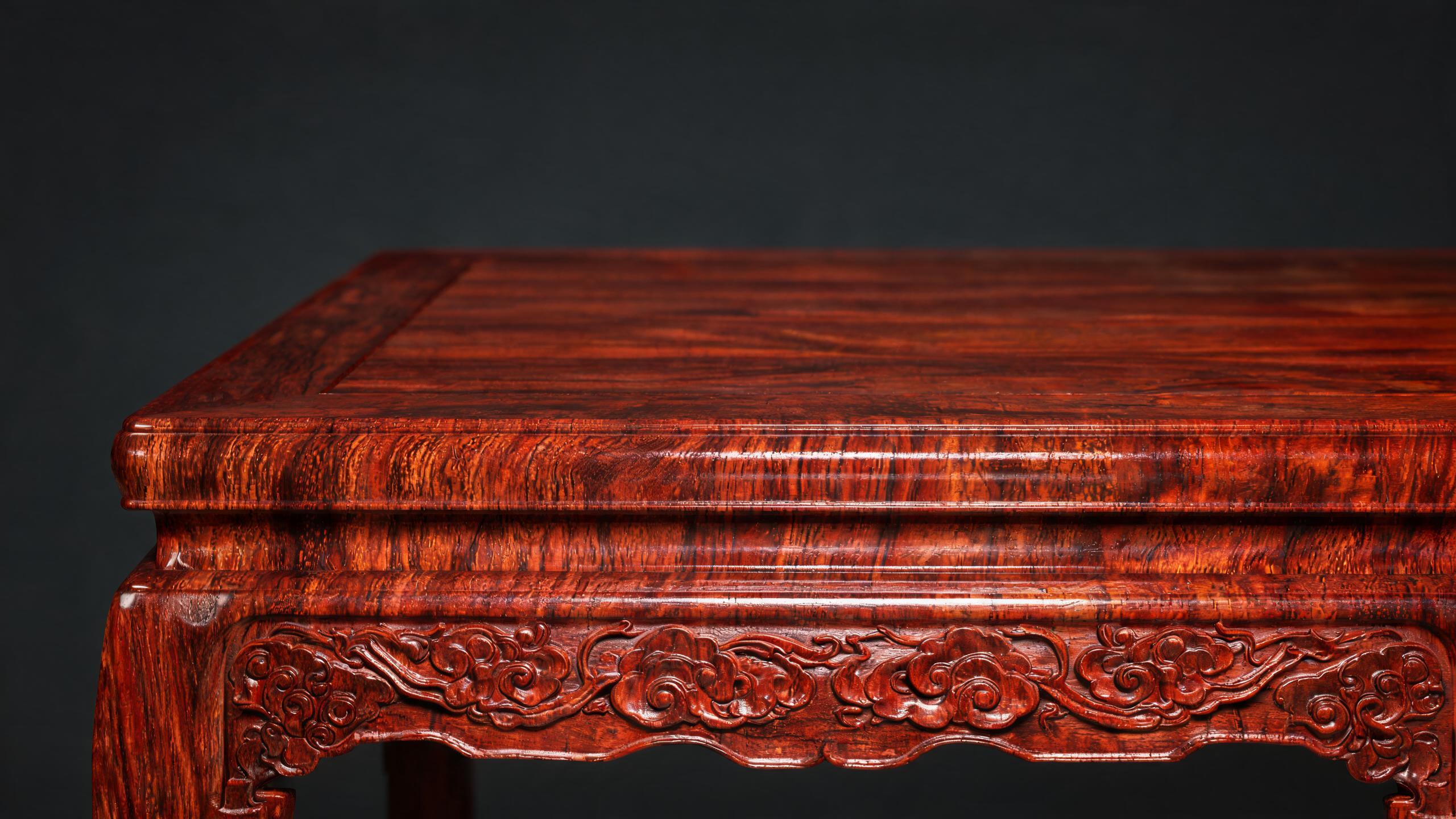
Ein praktischer B2B-Leitfaden, warum die traditionelle Rohlackveredelung beim Bezug von Rosenholzmöbeln aus China für Exportmärkte wichtig ist, einschließlich Klimaanpassungsfähigkeit, EU-REACH- und US-CARB-Konformität, der sechsfache Lackprozess …
Why Lacquer Finishing Is the Hidden Decision in Rosewood Furniture Sourcing
When B2B buyers evaluate Chinese rosewood furniture suppliers, most attention goes to timber species, carving quality, and joinery technique. These are legitimate priorities, but one production variable is routinely underestimated: the surface finishing process. The finishing method applied to rosewood furniture determines not only the visual character of each piece but also its long-term dimensional stability, its compliance with chemical regulations in destination markets, and ultimately its resale value in front of the end customer.
For importers, hospitality procurement teams, and wholesale distributors sourcing from manufacturers in regions like Fujian's Xianyou County, understanding the difference between traditional raw lacquer finishing and alternative coating methods is not a niche technical concern. It is a sourcing decision that affects product performance in varied climates, regulatory clearance at customs, and the premium positioning that classical furniture commands in European, North American, Southeast Asian, and Australian markets.
This guide explains what traditional lacquer finishing actually involves, why it matters for export-grade rosewood furniture, how it compares to other common finishing methods, and what B2B buyers should verify when evaluating a supplier's finishing standards.
What Is Traditional Raw Lacquer Finishing in Classical Furniture Manufacturing?
Raw lacquer finishing, known in Chinese manufacturing as sheng qi (raw lacquer) or da qi (lacquer application), is a surface treatment process that dates back over 7,000 years in Chinese craft tradition. The lacquer itself is a natural sap harvested from the Toxicodendron vernicifluum tree, commonly called the lacquer tree. When applied to dense hardwoods like Siamese rosewood (Dalbergia cochinchinensis), raw lacquer creates a finish that penetrates the wood surface rather than sitting on top of it as a plastic-like film.
At Yunxiao Rosewood Furniture, the finishing process for each piece follows a multi-coat raw lacquer schedule. The manufacturer applies six successive coats of raw lacquer to furniture surfaces. Each coat is allowed to cure for approximately 24 hours under controlled humidity conditions. After curing, the surface is hand-rubbed with pumice stone to create a penetrating satin sheen rather than a glossy, artificial-looking surface. This process is fundamentally different from spray-on polyurethane or nitrocellulose lacquers that cure into a hard plastic film on top of the wood.
The key distinction is penetration versus film formation. Traditional raw lacquer seeps into the dense pore structure of rosewood, bonding with the wood fiber at a molecular level. Modern synthetic finishes form a surface film that can chip, peel, or delaminate over time, especially when exposed to the humidity and temperature fluctuations that furniture experiences during international shipping and in varied climate zones.
Why Does Lacquer Finishing Affect Export Performance?
Climate Adaptability Across Target Markets
Rosewood furniture exported from Fujian, China, travels to destinations with dramatically different climate profiles. A container loaded in the humid subtropical climate of coastal China may arrive in the dry heated interiors of a North American winter, the tropical humidity of Southeast Asia, or the moderate temperate zones of Western Europe. Each of these environments imposes different stress on the wood surface.
Raw lacquer finishing provides a breathable moisture barrier. Because the lacquer penetrates the wood rather than encapsulating it in a synthetic film, the furniture surface can regulate moisture exchange with the surrounding air. This breathability reduces the risk of surface cracking, finish delamination, and the cloudy white marks that appear when synthetic finishes trap moisture against the wood substrate. For B2B buyers sourcing furniture for hotel projects in tropical Southeast Asia or for residential clients in dry-climate regions like the American Southwest, this climate adaptability directly reduces after-sales complaints and warranty claims.
Regulatory Compliance for EU and US Markets
Surface finishes are subject to chemical regulations in major import markets. The European Union's REACH regulation restricts volatile organic compound (VOC) emissions and specific hazardous chemicals in consumer products. The United States CARB (California Air Resources Board) standards impose some of the strictest formaldehyde emission limits in the world. Furniture finished with conventional solvent-based lacquers or polyurethane coatings may require extensive compliance documentation and testing to clear customs, particularly for commercial and hospitality projects where fire safety and indoor air quality standards apply.
Yunxiao's eco-friendly beeswax and lacquer finishing process is designed to meet EU REACH and US CARB standards. Raw lacquer, being a natural plant sap, contains none of the synthetic plasticizers, formaldehyde-releasing preservatives, or high-VOC solvents found in many commercial furniture finishes. This compliance profile simplifies import documentation and reduces the risk of port-of-entry testing failures that can delay container release.
Aesthetic Premium and Brand Positioning
The visual difference between raw lacquer and synthetic finishes is immediately apparent to trained eyes and, increasingly, to discerning end consumers. Raw lacquer produces a deep, translucent surface that allows the natural grain pattern of rosewood to show through with three-dimensional depth. The hand-rubbed satin sheen feels warm to the touch and develops a richer patina with age and use. Synthetic finishes, by contrast, tend to produce a flat, uniform gloss that masks the tactile quality of the wood and does not improve with time.
For wholesalers and retailers positioning classical rosewood furniture as a premium product, the finishing method is a tangible selling point. Furniture finished with six-coat raw lacquer, each coat hand-rubbed, carries a production story that justifies higher retail pricing and differentiates the product from mass-produced alternatives finished with automated spray lines.
Raw Lacquer vs. Beeswax vs. Synthetic Finishes: A B2B Comparison
Buyers sourcing rosewood furniture from China will encounter three primary finishing methods. Understanding the trade-offs of each helps importers align product specifications with their target market requirements and price positioning.
Six-Coat Raw Lacquer Finish
This is the most labor-intensive and durable traditional finishing method. Each coat of raw lacquer is applied by hand, cured for 24 hours, and rubbed with pumice stone before the next coat is applied. The six-coat schedule at Yunxiao Rosewood Furniture creates a penetrating finish that bonds with the wood fiber, produces a satin sheen with visible grain depth, and provides natural resistance to moisture, mild acids, and abrasion. This finish is appropriate for premium residential, hospitality, and commercial projects where furniture longevity and surface quality are key selling points.
Advantages: Deep penetration, natural moisture regulation, REACH and CARB compliant, develops patina over time, resistant to cracking and delamination, repairable by reapplication.
Considerations: Higher labor cost per piece, longer production cycle due to 24-hour curing per coat, requires skilled artisans for consistent application.
Eco-Friendly Beeswax Finish
Beeswax finishing involves applying natural beeswax to the wood surface, which is then buffed to a soft, matte sheen. Beeswax penetrates the wood pores and provides a natural moisture barrier without forming a film. Yunxiao uses eco-friendly beeswax alongside raw lacquer in its finishing process. Beeswax is particularly suitable for furniture that will be placed in controlled indoor environments where the surface will receive regular maintenance.
Advantages: Natural and non-toxic, simple maintenance, allows wood to breathe, easy to reapply for end users.
Considerations: Less resistant to water rings and stains than cured lacquer, requires periodic reapplication, not ideal for high-traffic commercial surfaces.
Synthetic Polyurethane or Nitrocellulose Finish
These are the finishes most commonly applied by mass-production furniture factories. A polyurethane or nitrocellulose lacquer is sprayed onto the surface, where it cures into a hard plastic-like film. While this method is fast, inexpensive, and produces a uniform gloss, it does not bond with the wood fiber. The film sits on the surface and is vulnerable to chipping, peeling, and moisture trapping.
Advantages: Low cost, fast production, uniform appearance, high initial gloss.
Considerations: Cannot be repaired without full stripping, does not allow wood to breathe, vulnerable to delamination in climate changes, may require additional compliance testing for VOC content, does not develop patina.
How Does the Six-Coat Lacquer Process Work in Production?
To give buyers a clear understanding of what the finishing process involves, here is the production sequence used for Yunxiao's raw lacquer finishing on a product like the Classical Siamese Rosewood Tea Table with Carved Cloud Apron:
Surface preparation: After carving and assembly, the raw wood surface is sanded to a smooth substrate. Any tool marks from the carving process are removed. The surface must be clean and dry before lacquer application.
First coat (sealing): A thin coat of raw lacquer is applied by hand. The lacquer penetrates the open pores of the rosewood, establishing a bond with the wood fiber. This coat is allowed to cure for approximately 24 hours under controlled humidity.
Hand-rubbing with pumice stone: After the first coat cures, the surface is rubbed with natural pumice stone. This rubbing action serves two purposes: it smooths the raised grain and it forces lacquer particles deeper into the wood pores, strengthening the bond between finish and substrate.
Coats two through five: Each subsequent coat follows the same cycle: application, 24-hour curing, and hand-rubbing. With each coat, the finish builds depth and translucency. The grain pattern becomes more pronounced as successive layers of lacquer refract light at different depths within the finish.
Sixth coat (final coat): The final coat is applied and hand-rubbed to achieve the penetrating satin sheen that characterizes traditional raw lacquer finishing. The result is a surface that feels warm to the touch, shows the wood grain with three-dimensional clarity, and provides natural resistance to daily use.
Quality inspection: The finished surface is inspected for uniformity, absence of dust particles, consistency of sheen, and proper penetration. Any imperfections require spot repair and re-curing before the piece is released to the next production stage.
The total time for the six-coat lacquer process alone is approximately six to seven working days, assuming each coat cures for 24 hours and hand-rubbing is completed within the same cycle. This finishing time is separate from and additional to the 36-day constant humidity drying process that each piece of raw timber undergoes before manufacturing begins. The combined production timeline reflects the reality that quality classical furniture cannot be rushed through automated finishing lines.
What Should B2B Buyers Verify When Assessing Lacquer Finishing Quality?
When evaluating a Chinese rosewood furniture supplier's finishing standards, B2B buyers can use the following verification checklist during factory visits, sample evaluation, or remote supplier assessment.
1. Confirm the Finishing Method in Writing
Request a written specification of the finishing process, including the number of coats, the type of lacquer used (raw lacquer vs. synthetic), the curing time per coat, and whether the surface is hand-rubbed or machine-polished. A supplier using traditional methods should be able to describe the process in specific, verifiable terms rather than vague assurances about quality.
2. Request Cross-Section or Edge Samples
If possible, ask for a small sample piece or an offcut that shows the lacquer penetration from the surface to the raw wood. Raw lacquer that has penetrated the wood fiber will show a gradual transition from finished surface to raw wood, not a distinct line where a synthetic film sits on top of the substrate.
3. Test Surface Response to Humidity Changes
Place a sample piece in a controlled environment with moderate humidity for several days, then move it to a drier environment. Synthetic finishes may show stress at the wood-finish interface when the substrate shrinks or swells. Raw lacquer, being flexible and bonded to the fiber, accommodates minor dimensional changes without cracking.
4. Verify Compliance Documentation
For EU and US market buyers, request REACH and CARB compliance documentation for the finishing materials used. Raw lacquer and beeswax, being natural materials, typically meet these standards without modification. However, the supplier should have documentation available rather than requiring the buyer to assume compliance.
5. Evaluate Tactile and Visual Quality
The surface of a properly finished raw lacquer piece should feel warm and smooth to the touch, not slick or plastic-like. When viewed under raking light, the grain pattern should be visible beneath the finish with depth and dimension. A flat, mirror-like gloss that obscures the grain pattern is characteristic of sprayed synthetic finishes, not traditional hand-applied lacquer.
6. Ask About Repair and Maintenance Procedures
Raw lacquer finishes are repairable: minor scratches can be addressed by applying a thin coat of fresh lacquer to the affected area, which bonds with the existing finish. Synthetic film finishes generally require complete stripping and refinishing to repair damage. For commercial buyers managing furniture across multiple properties or projects, repairability affects total cost of ownership over the furniture's service life.
How Does Finishing Relate to Other Production Stages?
The finishing process does not exist in isolation. Its quality is dependent on the preceding production stages, and B2B buyers should understand these relationships to evaluate overall manufacturing competence.
Timber Drying
Before any finishing begins, the raw timber must be properly dried. Yunxiao applies a 36-day constant humidity drying process to each piece of timber. This controlled drying reduces the moisture content to a stable level appropriate for furniture manufacturing. If timber is inadequately dried, the wood will continue to lose moisture after the finish is applied, causing shrinkage, joint movement, and finish stress. No finishing method, however well executed, can compensate for poorly dried timber.
Carving and Surface Preparation
The tea table with carved cloud apron produced by Yunxiao requires approximately 12 carving hours per piece, with relief carving cut at 2-3 mm depth. Carved surfaces present a particular challenge for finishing, as the lacquer must follow the contours of the relief without pooling or bridging detail. Hand-applied raw lacquer is better suited to carved surfaces than sprayed synthetic finishes, which tend to build up in recessed areas and obscure fine detail.
Joinery and Assembly
Yunxiao uses mortise-and-tenon joinery with bamboo dowel pins, with zero metal fasteners in the primary frame. This traditional joinery method allows the furniture to accommodate seasonal wood movement without the stress concentrations that metal screws and nails create. The relationship to finishing is indirect but important: furniture that moves freely at its joints places less stress on the surface finish, reducing the likelihood of finish cracking at joint locations.
Common Misconceptions About Lacquer Finishing in B2B Sourcing
"All Lacquer Finishes Are the Same"
This is one of the most common and costly misconceptions. The word lacquer is used to describe everything from natural raw lacquer sap to fully synthetic polyurethane coatings. When a supplier says their furniture has a lacquer finish, B2B buyers must ask specifically what type of lacquer: raw lacquer from Toxicodendron vernicifluum, cashew nut shell liquid (CNSL) lacquer, nitrocellulose lacquer, or polyurethane lacquer. Each has different penetration, breathability, compliance, and durability characteristics.
"Glossier Means Better Quality"
In traditional Chinese furniture aesthetics, a high-gloss mirror finish is not the standard of quality. The penetrating satin sheen achieved by hand-rubbed raw lacquer is considered the premium standard because it preserves the tactile and visual quality of the wood. Excessive gloss often indicates a thick synthetic film that masks the wood's natural character.
"Finishing Is Just the Final Coat"
The finishing process begins with timber drying and surface preparation and involves multiple interdependent stages. Buyers who treat finishing as a single final step tend to underestimate the production time and skill required, leading to unrealistic expectations about lead times and pricing.
"Synthetic Finishes Are More Durable"
Synthetic finishes may offer higher initial hardness, but their durability over the long term is compromised by their inability to accommodate wood movement and their vulnerability to delamination. Raw lacquer, which bonds with the wood fiber, remains intact through dimensional changes and can be refreshed or repaired without stripping. For furniture intended to last for generations, the traditional finish offers superior long-term performance.
How Does Finishing Affect Total Cost of Ownership for B2B Buyers?
The per-unit cost of furniture with traditional raw lacquer finishing is higher than mass-produced alternatives finished with sprayed synthetic coatings. However, B2B buyers should calculate total cost of ownership rather than comparing unit prices alone.
Factors that reduce the total cost of ownership for raw lacquer finished furniture include:
Reduced warranty claims: The breathable, flexible finish is less prone to the cracking and delamination that generate customer complaints and replacement costs.
Lower compliance costs: Natural raw lacquer and beeswax typically meet REACH and CARB standards without additional testing or reformulation, reducing documentation and testing expenses.
Repairability: Minor surface damage can be repaired in the field by reapplying lacquer to the affected area, rather than requiring full stripping and refinishing.
Longer service life: Furniture that lasts decades without finish failure has a lower amortized cost per year of use than cheaper alternatives that need replacement sooner.
Higher resale value: Premium positioning supported by traditional finishing methods commands stronger resale value, particularly in markets where classical Chinese furniture is collected as an investment category.
For hospitality projects outfitting multiple rooms or villas, the difference in total cost of ownership between traditional and synthetic finishes compounds across the full furniture order. A 10-seat dining set or a complete bedroom suite represents a significant investment, and the finishing method is the primary determinant of how that investment performs over the project lifecycle.
What Role Does Beeswax Play in the Finishing System?
Yunxiao's finishing system combines raw lacquer with eco-friendly beeswax. Beeswax serves a complementary function to lacquer in the surface treatment. While raw lacquer provides the primary protective and aesthetic finish, beeswax adds a soft, natural layer that enhances the tactile quality of the surface and provides an additional moisture barrier.
For end customers, beeswax also offers a simple maintenance pathway. Unlike synthetic finishes that require specialized products and professional refinishing, beeswax-finished surfaces can be maintained by applying a thin coat of natural beeswax and buffing with a soft cloth. This user-friendly maintenance is a selling point for residential buyers who want to care for their furniture without professional intervention.
In the B2B context, the combination of raw lacquer and beeswax provides two layers of surface protection with different but complementary properties. The lacquer provides structure, depth, and durability; the beeswax provides surface warmth, tactile appeal, and easy maintenance. Together, they create a finishing system that is more robust than either component alone.
How Should Importers Specify Finishing Requirements in Purchase Orders?
To ensure that the furniture received matches the quality expected, B2B buyers should include specific finishing requirements in their purchase orders and supplier agreements. A well-structured specification might include:
Finishing method: raw lacquer (sheng qi) hand-applied
Number of coats: minimum six, with 24-hour curing between coats
Surface treatment: hand-rubbed with pumice stone
Final sheen: penetrating satin (not high-gloss)
Complementary treatment: eco-friendly beeswax top layer
Compliance: raw lacquer and beeswax materials meeting EU REACH and US CARB standards
Inspection criteria: uniform sheen, visible grain depth, no dust particles, no pooling in carved recesses, no film delamination at edges
Documentation: finishing process description and compliance certificates included with shipment documentation
By specifying these requirements rather than leaving finishing to the supplier's default, importers can control a critical quality variable and reduce the risk of receiving furniture that does not meet their market's expectations or regulatory requirements.
How Does Finishing Relate to CITES and Timber Compliance?
While finishing is a post-timber process, it intersects with timber compliance in an important way. CITES regulations govern the international trade of certain rosewood species, including Dalbergia cochinchinensis (Siamese rosewood). The finish applied to the furniture does not affect CITES compliance directly, but the finishing documentation forms part of the overall product dossier that importers present at customs.
Yunxiao provides full export documentation including FSC certificates and ISPM 15 heat-treated packaging. The finishing specification, when documented alongside timber sourcing records, CITES permits, and compliance certificates, creates a complete product provenance trail that simplifies customs clearance and demonstrates due diligence to end customers who increasingly demand transparency about timber legality and environmental standards.
What Are the Visual Cues of Quality Lacquer Finishing?
For buyers who are not finishing specialists, several visual cues can help distinguish quality raw lacquer finishing from inferior alternatives during sample evaluation:
Grain visibility: The natural grain pattern of the rosewood should be clearly visible beneath the finish with three-dimensional depth. If the grain is obscured by a thick, uniform layer, the finish is likely synthetic.
Sheen consistency: The sheen should be consistent across flat surfaces and follow the contours of carved details without pooling. Variation in sheen on flat surfaces may indicate uneven application or insufficient curing between coats.
Edge behavior: At the edges of panels and components, the finish should show penetration into the wood, not a built-up lip of film. A visible film edge is characteristic of sprayed synthetic finishes.
Tactile warmth: When touched, the surface should feel warm and organic, not cool and slick like plastic. This tactile difference is one of the most reliable indicators of traditional finishing.
Carved detail preservation: On carved surfaces, the lacquer should follow the carved contours without filling in or bridging fine detail. Synthetic spray finishes tend to accumulate in recesses and flatten the visual depth of carving.
How Does Finishing Differ Across Product Categories?
The finishing requirements for different product categories within a rosewood furniture line can vary based on the intended use and surface exposure. Understanding these differences helps B2B buyers specify appropriate finishes for each product type in their order.
Tea Tables and Living Room Accent Pieces
Products like the Classical Siamese Rosewood Tea Table with Carved Cloud Apron (80 x 50 x 38 cm) are designed for living rooms, tea rooms, and boutique hotel lounges. These surfaces see regular contact with tea ware, water, and daily use. The six-coat raw lacquer finish provides the water resistance and surface durability needed for these applications while maintaining the aesthetic quality expected of a display piece.
Dining Sets
Dining table surfaces are subject to heat, moisture from hot dishes, food stains, and regular cleaning. The raw lacquer finish provides natural resistance to mild acids, water rings, and food residues. For dining sets like the Ming Style Round Redwood Dining Table 8-Seat or the Square Redwood Dining Table 12-seat Banqueting Set, the finishing must meet the demands of daily commercial or family use while preserving the formal aesthetic of the furniture.
Bedroom Suites
Bedroom furniture, including pieces like the Classical Redwood Canopy Bed 3-piece and the Classical Redwood Bedroom Wardrobe Suite 6-piece, has less direct surface exposure but requires a finish that supports long-term stability. The breathable nature of raw lacquer is particularly valuable for bedroom furniture placed in climate-controlled interiors, as it allows the wood to adjust to indoor humidity without finish stress.
Sofa and Reception Sets
Sofa sets such as the Imperial Dragon Carved Redwood Sofa 10-seat and the Auspicious Phoenix Carved Redwood Sofa 6-piece Reception Set feature extensive carved surfaces. The finishing of carved furniture requires special attention because the lacquer must follow the contours of relief carving without obscuring detail. Hand-applied raw lacquer is superior to sprayed finishes for carved pieces, as the artisan can control the application depth and ensure that recesses and raised elements receive appropriate coverage.
FAQ: Lacquer Finishing for Rosewood Furniture Export
How long does the six-coat lacquer process take?
The lacquer application process requires approximately six to seven working days, assuming 24-hour curing per coat and hand-rubbing between coats. This is in addition to the 36-day constant humidity drying process that precedes manufacturing. The total production timeline from timber preparation to finished product is 45-60 working days after deposit for container orders.
Is raw lacquer safe for consumers?
Yes. Raw lacquer from the lacquer tree is a natural plant sap that has been used for thousands of years on food contact surfaces including bowls and chopsticks. Once fully cured, it is inert and non-toxic. Yunxiao's finishing materials meet EU REACH and US CARB standards, which are among the most stringent chemical safety regulations for consumer products.
Can raw lacquer finishes be repaired if damaged?
Yes. One of the key advantages of raw lacquer over synthetic film finishes is its repairability. Minor scratches or wear areas can be addressed by cleaning the surface and applying a thin coat of fresh raw lacquer to the affected area. The new lacquer bonds with the existing finish, creating a seamless repair. This is not possible with synthetic finishes, which require complete stripping for any repair.
Will the lacquer finish crack in dry climates?
Raw lacquer is more resistant to cracking in dry climates than synthetic finishes because it penetrates and bonds with the wood fiber rather than forming a rigid film. The finish can accommodate the natural seasonal movement of the wood substrate. However, extremely dry conditions (such as heated interiors below 30% relative humidity) may still cause minor wood movement. Yunxiao's 36-day drying process is designed to reduce the moisture content to a stable level that minimizes dimensional change after installation.
How should buyers maintain raw lacquer furniture?
For routine maintenance, dust with a soft dry cloth. For deeper cleaning, use a barely damp cloth followed by a dry wipe. Periodically, the surface can be refreshed by applying a thin coat of natural beeswax and buffing with a soft cloth. Avoid chemical cleaners, silicone-based furniture polishes, and abrasive materials, which can damage the lacquer surface.
Can I request a different number of coats or finishing method?
Yunxiao offers flexible OEM and ODM custom sizes, patterns, and specifications. Buyers can discuss alternative finishing schedules if their project requirements differ from the standard six-coat raw lacquer process. However, reducing the number of coats or switching to a synthetic finish will affect the surface quality, durability, and compliance profile of the furniture.
Conclusion: Why Finishing Is a Sourcing Decision, Not a Production Detail
The surface finishing of rosewood furniture is often treated as a production detail that happens after the real work of timber selection, carving, and joinery is complete. This perspective misses the reality that finishing is the interface between the furniture and its environment. It is what the customer touches, sees, and maintains. It determines whether the furniture performs in the target market's climate, passes regulatory clearance, and justifies its premium price point over the years of service life.
For B2B buyers sourcing from China's traditional hardwood furniture manufacturing regions, the finishing method is a sourcing decision that should be specified, verified, and documented with the same rigor as timber species and joinery technique. Traditional raw lacquer finishing, applied in multiple coats with hand-rubbing and natural curing, provides a combination of aesthetic quality, climate adaptability, regulatory compliance, and long-term repairability that no synthetic alternative can match.
Yunxiao Rosewood Furniture, established in 2008 in Xianyou County, Fujian, applies a six-coat raw lacquer finishing process with eco-friendly beeswax to each piece of classical rosewood furniture produced in its 12,000 square meter facility. The finishing materials meet EU REACH and US CARB standards, and the company provides full export documentation including FSC certificates and ISPM 15 heat-treated packaging for international orders. For buyers who want to discuss specific finishing specifications for their project requirements, Yunxiao offers consultation on OEM and ODM custom orders, trial single sets, and refundable samples.
To discuss your finishing requirements and request product specifications, contact Yunxiao Rosewood Furniture for a detailed quotation.