
SEO

Rosewood Folding Stool & Carved Stool B2B Sourcing Guide: Importing Classical Chinese Solid Wood Stools

2026-08-20T10:11:18+08:00

A practical sourcing guide for importers and hospitality buyers looking to purchase classical Chinese solid wood stools — covering rosewood folding stools, hand carved stools, and Ming style stools. Learn what to check in wood species, joinery, finish, and supplier qualifications before placing your first container order.

BUYER GUIDE · CLASSICAL CHINESE STOOLS

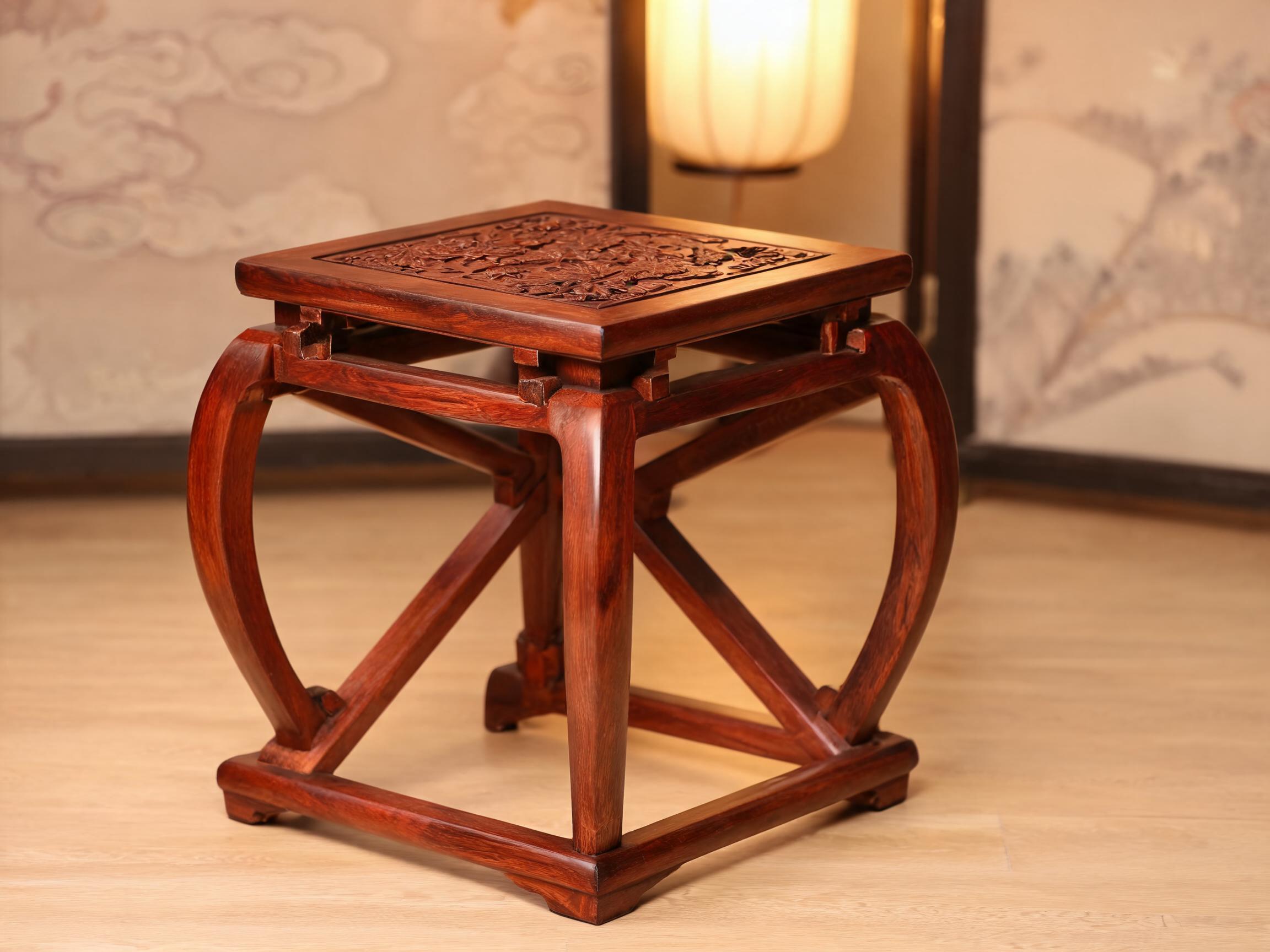
# Rosewood Folding Stool & Carved Stool B2B Sourcing Guide Chinese solid wood stools — whether a rosewood folding stool for a tea room, a hand carved stool for a hotel lobby, or a Ming style stool for a restaurant — are not commodity items. They are made from specific wood species, joined by hand or machine, finished with different coatings, and produced by workshops with very different quality control levels. This guide walks through what to check before you commit to a supplier.
Key takeaways for buyers:
  • Wood species determines price and stability — verify the exact botanical name, not just "rosewood" or "solid wood."
  • Joinery quality (mortise-and-tenon vs. nails/screws) is the main durability factor for a solid wood stool.
  • Folding stools need extra attention to hinge hardware and wood thickness at stress points.
  • Finish type matters for hospitality use — specify moisture-resistant lacquer or oil for commercial environments.
  • Ask for photos of the actual production batch, not only catalog images, before placing a large order.
## Why Classical Chinese Stools Are a Distinct Sourcing Category A classical Chinese stool is not a generic wooden seat. It carries specific design language — the clean lines of a Ming style stool, the structural logic of traditional joinery, and often decorative carving that requires skilled handwork. For buyers importing for tea rooms, entryways, hotels, or restaurants, the product must match both a visual standard and a durability standard. Two product families dominate the import category: - **Folding stools** (rosewood folding stool being the most requested) — valued for portability, storage efficiency, and traditional design that folds into a compact X-frame. - **Carved stools** — round or square seats with hand carved panels, often used as accent seating in entryways, corridors, or VIP areas. Both are typically made from hardwoods — rosewood (hongmu), elm (yumu), or other dense domestic species — and finished with lacquer or wax. ## Wood Species: What "Rosewood" Actually Means The single biggest source of confusion in sourcing is wood naming. "Rosewood" in international trade can refer to several different species with very different price points and legality profiles.
Common Trade NameTypical Botanical ReferenceCharacteristicsPrice Level
Hongmu / Rosewood (classical)Dalbergia species (e.g., D. odorifera)Very dense, deep color, CITES-listed, high costHigh
Rosewood (commercial grade)Dalbergia sissoo or similarDense, reddish-brown, more affordableMedium
Elm (Yumu)Ulmus speciesHard, durable, common for classical furniture, light colorMedium-low
Rubberwood / ParawoodHevea brasiliensisUniform texture, low cost, often used for budget itemsLow
**Buyer action:** Ask the supplier for the exact species name and, if possible, the scientific name. If the product is marketed as "rosewood," request confirmation of CITES status and export documentation. For a rosewood folding stool, verify whether the entire piece is solid rosewood or whether it uses rosewood only for visible parts. ## Hand Carved Stool vs. Machine Carved: What to Specify Carving is where cost and quality diverge most. A hand carved stool can take days per piece; a machine-carved version is produced in minutes. Both have their place, but you must know which you are buying. - **Hand carved stool:** Each piece is unique. Look for tool marks, slight asymmetry, and depth of relief. Higher cost, higher perceived value for hospitality projects where craftsmanship is part of the brand story. - **Machine carved:** Consistent, repeatable, lower cost. Suitable for high-volume orders where uniformity matters more than artisanal character. **Quality check:** Ask for a video of the carving process or close-up photos of the carving details. For hand carved stool orders, request a pre-production sample to lock the carving depth and style before mass production. ## Ming Style Stool: Design Specifications to Confirm The Ming style stool (often a rectangular or round stool with straight legs and minimal ornament) is the most internationally recognized classical Chinese stool form. Its value lies in proportion and joinery, not decoration. When sourcing Ming style stools, confirm: - **Seat dimensions** — typical seat heights range from 45–50 cm; confirm your target market's standard. - **Leg angle and stretcher placement** — these affect stability. - **Joinery type** — traditional mortise-and-tenon is preferred; visible nails or screws indicate lower quality. - **Wood thickness** — seat panels should be at least 1.5–2 cm thick for commercial use.
Common specification for a Ming style stool (reference):
Seat: 30 × 30 cm, height 48 cm, solid wood seat panel, mortise-and-tenon legs, natural lacquer finish. MOQ and exact dimensions should be confirmed with the supplier per order.
## Rosewood Folding Stool: Structural Points to Inspect The folding stool (often called a "ma zha" in Chinese) is a clever X-frame design. It is compact, portable, and surprisingly strong when built correctly. But the folding mechanism introduces stress points that a fixed stool does not have. Inspect these areas: - **Hinge hardware:** Brass or steel hinges with riveted or bolted connections. Check for play — a loose hinge means the stool will wobble within months. - **Cross-bar thickness:** The horizontal bars that lock the X-frame open take the most load. Thicker wood (at least 2.5–3 cm) is safer for commercial use. - **Leather or cloth seat:** Many folding stools use a leather or fabric seat panel. Specify the material grade — full-grain leather lasts longer than bonded leather. - **Folding smoothness:** The stool should fold and unfold without binding. Test multiple units in the sample batch. ## Finish and Coating: Matching Your Application The finish affects both appearance and durability. For tea rooms and hospitality, the finish must withstand moisture, cleaning agents, and frequent use.
Finish TypeAppearanceDurabilityBest For
Natural lacquer (raw lacquer)Matte, warm, shows wood grainHigh, moisture-resistantTea rooms, traditional settings
PU lacquerGlossy or matte, uniformHigh, scratch-resistantHotels, high-traffic areas
Wax finishLow sheen, natural feelMedium, needs reapplicationResidential, low-traffic
Oil finishNatural, matteMedium, water-resistantEntryways, decorative use
**Buyer action:** Specify the finish type in your inquiry. If you need a specific color or sheen level, request a finish sample on the actual wood species — finishes look different on rosewood versus elm. ## Quality Control Checklist for Suppliers Before placing a container order, use this checklist to evaluate a supplier: 1. **Production photos and videos** — ask for images of the actual workshop and the specific product batch, not catalog shots. 2. **Sample approval** — order one pre-production sample and test it for stability, finish, and folding mechanism (if applicable). 3. **Moisture content** — solid wood should be kiln-dried to 8–12% moisture content to prevent warping in export containers. 4. **Packaging** — confirm export packaging: each stool wrapped, corner protection, and carton strength suitable for sea freight. 5. **Lead time** — hand carved stool orders typically take longer than machine-carved. Confirm production time per quantity. 6. **MOQ and customization** — ask about minimum order quantities and whether size, carving pattern, or finish can be customized. ## Common Sourcing Mistakes - **Assuming "rosewood" means one specific wood.** It does not. Always confirm the species and its legal status. - **Skipping the sample.** For a hand carved stool, the sample is the only way to verify carving quality. - **Ignoring joinery.** A stool that looks beautiful but is nailed together will fail in commercial use. - **Under-specifying the finish.** A wax-finished stool in a hotel lobby will show wear within months. - **Not checking folding hardware.** For a rosewood folding stool, the hinges are the most likely failure point. ## FAQ: Quick Answers for Buyers **Q: What is the typical MOQ for hand carved stools?** A: MOQ varies by supplier and design complexity. Hand carved items often require higher minimums due to production time. Confirm directly with the supplier. **Q: Can I get a custom size or carving pattern?** A: Most workshops offer customization, but it affects both cost and lead time. Provide detailed drawings or reference photos with your inquiry. **Q: How do I verify the wood is really rosewood?** A: Ask for the scientific name, request photos of the raw wood before finishing, and consider third-party inspection for large orders. **Q: What is the typical lead time for a 20-foot container of solid wood stools?** A: Lead time depends on the product type and order size. Machine-carved items may ship in 2–3 weeks; hand carved items may take 4–6 weeks or longer. Always confirm at the time of quotation. **Q: Do you provide export documentation for CITES-listed woods?** A: Documentation availability depends on the specific wood species and current regulations. Confirm this with the supplier before ordering any "rosewood" product. ## Next Steps for Your Sourcing Project Start with a clear specification sheet: wood species, dimensions, finish, carving style, quantity, and target price range. Send this to multiple suppliers and compare not just price, but also their willingness to provide production photos, samples, and honest lead times. For tea rooms and hospitality projects, the classical Chinese stool is a statement piece. A well-made hand carved stool or a precise Ming style stool will serve for decades. The sourcing process is straightforward if you verify the wood, inspect the joinery, and test the sample before committing to volume. Note: Wood species availability, CITES regulations, and supplier capabilities change over time. Always confirm current details with your supplier before placing an order.

KONTAKT

Angebot anfordern

Teilen Sie uns mit, was Sie benötigen, und unser Team antwortet innerhalb von 24 Stunden.

Interessiert an unseren Rosenholzmöbeln? Senden Sie uns eine Anfrage.