
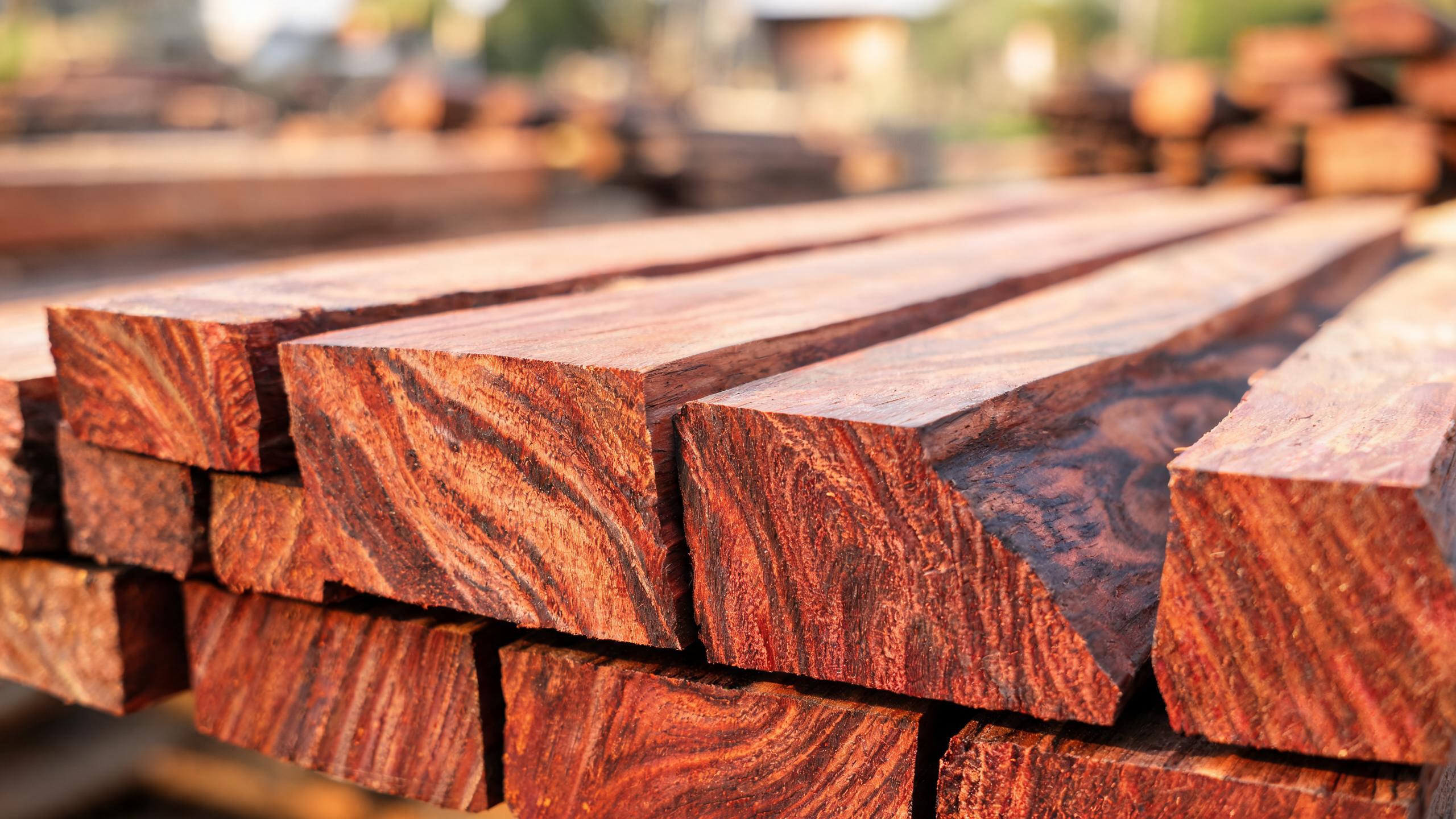
A practical procurement guide for professional furniture buyers and importers sourcing Dalbergia cochinchinensis (Siamese rosewood). Covers species identification and timber density, CITES Appendix II export permit requirements, quality grading criteria (moisture content, lacquer finish, carving hours), price factors, and export documentation for EU and US markets.
PROCUREMENT GUIDE · DALBERGIA COCHINCHINENSIS
Buying Siamese Rosewood in 2025: What Professional Importers Need to Verify Before Placing an Order
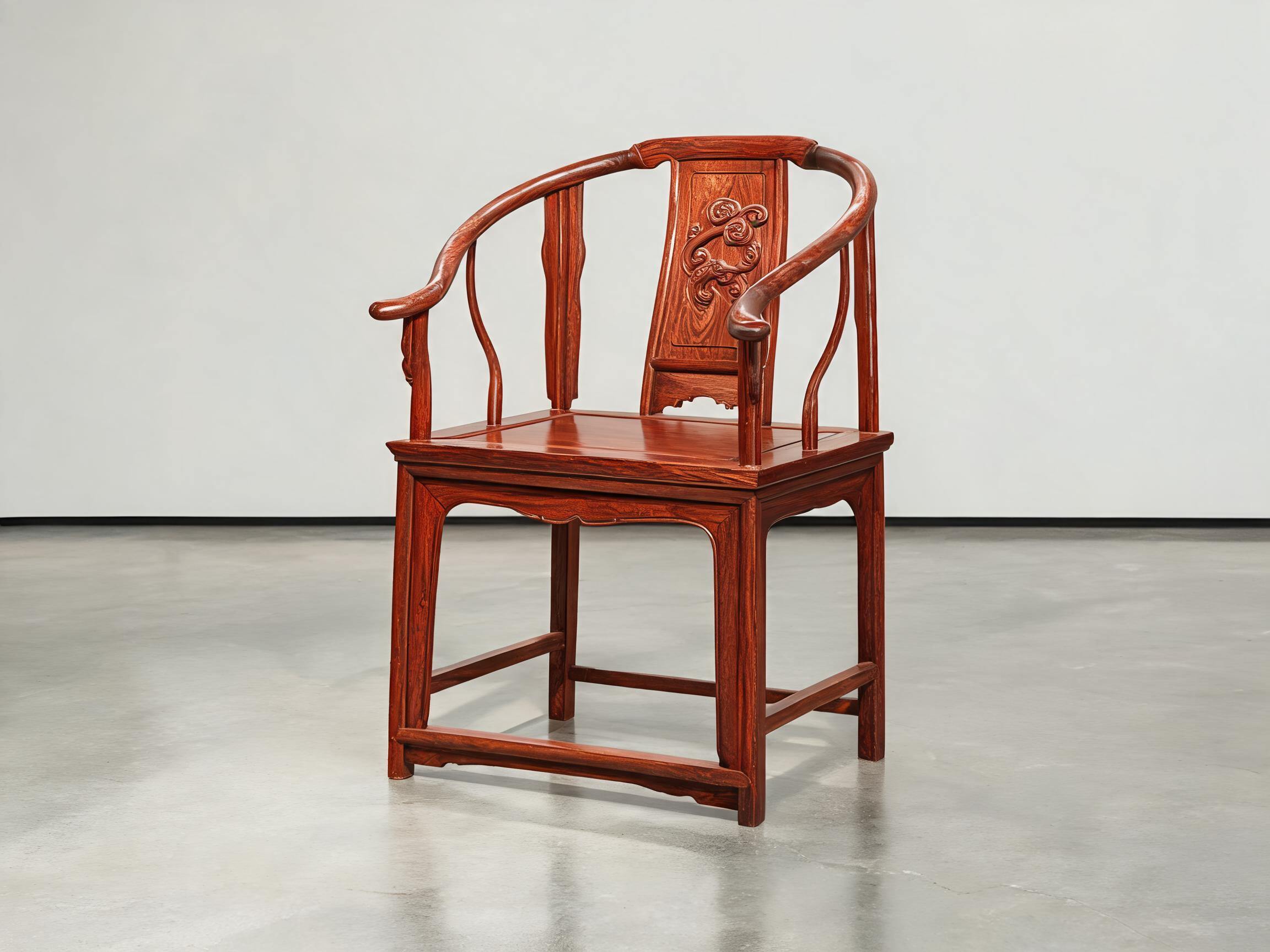
Siamese rosewood (Dalbergia cochinchinensis) remains one of the most sought-after hardwoods for high-end furniture, paneling, and decorative carvings. But for professional buyers, the commercial appeal comes with a compliance burden that has tightened significantly over the past decade. CITES Appendix II listing, chain-of-custody documentation, and inconsistent grading across exporting regions mean that a poorly verified shipment can be stopped at customs — or worse, seized.
This guide covers the four things every B2B buyer must verify before committing to a Siamese rosewood order: species identification, CITES compliance, quality grading, and price structure. It is written for furniture importers, interior contractors, and wholesalers who need practical, verifiable criteria — not generic marketing language.
- Verify species by density (0.90–1.00 g/cm³ at 12% MC) and heartwood color — not by name alone.
- CITES Appendix II requires export permits from the source country; re-export permits are needed for transshipment through third countries.
- Quality grading hinges on three measurable factors: moisture content (8–12%), lacquer finish, and carving hours.
- Price varies by wood grade, carving complexity, and number of lacquer coats — request a breakdown per factor, not a lump sum.
- For EU and US markets, prepare CITES permits, phytosanitary certificates, and FSC chain-of-custody documentation before shipment.
1. Species Identification: Confirming Dalbergia cochinchinensis
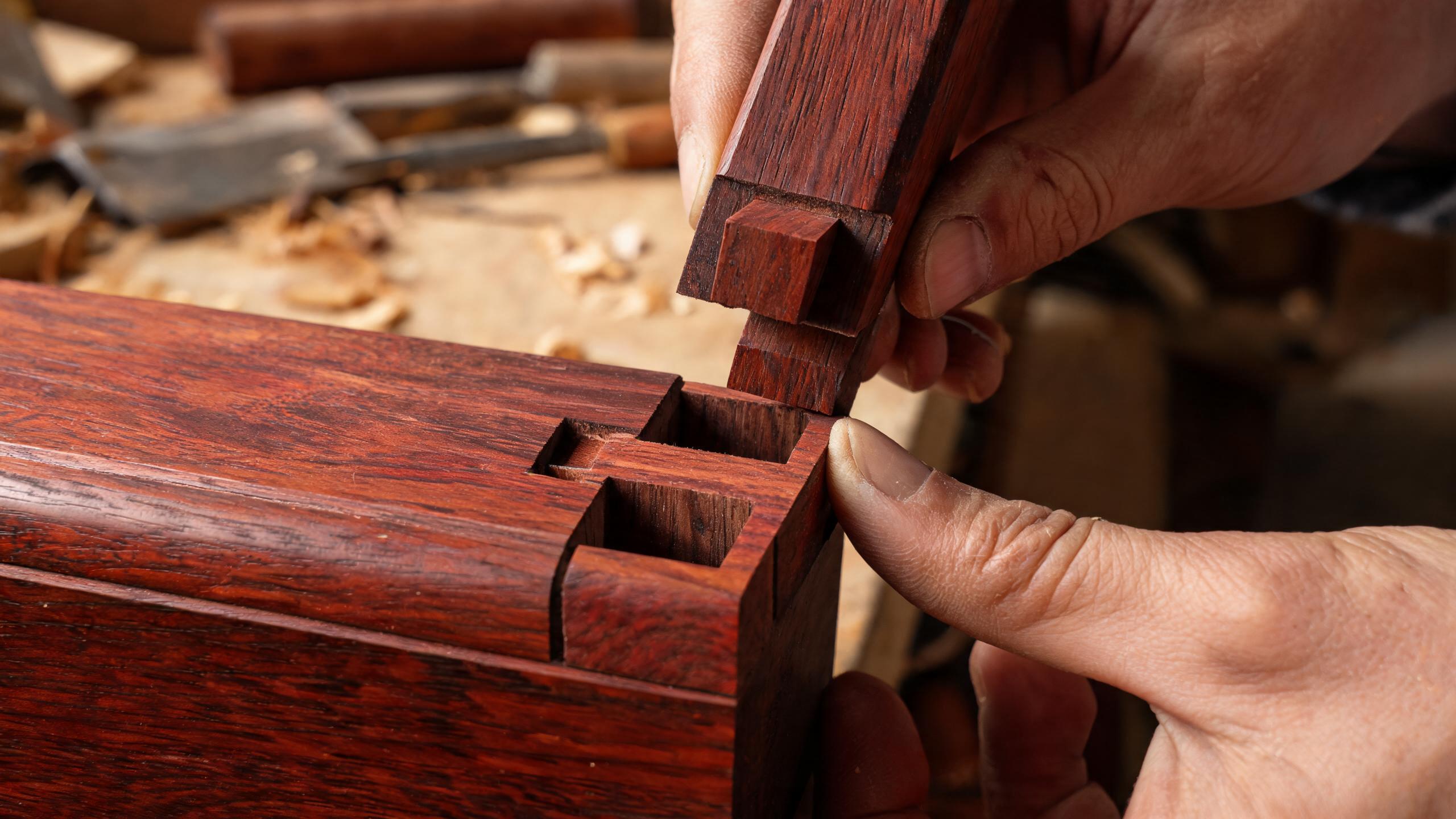
Dalbergia cochinchinensis is commonly traded as Siamese rosewood, Thai rosewood, or Tracwood. It is often confused with other Dalbergia species such as Dalbergia oliveri (Burma tulipwood) or Dalbergia bariensis — both of which are also CITES-listed but have different commercial value and working properties.
Key identification markers
- Heartwood color: Freshly cut heartwood ranges from golden brown to deep reddish-brown with darker streaks. It darkens to a richer red-brown after exposure to light.
- Density: Air-dry density is 0.90–1.00 g/cm³ at 12% moisture content. This is a reliable physical test — lighter wood is likely a different species or young plantation stock.
- Grain and texture: Usually straight to slightly interlocked grain; medium to coarse texture. Quarter-sawn surfaces show a subtle ribbon figure.
- Odor: A mild, sweet scent when freshly cut — distinct from the stronger rose-like smell of Dalbergia nigra (Brazilian rosewood).
- End-grain pores: Medium-sized, diffuse-porous to semi-ring-porous. A 10× loupe is sufficient for a basic check.
| Property | Dalbergia cochinchinensis | Dalbergia oliveri (common substitute) |
|---|---|---|
| Density (12% MC) | 0.90–1.00 g/cm³ | 0.85–0.95 g/cm³ |
| Heartwood color | Golden-brown to deep red-brown | Paler red-brown, less contrast |
| CITES status | Appendix II | Appendix II |
| Typical use | High-end furniture, carvings | Furniture, flooring |
Buyer tip: Request a density test report from the supplier, or test a small sample yourself. Density is the most objective, low-cost verification method available before shipment.
2. CITES Compliance: What Appendix II Means for Your Shipment
Dalbergia cochinchinensis has been listed on CITES Appendix II since 2013. This means international trade is permitted but strictly regulated. Both exporting and importing countries require documentation.
Required documents for EU and US import
- CITES export permit issued by the CITES Management Authority of the exporting country (e.g., Cambodia, Laos, or Vietnam).
- CITES re-export certificate if the wood transits through a third country — a common scenario for shipments routed via Vietnam or Thailand.
- Import permit for EU member states (issued by the national CITES authority) and for the US (issued by the USFWS).
- Phytosanitary certificate confirming the wood is free of pests and diseases.
- Commercial invoice and packing list with the scientific name Dalbergia cochinchinensis clearly stated.
FSC Chain-of-Custody
While FSC certification is not a CITES requirement, it is increasingly demanded by EU and US buyers — especially for government projects or LEED-certified buildings. FSC chain-of-custody (CoC) certification ensures the wood can be traced from certified forest to final product. If your supplier cannot provide FSC CoC documentation, confirm whether your market actually requires it; for residential furniture, CITES permits alone may suffice.
3. Quality Grading: Three Measurable Criteria
Unlike plantation teak or rubberwood, Siamese rosewood has no universal grading standard. In practice, buyers and suppliers agree on three measurable criteria:
3.1 Moisture Content (8–12%)
Properly kiln-dried Siamese rosewood should have a moisture content of 8–12%, depending on the destination climate. Wood above 12% risks warping, cracking, and fungal staining after arrival. Below 8% can cause issues in humid climates. Always request a moisture meter reading from the supplier and verify it upon arrival with your own meter.
3.2 Lacquer Finish
Siamese rosewood furniture is typically finished with lacquer — either natural shellac or synthetic polyurethane. The number of coats and the curing process determine durability. A quality finish involves:
- Base coat: Sanding sealer to close the pores.
- 2–3 color coats: Building the depth of the red-brown tone.
- 1–2 top coats: Protective, scratch-resistant layer.
- Final polishing: Hand-rubbed or machine-polished to a uniform sheen.
Ask the supplier how many coats are applied and what the curing time is between coats. A rushed 2-coat finish will look acceptable in photos but fail within 12 months of use.
3.3 Carving Hours
For carved furniture — screens, headboards, chair backs — the carving hours directly determine the price and quality. A simple geometric relief may take 4–8 hours per panel. A deep, high-relief dragon or floral motif can take 40–80 hours per panel. Ask for a breakdown of carving hours per piece; it is the most transparent way to compare quotes from different suppliers.
| Grade | Moisture Content | Lacquer Coats | Carving Hours (per panel) | Typical Use |
|---|---|---|---|---|
| Commercial | 10–12% | 2–3 | 4–10 | Hotels, restaurants, contract furniture |
| Premium | 8–10% | 4–5 | 10–30 | Residential, boutique interiors |
| Museum-grade | 8–9% | 5+ with hand polishing | 40+ | Collector pieces, heritage projects |
4. Price Factors: What You Are Actually Paying For
Siamese rosewood pricing varies significantly by source country, wood grade, and finishing complexity. As a professional buyer, you should request a price breakdown that separates the following factors:
4.1 Wood Grade
- Select grade: Uniform color, minimal defects, straight grain. Highest price per cubic meter.
- Standard grade: Some color variation and small knots, acceptable for hidden structural parts.
- Utility grade: Mixed color, visible defects, used for internal framing or non-visible components.
4.2 Carving Complexity
Simple geometric patterns cost the least. Deep relief, undercutting, and fine detail work require skilled artisans and significantly more hours. A carved panel that costs $150 in a simple pattern may cost $600+ in a high-relief design.
4.3 Lacquer Coats
Each additional coat adds labor and drying time. A 5-coat finish typically costs 15–25% more than a 3-coat finish on the same piece.
4.4 Source Country and CITES Processing
Permits, inspections, and export taxes vary by country. Cambodian and Laotian sources often have lower raw wood costs but longer permit processing times. Vietnamese suppliers may have higher prices but faster logistics and established CITES procedures.
5. Export Documentation Checklist for EU and US Markets
Before shipment, confirm the following documents are in order. Missing any one can delay customs clearance by weeks.
- CITES export permit (original, not a copy)
- CITES re-export certificate (if transshipped)
- Import permit (EU: issued by member state authority; US: USFWS Form 3-200)
- Phytosanitary certificate
- Commercial invoice with scientific name and HS code (4403.49 for rough wood; 9403.60 for furniture)
- Packing list with weights and dimensions
- FSC CoC certificate (if required by your contract)
- Bill of lading / air waybill
For EU imports, note that the EU Wildlife Trade Regulations (Regulation (EC) No 338/97) require an import permit in addition to the export permit. The import permit must be obtained before shipment, not upon arrival.
6. Common Mistakes Buyers Make
- Relying on photos alone: Color and grain can be digitally enhanced. Request a physical sample or a video under natural light.
- Skipping the density test: A 5-minute density check can prevent paying rosewood prices for a cheaper substitute.
- Assuming FSC = CITES: They are separate systems. FSC does not replace CITES permits.
- Not specifying moisture content in the contract: Without a written specification, you have no recourse if the wood arrives at 15% MC.
- Underestimating permit lead time: CITES export permits can take 2–8 weeks depending on the country. Plan your production schedule accordingly.
FAQ: Quick Answers for Buyers
Q: Is Siamese rosewood the same as Thai rosewood?
Yes, both names refer to Dalbergia cochinchinensis. Thai rosewood is the common trade name; Siamese rosewood is the older colonial-era term.
Q: Can I import finished furniture without a CITES permit?
No. Finished products made from Appendix II species still require CITES documentation. There is no "finished goods exemption" for Dalbergia cochinchinensis.
Q: How long does a CITES export permit take?
Typically 2–8 weeks, depending on the exporting country's CITES authority and the completeness of your documentation. Confirm the timeline with your supplier before placing the order.
Q: What is the difference between FSC and CITES?
CITES is a legally binding international agreement on endangered species trade. FSC is a voluntary certification system for sustainable forestry. Both may be required, but they serve different purposes.
Q: Can I request a lower price by accepting a lower grade?
Yes, but specify the grade in writing. "Standard grade, moisture content 10–12%, 3-coat lacquer finish" is a contractual specification. "Cheaper" without a grade definition leads to disputes.
Final Recommendations for Your Next Order
Siamese rosewood remains a viable, high-value material for professional furniture buyers — provided you verify species, comply with CITES, and grade quality by measurable criteria. Before placing your next order:
- Request a density test report and a physical sample.
- Confirm CITES export permit availability and lead time.
- Specify moisture content (8–12%), lacquer coats, and carving hours in your contract.
- Obtain your import permit before shipment for EU or US destinations.
- Ask for a price breakdown by wood grade, carving hours, and finishing — not a lump sum.
If you need assistance verifying supplier documentation or comparing quotes, contact our procurement team with your project specifications. We can help you evaluate offers against the criteria above.