
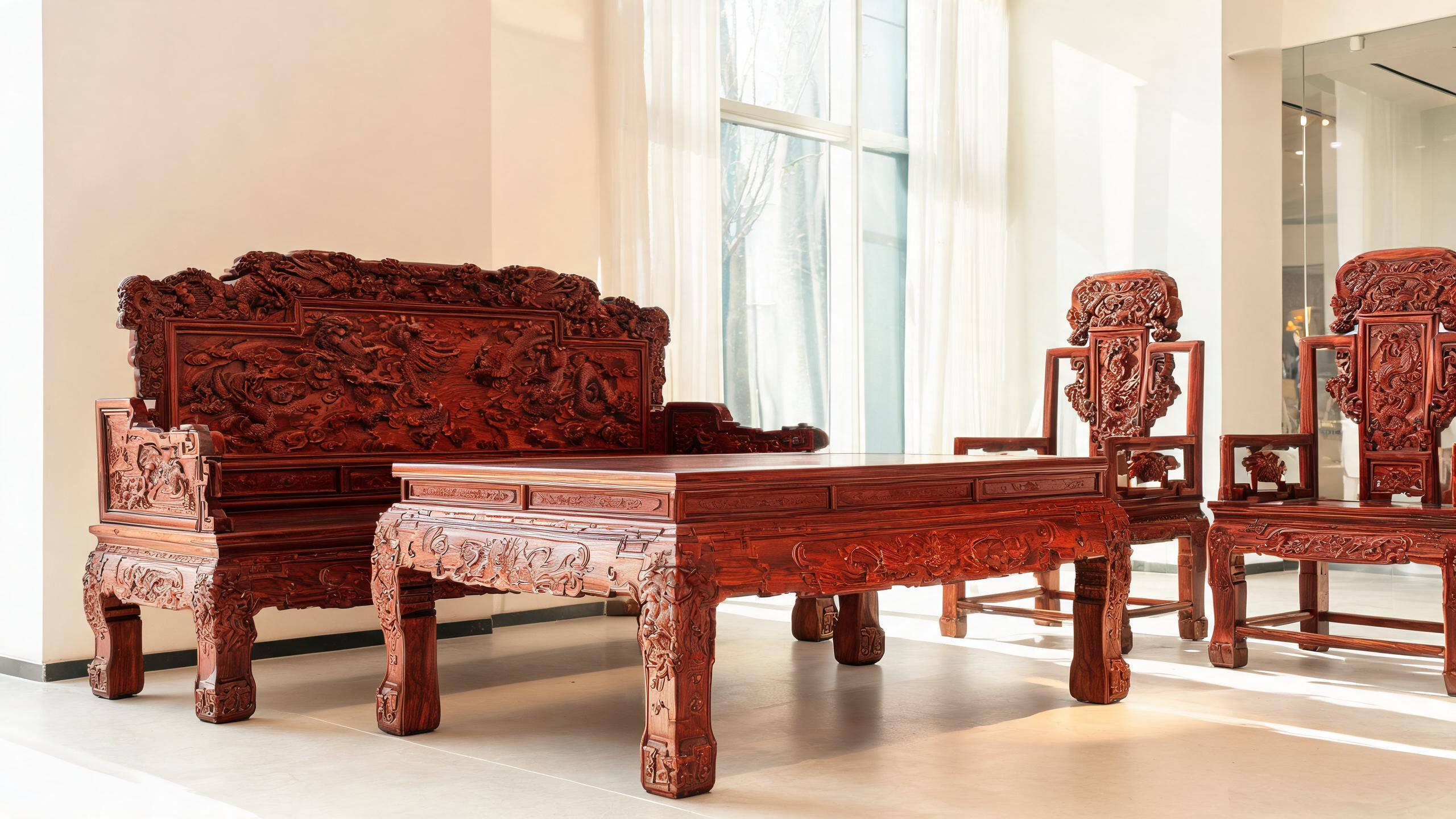
信頼できるローズウッド家具サプライヤーを審査・選定するための実践的なB2Bガイド。材料、職人技、品質管理、価格、コンプライアンス、カスタマイズ、供給条件を網羅。
How to Choose a Reliable Rosewood Furniture Supplier for Your Business
If you are a wholesaler, hotelier, interior designer, or furniture importer planning to bring classical rosewood furniture into your catalog, the single most important decision you will make is not which sofa or dining table to buy — it is which rosewood furniture supplier you trust to build it. Rosewood furniture is a long-term investment. A well-made piece can serve a hotel lobby, a villa, or a family home for generations, while a poorly made one can crack, warp, or fail within a few years of arriving in a different climate. The difference between the two is decided long before the furniture is loaded into a container: it is decided by the supplier you choose, the materials they use, the way they dry and join the wood, and the controls they put in place before a single piece leaves the factory.
This guide is written for overseas B2B buyers who are sourcing rosewood furniture from China and want to do it without avoidable risk. It walks through the practical questions you should ask, the evidence you should request, and the red flags you should watch for when evaluating a solid wood furniture supplier. It is grounded in the real practices of a working classical redwood furniture factory — Yunxiao Rosewood Furniture Co., Ltd, a manufacturer founded in 2008 in Xianyou County, Putian City, Fujian, the traditional home of Chinese hardwood craft — and in the realities of exporting carved rosewood furniture to Europe, North America, Southeast Asia, and Australia. The goal is to give you a concrete, verifiable framework so that when you compare suppliers, you are comparing facts, not marketing claims.
Why Supplier Selection Matters More for Rosewood Furniture Than for Most Other Furniture
Rosewood furniture is not like flat-pack furniture or mass-produced upholstery. It is made from dense, heavy, slow-growing hardwoods, and it is usually assembled with traditional joinery rather than screws and metal brackets. These two facts change everything about how it should be sourced.
First, the wood itself is expensive and limited. Genuine rosewood and related tropical hardwoods are regulated under international trade rules, and responsible suppliers maintain legal sourcing documentation. Because the raw material is costly, there is strong commercial pressure to cut corners — to use thinner boards, to mix in cheaper filler woods, to skip proper drying, or to hide defects under thick lacquer. A buyer who cannot tell the difference between a properly built piece and a superficially similar one can easily overpay for furniture that will not hold up.
Second, the construction method matters. Traditional mortise-and-tenon joinery, in which pieces of wood are shaped to lock together without metal nails, is stronger and more stable over time than nailed or screwed construction — but only when it is done correctly. It requires skilled craftsmen and careful fitting. A supplier that has invested in experienced carvers and joiners will produce furniture that survives overseas climates; a supplier that rushes assembly will not.
Third, the destination climate matters. A solid wood dining table or sofa set built for a humid Chinese coastal city may behave very differently in a dry Australian interior or a heated North American home. Wood expands and contracts with changes in humidity. How the wood is dried, how the panels are constructed, and how the finish is applied all determine whether the furniture stays stable after it crosses the ocean. This is why the supplier's drying and finishing process is not a minor detail — it is central to whether your shipment arrives in good condition and stays that way.
For all of these reasons, choosing a rosewood furniture supplier is a decision about process and evidence, not just about price and pictures. The rest of this guide gives you the specific things to check.
Understand the Materials: What "Rosewood Furniture" Actually Means
Before you can evaluate a supplier, you need to understand what you are buying. The term "rosewood" is used loosely in the market, and the same word can describe very different woods with very different prices and properties. A reliable supplier will be precise about the species they use and the documentation they can provide.
Common Woods Used in Classical Chinese Rosewood Furniture
Classical Chinese hardwood furniture is made from a family of dense, dark, oily hardwoods. In the export market you will commonly encounter the following:
- Siamese rosewood (Dalbergia cochinchinensis) — a premium tropical hardwood prized for its deep reddish-brown color, fine grain, and natural oils. It is dense and heavy, takes a beautiful polish, and is often used for high-end carved pieces such as sofas, tea tables, and bedroom suites. Because it is a regulated species, legitimate suppliers provide CITES documentation.
- Machilus Nanmu — a legally certified hardwood used in classical furniture, valued for its stability and workability. It is a real, documented material in Yunxiao's production.
- Aged red wood and Grade-A tropical hardwood — terms used by suppliers to describe mature, high-grade hardwood with good color and density. A responsible supplier will tell you exactly which species and grade they use rather than leaving it vague.
When you receive a quotation, ask the supplier to name the exact species, the grade, and the origin of the wood. Ask whether the wood is legally sourced and whether the supplier can provide the relevant export documentation. A supplier that is confident about its materials will answer these questions directly and in writing.
Why Wood Drying Is the Foundation of Quality
Freshly cut hardwood contains a great deal of moisture. If it is used before it is properly dried, the furniture will shrink, crack, and warp as the moisture leaves the wood — often after it has already been shipped to your market. This is one of the most common causes of complaints about imported solid wood furniture.
A serious supplier controls moisture content through a deliberate drying process. Yunxiao, for example, subjects each product to a 36-day constant-humidity drying cycle before the wood is used. This is not a detail you should gloss over. Ask your supplier how long their wood is dried, at what target moisture content, and whether the drying is done in a controlled environment. The answer tells you a great deal about whether the furniture will stay stable in your climate.
Evaluate Craftsmanship and Construction
Once you understand the materials, the next question is how the furniture is put together. Two pieces can look identical in a photograph and be completely different in construction quality.
Mortise-and-Tenon Joinery vs. Metal Fasteners
Traditional Chinese classical furniture is assembled with mortise-and-tenon joinery — interlocking joints cut into the wood itself, often reinforced with wooden dowels, and held together without metal nails or screws in the primary frame. This method has several advantages for furniture that will be shipped overseas:
- It allows the wood to expand and contract naturally with humidity changes without tearing the joints apart.
- It avoids the rust and corrosion that can affect metal fasteners in humid environments.
- It is structurally stronger over the long term when the joints are cut and fitted correctly.
Yunxiao assembles its furniture without metal nails specifically to avoid cracking and deformation. When you evaluate a supplier, ask whether the primary frame uses mortise-and-tenon joinery and wooden dowels, and whether any metal hardware is used. A supplier that relies on nails and screws in the frame is not building classical furniture to traditional standards.
Hand Carving vs. Machine Carving
Much of the value and beauty of classical rosewood furniture lies in its carving. Dragon motifs, cloud patterns, lattice work, and floral details are hallmarks of the style. But carving can be done by hand or by machine, and the two are very different in character and cost.
Hand carving is done by skilled artisans using traditional tools. It produces deeper, more expressive, more organic detail, and it is one of the reasons classical rosewood furniture is valued as craft. Machine carving is faster and cheaper but tends to produce shallower, more repetitive, less refined detail. A serious supplier employs experienced carving artisans and can show you the difference. When you compare quotes, be aware that a much lower price may reflect machine-carved detail rather than hand-carved craftsmanship.
Ask your supplier how their carving is done, how many years of experience their carvers have, and whether they can show you close-up photos or samples of the carving detail. If you are buying carved sofa sets or dining sets for a hospitality project, the quality of the carving will be one of the first things your clients notice.
Quality Control: What to Verify Before You Commit
Quality control is where a reliable supplier separates itself from an unreliable one. The question is not whether the supplier says its furniture is high quality — every supplier says that. The question is what controls they actually have in place, and what evidence they can show you.
In-Process and Pre-Shipment Inspection
A good supplier inspects at multiple points: when the wood is selected, after drying, during assembly, after finishing, and again before packing. Ask your supplier to describe their inspection process and whether they can provide photos or reports at each stage. Many buyers also arrange for a third-party inspection before shipment, and a confident supplier will welcome this rather than resist it.
Finishing: Beeswax and Lacquer
The finish protects the wood and determines how the furniture looks and feels. Classical rosewood furniture is typically finished with natural materials — beeswax and raw lacquer — applied in multiple coats and hand-rubbed. These finishes are not only beautiful; they are also chosen for safety and compliance. Yunxiao's eco-friendly beeswax and lacquer finishing meets EU REACH and US CARB standards, which matters if you are importing into Europe or North America where chemical and emissions regulations are strict.
Ask your supplier what finish they use, whether it is compliant with the regulations in your target market, and whether they can provide documentation. A supplier that uses compliant, documented finishes is far easier to import from than one that cannot tell you what is on the wood.
Pricing: Understand What You Are Paying For
Rosewood furniture is not a commodity, and price differences between suppliers usually reflect real differences in materials, craftsmanship, and service. Understanding what drives the price will help you compare quotes fairly and avoid paying for something you are not getting — or worse, getting something far below the quality you paid for.
What Drives the Cost of Rosewood Furniture
- The wood species and grade. Premium regulated hardwoods such as Siamese rosewood cost far more than cheaper substitutes. If a quote seems too low for genuine rosewood, ask what species is actually being used.
- The drying process. A 36-day controlled drying cycle costs time and energy. Suppliers who skip proper drying can offer lower prices, but the furniture may fail in your climate.
- Hand carving. Skilled artisans are expensive, and hand-carved detail is a major cost driver. Machine-carved pieces are cheaper but less refined.
- Finishing and compliance. Compliant, documented finishes and export documentation add cost but protect you at customs and in your market.
- Packaging. Proper export crating, moisture barriers, and bracing protect delicate carvings in transit. This is not optional for carved furniture shipped overseas.
When you compare quotes, ask each supplier to break down what is included: the species and grade, the finish, the packaging, the export documentation, and the lead time. A transparent supplier will give you a clear breakdown; a vague one may be hiding what you are not getting.
Compliance, Certification, and Export Documentation
For rosewood furniture, compliance is not a formality — it is the difference between a smooth import and a shipment that is held, fined, or refused at the border. Because rosewood and related tropical hardwoods are regulated under the Convention on International Trade in Endangered Species (CITES), and because timber imports into the EU and US are subject to due-diligence rules, you need a supplier that can provide the right documentation.
Documentation a Reliable Supplier Should Provide
- CITES documentation for regulated species such as Siamese rosewood — export permits and, where relevant, re-export certificates.
- FSC chain-of-custody documentation where the wood is FSC-certified, confirming the timber's legal and sustainable origin.
- ISPM 15 heat-treated packaging certification, confirming that the wooden crates and pallets used for shipping meet international phytosanitary standards.
- Finish compliance documentation showing that the finishes meet EU REACH and US CARB requirements for your target market.
Yunxiao's internal team prepares full export documents, FSC certificates, and ISPM 15 heat-treated packaging for its shipments. When you evaluate a supplier, ask specifically which of these documents they can provide and whether they are included in the quoted price. If a supplier cannot clearly explain its compliance documentation, treat that as a serious concern — especially if you are importing into Europe or North America, where timber due-diligence rules are actively enforced.
Customization and OEM/ODM Capabilities
Many B2B buyers do not buy off-the-shelf pieces. They need custom sizes, custom patterns, or furniture that fits a specific villa, hotel, or residential project. This is where a supplier's OEM and ODM capabilities matter.
What to Ask About Customization
- Custom sizes. Can the supplier adjust dimensions to fit your space or your project's specifications?
- Custom patterns and carving. Can they produce specific motifs, logos, or design details you require?
- Whole-house and project coordination. Can they supply coordinated sofa, dining, and bedroom sets for a complete project, so the pieces match in style and finish?
- Design support. Do they provide layout drawings or design guidance for projects?
Yunxiao supplies carved sofas with tea tables, 6–12-seat dining sets, and complete bedroom suites, with flexible OEM and ODM custom sizes and patterns for villas and resorts. It also offers free layout drawings for projects. When you compare suppliers, ask how flexible their customization is and whether they can support the scale and coordination your project needs. A supplier that can handle whole-house coordination is far more valuable for hospitality and residential projects than one that only sells single pieces.
Supply, Lead Times, and Logistics
Even the best furniture is of no use if it arrives too late for your project or damaged in transit. Supply reliability is a core part of choosing a supplier.
Lead Times
Hand-built, hand-carved rosewood furniture takes time to produce. A realistic expectation for a container order is 45–60 working days after deposit, depending on the size and complexity of the order. Ask your supplier for a clear, written lead time and how they handle delays. A supplier that promises impossibly short lead times may be cutting corners on drying or carving.
Packaging and Shipping
Carved rosewood furniture is delicate and heavy. Proper export packaging — custom crating, moisture barriers, and bracing — is essential to protect the carvings and the structure during ocean transit. Ask your supplier how they pack carved pieces and whether they use ISPM 15 heat-treated packaging. If you are shipping to Europe or North America, this is both a quality issue and a compliance issue.
Flexible Ordering and Samples
For long-term partnerships, flexibility matters. Ask whether the supplier offers trial single sets, refundable samples, or partial shipments. Yunxiao offers trial single sets, refundable samples, remote installation guidance, and partial shipments for long-term partners. These options reduce your risk when you are testing a new supplier and make it easier to scale up as your business grows.
The Procurement Process: From Inquiry to Container
Understanding how a typical rosewood furniture order moves from inquiry to shipment will help you plan your sourcing and know what to expect at each stage. While every supplier has its own workflow, a reliable one will follow a clear, documented process.
Step 1: Send a Detailed Inquiry
Start by sending a detailed inquiry that tells the supplier exactly what you need: the pieces (for example, a carved sofa set, a dining table set, or a bedroom suite), the quantities, your target market, and any special requirements such as custom sizes or patterns. The more specific your inquiry, the more useful the quotation you receive. A good supplier will respond with clarifying questions if anything is unclear, rather than guessing.
Step 2: Review Quotations and Request Samples
Compare quotations on a like-for-like basis. Ask each supplier to break down what is included — the species and grade, the finish, the packaging, the export documentation, and the lead time. Before committing to a large order, request a sample or a trial single set. A refundable sample is a low-cost way to verify the quality of the materials, the carving, and the finish before you invest in a full container.
Step 3: Confirm Specifications and Place the Order
Once you are satisfied with the sample and the quotation, confirm the specifications in writing. This includes the exact pieces, dimensions, materials, finish, packaging, and delivery terms. A written specification protects both you and the supplier and prevents misunderstandings later.
Step 4: Production and Inspection
During production, stay in touch with the supplier and, if possible, arrange for inspection at key stages. Many buyers use a third-party inspection before shipment. A confident supplier will welcome this and provide photos or reports as the work progresses.
Step 5: Shipment and After-Sales Support
After the furniture is packed and shipped, a reliable supplier continues to support you — with export documentation, remote installation guidance, and help if any issue arises. Ask about after-sales support before you commit, because it makes a real difference when you are importing from overseas.
Comparing Quotes and Total Cost of Ownership
When you compare quotations from different rosewood furniture suppliers, the lowest unit price is rarely the cheapest option once you account for everything. To make a fair comparison, think in terms of total cost of ownership — the full cost of getting a piece into your market and keeping it there in good condition.
What to Include in Your Comparison
- The unit price. The base cost of each piece, but only as a starting point.
- Packaging. Proper export crating and moisture barriers cost money but protect the furniture in transit. Cheap packaging can lead to damaged goods and costly claims.
- Export documentation. CITES, FSC, and ISPM 15 documentation may be included or charged separately. Confirm which is included.
- Freight and insurance. The cost of shipping and insuring the container to your port.
- Customs and compliance. The cost of clearing the goods in your market, which is lower when the documentation is complete and correct.
- Quality and durability. A slightly more expensive piece that is properly dried and joined will last far longer than a cheaper one that cracks or warps — reducing replacement and warranty costs over time.
When you compare quotes, ask each supplier to give you a complete picture rather than just a unit price. A supplier that is transparent about all the components of cost is easier to plan with and less likely to surprise you with hidden charges later.
Building a Long-Term Supplier Relationship
The best sourcing relationships are not one-off transactions; they are partnerships built over time. A supplier that understands your business, your market, and your quality expectations becomes far more valuable as your needs grow.
Why Long-Term Relationships Matter
When you work with the same rosewood furniture supplier over multiple orders, several things improve. The supplier learns your preferences for materials, styles, and finishes. They can anticipate your needs and plan production more efficiently. They are more willing to offer flexible terms, such as partial shipments, because they trust you as a long-term partner. And because they know your quality standards, they are more likely to catch issues before they reach you.
How to Build the Relationship
- Communicate clearly. Share your requirements, your market, and your expectations openly.
- Start small and scale. Begin with a sample or a trial set, then grow the relationship as you build confidence.
- Give feedback. Tell the supplier what worked and what did not, so they can improve.
- Plan ahead. Share your upcoming needs so the supplier can reserve materials and production capacity.
- Pay reliably. A supplier that trusts you to pay on time is far more willing to offer favorable terms.
A supplier that offers trial single sets, refundable samples, and partial shipments for long-term partners is signaling that it wants a lasting relationship, not just a single sale. That is a good sign when you are choosing a partner for your business.
Understanding the Main Rosewood Furniture Product Lines
When you source rosewood furniture, you will most often be buying from a few core product lines. Understanding these will help you plan your catalog and ask the right questions of your supplier.
Rosewood Sofa Sets
Carved rosewood sofa sets are among the most striking pieces in the classical style. They typically pair a large carved sofa with matching armchairs and a tea table, and they are often the centerpiece of a living room or hotel lobby. When sourcing a rosewood sofa set, ask about the number of pieces, the carving detail, and whether the set can be coordinated with a matching tea table.
Rosewood Dining Sets
Rosewood dining sets range from compact 4-seat tables to large 6–12-seat banqueting sets with carved chairs. They are popular for both residential dining rooms and hospitality venues. When sourcing a rosewood dining table, confirm the seating capacity, the table shape (round, rectangular, or oval), and whether the chairs are included and matched in style.
Rosewood Bedroom Sets
Complete rosewood bedroom suites typically include a bed, nightstands, a wardrobe, and a dresser. They are often sold as coordinated sets so the pieces match in wood, finish, and carving. When sourcing a bedroom suite, ask whether it is a complete coordinated set and whether the pieces can be customized to fit your space.
Rosewood Coffee and Tea Tables
Rosewood coffee tables and tea tables are popular standalone pieces that pair with sofa sets or serve as accent furniture. They often feature carved aprons, inlaid stone tops, or lattice details. When sourcing a coffee table, ask about the carving and whether it can be matched to a sofa set you are also ordering.
A supplier that can supply coordinated sofa, dining, and bedroom sets — and match them in style and finish — is far more valuable for whole-house and hospitality projects than one that only sells individual pieces.
Sourcing for Hospitality vs. Residential Projects
The way you source rosewood furniture depends on whether you are buying for a hospitality project or for residential use. The two have different priorities, and a good supplier will understand both.
Hospitality Projects
Hotels, resorts, and hospitality venues need furniture that is durable, consistent across many rooms, and compliant with the regulations of the destination market. They often require large quantities, coordinated whole-house sets, and reliable lead times to meet project deadlines. Compliance documentation — CITES, FSC, ISPM 15, and finish compliance — is especially important for hospitality projects importing into Europe or North America.
Residential Projects
Residential buyers and interior designers often need custom sizes and patterns to fit a specific home, and they may order smaller quantities or single sets. They value craftsmanship and the ability to customize pieces to match a design vision. A supplier that offers custom sizes, free layout drawings, and trial single sets is well suited to residential projects.
When you choose a supplier, make sure they can serve the type of project you are working on. A supplier that handles both hospitality-scale orders and residential customization — and offers the flexibility, documentation, and design support each requires — is the most versatile partner for your business.
A Practical Checklist for Vetting a Rosewood Furniture Supplier
To bring everything together, here is a concrete checklist you can use when evaluating any rosewood furniture supplier. Work through it before you commit to an order.
- Materials: Can the supplier name the exact wood species, grade, and origin? Can they document legal sourcing?
- Drying: How long is the wood dried, and at what target moisture content? Is it a controlled process?
- Construction: Does the primary frame use mortise-and-tenon joinery and wooden dowels, without metal nails?
- Carving: Is the carving hand-done by experienced artisans or machine-made? Can they show you the difference?
- Finishing: What finish is used? Is it compliant with EU REACH and US CARB for your market?
- Quality control: What inspection points exist, and can they provide photos or reports? Do they welcome third-party inspection?
- Compliance: Can they provide CITES, FSC, and ISPM 15 documentation as needed?
- Customization: Can they handle custom sizes, patterns, and whole-house coordination?
- Lead time: What is the written lead time, and how do they handle delays?
- Packaging: How are carved pieces packed for ocean transit? Is ISPM 15 packaging used?
- Flexibility: Do they offer trial sets, refundable samples, partial shipments, or remote installation guidance?
If a supplier answers these questions clearly and in writing, you can evaluate them on facts. If they are vague, evasive, or unable to provide documentation, that is a signal to look elsewhere.
Red Flags to Avoid When Sourcing Rosewood Furniture
Just as important as knowing what to look for is knowing what to avoid. Here are common red flags when evaluating a rosewood furniture supplier:
- Vague about materials. A supplier that cannot or will not name the exact wood species and grade is likely hiding what you are actually getting.
- No drying process. If a supplier cannot explain how they control moisture, the furniture is at high risk of cracking and warping in your climate.
- Metal nails in the frame. Furniture assembled with nails and screws rather than mortise-and-tenon joinery is not built to classical standards and is more likely to fail.
- No compliance documentation. For regulated rosewood, a supplier without CITES, FSC, or ISPM 15 documentation is a serious risk at customs.
- Impossibly low prices. Genuine rosewood, hand carving, and proper drying all cost money. A price far below the market usually means something is being cut.
- Unrealistic lead times. Hand-built furniture takes time. A supplier promising instant delivery may be skipping the drying or carving that makes the furniture worth buying.
- No samples or trial options. A supplier that refuses to offer a sample or trial set may not be confident in its own product.
Frequently Asked Questions
Is rosewood furniture legal to import?
Yes, when it is sourced and documented correctly. Genuine rosewood and related tropical hardwoods are regulated under CITES, so you need a supplier that provides the correct export permits and documentation. A responsible supplier, such as Yunxiao, includes CITES and FSC documentation with its shipments to Europe and North America.
How can I tell if the furniture is really solid wood?
Ask the supplier to specify the species and grade, and request close-up photos or a sample. Solid rosewood is dense and heavy, with a visible grain that runs through the piece. Be wary of furniture that is described vaguely or priced far below the market for genuine rosewood.
Why is hand-carved furniture more expensive?
Hand carving is done by skilled artisans using traditional tools, which takes far more time and skill than machine carving. It produces deeper, more refined, more expressive detail. The higher price reflects the craftsmanship and the time required.
How long does a container order take?
For hand-built rosewood furniture, a realistic lead time is 45–60 working days after deposit, depending on the size and complexity of the order. Always confirm the written lead time with your supplier before committing.
Do I need to worry about the finish being compliant?
Yes, especially if you are importing into Europe or North America. Ask your supplier whether the finish meets EU REACH and US CARB standards. Yunxiao's beeswax and lacquer finishing is designed to meet these requirements.
Can I order custom sizes or patterns?
Most serious suppliers offer OEM and ODM customization. Ask whether the supplier can adjust sizes, produce custom patterns, and coordinate whole-house sets for your project. Yunxiao offers flexible custom sizes and patterns for villas and resorts.
Should I use a third-party inspection?
Many buyers find it worthwhile, especially for a first order or a large order. A third-party inspection before shipment gives you independent confirmation that the furniture meets your specifications. A confident supplier will welcome this rather than resist it.
What should I do if the furniture arrives damaged?
Document the damage with photos immediately and contact the supplier and your freight forwarder. A reliable supplier will work with you to resolve the issue. Proper packaging and insurance reduce the risk of damage in the first place, which is why packaging quality matters when you choose a supplier.
Can a supplier handle a whole-house furniture project?
Yes, if the supplier offers coordinated sofa, dining, and bedroom sets and can match them in style and finish. Ask whether the supplier can supply a complete coordinated set for a villa, hotel, or residential project, and whether they provide layout drawings to help you plan the space.
What is the difference between OEM and ODM?
OEM (original equipment manufacturing) means the supplier produces furniture to your specifications and design. ODM (original design manufacturing) means the supplier provides its own designs that you can customize or rebrand. Ask your supplier which services they offer and whether they can support your specific customization needs.
Conclusion: Choose a Supplier You Can Verify
Choosing a reliable rosewood furniture supplier is not about finding the lowest price or the most impressive brochure. It is about finding a partner whose materials, craftsmanship, quality control, compliance, and supply terms you can verify — and who is willing to show you the evidence. A supplier that names its wood species, explains its drying and joinery, documents its compliance, welcomes inspection, and offers samples and trial orders is a supplier you can build a long-term business with.
Yunxiao Rosewood Furniture Co., Ltd has been manufacturing classical solid redwood furniture since 2008 from its 12,000-square-meter factory in Xianyou County, Fujian — the traditional home of Chinese hardwood craft. The company supplies carved sofas with tea tables, 6–12-seat dining sets, and complete bedroom suites to wholesalers, hotels, and designers across Europe, North America, Southeast Asia, and Australia, with flexible OEM and ODM customization, full export documentation, and a 45–60 working day lead time on container orders.
If you are evaluating rosewood furniture suppliers for your business, start by asking the questions in this guide. Request the materials, the drying process, the joinery, the compliance documentation, and a sample or trial set. The supplier that answers clearly and in writing is the one worth your time.
Request rosewood furniture supplier details and a quotation — tell us your target market, the pieces you need, and your project requirements, and we will help you confirm the specifications, compliance documentation, and lead time that fit your order.