
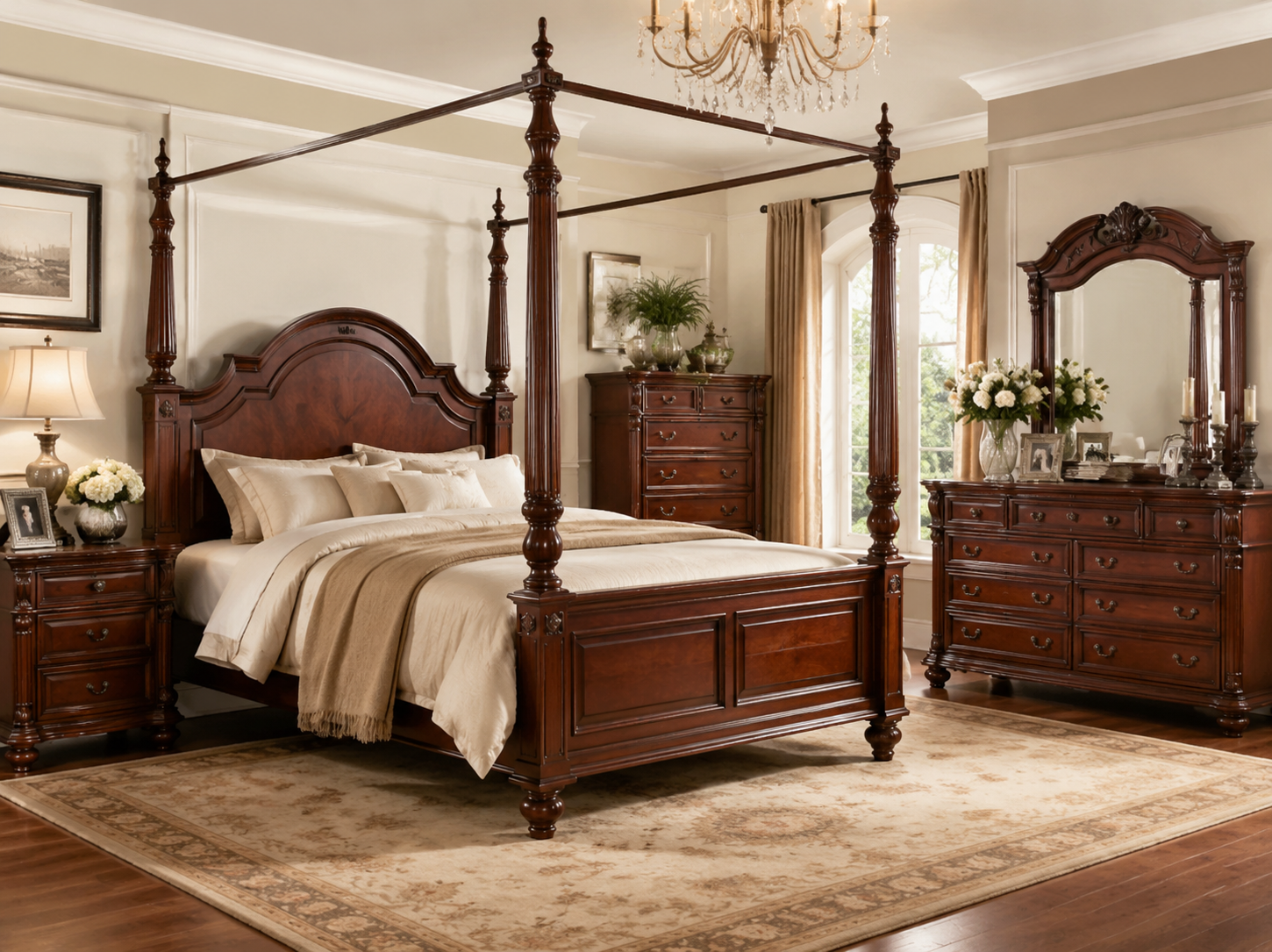
A practical B2B guide for importers and wholesalers looking to source classical rosewood canopy beds directly from factories. Covers material verification (Siamese rosewood vs. substitutes), craftsmanship checkpoints, factory evaluation criteria, logistics, compliance, and common sourcing mistakes — written for buyers who need actionable criteria, not marketing fluff.
BUYER GUIDE · CANOPY BED SOURCING
Why This Guide Exists
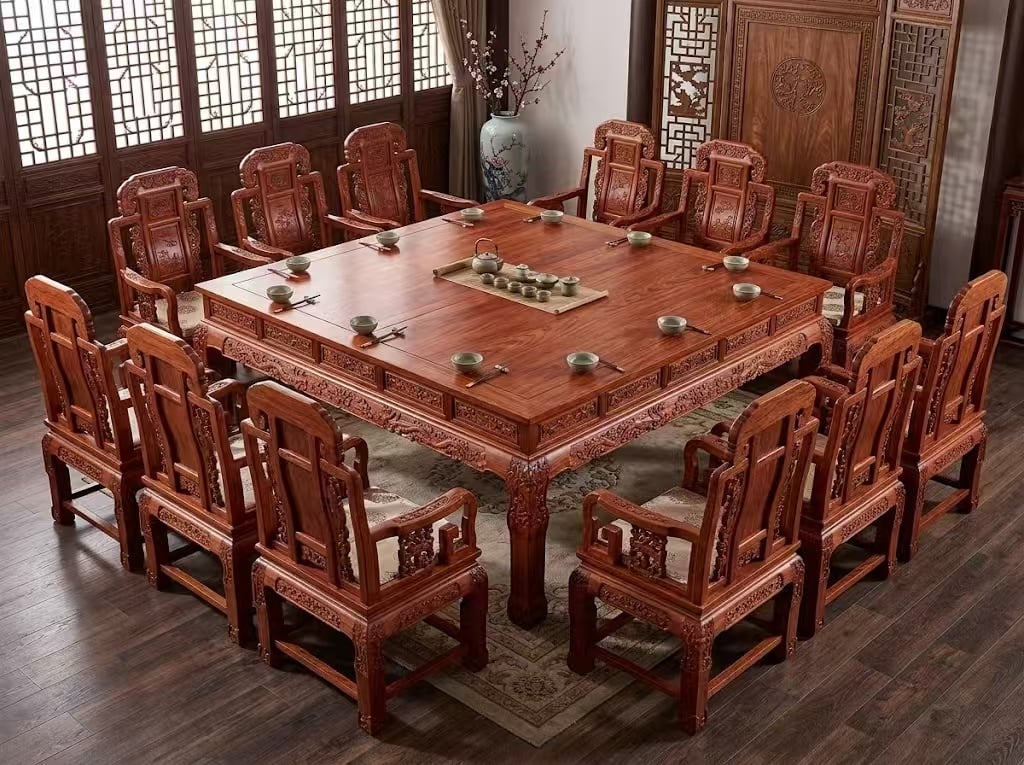
Importing a classical rosewood canopy bed is not like ordering a standard bedroom set. You are dealing with dense tropical hardwood, hand-carved joinery, finish chemistry, and shipping logistics that can break a container if handled wrong. Most sourcing mistakes happen before the PO is signed — usually because the buyer could not verify what the factory actually quoted.
This guide walks through the decisions an importer or wholesaler must make: verifying Siamese rosewood, assessing carving and joinery quality, evaluating a factory's real capabilities, and planning logistics so the goods arrive intact. Use it as a checklist before you commit to a supplier.
- Verify wood species by density and grain — "rosewood" alone means little; specify Dalbergia cochinchinensis (Siamese rosewood) in your contract.
- Check CITES documentation status before sampling; this determines whether you can legally export at all.
- Assess joinery and carving by photos of the production stage, not finished glamour shots.
- Ask for a pre-shipment inspection report and moisture content readings (8–12% is typical for kiln-dried furniture wood).
- Plan crating and container loading with the factory — canopy posts and rails need dedicated blocking.
What "Rosewood Canopy Bed" Actually Means
The term "rosewood" covers multiple species with very different properties and legal status. For classical furniture, the most sought-after is Siamese rosewood (Dalbergia cochinchinensis), also known as Thai rosewood or Trắc wood. It is dense, heavy, and has a distinctive dark grain with natural oils that give it a deep luster after polishing.
Common substitutes you will encounter from factories:
- Burmese rosewood (Dalbergia oliveri) — similar look, slightly lower density, often cheaper.
- Rosewood (Dalbergia bariensis) — lighter color, less oil content.
- Padauk or other "red wood" species — sometimes passed off as rosewood to unsuspecting buyers.
Because visual inspection alone cannot confirm species, your sourcing contract should state the scientific name, not just "rosewood." Ask the factory for a wood species certificate or a lab test report from a recognized institution. If they hesitate, treat that as a red flag.
Key Specifications to Define Before Quoting
Classical canopy beds vary significantly in dimension, wood thickness, and carving complexity. Define these parameters in your RFQ so you can compare factory quotes fairly:
| Parameter | Typical Range | Why It Matters |
|---|---|---|
| Overall dimensions (W×D×H) | 1800×2000×2100 mm (King) / 1500×2000×2100 mm (Queen) | Determines container fit and shipping cost per unit. |
| Wood thickness (posts, rails) | 80–120 mm for main posts; 30–50 mm for rails | Thicker stock means higher cost but better structural integrity. |
| Carving coverage | Full-carved vs. partial (headboard only) | Full-carved pieces take 2–3× longer to produce. |
| Finish type | PU lacquer, NC lacquer, or wax/oil finish | Affects VOC compliance and durability in different climates. |
| Joinery method | Traditional mortise-and-tenon vs. metal fasteners | Mortise-and-tenon lasts longer but requires skilled labor. |
Ask the factory for a dimensioned drawing or 3D model before production. This prevents "surprises" at the container loading stage when a bed does not fit the carton dimensions you planned for.
How to Verify Siamese Rosewood Quality
You cannot verify wood species from a photo. But you can ask for specific evidence:
- Density test: Siamese rosewood has a density of approximately 0.85–1.0 g/cm³ at 12% moisture content. A factory with a moisture meter and scale can provide this data.
- Grain inspection: Ask for close-up photos of the end grain and a cut surface. Siamese rosewood shows distinct growth rings and a dark, oily heartwood.
- Sample request: Order a small sample block (e.g., 10×10×5 cm) before committing to a full container. Compare weight, smell, and oiliness by hand.
- Lab test: For large orders, request a wood species identification report from a third-party lab. Costs are modest relative to the risk of a mislabeled container.
Rule of thumb: if the factory cannot tell you the scientific name and density of the wood they are quoting, they are not a specialist in rosewood furniture.
Assessing Carving and Joinery Quality
Classical canopy beds are defined by their carving. The difference between a $1,200 bed and a $3,500 bed is often hours of handwork and the skill of the carver. Here is what to check:
Carving Depth and Detail
- Look for undercutting — areas where the carver has removed material beneath the surface to create shadow and depth. Flat, shallow carving is a sign of machine-only work.
- Check the symmetry of repeated motifs (e.g., dragon heads, floral scrolls). Hand-carved pieces have slight variations; machine-carved pieces are identical but often lack life.
- Ask for photos of the carving in progress, not just the finished piece. This shows whether the factory employs dedicated carvers or outsources.
Joinery
- Traditional mortise-and-tenon joints are the gold standard for beds that need to last decades. Ask whether the factory uses this method or relies on screws and metal brackets.
- Check whether the canopy frame is one solid piece or assembled from multiple boards. Solid construction is more stable but more expensive.
- Ask about the glue type — waterproof PVA or PU glue is essential for humid climates.
Factory Evaluation Checklist
Before sending a deposit, verify these points about the factory itself:
- Production capacity: How many canopy beds per month? A factory that produces 20 units per month cannot deliver a 200-unit order on time.
- Kiln drying capability: Rosewood must be kiln-dried to 8–12% moisture content to prevent cracking in export climates. Ask for kiln capacity and moisture meter readings.
- CITES compliance: Siamese rosewood is listed in CITES Appendix II. The factory must be able to provide the necessary export permits. If they cannot, your shipment will be held at customs.
- Export experience: Ask which countries they have shipped to and request a Bill of Lading sample or customs clearance record. Factories with no export experience will struggle with documentation.
- Inspection policy: Do they accept third-party inspection (SGS, BV, or similar)? A factory that refuses inspection is not worth the risk.
1. Business license (translated)
2. Wood species certificate or lab report
3. CITES export permit (if applicable)
4. Packing list and container loading plan
5. Pre-shipment inspection report (third-party or in-house)
Logistics and Packing for Canopy Beds
Canopy beds are awkward cargo. The posts are long, the headboard is wide, and the carving is fragile. Poor packing is the #1 cause of damage claims. Specify the following in your contract:
- Individual crating: Each bed should be disassembled and packed in its own wooden crate, not bundled with other furniture.
- Foam and corner protection: Carved areas need at least 5 cm of foam padding and rigid corner protectors.
- Moisture barrier: A polyethylene liner inside the crate prevents condensation damage during ocean transit.
- Container loading plan: Ask the factory to provide a loading diagram showing how many sets fit per 40HQ container and how the crates are blocked and braced.
Typical loading for a classical rosewood canopy bed (disassembled): 10–14 sets per 40HQ container, depending on bed dimensions and crate design. Confirm this with your supplier before booking freight.
Common Sourcing Mistakes to Avoid
- Buying on photos alone: Always request a video call showing the actual production batch, not a polished showroom piece.
- Ignoring CITES: Siamese rosewood without proper permits will be confiscated. Verify the factory's export documentation before paying a deposit.
- Comparing quotes without a spec sheet: A cheap quote may use thinner wood, less carving, or a different species. Standardize your RFQ first.
- Skipping the pre-shipment inspection: A 10–15% deposit for inspection is far cheaper than receiving a container of damaged or mis-specified goods.
FAQ: Quick Answers for Importers
How do I know if the factory is really a direct manufacturer?
Ask for a factory tour via video call, request photos of the production floor with your company name on a sign, and verify their business license. Trading companies often claim to be factories; the license and production photos will clarify.
What is the typical MOQ for a rosewood canopy bed order?
MOQ varies by factory. Some accept 10–20 sets for a mixed container; others require a full 40HQ. Confirm MOQ and lead time (typically 30–60 days for carved furniture) in writing before sampling.
Can I get a sample before placing a bulk order?
Most factories offer a single-piece sample at cost plus shipping. This is the best way to verify wood quality and carving in person. Budget for this — it is cheaper than a mistake on a full container.
What is the typical lead time?
For a standard classical rosewood canopy bed, expect 35–60 days from order confirmation to shipment, depending on carving complexity and factory load. Full-carved pieces at the high end of that range.
Next Steps for Buyers
Start by sending a detailed RFQ with the specifications listed above. Ask for a sample block, production photos, and a CITES compliance statement. Shortlist two or three factories, compare their documentation and communication quality, and visit via video call before committing.
If you are sourcing classical rosewood canopy beds for your market and need a factory that can provide verified wood documentation and consistent carving quality, contact us with your target dimensions and order volume — we will respond with a spec sheet and production timeline.