A practical B2B guide for importers and distributors looking to source Chinese rosewood furniture directly from factories. Covers wood species identification, quality inspection checkpoints, factory evaluation criteria, shipping and compliance basics, and common pitfalls — written for buyers who need verifiable facts, not marketing fluff.
BUYER GUIDE · IMPORT FROM CHINA
# Chinese Rosewood Furniture Sourcing: A Direct-Factory Import Guide Importing classical Chinese rosewood furniture is not like ordering standard wooden furniture. The category carries a set of specific risks: wood species mislabeling, moisture-related cracking, CITES documentation issues, and wide quality variance between workshops. This guide walks through what a buyer should verify before placing an order — from wood identification to factory audits to shipping terms.
Key takeaways for importers:
## Why Source Directly from a Factory?
The main reason importers go direct is cost and control. Trading companies in China typically add 15–30% on top of factory prices for this category. Going direct means you pay the factory price, but you also take on the quality-control and logistics responsibilities yourself.
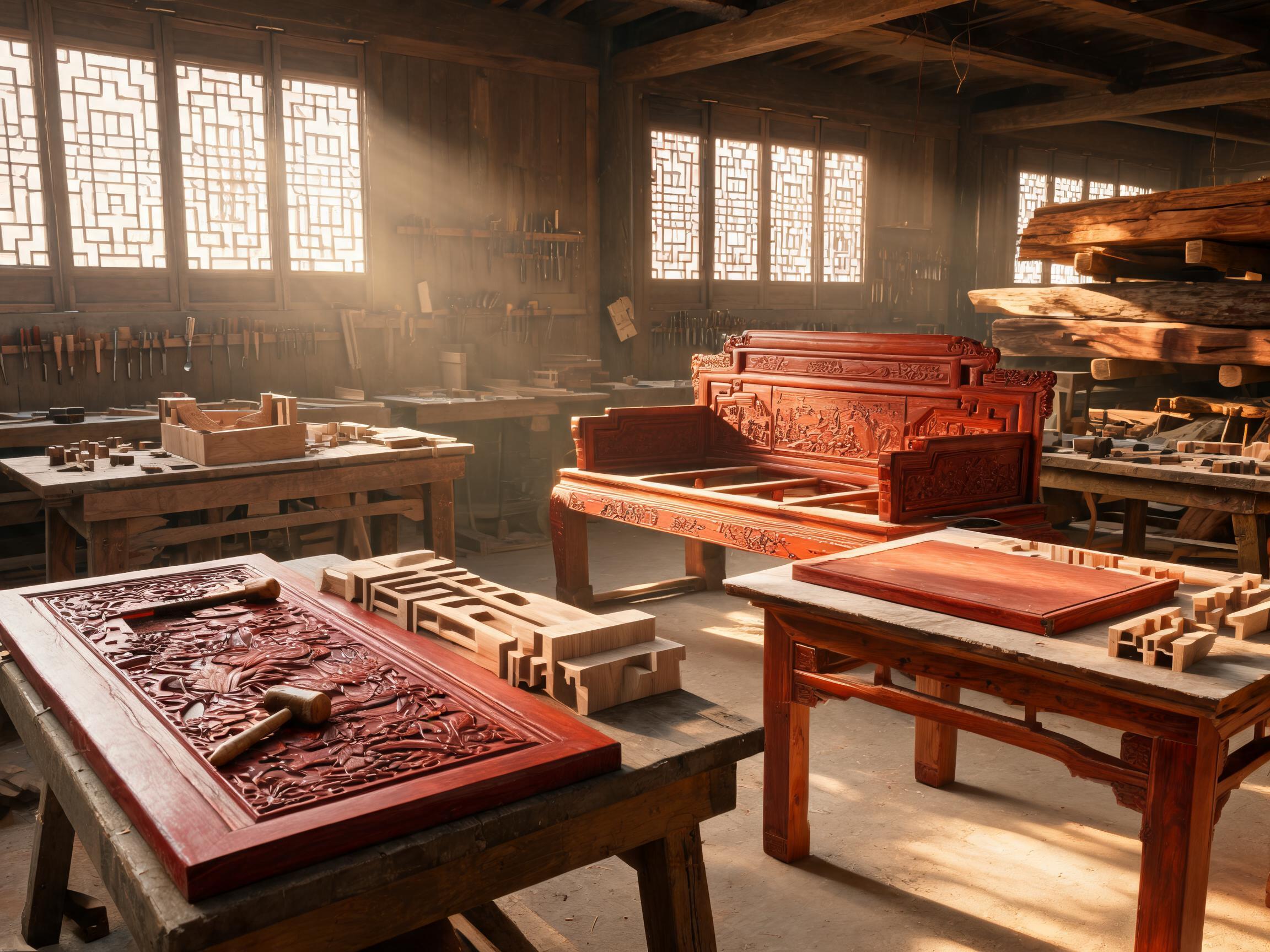
Direct sourcing also gives you access to the production process. You can request photos or video of your pieces at the rough-carving, assembly, and finishing stages. That visibility matters because classical rosewood furniture is largely hand-made — the same design can vary noticeably between two workshops, and even between two pieces from the same workshop.
## Step 1: Know Your Wood
"Rosewood" in the Chinese furniture trade does not refer to a single species. The Chinese term hongmu (红木) covers a family of dense tropical hardwoods. For export purposes, you need the scientific name on your documentation.
| Commercial Name | Scientific Name (typical) | Density | Typical Use | CITES Status |
|---|---|---|---|---|
| Burmese rosewood | *Dalbergia oliveri* | Very high | High-end classical furniture | Appendix II (restricted) |
| East Indian rosewood | *Dalbergia latifolia* | High | Furniture, veneer | Appendix II (restricted) |
| Burmese padauk | *Pterocarpus macrocarpus* | High | Furniture, flooring | Not listed (verify current status) |
| Red sandalwood / Rosewood | *Pterocarpus indicus* | High | Furniture, carvings | Appendix II (restricted) |
| Huanghuali (fragrant rosewood) | *Dalbergia odorifera* | Very high | Antique-style high-end pieces | Appendix II (restricted) |
**What this means for you:** Before you negotiate price, ask the factory to state the scientific name of the wood in the contract. If they cannot or will not, treat that as a red flag. Also ask whether the wood is legally harvested and whether the factory holds a CITES export permit for that species. Availability of the permit should be confirmed before production begins — it affects your delivery timeline and your ability to clear customs at the destination port.
## Step 2: Understand Construction Quality
Classical Chinese furniture is defined by its joinery. The traditional method uses mortise-and-tenon joints (sunmao) without metal fasteners. A well-made piece can be disassembled and reassembled. This is not just tradition — it is also structural. Dense hardwoods expand and contract with humidity changes, and mortise-and-tenon joints accommodate that movement better than glued butt joints or screws.
**What to check in factory photos or at inspection:**
- **Joint tightness:** Look at corners where rails meet legs. Gaps wider than a business card are a defect.
- **Panel construction:** Large tabletops and side panels should be made of multiple boards joined edge-to-edge. A single wide board is more likely to crack.
- **Back panels:** On cabinets and wardrobes, check whether the back panel is floating (set into a groove) or nailed on. Floating panels allow wood movement; nailed panels will eventually split.
- **Finish:** Traditional finishes are wax or natural lacquer. Modern factories may use PU lacquer. Both are acceptable, but the finish should be even, without runs or cloudiness.
- **Carving detail:** On carved pieces, look at the depth and undercutting. Shallow, flat carving is a sign of machine-only work. Hand-finishing shows in the smoothness of undercuts.
## Step 3: Moisture Content and Climate
Rosewood is a tropical hardwood, but the furniture is often made in workshops in southern China (Guangdong, Fujian, Zhejiang). The ambient humidity in these regions is high — often 70–90% in summer. Furniture made and stored in those conditions can have a moisture content of 14% or higher. If you ship it to a dry climate (e.g., most of Europe, North America inland, Australia), the wood will lose moisture and shrink. This is the leading cause of cracking and joint loosening in exported Chinese furniture.
**What to request:**
- A moisture meter reading for each piece before packing. The acceptable range depends on your destination climate. For most temperate markets, 8–12% is safe.
- If the factory does not have a moisture meter, ask them to store the finished pieces in a dry, ventilated area for 7–14 days before packing. This is a simple, low-cost step that reduces claims significantly.
## Step 4: Factory Evaluation Checklist
Not all "rosewood furniture factories" are equal. In the main production clusters, you will find everything from 10-person workshops to 300-person operations. Before committing, ask for the following:
- Confirm the exact wood species in writing — "rosewood" alone is not a specification. Common commercial species include Dalbergia varieties (e.g., Burmese rosewood, East Indian rosewood) and Pterocarpus varieties (e.g., Burmese padauk, red sandalwood). Each has different density, grain, and CITES status.
- Inspect joinery and mortise-and-tenon construction. A piece that uses glue-and-screw assembly is not classical furniture, regardless of the wood.
- Verify the factory's CITES export permit capability before production, not after. Many rosewood species are regulated under CITES Appendix II.
- Ask for moisture content readings. For export to temperate climates, 8–12% is the typical safe range. Higher readings risk cracking in transit.
- Get a proforma invoice with itemized HS codes, wood species (scientific name), and unit prices. Vague descriptions cause customs delays.
| Checkpoint | What to Ask | Why It Matters |
|---|---|---|
| Production capacity | How many pieces per month? What is the current order backlog? | Tells you whether your order will be rushed or produced on a realistic schedule. |
| Export experience | Which countries have you shipped to? Can you share past bill of lading samples (with commercial info redacted)? | Confirms they know export packing and documentation. |
| CITES capability | Do you hold a CITES export permit for the wood species we are using? | Without this, your shipment can be stopped at the Chinese border or at your destination port. |
| In-house drying | Do you have a kiln? What is the target moisture content before finishing? | Kiln-dried wood is far less likely to crack in transit. |
| QC process | Who inspects the finished piece before packing? Can we arrange third-party inspection? | Third-party inspection (e.g., SGS, Bureau Veritas) is common for this category. A factory that refuses it is a risk. |
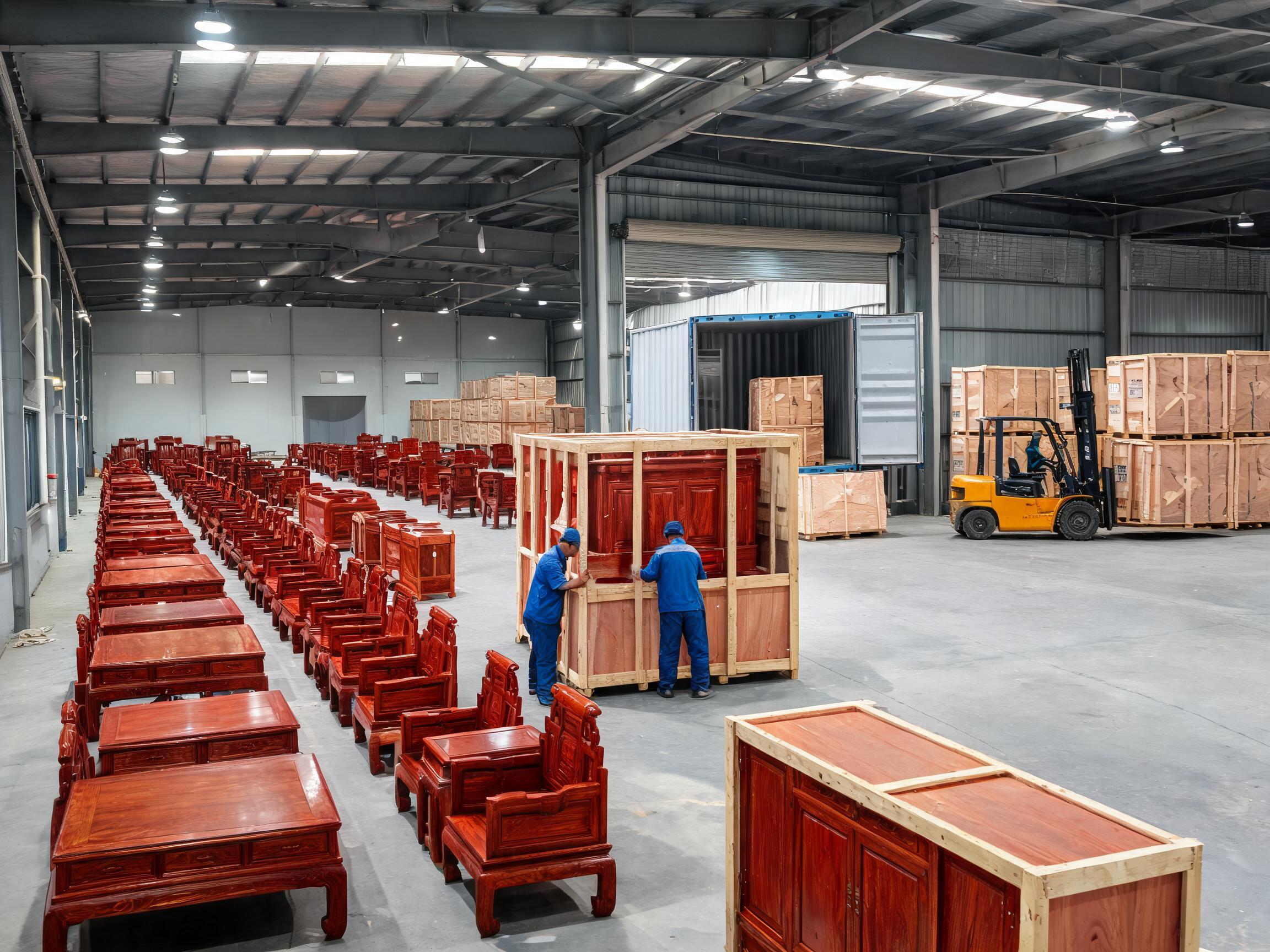
| Packing standard | What packing material do you use for export? Foam + carton? Wooden crate? | Rosewood is heavy. A 2-meter cabinet can weigh 150–250 kg. Packing must be designed for the weight. |