
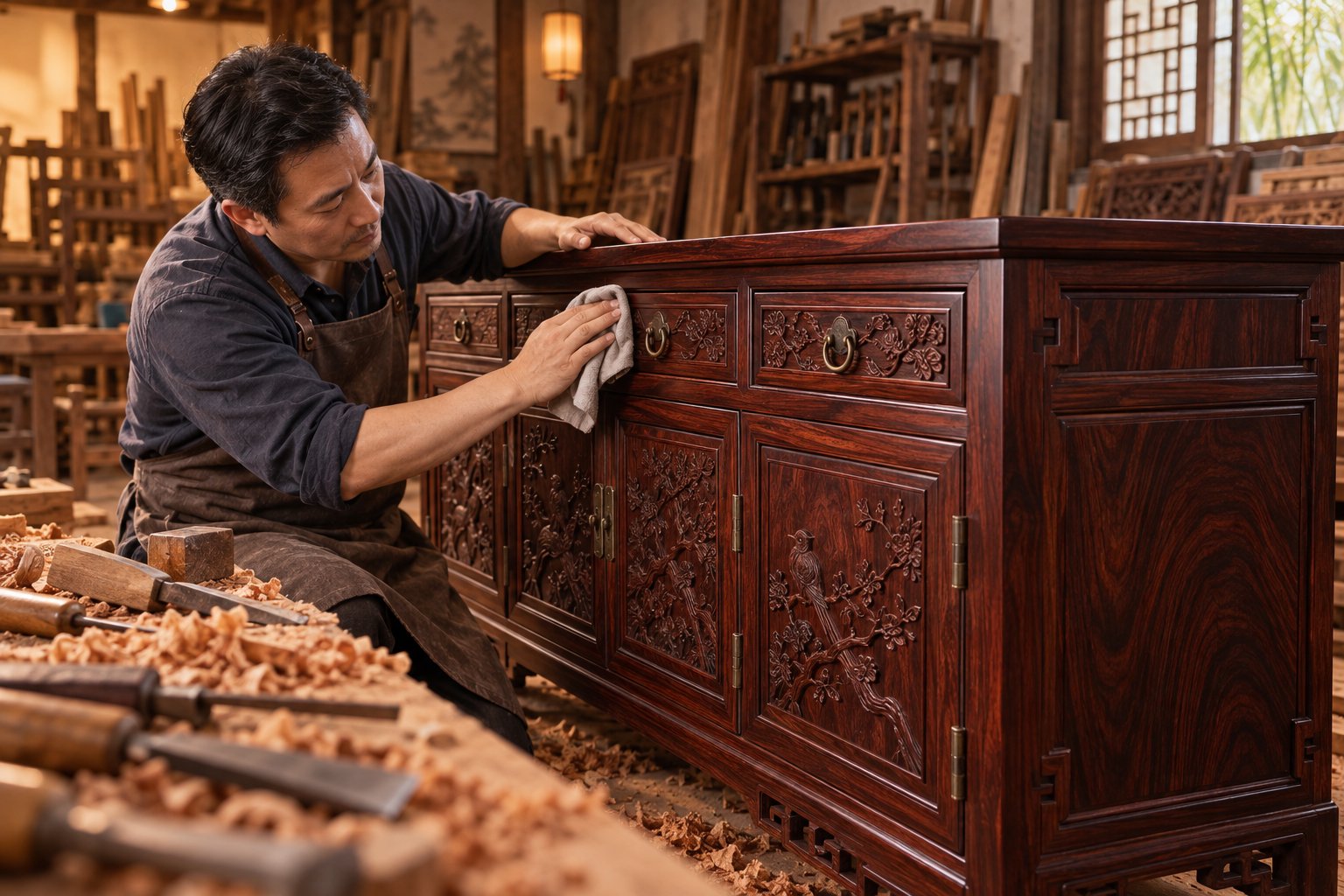
Why After-Sales Service and Warranty Matter When You Import Rosewood Furniture
When a B2B buyer sources classical rosewood furniture from a Chinese factory, the conversation usually starts with price, timber, carving, and container loading. But the questions that decide whether a partnership lasts are different. They are about what happens after the container arrives: How does the factory stand behind the pieces it shipped? What happens if a carved panel is damaged in transit, a drawer binds in a humid climate, or a lacquer finish needs a touch-up two years later? These are after-sales questions, and the answers separate a one-off transaction from a dependable supply relationship.
This article explains how a rosewood furniture factory supports importers with after-sales service and warranty. It is written for importers, distributors, interior designers, hotel and villa project buyers, and retail brands who need to know what protection they can reasonably expect, what to ask for in a supply agreement, and how to evaluate a factory's commitment before you place a large order. The goal is to give you a practical framework, grounded in how a real classical rosewood furniture manufacturer operates, so you can negotiate with confidence and avoid costly surprises after your goods land.
What a Rosewood Furniture Factory Warranty Should Cover
A warranty on solid wood furniture is not the same as a warranty on an electronic device. Wood is a living material. It expands and contracts with changes in temperature and humidity, and even the best-made piece can develop a hairline crack or a loose joint if it is moved into an environment very different from the one where it was built. A responsible factory understands this and writes a warranty that is honest about what it can and cannot control.
In practice, a meaningful rosewood furniture warranty typically covers the following categories:
- Structural integrity: The mortise-and-tenon joints, frame, legs, and load-bearing elements should remain sound under normal use. If a joint fails or a leg splits because of a manufacturing defect, the factory should repair or replace the piece.
- Workmanship defects: This includes visible flaws in hand-carving, uneven lacquer application, misaligned panels, or joinery that was assembled incorrectly at the factory.
- Material defects: If the timber was not properly kiln-dried and the piece warps, twists, or develops deep cracks because of excessive internal moisture, that is a factory responsibility, not a buyer's fault.
- Hardware and moving parts: Drawer slides, hinges, and other moving components should function smoothly for a reasonable period.
What a warranty usually does not cover is damage caused by the buyer after delivery: water damage, exposure to extreme heat or direct sunlight for long periods, improper cleaning with harsh chemicals, or physical impact. A good factory will explain these exclusions clearly rather than hiding them in fine print, because a clear warranty builds more trust than a vague one.
It is also worth understanding that a warranty is not a substitute for quality. A warranty protects you if something goes wrong, but it cannot make a poorly made piece last. The most valuable warranty is the one you never need to use, because the furniture was built well in the first place. This is why the best factories combine a clear warranty with rigorous quality control, and why experienced importers look at both the warranty terms and the manufacturing process when they evaluate a supplier.
How Craftsmanship Reduces the Need for After-Sales Claims
The best after-sales service is the kind you rarely need. A factory that builds classical rosewood furniture with traditional methods is, in effect, investing in fewer warranty claims down the road. Three techniques matter more than any others.
Mortise-and-Tenon Joinery
Classical Chinese furniture is assembled with mortise-and-tenon joints rather than nails or screws. A well-cut tenon fits into a mortise so precisely that the joint holds together under load without metal fasteners. This is not just a stylistic choice; it is a structural one. Mortise-and-tenon joints allow the wood to move naturally with changes in humidity without tearing the frame apart, which is why many antique pieces survive for centuries. When a factory uses this joinery correctly, the furniture is far less likely to develop loose or creaking joints, which means fewer after-sales issues for the importer.
The precision of a mortise-and-tenon joint is a direct reflection of the skill of the craftsman. A joint that is cut too loose will wobble over time. A joint that is cut too tight can split the wood as it expands. The best factories train their joiners carefully and inspect every joint before the piece is assembled. For an importer, this means the furniture is more likely to arrive sound and to stay sound, which reduces the risk of warranty claims and the cost of repairs.
Proper Kiln Drying
Before any timber is cut into furniture, it must be dried to a moisture content that matches the climate where the furniture will be used. If wood is shipped with too much internal moisture, it will continue to shrink and can crack or warp after it reaches a drier overseas market. A factory that controls moisture content carefully, and that seasons the timber before and after machining, produces furniture that is far more stable in transit and in service. This is one of the most important factors in preventing the cracks that buyers often worry about.
Kiln drying is not a single step; it is a process. The timber must be dried slowly and evenly to avoid internal stresses, then allowed to rest so the moisture content stabilizes. The best factories monitor moisture content at several points in the production process, and they match the final moisture content to the destination market. For example, furniture destined for a humid tropical market may be dried to a slightly different moisture content than furniture destined for a dry, cold climate. This attention to detail is invisible to the buyer, but it has a huge impact on whether the furniture develops problems after it is installed.
Raw Lacquer and Surface Finishing
The finish on a piece of rosewood furniture protects the wood and determines how it looks for years. Traditional raw lacquer, applied in multiple thin coats, penetrates the wood and forms a durable, breathable surface. A factory that applies several coats and allows proper curing time produces a finish that resists moisture, heat, and everyday wear. This reduces the likelihood of surface damage that would otherwise require a repair or a refinishing claim.
Lacquer is not just a cosmetic layer. It seals the wood, slows the exchange of moisture with the air, and protects the surface from scratches and stains. A well-applied lacquer finish can be touched up and maintained for decades, which is an important part of after-sales service. A factory that understands its own finish can give the importer precise guidance on how to care for it, what products to use, and how to restore it if it is damaged. This kind of knowledge is part of the after-sales support a good factory provides.
None of this means a factory can guarantee that no piece will ever need attention. But when the underlying construction is sound, the after-sales burden is dramatically smaller, and the warranty becomes a safety net rather than a routine expectation.
Quality Control and Pre-Shipment Inspection
The most effective after-sales service begins before the furniture is shipped. A factory that inspects every piece carefully before it leaves the workshop catches defects while they are still easy to fix, rather than after the furniture has crossed an ocean. This is why quality control is inseparable from after-sales service.
A responsible factory checks the joinery, the carving, the finish, and the overall construction of each piece before it is packed. It verifies that the dimensions match the specification, that the wood is free of cracks and defects, and that the finish is even and properly cured. It also checks the hardware and moving parts, so that drawers open smoothly and doors align correctly. This pre-shipment inspection is the first line of defense against after-sales claims.
Many importers also arrange for a third-party inspection before shipment. A factory that welcomes this, and that is transparent about its own inspection process, is demonstrating confidence in its work. For the importer, a pre-shipment inspection is an opportunity to catch problems before they become expensive, and it is a valuable complement to the factory's own quality control.
It is worth asking the factory what its inspection process covers and whether it can provide inspection reports or photos of the finished pieces before shipment. A factory that documents its quality control is giving the importer the evidence needed to trust that the order is correct before it is loaded.
Spare Parts and Repair Support for Carved Rosewood Furniture
One of the most practical after-sales services a rosewood furniture factory can offer is the ability to supply spare parts and perform repairs. This matters because hand-carved rosewood furniture is not something a local carpenter can easily fix. The timber, the carving style, and the finish are specific to the factory that made the piece.
When you buy from a factory that keeps the original timber and carving patterns, you have a realistic path to repair. If a carved panel is damaged, the factory can carve a matching replacement using the same timber and the same design. If a leg is broken, it can be remade to match. If the lacquer is scratched, the factory can supply touch-up material or guidance on how to restore the finish. This kind of support is only possible when the manufacturer retains the production records, the timber stock, and the carving masters who made the original piece.
Before you place an order, it is worth asking the factory directly what spare parts it can supply and how it handles repairs. A factory that can provide replacement carved panels, matching timber, and refinishing guidance is offering a level of after-sales support that a trading company or a middleman simply cannot match.
For a buyer who is building a brand or supplying a hotel project, the ability to obtain matching spare parts years after the original order is extremely valuable. It means the buyer can maintain a consistent look across a property, replace a damaged piece without replacing the whole set, and offer its own customers a repair service. This is a genuine competitive advantage, and it is one of the strongest reasons to buy directly from a manufacturer rather than through an intermediary.
Documentation and Compliance Support as Part of After-Sales Service
For importers of rosewood furniture, after-sales service is not only about physical repairs. It is also about documentation. Rosewood is a regulated timber, and importers in many markets must demonstrate that their furniture was sourced legally and in compliance with international conventions.
A responsible factory supports its buyers by providing the documentation needed for smooth customs clearance and compliance. This includes CITES documentation where applicable, FSC certification for orders that require certified timber, and the export paperwork that proves the origin and legality of the wood. When a factory can supply these documents reliably, it reduces the risk of delays, fines, or confiscation at the border, which is one of the most expensive after-sales problems an importer can face.
It is important to understand what these documents do and do not prove. CITES documentation confirms that the timber was traded in compliance with the Convention on International Trade in Endangered Species. FSC certification confirms that the wood came from responsibly managed forests. Neither document is a substitute for the other, and importers should ask which documentation applies to their specific order and their destination market. A factory that is transparent about its compliance position, and that can explain the documentation it provides, is demonstrating a level of after-sales responsibility that protects the buyer's investment.
Documentation support is not a one-time event. Importers may need to provide documents to their own customers, to customs authorities, or to certification bodies months or years after the original shipment. A factory that keeps its records organized and can reissue or explain documents when needed is providing a valuable ongoing service. This is especially important for buyers who resell the furniture, because they need to be able to demonstrate the legality of the timber to their own end customers.
OEM and ODM Support: After-Sales Service for Custom Orders
Many B2B buyers do not simply buy finished pieces; they commission custom furniture under their own brand. This is where OEM and ODM manufacturing comes in. After-sales service for a custom order is more complex than for a standard piece, because the buyer has invested in a specific design, finish, and specification.
A factory that supports OEM and ODM buyers will typically do the following:
- Maintain the design and production records so that repeat orders match the original exactly.
- Supply spare parts for custom pieces using the same timber and carving patterns.
- Provide technical drawings and specifications so the buyer understands exactly what was built.
- Support refinishing and repair for branded pieces, even after the initial order is complete.
- Offer flexible minimum order quantities so buyers can test the market before committing to a full container.
For a buyer building a brand around classical rosewood furniture, this kind of after-sales support is essential. It means the brand can stand behind its products, offer repairs to its own customers, and reorder matching pieces without starting from scratch. A factory that treats custom orders as a long-term relationship, rather than a one-off job, is a more valuable partner.
Custom furniture also raises the question of design ownership. A good factory will be clear about who owns the design, how the buyer's specifications are protected, and how repeat orders are handled. This clarity is part of after-sales service, because it gives the buyer confidence that their investment in a custom design is secure. When a factory respects the buyer's design and keeps accurate records, the buyer can build a distinctive product line that is difficult for competitors to copy.
Packaging and Shipping: Preventing After-Sales Problems Before They Start
A large share of after-sales issues with imported furniture are caused not by the furniture itself, but by damage during shipping. Hand-carved rosewood furniture is heavy, and carved surfaces are vulnerable to impact. The way a factory packages and loads the furniture has a direct effect on whether it arrives in good condition.
A responsible factory protects carved pieces with soft padding, corner protectors, and sturdy crating. It secures the furniture so it cannot shift during the voyage, and it loads the container carefully to distribute weight and prevent movement. It also documents the condition of each piece before shipment, so that any damage found at delivery can be traced to its cause.
For the importer, this means asking about the factory's packaging standards before you order. What materials are used? How are carved surfaces protected? How is the container loaded? A factory that takes packaging seriously is investing in fewer after-sales claims, and that is a sign of a reliable partner. It is also worth agreeing in advance how damage discovered at delivery will be handled, so that both sides know what to expect.
Care and Maintenance Guidance as Part of After-Sales Service
One of the most valuable, and most overlooked, parts of after-sales service is guidance on care and maintenance. Rosewood furniture is durable, but it needs to be cared for correctly, especially when it is moved to a climate very different from the one where it was made.
A good factory provides clear instructions on how to care for the furniture: how to clean it, what products to use, how to manage humidity, how to protect it from direct sunlight, and how to handle minor issues like a small scratch or a loose joint. This guidance helps the importer, and the importer's customers, keep the furniture in good condition for years. It also reduces the number of after-sales claims, because many problems are caused by improper care rather than by a defect.
For example, a factory might advise the buyer to let the furniture acclimatize to its new environment for a few days before use, to avoid placing it near a heat source or in direct sunlight, and to use a soft, dry cloth for cleaning rather than harsh chemicals. This kind of practical advice is part of the after-sales relationship, and it is a sign that the factory cares about how its products perform in the field, not just how they look in the showroom.
How After-Sales Service Differs Across Market Segments
Different buyers have different after-sales needs, and a good factory understands this. A hotel or villa project buyer, for example, needs furniture that can be installed on a schedule, replaced quickly if damaged, and maintained consistently across a large property. A retail brand needs spare parts and repair support so it can stand behind the products it sells to consumers. A distributor needs reliable documentation and consistent quality so it can reorder with confidence.
A factory that serves all of these segments will tailor its after-sales support accordingly. For a hotel project, it may prioritize fast replacement of damaged pieces and on-site installation guidance. For a retail brand, it may prioritize spare parts, refinishing materials, and clear care instructions that the brand can pass on to its customers. For a distributor, it may prioritize documentation, consistent quality, and flexible reordering.
When you evaluate a factory, it is worth asking how it supports buyers in your specific segment. A factory that has experience with your type of project, and that can explain how it handles the after-sales needs of similar buyers, is more likely to be a good fit than one that treats every customer the same way.
How to Evaluate a Factory's After-Sales Commitment Before You Order
You cannot fully judge a factory's after-sales service from its website. You have to ask the right questions and look for evidence. Here is a practical checklist to use before you commit to a supplier.
- Ask for the warranty terms in writing. What is covered, for how long, and what is excluded? A factory that gives you a clear, written warranty is more trustworthy than one that gives vague verbal assurances.
- Ask how claims are handled. Who do you contact? How quickly does the factory respond? What evidence do you need to provide, such as photos or video of the issue?
- Ask about spare parts. Can the factory supply replacement carved panels, matching timber, or refinishing materials? How long does it take?
- Ask about documentation. What CITES, FSC, or export documents will you receive, and can the factory explain them?
- Ask about the production process. How is the timber kiln-dried? What joinery is used? How many coats of lacquer? The answers tell you how durable the furniture is likely to be.
- Ask for references or examples. Has the factory supported other importers with repairs or replacements? A track record of standing behind its work is the strongest evidence of good after-sales service.
These questions do more than protect you. They also signal to the factory that you are a serious, informed buyer who expects a real partnership. Factories tend to invest more in buyers who ask the right questions.
It is also wise to put the after-sales terms into the supply agreement. A written agreement that specifies the warranty period, the scope of coverage, the process for filing a claim, and the factory's responsibility for spare parts and documentation protects both sides and prevents misunderstandings later. A factory that is willing to put its after-sales commitments in writing is demonstrating confidence in its own work.
Building After-Sales Terms into Your Supply Agreement
The most reliable way to secure good after-sales service is to agree on it in writing before you order. A well-drafted supply agreement protects both the importer and the factory, because it removes ambiguity about who is responsible for what. When the terms are clear, there is less room for disagreement later.
Here are the after-sales terms worth including in a supply agreement:
- Warranty period and scope: State clearly how long the warranty lasts and what it covers, including structural integrity, workmanship, and material defects.
- Exclusions: State what is not covered, such as damage from improper care, extreme climate, or physical impact, so that both sides understand the limits.
- Claims process: Describe how a claim is filed, what evidence is required, and how quickly the factory will respond.
- Spare parts and repairs: Agree on the factory's responsibility to supply spare parts and support repairs, and the terms for doing so.
- Documentation: Specify what documents the factory will provide and its responsibility to support compliance after shipment.
- Dispute resolution: Agree on how disagreements will be resolved, so that a dispute does not end the relationship.
A factory that is willing to sign a clear agreement is demonstrating that it stands behind its work. A factory that resists putting its commitments in writing, or that is vague about its terms, is a warning sign. For the importer, a written agreement is the strongest protection available, and it is worth the effort to get it right.
The Economics of After-Sales Service for Importers
After-sales service has a direct effect on the importer's bottom line, and it is worth understanding the economics. A single damaged or defective piece can cost far more than the price of the piece itself, once you account for the cost of replacement, shipping, installation, and the impact on your reputation with your own customers.
This is why the cost of after-sales service should be considered as part of the total cost of ownership, not as an afterthought. A factory that charges a slightly higher price but provides reliable after-sales support may be a better value than a cheaper factory that leaves you to handle problems on your own. When you compare suppliers, it is worth estimating the potential cost of after-sales issues and weighing that against the difference in price.
It is also worth considering the value of a factory that prevents problems in the first place. A factory that kiln-dries its timber properly, uses sound joinery, inspects every piece, and packages it carefully is reducing the likelihood of claims. This prevention is worth real money, because it protects your investment and your reputation. The best after-sales service is the one that minimizes the need for after-sales service.
Common After-Sales Issues and How a Good Factory Handles Them
To understand what good after-sales service looks like, it helps to consider the issues that actually arise with imported rosewood furniture and how a responsible factory responds.
Damage in Transit
Despite careful packaging, furniture can be damaged during a long ocean voyage. A good factory packages carved pieces with protective padding and sturdy crating, and it works with the importer to document any damage at the time of delivery. If a piece arrives damaged, the factory should help resolve the claim, whether by supplying a replacement part, a replacement piece, or guidance on repair.
Cracks from Climate Change
Wood that was stable in the factory can develop small cracks after it is moved to a very different climate. A good factory explains this risk honestly, provides guidance on acclimatizing the furniture, and offers practical advice on managing humidity. It does not blame the buyer for a natural property of wood, but it also does not promise that wood will never move.
Loose Joints or Hardware
Over time, a joint may loosen or a drawer slide may need adjustment. A factory that provides clear care instructions, and that can supply replacement hardware or guidance on tightening joints, turns a minor issue into a quick fix rather than a source of frustration.
The common thread is communication. A factory that responds promptly, explains the issue honestly, and offers a practical solution is providing good after-sales service. A factory that is slow to respond, vague about responsibility, or unwilling to help is not, regardless of what its marketing materials claim.
The Role of Communication and Response Time
After-sales service is, at its core, a communication process. When an importer has a problem, what matters most is that the factory responds quickly, listens carefully, and works toward a solution. Response time is a reliable indicator of a factory's commitment to its customers.
A good factory assigns a dedicated contact for each buyer, so that the importer always knows who to reach. It responds to after-sales inquiries within a reasonable time, asks for the information it needs to diagnose the issue, and keeps the buyer informed as the issue is resolved. It does not disappear after the order is paid, and it does not treat after-sales questions as an inconvenience.
For the importer, this means it is worth testing a factory's communication before you place a large order. Send a question, ask for a document, or raise a concern, and see how the factory responds. A factory that is responsive and helpful before the order is likely to be responsive and helpful after it. A factory that is slow or evasive before the order is a warning sign.
Why After-Sales Service Builds Long-Term B2B Partnerships
For an importer, the value of a rosewood furniture supplier is not measured by a single order. It is measured by the ability to reorder, to expand a product line, to trust that quality will be consistent, and to know that problems will be handled. After-sales service is the foundation of that trust.
When a factory stands behind its work, the importer can confidently offer the furniture to its own customers, knowing that issues can be resolved. This reduces the importer's risk and makes the product easier to sell. Over time, a reliable after-sales relationship becomes a competitive advantage for both sides. The importer gains a dependable supplier, and the factory gains a loyal customer who reorders and refers others.
This is why the most experienced B2B buyers do not choose a factory on price alone. They choose a factory they can work with for years, and after-sales service is a large part of what makes a factory easy to work with.
A long-term partnership also benefits the factory. A loyal customer provides steady orders, valuable feedback, and referrals. A factory that invests in after-sales service is investing in its own future, because it is building a base of customers who will return. This alignment of interests is what makes a strong B2B relationship work, and it is why after-sales service is not a cost to be minimized but an investment to be made.
The Value of Buying Directly from a Manufacturer
One of the most important decisions an importer makes is whether to buy directly from a factory or through a trading company. For after-sales service, the difference is significant. A factory that made the furniture has the timber, the carving patterns, the production records, and the craftsmen needed to repair or replace a piece. A trading company, by contrast, is an intermediary that may not have access to any of these, and its ability to support after-sales issues depends on the factory behind it.
Buying directly from a manufacturer gives the importer a direct line to the people who made the furniture. This makes communication faster, claims easier to resolve, and spare parts more accessible. It also means the importer can build a relationship with the factory, which is valuable over the long term. A factory that knows its customer, understands its needs, and has a stake in the relationship is more likely to go out of its way to resolve a problem.
This is not to say that trading companies have no value. They can be useful for buyers who want a single point of contact across multiple factories, or who are just starting out and want help navigating the market. But for buyers who are serious about building a long-term supply relationship for classical rosewood furniture, buying directly from a manufacturer is usually the better choice. It gives the buyer more control, more transparency, and more after-sales support.
When you buy directly, you can also verify the factory's capabilities for yourself. You can ask about its kiln drying, its joinery, its inspection process, and its spare parts. You can see how it packages its furniture and how it handles documentation. This transparency is the foundation of trust, and it is much harder to achieve through an intermediary.
Frequently Asked Questions
How long should a rosewood furniture warranty last?
Warranty periods vary by factory and by product. The most important thing is that the warranty is written down, covers structural and workmanship defects, and is realistic about what wood can and cannot do. Ask the factory for its specific terms rather than assuming a standard period.
Does a warranty cover cracks in the wood?
It depends on the cause. Cracks caused by a manufacturing defect, such as improperly dried timber, are usually covered. Cracks caused by a sudden change in climate or improper care are often not. A good factory will explain the difference and give you guidance on preventing climate-related cracks.
Can a factory repair hand-carved rosewood furniture?
Yes, if it retains the original timber, carving patterns, and carving masters. This is a key advantage of buying directly from a manufacturer rather than a trading company. Ask the factory what repair services it can provide before you order.
What documentation should I receive with my rosewood furniture order?
Depending on your market and the timber, you may receive CITES documentation, FSC certification, and export paperwork. Ask the factory which documents apply to your order and destination, and make sure you understand what each one proves.
How do I file an after-sales claim?
Contact the factory directly with clear photos or video of the issue, your order number, and a description of the problem. A responsive factory will guide you through the process and explain what evidence is needed.
Can I get spare parts for a custom piece years after the original order?
This depends on whether the factory retains the design and production records. A factory that keeps its records organized and its timber stock available can often supply matching spare parts for custom pieces. Ask about this before you order, because it is a key part of after-sales support for branded or project furniture.
What should I do if a piece arrives damaged?
Document the damage with photos and video, note it on the delivery documents, and contact the factory immediately. A good factory will work with you to resolve the claim, whether by supplying a replacement part, a replacement piece, or guidance on repair.
Conclusion: Choose a Factory That Stands Behind Its Work
Importing classical rosewood furniture is a significant investment. The furniture is meant to last for generations, and the factory you choose should be willing to stand behind it for the long term. After-sales service and warranty are not afterthoughts; they are core parts of what makes a supplier reliable.
When you evaluate a rosewood furniture factory, look beyond the price and the photographs. Ask about the warranty, the spare parts, the documentation, and the repair support. Choose a factory that builds with traditional craftsmanship, controls its timber quality, and treats you as a long-term partner. That is the factory that will support your business not just for one container, but for years of successful importing.
If you are sourcing classical rosewood furniture and want to understand how a manufacturer can support your after-sales needs, contact us to discuss your project, your warranty expectations, and how we can build a reliable supply partnership together.