
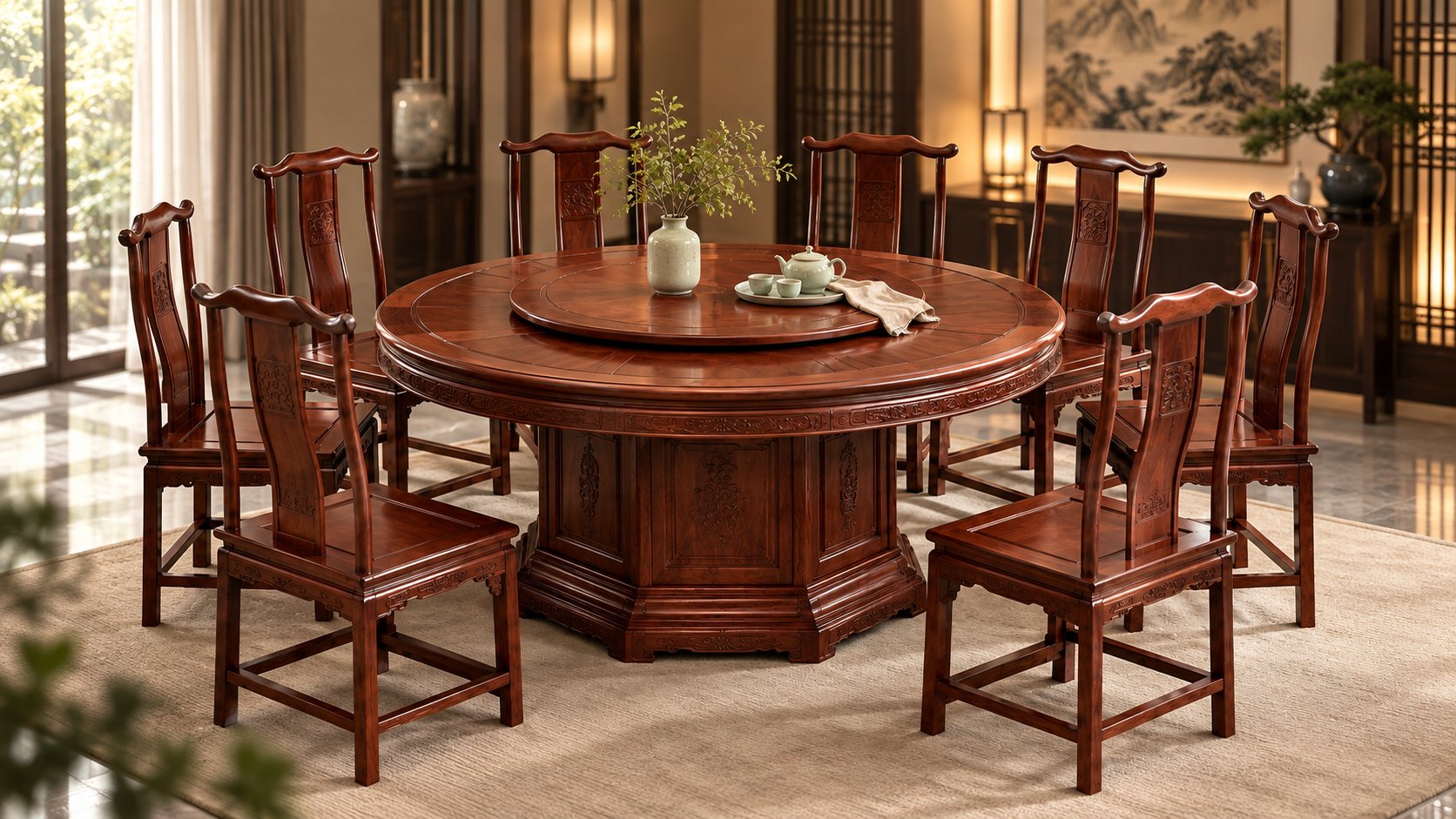
Hướng dẫn B2B thực tế về cách chăm sóc bàn ăn gỗ tự nhiên trong khách sạn, nhà hàng và phòng tiệc: điều gì thực sự bảo vệ mặt bàn gỗ trắc, cách vệ sinh và bảo vệ, cách quản lý độ ẩm trong khí hậu nhiệt đới và khô, và cách xây dựng quy trình bảo trì thương mại giữ đồ nội thất bàn ăn hoạt động trong nhiều thập kỷ.
Solid wood dining tables are the hardest-working pieces of furniture in any hotel, restaurant, banquet hall or family home. They carry hot serving dishes, spilled wine, wet glassware, cutlery, cleaning chemicals and hundreds of hands every week. Yet most damage to a solid wood dining table does not come from heavy use at all. It comes from the environment around the table and from the wrong cleaning routine. This guide explains, in practical terms, how to care for wood dining tables in commercial and residential settings: what actually protects the surface, what quietly destroys it, and how importers and their hospitality clients should build a maintenance routine that keeps a solid wood dining table looking right for decades.
Why Solid Wood Dining Tables Fail in Commercial Use
When a solid wood dining table fails in a hotel or restaurant, it almost never fails suddenly. It fails in one of four predictable ways, and each one has a different cause.
- Radial or edge cracks in the tabletop. Caused by moisture movement. A wide tabletop moves far more across its width than along its length, and if the humidity around it swings hard, the boards stress against each other until a crack opens.
- Loose chair joinery. Caused by mechanical load. A dining chair takes a person's full weight through the seat rail and back post every time someone sits down, and in a restaurant that happens hundreds of times a day.
- Cloudy, dulled or marked finish. Caused by chemistry. Alcohol, ammonia-based cleaners, acidic food spills and silicone polishes all attack a lacquer film in different ways.
- White rings and heat marks. Caused by heat and moisture together. A hot plate or a cold glass left on the surface traps moisture in the finish and leaves a mark that will not wipe away.
Understanding which failure mode you are protecting against is the whole point of a care routine. A routine that only dusts the table protects against none of them.
Understanding the Wood Before You Clean It
You cannot care for a material you do not understand. Solid rosewood — and the Siamese rosewood (Dalbergia cochinchinensis) used in classical Chinese dining furniture — behaves in a specific way that explains almost every care rule in this guide.
Density and oil content
Rosewood is a dense, naturally oily hardwood. That density is why a 150 cm round dining table can weigh around 45 kg and still feel stable, and why the wood resists everyday wear far better than softwood. The natural oil content gives the timber its deep, warm colour and its resistance to surface moisture. It also means the wood is slow to absorb a spill — which buys you time, but not unlimited time.
Wood is hygroscopic
Solid wood is not static. It is a bundle of long, hollow cells that constantly exchange moisture with the air. When relative humidity rises, the cells absorb water vapour and the wood expands. When the air dries out, the cells release moisture and the wood contracts. This movement is not uniform: wood moves far more across its width than along its length, which is exactly why a wide dining tabletop is the most movement-sensitive part of any dining set, and why a tall chair leg barely moves at all.
A well-built table anticipates this movement. Boards are edge-joined so each one can move independently, and the apron frame is designed to hold the top without locking it rigidly in place. A poorly built table fights the movement, and the result is a crack.
What the factory does before the table ever ships
The stability of a solid wood dining table is decided long before it reaches your client's dining room. At Yunxiao Rosewood Furniture, timber is kiln-dried and then conditioned over a 36-day constant-humidity cycle so the wood reaches a stable moisture state before it is cut into furniture. Frames are assembled with mortise-and-tenon joints and bamboo dowel pins rather than metal fasteners, precisely so the wood can move with the seasons without splitting. On the Ming Style Round Redwood Dining Table 8-Seat Set, for example, the tabletop is built from edge-joined Siamese rosewood boards with bamboo dowels along the join line, and the apron rails connect to the cabriole legs with 18 mm tenon-depth mortise-and-tenon joints.
This matters to a buyer because it tells you what the table can survive. A table built on stable, well-dried timber with proper joinery will tolerate normal seasonal humidity swings. A table built on under-dried timber will keep shrinking after it is delivered, no matter how carefully it is cleaned.
Most damage to a solid wood dining table comes not from use, but from the environment and the cleaning routine. Fix those two things and the table will outlast the building it sits in.
Know Your Finish Before You Touch It
The single most common — and most expensive — care mistake is applying the wrong product to the wrong finish. Before anyone cleans a solid wood dining table, they need to know what is on the surface.
Lacquer finishes
Lacquer is a hard film that sits on top of the wood and dries to a smooth, glossy or satin surface. Classical Chinese rosewood dining furniture is traditionally finished with multiple hand-applied coats of raw lacquer, each cured and hand-rubbed. Yunxiao uses an eco-friendly beeswax and lacquer finishing system that meets EU REACH and US CARB standards, and the dining table lines use a glossy lacquer topcoat formulated to meet FDA 21 CFR 175.300 for repeated food contact — the compliance point North American and European buyers raise most often, because a dining table surface touches food directly.
- How to identify it: the surface feels smooth and hard, water beads up rather than soaking in, and there is a distinct sheen.
- How to care for it: dust regularly; a high-gloss lacquer in good condition may need no wax at all. If you do wax, use a very thin coat of quality beeswax and buff it well.
Oil finishes
An oil finish penetrates the wood instead of sitting on top of it. It looks more natural and matte, and it lets you feel the grain. It also needs more regular attention because the oil can dry out.
- How to identify it: the surface feels like bare wood with no hard coating, and water may darken the wood slightly before drying.
- How to care for it: reapply a thin coat of a suitable furniture oil or wax periodically, following the finish manufacturer's recommendation.
Wax finishes
A wax finish is a thin protective layer over the wood. It is soft and natural-looking but offers less protection than lacquer, so it needs more frequent reapplication.
- How to identify it: a soft, low sheen and a slightly waxy feel; a fingernail may leave a faint mark.
- How to care for it: reapply quality beeswax every few months, and be careful with liquids, which penetrate a wax finish more easily.
If you are unsure what finish a table has, test an inconspicuous area first, or ask the supplier. Applying the wrong product can change the appearance permanently, and on a commercial dining table that means a visible mismatch across a whole room.
Daily Cleaning: What Actually Works
Daily cleaning is the easiest part of the routine and the part most often done wrong. The goal is to remove dust and food residue before they settle into carved recesses, without stripping or scratching the finish.
Dusting
- Use a soft, lint-free cotton cloth or a microfiber duster. Dust at least once a week at home, and daily in a restaurant or hotel dining room.
- For carved aprons, chair backrests and lattice details, use a soft-bristled brush — a clean, dry paintbrush works well — to lift dust out of the recesses. Do not press hard; carving is meant to be admired, not scrubbed.
- Dust in the direction of the grain where possible, and avoid circular scrubbing that leaves fine swirl marks on a polished surface.
Wiping and spot cleaning
- For everyday marks, wipe with a cloth that is damp, not wet. Wring it out thoroughly so no water pools on the surface. Standing water can leave white rings or dull the lacquer.
- Dry the surface immediately with a second soft cloth after wiping.
- For sticky residue, use a very small amount of mild soap diluted in water on the damp cloth, then wipe again with a clean damp cloth and dry.
- Never use silicone-based polishes or general-purpose "lemon oil" sprays. Many contain silicones that build up a film over time, dull the finish and make future refinishing difficult.
Avoid abrasive pads, scouring powders, alcohol, nail-polish remover, bleach and ammonia-based cleaners. These can strip or cloud a lacquer finish, and repairing them means professional refinishing.
Protecting the Tabletop from Heat, Spills and Chemistry
A dining tabletop is exposed to more chemistry than any other piece of furniture in a building. Here is what each common threat actually does.
| Threat | What it does to the finish | How to prevent it |
|---|---|---|
| Hot serving dishes and pots | Heat softens the lacquer film and traps moisture, leaving a white or cloudy mark | Always use a trivet or heat pad. The lacquer on Yunxiao dining tables tolerates short local contact at 60–70 °C; prolonged contact above that range may leave marks |
| Cold drinks and condensation | Moisture trapped under a cold glass creates a white ring in the film | Use coasters as standard practice, not as an occasional courtesy |
| Red wine, vinegar, citrus and acidic sauces | Acid attacks the lacquer film and can etch a dull patch | Wipe immediately with a damp cloth, then dry. Do not let acidic liquid sit |
| Spirits and alcohol-based sanitiser | Alcohol is a solvent for many lacquer films and can dissolve the surface | Wipe spills at once; never spray sanitiser directly onto the wood |
| Ammonia and bleach cleaners | Strips the film and clouds the sheen permanently | Use mild soap and water only; keep commercial kitchen chemicals off the table |
| Cutlery and plates dragged across the top | Fine scratches that dull the sheen and trap dirt | Use placemats and felt pads under tableware; lift rather than drag |
The pattern is consistent: almost every serious tabletop mark is caused by something left in contact with the surface for too long. Speed of response matters more than the cleaning product you choose.
Humidity and Climate: The Real Cause of Cracking
If you remember only one thing from this guide, remember this: a solid wood dining table is happiest in a stable environment. Rapid swings in humidity and temperature are the leading cause of cracks, warping and loose joints — far more damaging than ordinary use.
The ideal indoor relative humidity for solid wood furniture is roughly 40 to 60 percent, at a comfortable room temperature. When the air stays in that range, the wood barely moves and the joinery stays tight.
What to watch for in the markets you sell into
- Tropical and coastal Southeast Asia: high humidity makes the wood swell. Drawers may stick and doors may be harder to close — this is usually temporary and not a defect. Keep rooms ventilated and use a dehumidifier where humidity regularly exceeds 60 percent.
- Dry inland Australia and North American winters: low humidity makes the wood shrink, which is the more dangerous direction because shrinkage can open joints and cause surface checks along the grain. Where indoor humidity drops below 40 percent — common in winter with heating running — use a humidifier.
- Air-conditioned hotels and restaurants: HVAC systems remove moisture from the air and can dry a dining room significantly. Monitor humidity in dining areas and guest rooms rather than assuming the building is comfortable for the furniture.
- Rapid changes: the worst scenario is a fast swing — moving a table from an air-conditioned room onto a hot, humid terrace, or placing it beside a heat vent that cycles on and off. Sudden changes stress the wood far more than a gradual seasonal shift.
Practical tools
- A digital hygrometer is inexpensive and tells you the room's relative humidity at a glance. Place one in the dining room and check it seasonally.
- A humidifier is the answer in dry months; a small unit can raise a room's humidity by 10–20 percent, which is usually enough.
- A dehumidifier helps in humid coastal climates and in poorly ventilated rooms.
- Air conditioning removes moisture, so a well-run system can help keep humidity in range in summer — but avoid pointing airflow directly at the furniture.
Aim to keep the dining room between 40% and 60% relative humidity year-round. If you can feel the air change noticeably when you walk into the room, the table feels it too.
Sunlight, Heat Sources and Colour Change
Direct sunlight is one of the most damaging things for a solid wood dining table. The ultraviolet component bleaches the rich red-brown colour over time, and the heat from direct sun dries the surface faster than the interior of the wood, which can cause surface checking.
- Position dining tables out of prolonged direct sunlight. Where a table must sit near a window, use curtains, blinds or UV-filtering window film.
- Keep tables away from radiators, heat vents, fireplaces and air-conditioning units. The heat and dry air they produce stress the wood.
- Never place hot items directly on the surface. Always use coasters, trivets or placemats.
- In a restaurant or banquet hall with fixed table positions, rotate or rearrange pieces occasionally so any slight colour change develops evenly across the set.
Understanding colour change
Rosewood naturally darkens and deepens in colour over time as it is exposed to light. This is a normal, desirable ageing process — the wood develops a richer patina. The problem is not the natural darkening but the uneven fading caused by direct sunlight on only part of a tabletop. That is why keeping direct sun off the surface and rotating pieces matters more than trying to stop the ageing process itself.
Chair and Joinery Care: The Most Stressed Parts
On a dining set, the tabletop gets the attention but the chairs take the punishment. Every time someone sits down, the seat rail and back post absorb a full body weight through a joint that may be only 16 mm deep. In a restaurant, that happens hundreds of times a day.
- Check joints regularly. In a commercial setting, inspect chair joints monthly. Look for movement between the seat rail and the back post, and for any gap opening at the leg-to-apron junction.
- Lift, don't drag. Dragging a chair across the floor loosens joints and scratches the legs. Train staff to lift chairs when moving them.
- Use felt pads. Felt pads under chair and table feet protect both the furniture and hard flooring.
- Address looseness early. A slightly loose joint is a five-minute repair; a joint that has been loose for a year usually needs the piece taken out of service.
- Do not overload. A dining table is designed to hold a full table setting and serving dishes. Avoid standing on it or placing extreme concentrated loads on unsupported areas.
The joinery itself is a care consideration too. Yunxiao dining chairs use mortise-and-tenon joints with bamboo dowel pins and no metal fasteners in the primary frame, and the Ming-style backrest slats are hand-fitted using the traditional friction-fit method with no glue in the slat-to-rail connection. That construction is designed to move with the wood rather than fight it — but it also means the slats should never be used as a handle or a lever when moving a chair.
Building a Maintenance Routine for Hotels and Restaurants
Hospitality dining furniture faces a completely different workload from a private home. The furniture is used more heavily, cleaned more often and handled by more people. With a disciplined routine, commercial solid wood dining furniture still lasts for decades.
Daily
- Wipe tabletops after every service with a damp cloth, then dry.
- Clear spills immediately — do not leave them for the end of shift.
- Check that placemats, coasters and trivets are actually in use.
Weekly
- Dust carved aprons, chair backrests and lattice details with a soft brush.
- Inspect chair joints and table legs for movement.
- Check the dining room hygrometer reading and adjust humidification or dehumidification.
Monthly
- Deep-clean the tabletop with mild soap and water, then dry thoroughly.
- Inspect the tabletop for early signs of checking or a dull patch.
- Check felt pads and replace worn ones.
Annually
- Apply a thin coat of quality beeswax to matte or oil-finished surfaces, and buff well.
- Have heavily used pieces professionally inspected for joint tightness and finish condition.
- Review the care routine with housekeeping and service staff.
Most commercial damage is caused by well-intentioned staff using the wrong product. Make sure housekeeping and service teams know to use a damp — not wet — cloth, to wipe spills immediately, and never to use abrasive pads or ammonia-based cleaners on the wood.
What to Do When Damage Happens
Even with a good routine, marks happen. Knowing what is repairable and what is not saves a lot of money.
| Problem | What it usually is | What to do |
|---|---|---|
| White ring from a glass or hot dish | Moisture trapped in the lacquer film, not a stain in the wood | Often fades on its own within days once the moisture evaporates. Gentle warmth from a hairdryer on low, through a cloth, can help. Do not sand |
| Fine scratches in the sheen | Surface-level abrasion from cutlery or dragged plates | A thin beeswax application and buff can disguise light scratches. Deep scratches need professional attention |
| Dull or cloudy patch | Chemical attack from alcohol, ammonia or an abrasive cleaner | Usually requires professional refinishing of the affected area. Prevention is the only cheap fix |
| Small chip on an edge | Impact damage | Keep the chip; a restorer can often colour-match and fill it. Do not attempt a DIY fill on a visible surface |
| Loose chair joint | Mechanical fatigue under repeated load | Take the chair out of service and have the joint re-fitted. Continuing to use it widens the damage |
| Surface check or crack in the tabletop | Moisture movement, usually from a humidity swing | Document it, correct the room humidity, and consult the supplier. A crack that has stabilised can often be stabilised further; an active crack needs the cause fixed first |
What Importers Should Check on Arrival
For a B2B importer, care starts before the furniture reaches the end user. What you check on arrival determines what you can claim later.
- Inspect before signing. Open the crates and inspect tabletops and chair frames in daylight before accepting delivery. Photograph any transit damage immediately, with the crate and packaging visible.
- Check moisture-sensitive parts first. Look at the tabletop surface for checking, and at chair joints for movement. These are the two areas most affected by a long sea voyage.
- Let the furniture acclimatise. Solid wood that has spent weeks in a container should be allowed to settle in the destination environment before it is placed in a finished room. Moving a cold, dry piece straight into a humid dining room is exactly the rapid swing that stresses wood.
- Keep the documentation. Retain the wood drying certificate, CITES permits and FSC chain-of-custody documents with the shipment records. If a moisture-related claim arises later, the drying documentation is what shows the piece left the factory in specification.
- Pass on the care instructions. Give your hospitality clients a written care sheet at handover. Most end-user damage is caused by staff who were never told what not to use.
Choosing a Dining Table That Is Easier to Care For
Some solid wood dining tables are simply easier to live with than others. When you are specifying for a hotel, restaurant or banquet hall, these are the construction details that determine how much maintenance the table will need.
- Moisture content at the factory. Ask what moisture content the timber was dried to and how it was conditioned. Yunxiao dining tables are produced from timber dried and conditioned over a 36-day constant-humidity cycle, with moisture readings recorded per piece.
- Joinery type. Mortise-and-tenon joinery with dowel pins allows the wood to move without opening up. Metal fasteners in a solid wood frame do not.
- Finish specification. For dining tables, ask specifically whether the finish is formulated for food contact. The Yunxiao dining table lines use a glossy lacquer specified to meet FDA 21 CFR 175.300, with a third-party food-contact test report available with the quotation.
- Tabletop construction. Edge-joined boards with dowels along the join line move more predictably than a single wide slab, and are far less likely to crack.
- Base geometry. A four-rail apron frame spreads load to all four legs rather than concentrating it at a centre pedestal, which matters on a large banqueting table.
Protective Layers: Linens, Pads and Table Runners
On a commercial dining table, the cheapest protection is the layer you put between the tableware and the wood. Understanding what each layer actually does helps you specify the right combination for a hotel or restaurant.
Tablecloths and runners
A full tablecloth protects the tabletop from almost everything: heat, spills, cutlery scratches and cleaning chemicals. The trade-off is that a cloth hides the wood grain, which is often the whole reason a client bought a solid rosewood table in the first place. Many hospitality projects use a runner or a set of placemats instead, which protects the working area while leaving the carved apron and the grain visible.
Placemats and coasters
Placemats handle the two most common daily threats — hot plates and cutlery — and coasters handle condensation. Both are inexpensive and both are only effective if they are actually used. In a restaurant, that means making them part of the table setting rather than an optional extra the server has to remember.
Felt pads and table pads
Felt pads under tableware reduce scratching from plates being set down and slid. Under the table and chair feet, felt pads protect both the furniture and hard flooring, and they also reduce the vibration that works chair joints loose over time. On a table that is used for banqueting and then cleared, a removable felt-backed table pad gives the protection of a cloth without hiding the wood between services.
A fine-dining room with a linen service can rely on tablecloths. A hotel lobby or a residential dining room that is meant to show the wood should rely on placemats, coasters and trivets, and accept that the surface will need more frequent inspection.
Cleaning Chemicals in Commercial Kitchens: What Not to Bring to the Table
Restaurants and hotels clean with industrial-strength products, and those products are designed for stainless steel, tile and laminate — not for a lacquered hardwood surface. This is the single biggest source of avoidable damage to commercial dining furniture.
| Product type | Why it damages a solid wood table | What to use instead |
|---|---|---|
| Chlorine bleach and bleach-based sanitisers | Bleach attacks the lacquer film and can strip colour from the wood beneath it | Mild soap and water, then dry |
| Ammonia-based glass and surface cleaners | Ammonia is aggressive on many lacquer films and clouds the sheen | A damp cloth with a drop of mild soap |
| Alcohol-based sanitiser sprays | Alcohol is a solvent and can dissolve the surface film where it pools | Apply sanitiser to hands, never to the table; wipe the table with soap and water |
| Abrasive cream cleansers and scouring pads | Physically scratch the finish and leave a permanently dull patch | A soft cloth only |
| Furniture polish with silicone | Builds a film that dulls the finish and makes future refinishing difficult | Quality beeswax, applied thinly and buffed |
| Steam cleaners | Drives moisture into the wood and can lift the finish at the edges | Never steam-clean solid wood furniture |
The practical answer for a hospitality operation is a dedicated cleaning kit for the wood furniture: a soft microfiber cloth, a second dry cloth, a mild pH-neutral soap, and a soft brush for carving. Keep it separate from the kitchen chemicals and label it clearly, so a new member of staff cannot reach for the wrong bottle.
Seasonal Care by Climate
Wood responds to the seasons, and the care routine should change with them. Understanding what to expect helps you tell normal behaviour from a real problem.
Humid season
- Expect slight swelling. Drawers may be stiffer and doors may need a firmer push — this is normal and usually reverses as the air dries.
- Increase ventilation and run a dehumidifier where indoor humidity regularly exceeds 60 percent.
- Check for any sign of mould in the recesses of carving, and wipe the surface dry rather than leaving it damp.
Dry season and winter heating
- Expect slight shrinkage. This is the direction that opens joints and causes surface checks, so it deserves more attention than the humid season.
- Run a humidifier to hold the room between 40 and 60 percent relative humidity.
- Move tables away from radiators and heat vents, and check chair joints for movement at the end of the dry season.
Transition periods
- The weeks when heating switches on or air conditioning starts running are when the biggest humidity swings happen. Check the hygrometer weekly during these periods.
- If a table has been in storage or in transit, give it time to settle before judging its condition.
Storage and Staging Before Installation
For an importer or a project contractor, the period between delivery and installation is a real risk window. Solid wood furniture that is stored badly can be damaged before it is ever used.
- Store flat and off the floor. Tabletops should be stored flat, not leaning against a wall, and raised off a concrete floor that can transmit damp.
- Keep the storage space dry and stable. A damp warehouse or a hot, unventilated container yard is exactly the environment that stresses solid wood. Where possible, store in a space with stable humidity.
- Do not unwrap everything at once. Packaging protects the surface during handling. Unwrap pieces as they are installed rather than stripping all the protection on day one.
- Keep chairs off their backs. Stacked or leaning chairs put load on the back posts and slats in directions they were not designed for.
- Acclimatise before installation. Move pieces into the destination room and let them settle before final placement, especially where the room is air-conditioned and the storage area was not.
Documenting Condition: A Practical Habit for Importers
Care and warranty are connected. A supplier's structural warranty covers manufacturing faults, not damage caused by the environment or the wrong cleaning product — and the difference is usually decided by what was documented and when.
- Photograph on arrival. Record the condition of tabletops, chair frames and joints in daylight, with the packaging visible, before the shipment is signed for.
- Record the room conditions. Where a client reports a problem, note the room's humidity and temperature and how the furniture is cleaned. A crack that appeared after a winter with 20 percent indoor humidity tells a different story from a crack in a stable room.
- Keep the care sheet with the handover pack. A written care sheet given at handover is the simplest way to show that the end user was told what not to use.
- Keep the drying and compliance documents. The wood drying certificate, CITES permits and FSC chain-of-custody documents are the evidence that the piece left the factory in specification.
Comparing Care Needs Across Dining Set Configurations
Different dining set configurations put different demands on a care routine. When you are specifying a mixed order for a hotel, this is worth planning for.
| Configuration | Typical use | Care priority |
|---|---|---|
| Four-seat compact square set | Guest rooms, small apartments, cafe corners | Light use; the main risk is condensation rings from drinks left on the table |
| Six-seat oval set | Residential dining rooms, boutique hotel suites | Moderate use; watch the tabletop for even colour development near windows |
| Eight-seat round set | Hotel private dining rooms, family dining | High use; the round top and lazy Susan centre need regular cleaning of the rotating joint area |
| Ten-seat rectangular set | Restaurants, conference dining | High use; the long tabletop is the most movement-sensitive surface and needs stable humidity |
| Twelve-seat square banqueting set | Banquet halls, event venues | Heaviest use; chair joints and the base frame need monthly inspection |
The pattern is simple: the larger the set and the more people it serves, the more the care routine shifts from cleaning the surface to inspecting the structure. A four-seat set in a guest room may only ever need dusting and coasters. A twelve-seat banqueting set in an event venue needs a written monthly inspection routine for chair joints and the table base.
Common Care Mistakes and What They Cost
Most of the expensive damage to solid wood dining tables comes from a short list of repeated mistakes. Each one has a predictable cost.
- Using a wet cloth instead of a damp one. Water pools in the grain and around the edges of the finish, and over time it lifts the film. Cost: refinishing an entire tabletop.
- Leaving spills until the end of service. Acid and alcohol do their damage in minutes, not hours. Cost: a permanent dull patch in the middle of a dining room.
- Reaching for the kitchen sanitiser. Bleach and ammonia strip a lacquer film. Cost: refinishing, and a visible mismatch against the other tables in the room.
- Ignoring a loose chair joint. A joint that is re-fitted early is a small repair; one that is left for a year usually means the chair is retired. Cost: replacing chairs out of a matched set.
- Letting the room swing between very dry and very humid. This is the single most expensive mistake, because it cracks tabletops that were perfectly built. Cost: a full tabletop replacement, not a repair.
- Never telling the cleaning staff. The best care routine in the world fails if the person holding the cloth was never told what not to use. Cost: all of the above, repeatedly.
Every item on this list is prevented by a written care sheet and ten minutes of staff training. Compared with the cost of refinishing a dining room, that is the highest-return maintenance investment a hospitality operator can make.
Frequently Asked Questions
Dust or wipe the surface at least weekly in a home, and after every service in a restaurant or hotel. Deep-clean with mild soap and water monthly, and apply a thin beeswax coat once or twice a year on matte or oil-finished surfaces.
No. Many household sprays contain alcohol, ammonia or silicones that attack or cloud a lacquer film. Use a damp cloth with a very small amount of mild soap, then dry immediately.
The lacquer surface on Yunxiao dining tables tolerates short local contact at 60–70 °C. Hot items above that range — a pot straight from the stove, for example — should always go on a trivet or heat pad, because prolonged contact above that range may leave marks.
Low indoor humidity in winter, usually from heating, makes the wood shrink. Shrinkage is the more damaging direction of wood movement because it can open joints and cause surface checks. Keep indoor humidity between 40% and 60% and the movement stays minimal.
Usually not. A white ring is moisture trapped in the finish rather than a stain in the wood, and it often fades on its own within days. Gentle warmth through a cloth can help. Do not sand the surface.
Usually not. A high-gloss lacquer in good condition needs only regular dusting. Wax is most useful on matte or oil-finished surfaces. If you do wax, use a very thin coat and buff it well.
Use a soft-bristled brush — a clean, dry paintbrush works well — to lift dust out of the recesses. Never scrub carving, and never use a wet cloth on deep relief, because water can collect in the recesses.
For Siamese rosewood dining sets, shipments include CITES export permits and the FSC chain-of-custody certificate for the product line, plus a wood drying certificate. Ask your supplier which documents accompany the specific line you are buying.
Where to Buy Solid Wood Dining Tables Built to Be Maintained
Care advice only works if the table underneath it was built properly. A dining table made from under-dried timber with metal fasteners will keep moving and loosening no matter how disciplined the cleaning routine is. A table built on stable, well-conditioned timber with mortise-and-tenon joinery and a properly specified finish will hold its shape and its surface for decades.
Yunxiao Rosewood Furniture Co., Ltd. has manufactured classical redwood furniture in Xianyou County, Fujian, since 2008, supplying wholesalers, hotels and designers across Europe, North America, Australia and Southeast Asia. The dining range covers six-seat oval sets, eight-seat round and rectangular sets, ten-seat rectangular sets and twelve-seat square banqueting sets, all built on solid Siamese rosewood with mortise-and-tenon joinery and food-contact-specified lacquer. OEM and ODM custom sizes and patterns are supported for villas and resorts, and container orders ship with full export documentation, FSC certificates and ISPM 15 heat-treated packaging.
If you are specifying dining furniture for a hospitality project, the care routine should be part of the specification conversation from the start. Ask your supplier about moisture content, joinery type, finish specification and the documentation that will accompany the shipment — those four answers tell you how much maintenance the table will need over its working life.
Planning a Dining Furniture Order?
Tell us your project type, seat count, destination port and whether the tables will be used in a hotel, restaurant or residential setting. We can advise on the right dining set configuration and the care documentation to pass on to your end clients.