
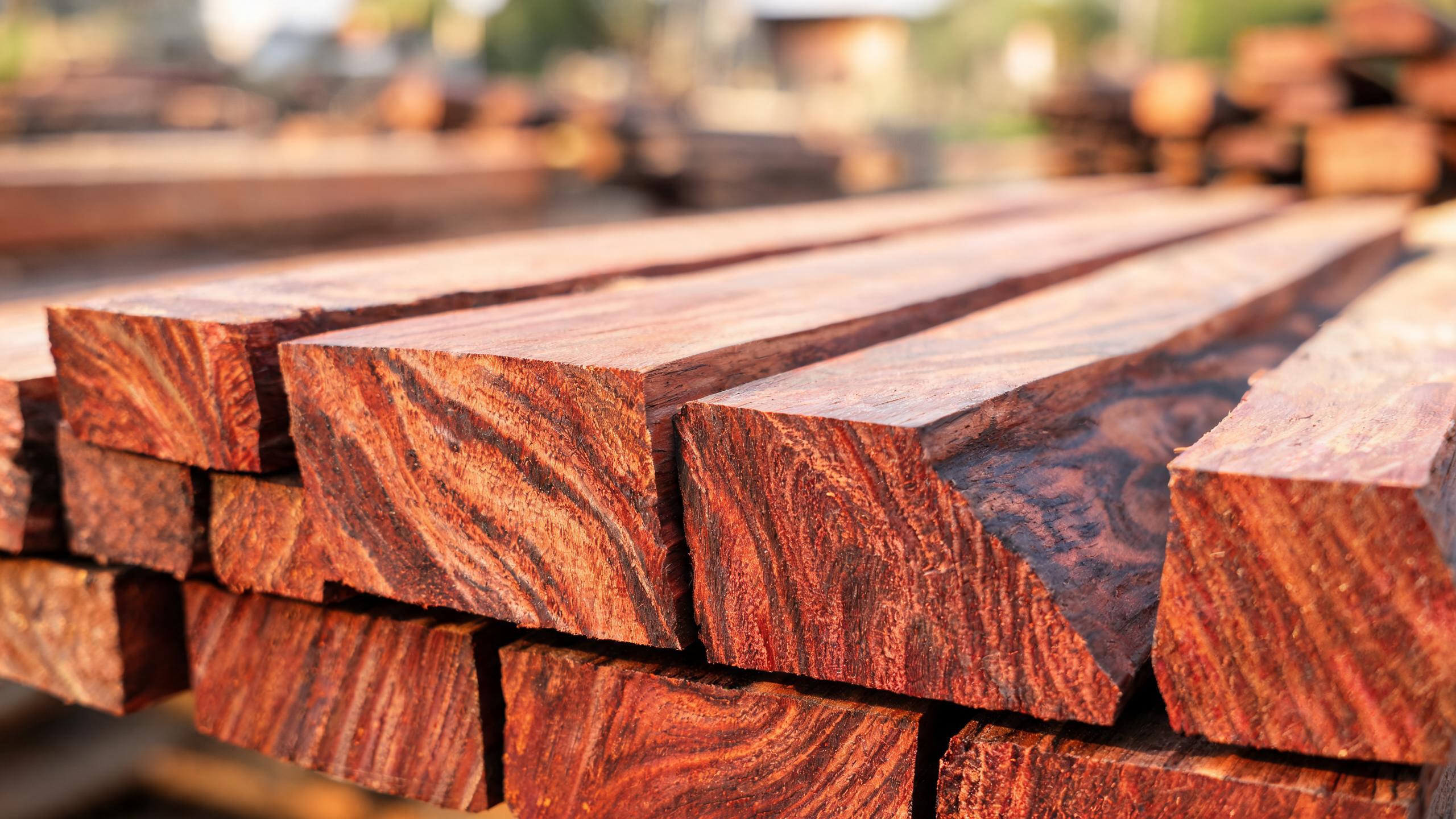
Gỗ trắc Xiêm (Dalbergia cochinchinensis) là loại gỗ cao cấp được bảo vệ bởi CITES dùng cho đồ nội thất cổ điển. Hướng dẫn này bao gồm các phương pháp nhận dạng, tuân thủ CITES, so sánh các loài gỗ và các phương pháp tìm nguồn cung ứng tốt nhất cho người mua quốc tế.
What Is Siamese Rosewood and Why Is It So Valued?
Siamese rosewood, known scientifically as Dalbergia cochinchinensis, is one of the most prized timber species for classical furniture in the world. Native to the tropical forests of Southeast Asia, including Thailand, Cambodia, Laos, and Vietnam, this species produces wood with a deep reddish-brown color, dense grain, and natural oil content that gives it exceptional durability and a lustrous patina that deepens with age.
The density of Dalbergia cochinchinensis ranges from 0.85 to 1.05 g/cm3, making it heavy enough to sink in water. This density is what gives the furniture its substantial feel and acoustic resonance when tapped. A genuine Siamese rosewood chair has a weight and solidity that cannot be replicated by lighter woods or stained substitutes.
The species grows slowly, taking 80 to 100 years to reach commercial harvest size. This slow growth creates the tight, interlocking grain pattern that makes the wood resistant to warping and cracking. It also means that natural supplies are extremely limited, which has driven prices to premium levels in the global timber identification and sourcing market.
Why Is Siamese Rosewood Protected Under CITES?
In 2013, Dalbergia cochinchinensis was listed on CITES Appendix II, which means that all international trade in this species requires both an export permit from the country of harvest and an import permit from the destination country. This listing was a response to decades of overharvesting that depleted natural forests across Southeast Asia.
The CITES listing has two major implications for rosewood furniture buyers. First, the documentation process adds 15 to 20 working days to the export timeline because the CITES permit must be issued by the Chinese CITES Management Authority before the goods can leave the country. Second, the supply of legally harvested Siamese rosewood is tightly controlled, which means that large orders may require advance booking of raw material stocks.
Buyers should be aware that CITES permits are specific to each shipment. The permit lists the species scientific name, the quantity, the harmonized system (HS) code, and the port of export. A permit cannot be reused or transferred between shipments. This is why sustainable sourcing practices and advance planning are essential when ordering furniture made from regulated species.
How Can You Identify Genuine Siamese Rosewood?
Timber identification is a critical skill for buyers of classical furniture. Several less expensive wood species are stained and marketed as Siamese rosewood, and visual identification alone is unreliable after staining. Here are the key identification methods.
Visual examination. Genuine Siamese rosewood has a heartwood color ranging from deep reddish-brown to dark purplish-red. The grain is interlocked with a medium to coarse texture. When quartersawn, it displays a distinct ribbon figure. Pores are visible to the naked eye and arranged in a semi-ring-porous pattern. The wood has a natural luster that becomes more pronounced with wax finishing.
Density test. Because Dalbergia cochinchinensis has a density above 0.85 g/cm3, a small sample will sink in water. This is a quick field test, but it is not definitive because several other dense tropical hardwoods also sink.
Fluorescence test. Under ultraviolet light, the heartwood of genuine Siamese rosewood exhibits a golden-yellow fluorescence due to the natural resin content. This is a more specific test that can distinguish it from common substitutes.
Laboratory DNA testing. For definitive identification, a wood sample can be sent to a specialized laboratory for DNA or fiber analysis. Labs in Shanghai and Singapore offer this service for approximately 150 USD per sample with a turnaround time of 5 to 7 working days. This is recommended for high-value orders where species authenticity is contractually guaranteed.
How Does Siamese Rosewood Compare to Alternative Species?
For buyers who cannot source or do not require Siamese rosewood, several alternative wood species offer similar aesthetic and structural properties for rosewood furniture.
Machilus Nanmu (Nanmu). This species, native to southern China, has a warm golden-brown color and a fine, even texture. It is not CITES-listed and is widely used in mid-range classical furniture. While it lacks the deep red tones of Siamese rosewood, it offers excellent dimensional stability and is suitable for buyers who want traditional Chinese craftsmanship without the regulatory complexity of CITES species.
Burmese rosewood (Dalbergia oliveri). Also known as Burmese tulipwood, this species has similar density and color to Siamese rosewood but is also CITES-listed. It offers comparable performance but faces the same documentation requirements.
African padauk (Pterocarpus soyauxii). This non-CITES species has a vivid red-orange color that ages to a deeper brown. It is less expensive than Siamese rosewood and offers good workability, but its color is distinctly different and may not appeal to buyers seeking the classic deep red-brown patina of traditional Chinese furniture.
What Should Buyers Consider When Sourcing Siamese Rosewood Furniture?
When sourcing Siamese rosewood classical furniture from China, buyers should follow a structured due diligence process to ensure they receive genuine, legally harvested, and properly documented products.
Verify the CITES permit chain. Request a copy of the CITES export permit before making payment. Cross-check the permit number with the Chinese CITES Management Authority online database. The permit must list Dalbergia cochinchinensis as the species, match the shipment quantity, and be valid on the date of export.
Request species certification. Ask the factory to provide a wood species test report from a recognized laboratory. This document confirms that the raw material used in your order has been scientifically identified as Dalbergia cochinchinensis and not a stained substitute.
Plan for extended lead times. CITES permit processing adds 15 to 20 working days to the production cycle. For container orders of Siamese rosewood furniture, plan for a total lead time of 60 to 75 days from deposit to container loading, compared to 45 to 60 days for non-CITES species.
Consider sustainable sourcing alternatives. If CITES compliance is not required by your retail customers, consider furniture made from Machilus Nanmu or other legally certified, non-regulated species. These alternatives offer authentic Chinese craftsmanship at a lower cost and with a simpler documentation process.
How Does Yunxiao Source Siamese Rosewood Responsibly?
At Yunxiao Rosewood Furniture, we maintain transparent sourcing records for all wood species used in our production. For Siamese rosewood orders, we procure raw material only from licensed timber traders who can provide CITES-compliant documentation from the country of origin. Our CITES permit applications are filed through the Fujian Provincial Forestry Department and the Chinese CITES Management Authority, ensuring full legal traceability.
We also offer Machilus Nanmu and other non-C-listed rosewood furniture species for buyers who want to avoid the regulatory complexity of CITES species. Our team can advise on the best species choice for your target market, budget, and compliance requirements, ensuring that your furniture is both beautiful and legally compliant for international trade.