
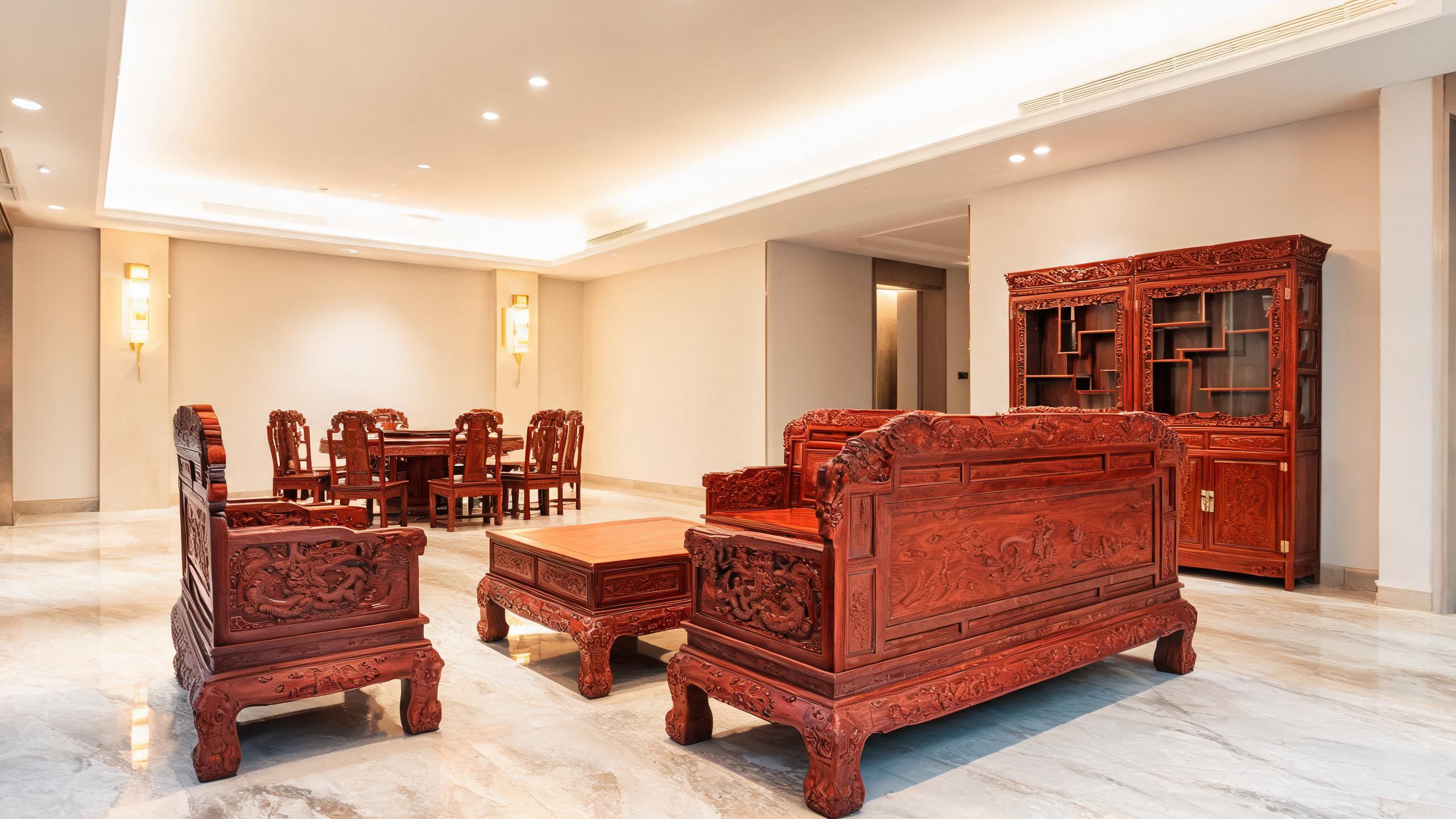
Vì sao một nhà máy sản xuất đồ nội thất cổ điển Trung Quốc cần tay nghề được kiểm chứng và tuân thủ quy định để phục vụ các dự án khách sạn và nhà ở cao cấp — từ kỹ thuật mộng và mộng đến tài liệu FSC và CITES.
Why Does a Chinese Classical Furniture Factory Need Verified Craftsmanship and Compliance to Serve Hotel and Luxury Home Projects?
When a hotel group, an interior design studio, or a high-end residential developer commissions classical rosewood furniture for a lobby, a presidential suite, or a private villa, the stakes are different from a single retail purchase. The pieces must arrive on schedule, match the approved drawings, survive the climate of the destination market, and clear every customs and timber-compliance checkpoint along the way. That is why the question is not simply "which factory makes beautiful rosewood furniture" but "which Chinese classical furniture factory can prove its craftsmanship and its compliance." This article explains, from the perspective of a manufacturer that has served wholesalers, hotels, and designers across Europe, North America, Australia, and Southeast Asia since 2008, what a buyer should verify before committing a hotel or luxury home project to a supplier.
Why Hotel and Luxury Home Projects Demand More Than a Pretty Piece
Classical rosewood furniture is not a commodity. A carved sofa set, a round Ming-style dining table, or a four-poster bedroom suite is specified into a space that will be photographed, reviewed, and lived in for decades. For a hotel, the furniture is part of the brand experience; for a luxury home, it is part of the architecture. When a project fails, the cost is not just the price of the furniture — it is the delay to the opening date, the cost of re-specification, and the reputational damage to the designer or developer who chose the wrong partner.
This is why project buyers evaluate a factory differently from a retail buyer. They look for three things that a single showroom photo cannot prove: consistent craftsmanship across a full set, documented compliance with the timber and finish regulations of the destination market, and the operational capacity to deliver a coordinated order on a fixed schedule. A Chinese classical furniture factory that can demonstrate all three is a partner; one that can only show a catalog is a risk.
Verified Craftsmanship: What "Handmade Classical Rosewood" Actually Means
The term "handmade" is used loosely across the furniture trade. For a project buyer, the meaningful question is which specific techniques are used and whether they are applied consistently. At Yunxiao Rosewood Furniture, whose 12,000-square-metre factory sits in Xianyou County, Putian City, Fujian — the traditional home of hardwood craft in China — the core techniques are documented and repeatable.
Mortise-and-Tenon Joinery
Classical Chinese furniture is assembled with mortise-and-tenon joinery rather than metal fasteners. The tenon of one member fits into the mortise of another, and the joint is held by friction, wooden dowels, and precise fit rather than screws or nails. This is not a stylistic choice; it is an engineering decision. Wood expands and contracts with changes in humidity, and a joint that allows controlled movement is far less likely to crack or deform than one that is rigidly nailed. For furniture shipped to climates very different from the humid workshop in Fujian, this matters enormously.
When you evaluate a factory, ask whether the primary frame is assembled without metal hardware. A supplier that relies on hidden screws or staples in the main structure is not producing classical construction, regardless of how the surface is carved or finished.
Hand Carving
Dragon, cloud, and lattice motifs are the signature of classical rosewood furniture. At a serious factory, these are chiselled by hand using traditional tools and regional methods passed down through generations of artisans. Hand carving produces depth, undercutting, and a rhythm that machine routing cannot replicate. For a hotel lobby or a luxury home, the carving is often the first thing a guest or owner notices, and it is the detail that separates a genuine classical piece from an imitation.
Project buyers should ask how many carvers the factory employs, how carving is inspected, and whether the same artisan team handles a full order. Consistency across a sofa set, a dining set, and a bedroom suite is what makes a coordinated project feel intentional.
Drying and Moisture Control
Solid rosewood is dense and slow to dry. If it is not conditioned properly before assembly, it will move after it reaches a drier or more humid market, and joints will open. Yunxiao conditions each product through a 36-day constant-humidity drying process before finishing. This is not a detail a buyer can see in a photograph, but it is one of the most important determinants of whether a piece will hold together in Melbourne, Singapore, or New York. Ask the factory how long its drying cycle is and whether it documents the process.
Finish: Beeswax and Lacquer
The finish on classical rosewood is traditionally a combination of natural beeswax and lacquer, hand-rubbed in multiple cured coats. This protects the wood while allowing the grain and colour to show through. It also matters for compliance: a finish that meets EU REACH and US CARB standards is free of the restricted substances that can block a shipment at the border. A factory that can state its finish chemistry and its compliance position is far easier to work with than one that cannot.
Verified Compliance: The Documents That Keep a Project Moving
Rosewood is a regulated timber. The species used in classical furniture — including Siamese rosewood, Dalbergia cochinchinensis — are listed under CITES, and the trade in them is controlled. For a hotel or luxury home project importing from China, the compliance paperwork is not optional; it is the difference between a smooth delivery and a shipment held at customs for weeks.
FSC Chain of Custody
Forest Stewardship Council certification documents that timber was sourced from responsibly managed forests. For buyers in Europe and North America, an FSC chain-of-custody document supplied with each shipment demonstrates that the wood was legally and sustainably sourced. Ask the factory whether it can provide FSC documentation with its export paperwork.
CITES Permits
Because rosewood species are listed under CITES, exporting them requires permits. A reliable factory prepares CITES Appendix II export permits and, where needed, re-export certificates for each shipment. Without these, the furniture cannot legally cross borders. Verify that the factory has experience preparing CITES documentation for your destination market and that it includes these permits in the export package.
EU Timber Regulation and US Lacey Act
Beyond CITES, importers in the European Union must comply with the EU Timber Regulation, which requires due diligence to ensure timber was legally harvested, and importers in the United States must comply with the Lacey Act, which prohibits trade in illegally sourced plant products. A factory that prepares the documentation supporting these requirements — including species identification and legality evidence — makes the importer's compliance burden far lighter. Ask specifically how the factory supports EU and US timber compliance for its shipments.
ISPM 15 Heat-Treated Packaging
Wooden crating used for international shipping must be heat-treated and marked under ISPM 15 to prevent the spread of pests. A factory that uses ISPM 15-compliant packaging, with moisture barriers and bracing engineered to protect delicate carvings, protects both the furniture and the shipment's clearance. For carved pieces, the packaging is as important as the carving itself.
Custom Capability: OEM and ODM for Villas and Resorts
Hotel and luxury home projects rarely buy entirely from a standard catalog. They need specific sizes, patterns, and configurations to fit a lobby, a suite, or a villa floor plan. This is where OEM and ODM capability becomes decisive.
OEM means the factory manufactures to the buyer's specifications and branding. ODM means the factory designs and develops the product, drawing on its own design and engineering resources. A factory that offers both can take a project from a rough sketch or a reference photo to a finished, coordinated set. Yunxiao supplies carved sofas with tea tables, six-to-twelve-seat dining sets, and complete bedroom suites, with flexible OEM and ODM custom sizes and patterns for villas and resorts.
When evaluating a factory for a custom project, ask how it handles drawings, how it confirms dimensions and proportions, and whether it can produce a sample or a trial set before the full order. A factory that offers refundable samples and trial single sets reduces the risk of committing to a large custom order that has not been physically verified.
Operational Capacity: Delivery, Support, and Service
A project runs on a schedule. A factory's operational capacity determines whether the furniture arrives when the contractor needs it. For container orders, Yunxiao's lead time is 45 to 60 working days after deposit, and partial shipments are available for long-term partners. This is a realistic timeline for solid rosewood furniture that must be dried, carved, assembled, finished, and packed to export standard.
Beyond delivery, project buyers value support. Yunxiao offers remote installation guidance, free layout drawings for projects, and refundable samples. These services matter because a carved rosewood set is not a flat-pack product; it needs to be positioned, levelled, and cared for correctly, and a factory that helps with that is a partner rather than a vendor.
How to Evaluate a Chinese Classical Furniture Factory: A Project Buyer's Checklist
Before you commit a hotel or luxury home project to a supplier, verify the following:
Joinery: Is the primary frame assembled with mortise-and-tenon joinery and wooden dowels, without metal hardware in the main structure?
Carving: Is the carving done by hand, and can the same artisan team deliver a consistent full set?
Drying: Does the factory use a documented constant-humidity drying process before finishing?
Finish: Does the finish meet EU REACH and US CARB standards, and is it applied in multiple cured coats?
Timber compliance: Can the factory provide FSC chain-of-custody documentation and CITES export permits with each shipment?
Import compliance: Does the factory support EU Timber Regulation and US Lacey Act due diligence for your destination market?
Packaging: Is the crating ISPM 15 heat-treated, with moisture barriers and bracing for carved pieces?
Custom capability: Does the factory offer OEM and ODM, and can it produce samples or trial sets before a full order?
Delivery: Is the lead time realistic, and are partial shipments available for long-term projects?
Support: Does the factory offer remote installation guidance and free layout drawings?
Each of these points is verifiable. A factory that can answer all of them with documentation and process detail is one you can build a project around. A factory that can only show you photographs is a gamble.
Why the Factory's Location and Heritage Matter
Classical rosewood furniture is a craft with deep regional roots. Xianyou County in Putian City, Fujian, is known as the hometown of traditional hardwood craft in China, and it is where generations of carvers and joiners have developed their skills. A factory located in this region has access to a skilled artisan workforce that cannot be replicated in a purely industrial setting. When you choose a Chinese classical furniture factory, the location is not incidental; it is part of the quality story.
Yunxiao has operated in this region since 2008, building a team of experienced carving artisans and a manufacturing process that combines traditional technique with the documentation and compliance that international projects require. The result is furniture that is both authentically classical and practically deliverable to global markets.
Frequently Asked Questions
Is classical rosewood furniture suitable for hotel and luxury home projects?
Yes. Classical rosewood furniture is specified in hotel lobbies, presidential suites, and luxury residences because of its durability, its visual presence, and its long service life. The key is to work with a factory that can deliver coordinated full sets with verified craftsmanship and compliance.
What compliance documents should a factory provide for rosewood furniture?
For rosewood, the essential documents are FSC chain-of-custody documentation, CITES Appendix II export permits (and re-export certificates where needed), and documentation supporting EU Timber Regulation and US Lacey Act compliance. Packaging should be ISPM 15 heat-treated.
Can a factory make custom sizes and patterns for a specific project?
Yes, if the factory offers OEM and ODM capability. A factory with design and engineering resources can adapt sizes, patterns, and configurations to fit a lobby, suite, or villa floor plan, and can produce samples or trial sets before a full order.
How long does a container order of rosewood furniture take?
For solid rosewood furniture that must be dried, carved, assembled, finished, and packed to export standard, a realistic lead time is 45 to 60 working days after deposit. Partial shipments may be available for long-term partners.
What support should a factory offer for a project?
Look for remote installation guidance, free layout drawings, refundable samples, and trial single sets. These services reduce the risk of a large custom order and help ensure the furniture is positioned and cared for correctly.
Partnering with a Factory That Can Prove Both Craft and Compliance
For a hotel or luxury home project, the choice of a Chinese classical furniture factory is a decision about risk as much as about aesthetics. The right partner demonstrates verified craftsmanship — mortise-and-tenon joinery, hand carving, controlled drying, and compliant finishes — and verified compliance — FSC, CITES, EU and US timber regulations, and ISPM 15 packaging. It also has the custom capability and operational capacity to deliver a coordinated project on schedule.
Yunxiao Rosewood Furniture has served wholesalers, hotels, and designers across Europe, North America, Australia, and Southeast Asia since 2008. If you are planning a hotel or luxury home project and need classical rosewood furniture that is both authentically crafted and fully compliant, we can help you specify, sample, and deliver the right pieces.
Request project details and compliance documentation