
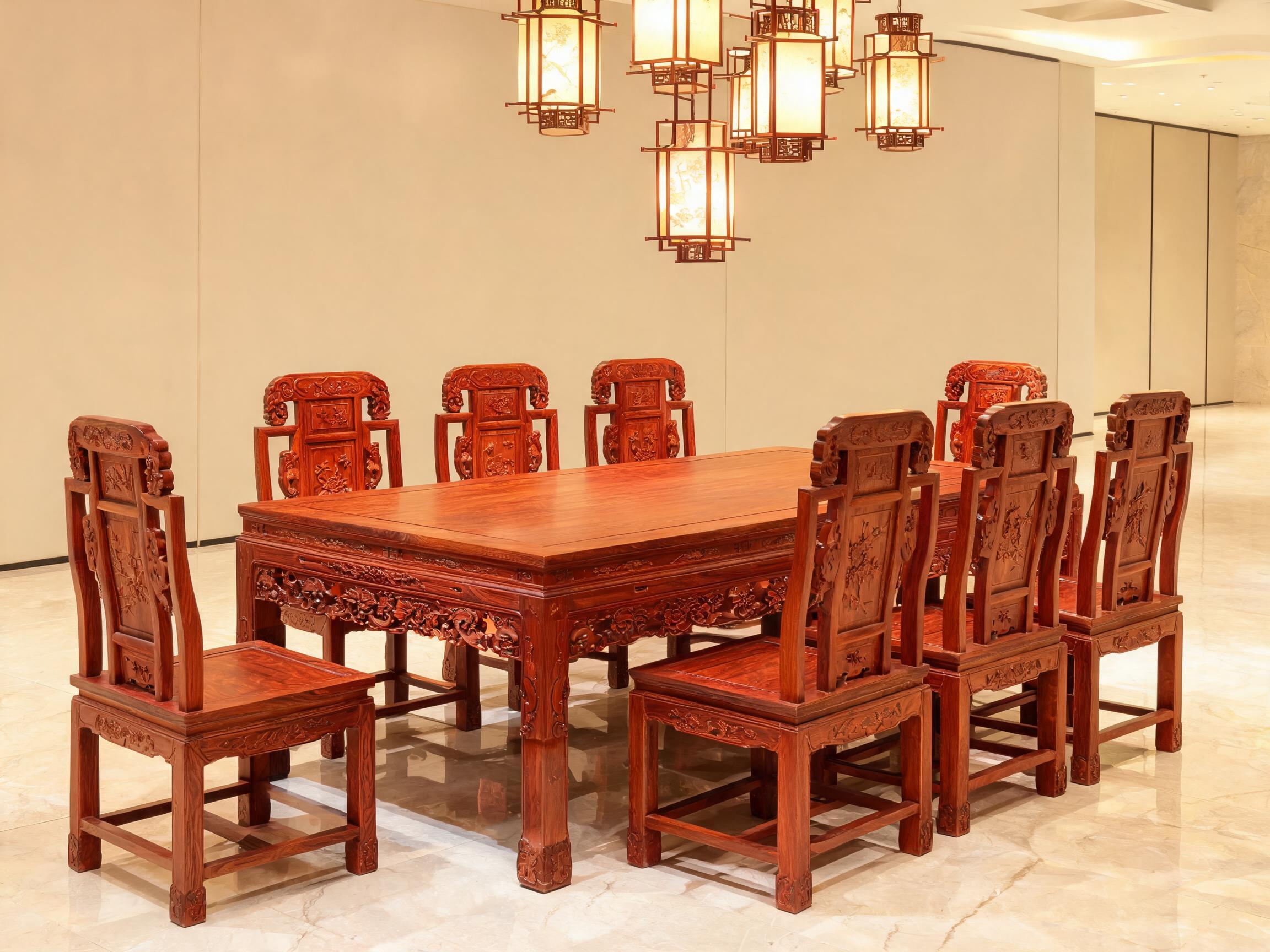
A practical procurement guide for importers and wholesale buyers evaluating FSC certified redwood dining sets. Covers what FSC certification actually means for furniture, how to verify chain of custody documentation, key quality indicators for redwood dining sets wholesale orders, and compliance checkpoints for export markets.
WHOLESALE PROCUREMENT GUIDE
FSC Certified Redwood Dining Sets: Compliance, Quality & Export Standards for Wholesale Buyers
If you are sourcing redwood dining sets wholesale for the EU, UK, Australia, or North American markets, you have likely encountered a recurring request from your clients: "Is this FSC certified?"
This is not a marketing preference. It is a compliance requirement that sits inside the EU Timber Regulation (EUTR), the UK Timber Regulation, the US Lacey Act, and Australia's Illegal Logging Prohibition Act. Importers who cannot demonstrate due diligence on the legal origin of wood products risk customs holds, fines, or worse—loss of importing privileges.
This article covers what FSC certification actually means for redwood dining furniture, how to verify a supplier's chain of custody claims, and the quality markers that separate export-grade FSC certified redwood dining sets from commodity-grade pieces. It is written for procurement managers, importers, and wholesale buyers who need verifiable facts, not sales language.
- FSC certification is a chain-of-custody system, not a one-time product stamp—you must verify the certificate number and scope with the supplier.
- For redwood dining sets wholesale orders, request the FSC COC certificate and the invoice-level claim (FSC Mix 70%, FSC 100%, or FSC Recycled) before committing to a container.
- Quality control for export-grade redwood dining furniture centers on moisture content (8–12%), joint construction, and finish durability—not just appearance.
- Compliance documentation should be part of the contract terms, not an afterthought. Specify what documents ship with each order.
What FSC Certification Actually Covers for Redwood Dining Furniture
The Forest Stewardship Council (FSC) runs two distinct certification systems. Buyers often confuse them, and the distinction matters when you are verifying a supplier.
1. Forest Management (FM) Certification — This applies to the forest itself. It confirms that timber is harvested in a way that preserves biodiversity, respects indigenous rights, and maintains the long-term health of the forest. An FM certificate belongs to the landowner or forest manager.
2. Chain of Custody (COC) Certification — This applies to every company that processes, transforms, or trades the certified material. A furniture factory that buys FSC-certified redwood lumber and turns it into dining sets must hold a COC certificate to label its products as FSC certified. The COC system tracks the material from forest to final product.
When a supplier claims their redwood dining sets are FSC certified, they should be able to show you:
- A valid COC certificate issued to their company (not to their lumber supplier).
- The certificate number, which you can verify on the FSC database (info.fsc.org).
- The product group or scope covered by the certificate.
- The percentage-based claim they use on invoices (FSC 100%, FSC Mix X%, or FSC Recycled).
| FSC Claim Type | What It Means | Typical Use in Furniture |
|---|---|---|
| FSC 100% | All wood in the product comes from FSC-certified forests. | Premium lines, single-source lumber. |
| FSC Mix X% | Product contains a minimum percentage of FSC-certified material (e.g., FSC Mix 70%). The rest is controlled wood. | Most common for mixed-production factories. |
| FSC Recycled | Wood is reclaimed or post-consumer recycled. | Less common for redwood dining sets; redwood is typically virgin lumber. |
VERIFICATION TIP
Ask the supplier for their COC certificate number and cross-check it on the FSC public database. A legitimate supplier will not hesitate to share this. If the certificate is in the name of a trading company rather than the factory, ask how the chain of custody is maintained between the two entities.
Why Redwood Specifically? The Material Profile Buyers Should Know
Redwood (Sequoia sempervirens) is a softwood species native to the coastal regions of Northern California and Southern Oregon. It is not a tropical hardwood, and it should not be compared to teak or mahogany on hardness. Its value in dining furniture comes from different properties:
- Natural decay resistance — Redwood contains tannins and oils that make it resistant to rot, insects, and fungal decay without chemical treatment.
- Dimensional stability — It is less prone to warping and twisting than many other softwoods, which matters for table tops and chair frames that must hold their geometry.
- Workability — It machines, sands, and accepts finishes well, which allows for clean joinery and smooth surfaces.
- Weight — Redwood is relatively light for its size, which reduces shipping weight compared to hardwoods. This is a real cost factor in container freight.
For outdoor or semi-outdoor dining settings, redwood is a strong candidate. For indoor dining rooms, it offers a warm, reddish-brown tone that darkens with age. The grain is typically straight, with occasional knots—buyers should specify their acceptable knot size and frequency in the quality agreement.
Quality Control Markers for Export-Grade Redwood Dining Sets
FSC certification tells you the wood is legally and sustainably sourced. It does not tell you the furniture is well made. These are separate assessments, and a wholesale buyer must evaluate both.
Here are the quality checkpoints we recommend covering in your supplier audit or pre-shipment inspection:
1. Moisture Content (MC)
For export furniture, kiln-dried redwood should be in the 8–12% moisture content range. This prevents warping, cracking, and mold during the 4–8 week ocean transit, especially across humidity and temperature changes. Ask the supplier what MC they target and whether they measure it at the time of packing. A moisture meter reading at the factory is a simple, verifiable data point.
2. Joint Construction
Dining chairs and table bases take repetitive stress. Mortise-and-tenon or dowel joints with proper glue and mechanical reinforcement are the standard for export-grade pieces. Stapled or nailed joints will not survive container shipping and daily use. Ask the supplier to describe their joinery method for each component—table legs to aprons, chair rails to legs, backrests to seat frames.
3. Finish System
Redwood is naturally resistant to decay, but it still needs a finish to protect against UV fading and moisture absorption. For outdoor-rated sets, the finish should be a UV-resistant exterior-grade sealer or oil. For indoor sets, a lacquer or varnish with sufficient build is standard. Ask what finish system is used, how many coats, and whether touch-up material is included with the order.
4. Surface Grading
Redwood is graded by appearance (Clear, B-Grade, C-Grade, etc.). Clear grade has minimal knots and is used for premium furniture. Lower grades have more knots and color variation. Wholesale buyers should specify the grade they are paying for and confirm it in the contract. A common dispute arises when a buyer expects clear-grade surfaces but receives pieces with open knots or sapwood streaks.
5. Packaging for Export
Furniture that arrives damaged is a costly problem. Check whether the supplier uses:
- Corner protectors and edge guards on each piece.
- PE foam or bubble wrap on finished surfaces.
- Carton thickness appropriate for the piece weight (5-ply for heavier items is typical).
- Palletization and stretch wrapping for container loading.
| Quality Factor | Commodity Grade | Export / Premium Grade |
|---|---|---|
| Moisture content at packing | Not measured or >15% | 8–12%, documented per batch |
| Joinery | Staples, nails, minimal glue | Mortise-and-tenon or dowel with waterproof glue |
| Finish | Single coat, low-build | Multi-coat, UV-stable, tested for adhesion |
| Wood grade | Mixed, ungraded, visible defects | Specified grade (Clear, B-Grade) with limits on knots |
| Packaging | Minimal, no edge protection | Full edge/corner protection, export-grade cartons |
Export Compliance: What Documentation Should Ship with Your Order
For FSC certified redwood furniture entering the EU, UK, US, or Australia, the documentation package is as important as the product itself. Here is what to request in your purchase contract:
FSC-Related Documents
- COC certificate copy — Valid and in the supplier's name.
- FSC invoice claim — The commercial invoice should state the FSC claim (e.g., "FSC Mix 70%") and the COC certificate code.
- Sales invoice with FSC claim — This is the document that connects the physical goods to the certification system.
Timber Legality Documents (for EUTR / UKTR / Lacey Act compliance)
- Due Diligence Statement — Your supplier should be able to provide information on the origin of the timber (species, country of harvest, and ideally the forest concession).
- Harvest permit or logging license — Where applicable, the supplier should have records of legal harvest rights.
- Transport and export permits — Depending on the country of origin, these may include export licenses or phytosanitary certificates.
IMPORTANT
FSC certification is widely recognized as evidence of legality under EUTR and the Lacey Act. However, the importer of record is still responsible for exercising due diligence. Keep your own records of the supplier's documents. Do not rely on verbal assurances.
Common Mistakes Wholesale Buyers Make with FSC Claims
Based on common issues in the furniture trade, here are the frequent pitfalls to avoid:
Mistake 1: Accepting a supplier's "we are FSC certified" without verification.
The certification may belong to a parent company or an affiliated trading entity, not the factory producing your goods. Verify the certificate number and scope.
Mistake 2: Assuming all redwood from California is automatically FSC certified.
FSC certification is voluntary. A forest can be legally harvested without being FSC certified. The certification status must be confirmed for each supply chain.
Mistake 3: Not specifying the FSC claim in the contract.
If your client requires FSC Mix 70% or higher, put it in the purchase order. Otherwise, the supplier may ship FSC Mix 30% or even non-certified product, and you will face a compliance gap with your downstream customer.
Mistake 4: Confusing FSC with other certifications.
PEFC is a separate forest certification system. Some buyers accept it; many EU tenders specifically require FSC. Confirm which standard your target market requires.
Sourcing FSC Certified Redwood Dining Sets Wholesale: What to Ask the Supplier
When you shortlist suppliers for redwood dining sets wholesale, use this checklist in your first round of communication:
- Please share your FSC COC certificate number and the legal entity name on the certificate.
- What FSC claim do you use on your invoices (FSC 100%, FSC Mix X%)?
- What is the country of origin for the redwood lumber?
- What is the target moisture content at packing, and how is it measured?
- What joinery methods are used for chairs and table bases?
- What finish system is applied, and is it suitable for outdoor use?
- What wood grade do you use for visible surfaces?
- What packaging standard do you follow for export?
- Can you provide a pre-shipment inspection report or third-party inspection option?
- What is the lead time for a 20ft or 40ft container order?
These questions are not aggressive. A supplier who regularly exports FSC certified redwood furniture will answer them quickly and with documentation. A supplier who hesitates or gives vague answers is a red flag.
Cost Considerations: What FSC Certification Adds to the Unit Price
FSC certified lumber typically commands a premium over non-certified lumber. The exact premium varies by species, region, and market conditions. For redwood, the premium is generally modest—often in the single-digit percentage range—because the certification system is well established in US forestry.
However, the total cost difference between an FSC certified redwood dining set and a non-certified set depends on more than the lumber premium. It includes:
- Administrative cost of maintaining COC records.
- Segregation of certified and non-certified material in the factory.
- Audit costs for the COC certificate.
For wholesale buyers, the practical implication is this: if your market requires FSC, you should budget for a small price uplift and ensure your downstream pricing reflects it. Do not push suppliers to drop the FSC claim to save 3–5%—the compliance risk to your import license is not worth it.
FAQ: FSC Certified Redwood Dining Sets
Q: Is FSC certification mandatory for importing redwood furniture into the EU?
A: FSC certification is not legally mandatory. However, the EUTR requires you to demonstrate that the timber was legally harvested. FSC certification is one of the strongest ways to demonstrate this. Many EU buyers and public tenders require FSC as a contractual condition.
Q: Can I mix FSC certified and non-certified redwood in one container?
A: Yes, but the FSC claim must be calculated correctly. If you order both certified and non-certified pieces, the supplier must issue separate invoices or clearly separate the claims. Discuss this with the supplier before production so their COC system can handle it.
Q: How long does it take to get FSC certification for a factory?
A: Typically 3–6 months from application to certificate issuance, depending on the audit schedule and the factory's readiness. If you are working with a new supplier, ask when their certificate was issued and when it expires.
Q: What is the difference between FSC and the SFI or PEFC labels?
A: These are separate certification systems with different standards and governance. FSC is often preferred in EU and UK markets, while SFI is more common in North America. Check your target market's requirements.
Next Steps for Buyers
If you are evaluating suppliers for FSC certified redwood dining sets, the key is to move from marketing claims to verifiable documentation. Ask for the COC certificate number, verify it on the FSC database, and put the certification requirements into your purchase contract.
For quality, define the moisture content, joinery, finish, and packaging standards in writing. A pre-shipment inspection by a third-party agency is a reasonable request for container orders and is standard practice in the furniture trade.
We supply FSC certified redwood dining sets for wholesale and contract projects. If you are sourcing for a specific market or project, contact us with your target quantities and quality requirements—we will provide documentation and specifications for your review.