
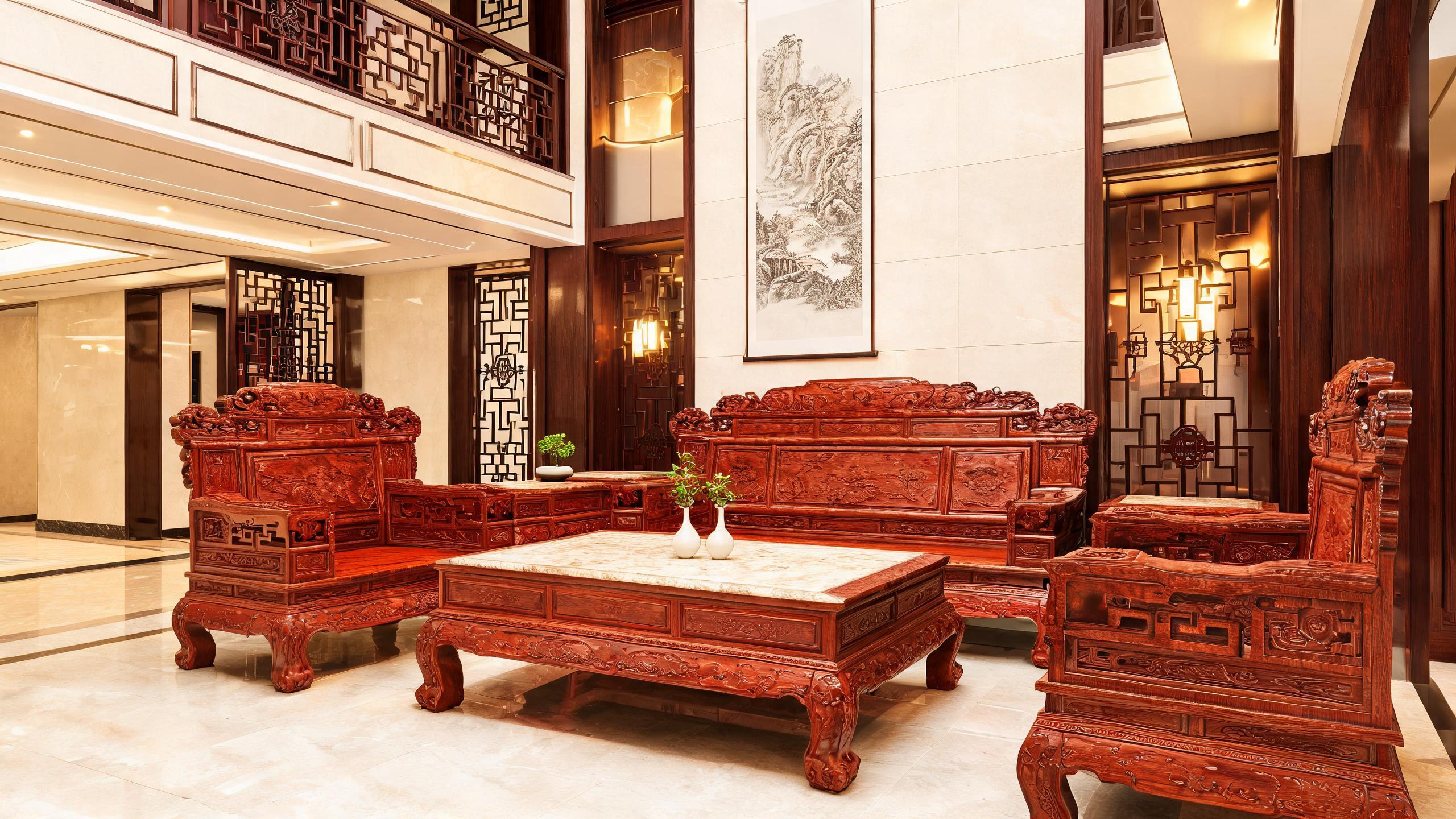
Un guide d'approvisionnement B2B pour le mobilier classique en bois de rose destiné à des projets d'hôtels et de villas de luxe : matériaux, savoir-faire, conformité, personnalisation OEM/ODM, délais et sélection de fournisseurs.
Why Luxury Hotel and Villa Projects Are Turning to Classical Rosewood Furniture
When a hotel group, resort developer, or private villa owner begins planning a high-end interior, the furniture specification is rarely an afterthought. It is one of the first decisions that shapes the guest experience, the visual identity of the property, and the long-term maintenance budget. In 2026, a growing number of hospitality and residential developers are choosing classical rosewood furniture not simply because it looks prestigious, but because it delivers a combination of durability, craftsmanship, and cultural character that few other materials can match.
For B2B buyers, however, sourcing rosewood furniture for a luxury project is very different from buying a single set for a private home. A hotel fit-out may require dozens of sofas, dining sets, tea tables, and bedroom suites that must match in wood tone, carving style, and finish across an entire building. A villa project may demand custom dimensions, bespoke motifs, and compliance documentation that a standard retail order never touches. This article is a practical procurement guide for importers, interior designers, hotel purchasing managers, and project developers who need to source classical rosewood furniture for a luxury hotel or villa project in 2026.
We will walk through the full sourcing journey: understanding the materials and craftsmanship that define quality, planning quantities and budgets, managing compliance and documentation, working with a factory on OEM and ODM customization, handling lead times and logistics, and avoiding the common mistakes that turn a promising project into a costly delay. Along the way, we will give you the specific questions to ask a supplier and the documentation to request, so that you can source with confidence and deliver a property that meets the expectations of discerning guests and owners.
The Luxury Hospitality Context in 2026
To source well, it helps to understand why classical rosewood furniture is in demand for luxury projects in the first place. The hospitality and high-end residential sectors have been evolving, and several trends are shaping what developers and designers are looking for.
The Return of Craft and Authenticity
After years of minimalist and mass-produced interiors, there is a clear shift toward craft, authenticity, and materials with a story. Guests and homeowners increasingly value pieces that are made by hand, that carry cultural meaning, and that will age gracefully rather than look dated in a few years. Classical rosewood furniture, with its hand carving, traditional joinery, and natural materials, fits this demand perfectly. It offers a sense of permanence and character that flat-pack or veneered furniture cannot provide.
Rising Demand in Hospitality and Residential Projects
Luxury hotels, resorts, boutique properties, and high-end villas are all investing in distinctive interiors to differentiate themselves. A property that features hand-carved rosewood furniture stands out in a crowded market and can command higher rates or resale value. This is driving demand from hotel groups, interior designers, and private developers who want furniture that is both beautiful and built to last.
The Importance of a Reliable Supply Chain
Because rosewood is a regulated material and the furniture is labor-intensive to produce, a reliable supply chain is essential. Developers cannot afford to have a project delayed by compliance issues, quality problems, or a supplier who cannot deliver on time. This is why choosing the right factory, with proven export experience and compliance capability, is so important for luxury projects.
What Defines Quality in Classical Rosewood Furniture for Hospitality Use
Before you can source well, you need to know what you are actually buying. Classical rosewood furniture is not a single product category. It spans different wood species, construction methods, carving traditions, and finishing systems, and each of these choices affects how the furniture performs in a demanding hotel or villa environment.
Understanding the Wood Species
The term rosewood covers a family of dense, richly colored hardwoods prized for their stability, grain, and natural luster. In the classical Chinese furniture tradition, several species are commonly used. Siamese rosewood, botanically Dalbergia cochinchinensis, is one of the most sought-after for its deep reddish-brown color, fine grain, and high density. Machilus nanmu, a legally certified timber used by many traditional workshops, offers a warm golden tone and excellent dimensional stability. Aged red wood and Grade-A tropical hardwood are also used, each with its own character and price point.
For a luxury hotel or villa, the density and stability of the wood matter as much as its appearance. Dense hardwoods resist warping and cracking when the climate changes, which is critical in air-conditioned lobbies, humid coastal resorts, and dry inland villas. A reputable factory will sort timber by density so that the structural response is consistent across a full order. For example, a quality Siamese rosewood sofa set may be built from timber sorted to a density range of roughly 0.90 to 1.00 grams per cubic centimeter, ensuring that every piece in a container behaves the same way under load and climate stress.
Joinery: The Difference Between Furniture and a Collection of Boards
The most important structural decision in classical rosewood furniture is how the pieces are joined. Traditional mortise-and-tenon joinery interlocks the wood without metal nails or screws. This is not a stylistic preference; it is an engineering choice. Wood expands and contracts with humidity, and a rigid metal fastener can cause the surrounding wood to split or the joint to loosen over time. A mortise-and-tenon joint, often reinforced with bamboo dowels, allows the wood to move naturally while keeping the structure tight.
When you source furniture for a hotel that will be used heavily for years, joinery quality directly affects your maintenance costs. A sofa or dining chair assembled with hidden mortise-and-tenon joints will hold up far better than one held together with screws and glue. Ask your supplier how the primary frame is joined, whether bamboo dowels are used, and whether any metal fasteners appear in the structure. A factory that assembles without metal nails to avoid cracking and deformation is making a deliberate quality choice that benefits the end user.
Carving and Craftsmanship
Classical rosewood furniture is defined by its carving. Master artisans hand-chisel motifs such as dragon, cloud, ruyi sceptre, bamboo, and lattice patterns into the wood using traditional tools and generations-old regional methods. Hand carving is labor-intensive and expensive, but it produces a depth and character that machine carving cannot replicate. For a luxury project, the carving is often the single most visible expression of quality.
When evaluating a supplier, ask how many carving hours go into each piece. A hand-carved ruyi motif on an armrest panel, for example, may represent roughly eighteen hours of work. This tells you both the craftsmanship level and the realistic cost. Be wary of suppliers who cannot explain their carving process or who rely entirely on machine-carved imitation. The difference is visible in the undercutting, the flow of the lines, and the way light plays across the surface.
Finishing Systems
The finish protects the wood and determines how the furniture looks and feels. Traditional finishing uses multiple coats of raw lacquer or a beeswax-based system, hand-rubbed to a satin sheen. A quality piece may carry six or seven coats, each allowed to cure before the next is applied. This builds a durable, food-safe, and environmentally friendly surface.
For hospitality use, the finish must also meet regulatory standards. Eco-friendly beeswax and lacquer finishing that meets EU REACH and US CARB requirements is a strong indicator that the supplier understands export compliance. For dining surfaces, a food-safe lacquer that meets FDA 21 CFR 175.300 is important, because guests will eat directly from the tables. Ask your supplier which finishing standards their products meet and request the relevant documentation.
Choosing the Right Furniture Categories for Your Project
A luxury hotel or villa project typically requires a coordinated range of furniture categories. Understanding what each category offers and how it is used will help you plan your order and communicate clearly with your supplier.
Sofas and Seating
Carved rosewood sofas are often the centerpiece of a lobby, lounge, or living room. They come in a range of configurations, from compact three-piece sets for urban residential spaces to grand nine or ten piece sets for large reception areas. A three-piece Siamese rosewood sofa set, with hand-carved ruyi armrests and a six-coat raw lacquer finish, is designed for compact urban residential footprints. Larger sets, such as an imperial dragon carved sofa set or a Ming style grand living room set, make a statement in hotel lobbies and villa living rooms.
When choosing sofas, consider the configuration that fits your space, the carving style that matches your design theme, and the seating capacity you need. Ask your supplier about the dimensions, the packaging volume, and how many sets fit in a container, because this affects your shipping cost.
Dining Sets
Rosewood dining sets are essential for hotel restaurants, private dining rooms, and villa dining areas. They range from compact four-seat sets to large twelve-seat banqueting sets. A Ming style round dining table with eight chairs, finished with a food-safe lacquer, is a popular choice for restaurants and dining rooms. Rectangular, oval, and square configurations are also available to suit different spaces.
For dining furniture, the finish is especially important because guests eat directly from the tables. Confirm that the lacquer is food-safe and meets the relevant standards for your market. Also consider the seating capacity and the dimensions of the table relative to your dining room.
Tea Tables and Accent Pieces
Tea tables, display cabinets, sideboards, and accent pieces complete the interior and add functional storage and display space. A carved rosewood tea table with a stone inlaid top, or a round tea table with a carved apron, works well in lobbies, tea rooms, and living areas. Display cabinets with carved lattice doors and sideboards with dovetail drawers provide storage while showcasing the craftsmanship.
Accent pieces are a good way to add the character of rosewood to a space without committing to a full set. They are also useful for filling corners, entryways, and transitional spaces in a hotel or villa.
Bedroom Suites
Complete bedroom suites, including beds, wardrobes, dressers, and nightstands, are needed for hotel guest rooms and villa bedrooms. A classical four-poster redwood bedroom suite, a canopy bed set, or a wardrobe suite provides a cohesive look for the bedroom. For a hotel, the bedroom furniture must be durable and easy to maintain, while for a villa it can be more elaborate.
When sourcing bedroom suites, consider the room dimensions, the storage needs, and the overall design theme. Ask your supplier about the configuration of the suite and whether custom sizes are available.
Planning Quantities and Budgets for a Hotel or Villa Project
Once you understand the product, the next step is planning how much you need and what it will cost. A luxury hotel or villa project is not a single purchase; it is a coordinated supply of furniture across multiple rooms, floors, and public spaces.
Mapping the Furniture Requirements
Start by mapping every space that needs furniture. A hotel project typically includes guest rooms, suites, lobbies, restaurants, tea rooms, lounges, and corridors. A villa project may include living rooms, dining rooms, bedrooms, studies, and outdoor or semi-outdoor seating areas. For each space, list the furniture types you need: sofas, armchairs, tea tables, dining tables and chairs, bedroom suites, display cabinets, sideboards, and accent pieces.
This mapping exercise is essential because it determines the scale of your order and the factory's production capacity. A full hotel fit-out might require hundreds of pieces, while a single villa might need a few dozen. The quantity affects lead time, pricing, and whether you qualify for container-load pricing or partial shipments.
Budgeting Realistically
Classical rosewood furniture is a premium product, and the price reflects the material, the carving labor, and the finishing. Budget realistically for the quality you need. Hand-carved, solid rosewood furniture with mortise-and-tenon joinery and multiple coats of lacquer will cost more than machine-made alternatives, but it will also last longer and hold its value.
When budgeting, include not just the furniture itself but also the costs of customization, packaging, freight, insurance, import duties, and installation. A common mistake is to budget only for the ex-works price and then be surprised by the total landed cost. Work with your supplier to understand the full cost structure, including the packaging volume, which affects how many sets fit in a container and therefore your shipping cost per piece.
Setting a Realistic Timeline
Custom rosewood furniture takes time to make well. A container order typically takes 45 to 60 working days after the deposit is paid, and that is before shipping and customs clearance. If your project has a fixed opening date, work backward from that date to set your order deadline. Build in buffer time for sample approval, production, drying, finishing, packaging, and transit.
For large or phased projects, consider whether partial shipments are available. Some factories offer partial shipments for long-term partners, which lets you receive furniture in stages and keep the project moving without waiting for the entire order to be complete.
Understanding the Cost Structure of Rosewood Furniture Projects
One of the most common questions from buyers planning a luxury project is how the price of rosewood furniture is built up. Understanding the cost structure helps you budget accurately, compare quotes fairly, and avoid surprises. The price of a piece of classical rosewood furniture reflects several distinct components, and each one can vary significantly between suppliers.
The Components of Price
The first and largest component is the material. Dense, legally certified hardwoods such as Siamese rosewood are expensive, and the price varies with the species, the grade, and the market. The second component is the labor, especially the hand carving. A piece with extensive hand-carved detail requires many hours of skilled work, which is reflected in the price. The third component is the finishing, which involves multiple coats of lacquer or beeswax applied and cured over time. The fourth component is the overhead of the factory, including drying, quality control, packaging, and export documentation. Finally, there is the logistics cost, which includes freight, insurance, and any import duties in your market.
When you compare quotes from different suppliers, ask each one to break down the price so you can see what you are paying for. A lower quote may reflect cheaper materials, less hand carving, a thinner finish, or less comprehensive documentation. It is worth understanding exactly what you are getting before you choose.
Comparing Wood Species and Their Value
Different wood species offer different characteristics and price points. The table below summarizes the main species used in classical rosewood furniture and what each offers for a luxury project.
| Wood Species | Character | Typical Use |
|---|---|---|
| Siamese Rosewood (Dalbergia cochinchinensis) | Deep reddish-brown color, fine grain, high density, excellent stability | Sofas, dining sets, tea tables, bedroom suites |
| Machilus Nanmu | Warm golden tone, excellent dimensional stability, legally certified | Classical furniture, cabinetry, accent pieces |
| Aged Red Wood | Rich color, mature and stable timber | Dining sets, sofas, display pieces |
| Grade-A Tropical Hardwood | Dense and durable, consistent quality | Structural frames, dining and seating |
For a luxury project, the choice of species affects both the appearance and the long-term performance of the furniture. Discuss the options with your supplier and choose the species that best matches your design vision, budget, and performance requirements.
Planning for Total Landed Cost
When you budget for a project, plan for the total landed cost, not just the price of the furniture. The total landed cost includes the ex-works price, packaging, freight, insurance, import duties, customs clearance, and any local delivery or installation costs. Work with your supplier to estimate these costs accurately so that your budget reflects the real cost of the project.
Ask your supplier about the packaging volume and how many sets fit in a container, because this directly affects your freight cost per piece. A supplier who can help you plan the container loading efficiently is adding value beyond the furniture itself.
Managing Compliance and Documentation
Compliance is one of the most important and least understood parts of sourcing rosewood furniture for export. Rosewood species are regulated under international conventions, and importing them into Europe, North America, or other markets requires careful documentation. Getting this wrong can delay your shipment, trigger fines, or even result in confiscated goods.
Understanding CITES
Many rosewood species, including Siamese rosewood (Dalbergia cochinchinensis), are listed under Appendix II of the Convention on International Trade in Endangered Species of Wild Fauna and Flora, commonly known as CITES. This means that international trade in the species is controlled and requires export permits. A reputable supplier will include the necessary CITES Appendix II export permits with each shipment.
When you source from a factory, ask explicitly whether CITES documentation is included and whether it covers the specific species and quantity in your order. Do not assume that a supplier who sells rosewood domestically can automatically export it. The export permit is a separate requirement that must be arranged in advance.
Timber Legality and Due Diligence
Beyond CITES, importers in the European Union and the United States must comply with timber legality regulations. The EU Timber Regulation requires operators to exercise due diligence to ensure that the timber they place on the market was legally harvested. The US Lacey Act prohibits trade in plant material that was harvested or traded in violation of laws, including foreign laws. This means you need to be able to demonstrate the legal origin of the wood.
FSC certification is one way to demonstrate responsible sourcing. A factory that can provide FSC chain-of-custody documentation for FSC-claimed orders gives you a strong compliance foundation. Ask your supplier whether they can provide FSC certificates and what documentation they supply with each shipment to support your due diligence obligations.
Finishing and Material Compliance
Compliance is not limited to the wood itself. The finishing materials must also meet the standards of your target market. Eco-friendly beeswax and lacquer finishing that meets EU REACH and US CARB requirements addresses chemical safety concerns. For food-contact surfaces, FDA 21 CFR 175.300 compliance for the lacquer is important for dining tables. Request the relevant documentation for the finishing system so you can verify it meets your market's requirements.
Working with a Factory on OEM and ODM Customization
Luxury hotel and villa projects almost always require some degree of customization. Standard catalog pieces rarely fit a bespoke interior perfectly, and developers often want unique motifs, dimensions, or finishes that reflect the property's identity. This is where OEM and ODM capabilities become critical.
What OEM and ODM Mean in Practice
OEM, or original equipment manufacturing, means the factory produces furniture to your specifications, using your designs, dimensions, and branding. ODM, or original design manufacturing, means the factory uses its own designs and adapts them to your requirements. For a hotel or villa project, you will often use a combination of both: adapting the factory's proven designs to your dimensions and adding custom motifs or finishes.
A factory with flexible OEM and ODM capabilities can adjust sizes, patterns, and carving motifs to suit villas and resorts. This flexibility is essential for projects where standard dimensions do not work, such as unusually shaped lobbies, oversized dining rooms, or rooms with specific ceiling heights.
Managing the Customization Process
Customization requires clear communication and a structured approval process. Start by providing the factory with your space plans, dimensions, and design references. The factory should respond with drawings or specifications for your approval before production begins. For complex projects, request a sample or a trial set before committing to the full order.
Many factories offer trial single sets and refundable samples. This is a low-risk way to verify the quality, the finish, and the fit before you commit to a full container. It also lets you confirm that the factory can deliver the specific customization you need.
Getting Layout and Installation Support
For a luxury project, the furniture does not just need to be made well; it needs to be placed well. A factory that offers free layout drawings and remote installation guidance adds real value. Layout drawings help you plan the placement of each piece before it arrives, and remote installation guidance helps your local team set everything up correctly, especially for large or complex pieces.
Ask your supplier what project support they provide. Free layout drawings, remote installation guidance, and clear documentation of what is included in each shipment can make the difference between a smooth project and a stressful one.
Managing Lead Times, Packaging, and Logistics
Once your order is confirmed and production begins, the focus shifts to getting the furniture to your site safely and on time. Rosewood furniture is heavy, valuable, and often intricately carved, which makes packaging and logistics a critical part of the sourcing process.
Understanding Production Lead Times
Production lead time is the time from order confirmation to the furniture being ready for shipment. For custom rosewood furniture, this typically ranges from 45 to 60 working days after the deposit, depending on the complexity of the order and the factory's current workload. Hand carving, kiln or air drying, finishing, and quality inspection all take time, and rushing these steps compromises quality.
When you plan your project, build the production lead time into your schedule. If you need furniture for a grand opening, order well in advance. If your timeline is tight, discuss it with the factory early so they can advise on what is realistic.
Packaging That Protects Carvings
The packaging is where many shipments go wrong. Carved rosewood furniture is delicate despite being made of dense hardwood. The carved details can be chipped or broken if the pieces are not properly protected. A quality supplier uses custom crating, moisture barriers, and bracing protocols engineered for delicate relief-carved furniture shipped overseas.
ISPM 15 heat-treated packaging is a standard requirement for international wood packaging. It ensures that the wooden crates and pallets used for shipping do not carry pests. Ask your supplier to confirm that their packaging meets ISPM 15 and that the packaging is designed to protect the carvings during transit.
Planning Container Loading
Container loading affects both cost and safety. Dense rosewood furniture is heavy, and how it is loaded determines how many sets fit in a container and whether the pieces arrive undamaged. A three-piece Siamese rosewood sofa set, for example, may occupy about 3.8 cubic meters of packaging, meaning a 20-foot container holds roughly five to six sets. Understanding these volumes helps you plan your shipping budget and container count.
Work with the factory to plan the container loading carefully. Proper bracing, moisture barriers, and weight distribution protect the furniture and maximize the use of container space. A factory that has experience exporting carved rosewood furniture will have established loading protocols that minimize damage.
Quality Inspection Before Shipment
Before your furniture leaves the factory, it should pass a thorough quality inspection. This is your last chance to catch problems before they become expensive to fix. A structured inspection checklist protects both you and the supplier.
What to Check
Inspect the joinery for tightness and alignment, the carving for consistency and depth, and the finish for uniformity and defects. Check the dimensions against the approved specifications, and verify that the wood tone and grain match across the pieces in your order. Confirm that the packaging is adequate and that the correct documentation is included.
If you cannot inspect in person, consider a third-party inspection or a virtual inspection with the factory. Many suppliers can arrange a video walkthrough of the finished pieces so you can verify quality before shipment.
Documentation to Verify
Before shipment, verify that all the required documentation is in order: CITES export permits, FSC certificates if applicable, finishing compliance documents, the packing list, and the commercial invoice. Confirm that the documentation matches the actual contents of the shipment, including the species, quantity, and dimensions.
A supplier who can provide complete and accurate documentation is demonstrating that they understand the requirements of international trade and have the systems in place to meet them.
Evaluating and Selecting a Rosewood Furniture Supplier
The quality of your project depends heavily on the supplier you choose. A reliable factory with proven craftsmanship, compliance capability, and export experience is worth far more than a cheaper supplier who cannot deliver on documentation or quality.
What to Look For in a Factory
When evaluating a rosewood furniture factory, look for evidence of real manufacturing capability rather than just marketing claims. A factory with its own production facility, experienced carving artisans, and a track record of exporting to your target market is a stronger partner than a trading company that simply resells furniture.
Consider the factory's location. A factory located in a region with a long tradition of hardwood craft, such as Xianyou County in Putian City, Fujian, benefits from a deep pool of skilled artisans and established supply chains. Ask about the factory's history, its production capacity, and the experience of its carving team.
Verifying Quality and Compliance Claims
Do not take quality and compliance claims at face value. Ask for documentation, request samples, and if possible, conduct a factory audit. A virtual factory audit can be a practical first step, allowing you to see the production facility, the drying process, the carving workshop, and the finishing area before you commit.
Request the specific documentation that matters for your market: CITES export permits, FSC certificates, finishing compliance documents, and packaging specifications. A supplier who can provide these documents readily is demonstrating that they understand export requirements and have the systems in place to meet them.
Testing a Supplier Before a Full Order
For first-time buyers, testing a supplier before a full container order is a prudent strategy. Order a trial single set or a refundable sample to evaluate the quality, the finish, and the fit. This small order lets you verify that the factory delivers what it promises before you commit a larger budget.
A trial order also gives you a chance to test the communication and responsiveness of the supplier. A factory that is responsive, transparent, and willing to answer detailed questions during a small order is likely to be a better partner for a large project than one that is difficult to reach.
Common Mistakes to Avoid When Sourcing Rosewood Furniture for Projects
Even experienced buyers make mistakes when sourcing rosewood furniture for luxury projects. Here are the most common pitfalls and how to avoid them.
Underestimating Compliance Requirements
The most costly mistake is underestimating compliance requirements. Rosewood is regulated, and importing it without the correct documentation can result in delays, fines, or confiscated goods. Always confirm CITES, timber legality, and finishing compliance before you order, and request the documentation in writing.
Choosing Price Over Quality
Rosewood furniture is a long-term investment. Choosing the cheapest supplier may save money upfront, but poor joinery, thin finishes, and machine-carved details will show their flaws quickly in a demanding hotel environment. Invest in quality that will last.
Ignoring Lead Times
Custom rosewood furniture takes time. Ignoring production lead times and ordering too late can force you to rush the process, compromise on quality, or miss your project deadline. Plan backward from your opening date and build in buffer time.
Overlooking Packaging and Logistics
Carved furniture is delicate in transit. Overlooking packaging quality and container loading can result in damaged pieces that are expensive and time-consuming to replace. Confirm the packaging specifications and loading plan before shipment.
Not Planning for Customization
Luxury projects rarely fit standard catalog pieces. Not planning for customization, or choosing a supplier without OEM and ODM capabilities, can leave you with furniture that does not fit your space or reflect your design vision. Confirm the factory's customization capabilities early.
Frequently Asked Questions About Sourcing Rosewood Furniture for Luxury Projects
Is rosewood furniture suitable for hotel and villa use?
Yes. Dense, stable hardwoods such as Siamese rosewood are well suited to demanding hospitality environments. Mortise-and-tenon joinery, proper drying, and quality finishing help the furniture withstand heavy use and changing climates.
What documentation do I need to import rosewood furniture?
You typically need CITES export permits for regulated species, documentation supporting timber legality under regulations such as the EU Timber Regulation and US Lacey Act, and finishing compliance documents for your target market. FSC certification supports responsible sourcing.
Can I get custom sizes and designs for my project?
Yes. A factory with OEM and ODM capabilities can adjust sizes, patterns, and carving motifs to suit your project. Provide your space plans and design references, and the factory will produce drawings for your approval before production.
How long does it take to produce custom rosewood furniture?
A container order typically takes 45 to 60 working days after the deposit, depending on complexity and the factory's workload. Build this into your project schedule and allow buffer time for shipping and customs.
Can I order a sample before committing to a full order?
Yes. Many factories offer trial single sets and refundable samples. This is a low-risk way to verify quality, finish, and fit before committing to a full container order.
How is carved rosewood furniture packaged for export?
Quality suppliers use custom crating, moisture barriers, and bracing protocols engineered to protect delicate carvings. ISPM 15 heat-treated packaging is standard for international wood packaging.
What is the difference between OEM and ODM customization?
OEM means the factory produces furniture to your specifications and designs. ODM means the factory adapts its own designs to your requirements. For a hotel or villa project, you will often use a combination of both to achieve the right fit and style.
How many rosewood sofa sets fit in a shipping container?
This depends on the size and packaging volume of the sets. A three-piece Siamese rosewood sofa set, for example, may occupy about 3.8 cubic meters of packaging, meaning a 20-foot container holds roughly five to six sets. Your supplier can provide the exact volumes for your order.
Building a Long-Term Sourcing Partnership
The best way to ensure the success of a luxury hotel or villa project is to build a long-term relationship with a reliable factory. A supplier who understands your standards, your market, and your project requirements becomes a strategic partner rather than just a vendor.
Look for a factory that offers the full range of support you need: quality craftsmanship, compliance documentation, OEM and ODM customization, project planning assistance, and reliable logistics. A factory that provides free layout drawings, remote installation guidance, and partial shipments for long-term partners is investing in the relationship, not just the order.
Yunxiao Rosewood Furniture, founded in 2008 and located in Xianyou County, Putian City, Fujian, the hometown of traditional hardwood craft, manufactures and exports full sets of classical solid redwood furniture for global wholesalers, hotels, and designers across Europe, North America, Australia, and Southeast Asia. Our 12,000 square meter factory uses legally certified Machilus nanmu, aged red wood, and Grade-A tropical hardwood, assembled with classic mortise-and-tenon techniques without metal nails to avoid cracking and deformation. Each product receives 36-day constant humidity drying and eco-friendly beeswax and lacquer finishing that meets EU REACH and US CARB standards. We supply carved sofas with tea tables, six to twelve seat dining sets, and complete bedroom suites, with flexible OEM and ODM custom sizes and patterns for villas and resorts. Our internal team prepares full export documents, FSC certificates, and ISPM 15 heat-treated packaging, and container orders take 45 to 60 working days after deposit, with partial shipments available for long-term partners.
If you are planning a luxury hotel or villa project and need classical rosewood furniture that combines craftsmanship, compliance, and reliability, we can help. Contact our team to discuss your project requirements, request samples, or arrange a factory audit. We will work with you to plan the furniture, manage the documentation, and deliver pieces that will serve your property for decades.