
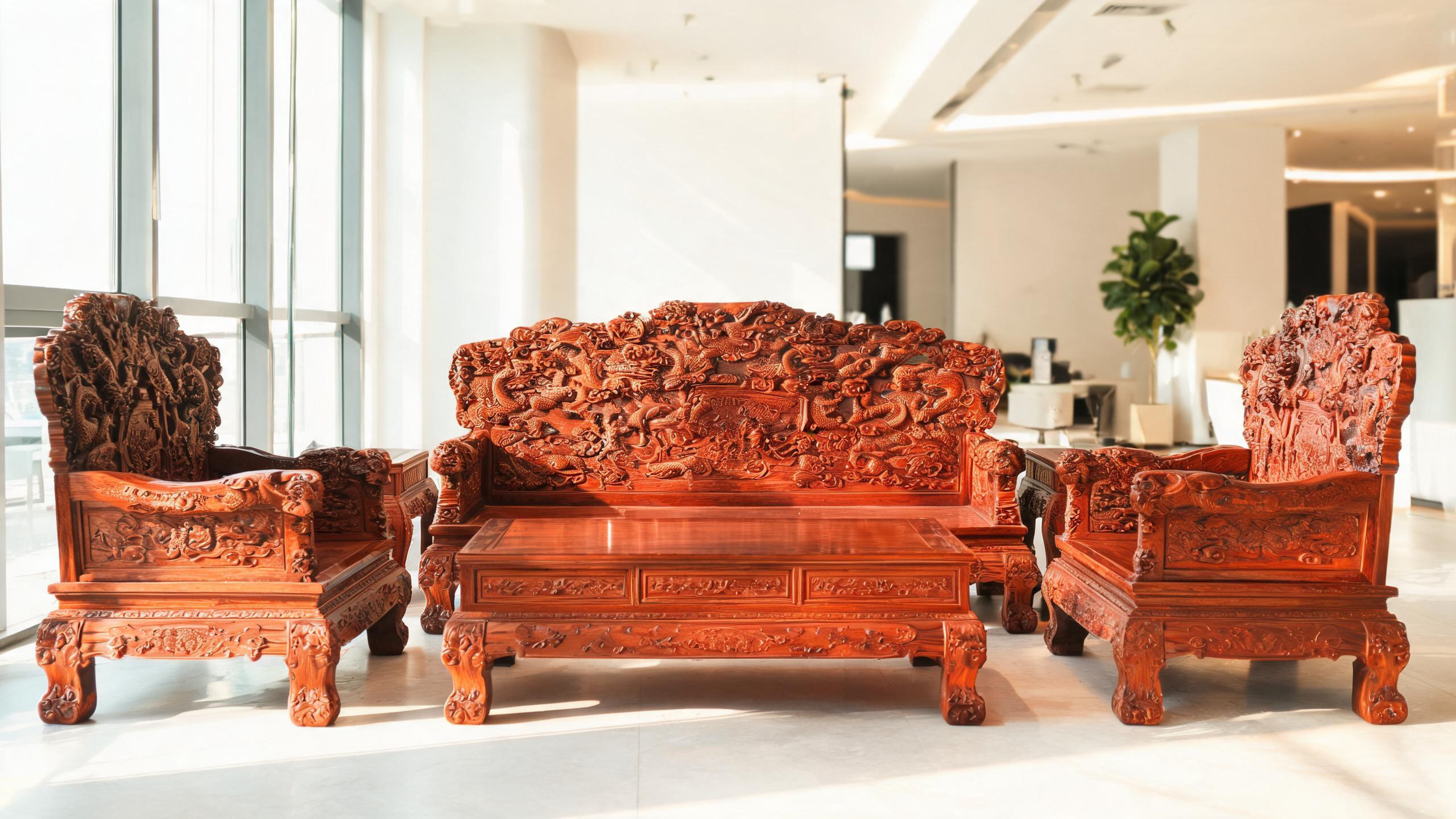
Pourquoi les meubles en bois de rose massif deviennent-ils plus chers pour les acheteurs mondiaux en 2026 ? — Une analyse des cinq principaux facteurs à l'origine de la hausse des prix des meubles en bois de rose massif en 2026 (approvisionnement en matières premières, conformité CITES, pénurie d'artisans qualifiés, normes énergétiques et environnementales, et logistique/emballage), accompagnée de recommandations de stratégies d'approvisionnement pour les grossistes, les détaillants et les acheteurs de projets hôteliers afin d'aider les acheteurs B2B à verrouiller les prix et à maîtriser les coûts dans un contexte de tendance à la hausse des prix.
Why Is Solid Rosewood Furniture Becoming More Expensive for Global Buyers in 2026?
For B2B buyers who import classical Chinese furniture, the question is no longer whether prices are rising, but how far they will climb and how to protect a sourcing program against the next increase. Across 2025 and into 2026, solid rosewood furniture has moved from a stable, predictable procurement category into one shaped by tightening timber supply, stricter trade regulation, rising energy and labour costs, and a structural shortage of skilled carvers. This article explains the forces behind the price trend, what they mean for importers, wholesalers, and hospitality buyers, and how a disciplined sourcing strategy can keep quality high and cost under control.
What Is Driving the Price of Solid Rosewood Furniture Upward?
No single factor explains the trend. The price of solid rosewood furniture is the sum of raw material, processing, finishing, compliance, and logistics costs, and each of these has moved in the same direction over the past two years. Understanding each component helps a buyer separate temporary market noise from structural change, and decide where to push back and where to accept reality.
1. Raw Timber Supply Is Tightening
Rosewood and other premium hardwoods used in classical furniture are slow-growing species with long regeneration cycles. Legal, verifiable supply is limited, and the gap between demand and certified availability has widened. As a result, the cost of the raw timber itself has risen steadily. For a manufacturer that sources legal, documented hardwood, the material line is now a much larger share of the final price than it was a few years ago. This is not a short-term spike; it reflects a structural constraint on how much premium hardwood can be brought to market legally each year.
2. Trade Regulation and Compliance Costs
International trade in rosewood is governed by CITES, the Convention on International Trade in Endangered Species of Wild Fauna and Flora. Species listed under CITES require permits and documentation to move across borders, and enforcement has become more rigorous. For exporters, this means maintaining traceable documentation, verified sourcing, and compliant packaging. These are not optional costs; they are the price of doing business legally. Buyers who work with manufacturers that already hold the necessary documentation avoid the delays and seizure risks that plague undocumented shipments, but the compliance burden is reflected in the price of every compliant piece.
3. Skilled Craftsmanship Is Scarce
Classical rosewood furniture is defined by hand carving, mortise-and-tenon joinery, and traditional finishing. These skills take years to develop, and the pool of experienced craftsmen is not growing quickly. As demand for high-quality hand-carved pieces rises, the labour cost for skilled artisans increases. A piece that requires weeks of hand carving simply costs more to produce than a machine-made alternative, and the gap is widening as skilled labour becomes harder to find. For buyers who value authenticity and durability, this is a cost worth paying; for those who only compare unit prices, it can be a source of confusion.
4. Energy, Finishing, and Environmental Standards
Drying, finishing, and climate-controlled storage all consume energy. The 36-day controlled drying process that prevents cracking and warping is energy-intensive, and rising energy prices feed directly into cost. At the same time, buyers in Europe and North America increasingly require finishes that meet EU REACH and US CARB standards. Environmentally compliant finishes and waxes cost more than conventional alternatives, but they are essential for selling into regulated markets. A manufacturer that already meets these standards builds the cost into the price rather than passing compliance risk to the buyer.
5. Logistics and Packaging
International freight has been volatile, and the cost of compliant export packaging has risen. ISPM 15 heat-treated packaging, which is required for most wood products moving internationally, adds to the bill. For full-container orders, these costs are spread across many pieces, but they are still real and they are rising. Buyers who plan orders in advance and consolidate shipments can reduce the per-piece impact of logistics.
What Does This Mean for Different Types of Buyers?
The price trend does not affect every buyer the same way. The right response depends on whether you are a wholesaler, a retailer, a hospitality buyer, or a custom-project developer.
Wholesalers and Importers
For wholesalers, the priority is predictable cost and reliable supply. A manufacturer with a stable, documented timber supply and in-house production can hold pricing more steadily than one that buys material on the open market for each order. Long-term relationships, repeat orders, and forward planning all help lock in better terms. Wholesalers who treat rosewood furniture as a commodity and switch suppliers on price alone often find that the lowest quote carries hidden compliance or quality risk.
Retailers and E-commerce Sellers
Retailers need to explain the value of solid rosewood to end customers. When prices rise, the temptation is to switch to cheaper materials, but that erodes the brand promise of authentic classical furniture. Retailers who communicate the craftsmanship, the legal sourcing, and the durability of solid rosewood can justify the price and build customer loyalty. The story of how a piece is made is part of the product.
Hospitality and Project Buyers
Hotels, resorts, and villa projects buy in volume and often need custom sizes and designs. For these buyers, the price trend argues for planning earlier and committing to orders sooner. Custom production has a lead time, and locking in a design and a price before material costs rise further protects the project budget. A manufacturer that offers OEM and ODM services, free layout drawings, and remote installation guidance can help a project stay on schedule and on budget.
How Can Buyers Protect Their Sourcing Program?
Rising prices are not a reason to stop buying solid rosewood furniture; they are a reason to buy more intelligently. A disciplined sourcing strategy can keep quality high and cost under control even in a rising market.
Work With a Manufacturer That Controls the Full Process
The most reliable way to manage cost is to work with a manufacturer that controls sourcing, drying, carving, finishing, and export from a single facility. Vertical integration removes middlemen, keeps quality consistent, and gives the buyer a single accountable partner. A factory that has been operating for many years, with its own workshop and its own documented timber supply, is better positioned to hold pricing than a trading company that assembles pieces from multiple sources.
Plan Orders and Commit Early
Forward planning is the single most effective hedge against rising prices. Buyers who place orders with realistic lead times, consolidate shipments, and commit to repeat volumes give their manufacturer the confidence to hold pricing. Last-minute orders, by contrast, force the manufacturer to buy material at current spot prices and pass the cost on. The buyer who plans wins.
Verify Documentation and Compliance
In a market where compliance is tightening, the cheapest quote is often the riskiest. Buyers should confirm that their supplier can provide the documentation needed for legal import: traceable sourcing, CITES documentation where applicable, FSC certification, and ISPM 15 heat-treated packaging. A manufacturer that prepares complete export documentation in-house removes a major source of delay and risk. The cost of compliance is real, but the cost of a seized or delayed shipment is far higher.
Balance Price With Value
Solid rosewood furniture is an investment. A well-made piece with proper joinery, controlled drying, and quality finishing lasts for generations, while a cheaper piece may warp, crack, or fail at the joints. When comparing quotes, buyers should compare the whole product: the material, the construction, the finish, and the compliance documentation, not just the unit price. The cheapest piece is rarely the most economical over the life of the product.
Why Solid Rosewood Remains a Sound Investment
Despite rising prices, solid rosewood furniture remains a strong choice for buyers who serve customers that value quality, heritage, and durability. Classical Chinese furniture is not a disposable product; it is designed to be passed down. The same characteristics that make it more expensive to produce, the hand carving, the joinery, the premium timber, are the characteristics that give it lasting value. For the right customer, solid rosewood is not a cost to be minimized but an asset to be acquired.
For B2B buyers, the practical implication is clear: the window for locking in favourable pricing is now, before material and labour costs rise further. Buyers who establish a relationship with a reliable manufacturer, plan their orders, and commit to quality will be better positioned than those who wait for prices to fall. In a market shaped by structural supply constraints, waiting rarely pays.
Choosing a Partner for the Long Term
Yunxiao Rosewood Furniture Co., Ltd., established in 2008, operates a 12,000-square-metre factory in Xianyou County, Fujian Province, a region long known for traditional hardwood craftsmanship. The company produces classical redwood sofa sets, dining sets, and bedroom sets, and supports OEM and ODM customisation for villas and resorts. Its production process reflects the principles described in this article: legal, documented hardwood sourcing, 36-day controlled drying, mortise-and-tenon assembly without metal nails, and environmentally compliant finishes that meet EU REACH and US CARB standards. The in-house team prepares complete export documentation, including FSC certification and ISPM 15 heat-treated packaging, and supports buyers with trial orders, returnable samples, remote installation guidance, and free layout drawings. Full-container orders typically ship within 45 to 60 working days.
For buyers who want to understand how these factors affect a specific order, the practical next step is to discuss requirements directly with the manufacturer, confirm current lead times and pricing, and verify the documentation that will accompany the shipment. In a rising market, the buyer who acts with information and a trusted partner is the buyer who stays ahead.