
A practical compliance guide for B2B importers of rosewood furniture. Learn how to verify FSC certification, navigate CITES Appendix II requirements for Dalbergia cochinchinensis, audit the FSC chain of custody, and avoid costly customs seizures.
BUYER COMPLIANCE GUIDE
Rosewood Import Is Not Just a Purchase — It Is a Compliance Decision
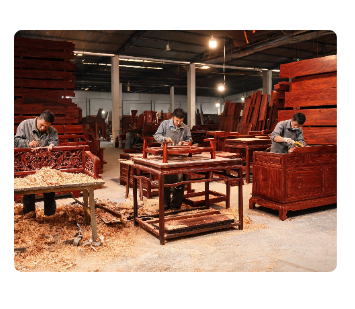
For B2B buyers, importing rosewood furniture is not the same as importing oak or teak. Rosewood — particularly Dalbergia cochinchinensis (Siamese rosewood) — sits on CITES Appendix II. That means every shipment crossing a border must be accompanied by the correct permits, and every supplier in your chain must hold verifiable documentation. One missing paper, one mismatched species code, and your container sits in customs while demurrage fees accumulate.
This guide walks through what you must verify before signing a purchase order — not what the sales brochure says, but what the customs officer will check.
- FSC certification alone does not exempt you from CITES permit requirements — you need both.
- Verify the FSC chain of custody certificate number directly on the FSC database, not on the supplier's website.
- Dalbergia cochinchinensis is listed on CITES Appendix II — confirm the exporter holds a valid CITES export permit for each shipment.
- Audit the full supply chain: log, sawmill, component maker, furniture factory. A gap anywhere breaks the chain.
- Get the species name, not just "rosewood," written on the commercial invoice and packing list.
What "FSC Certified Rosewood Furniture" Actually Means
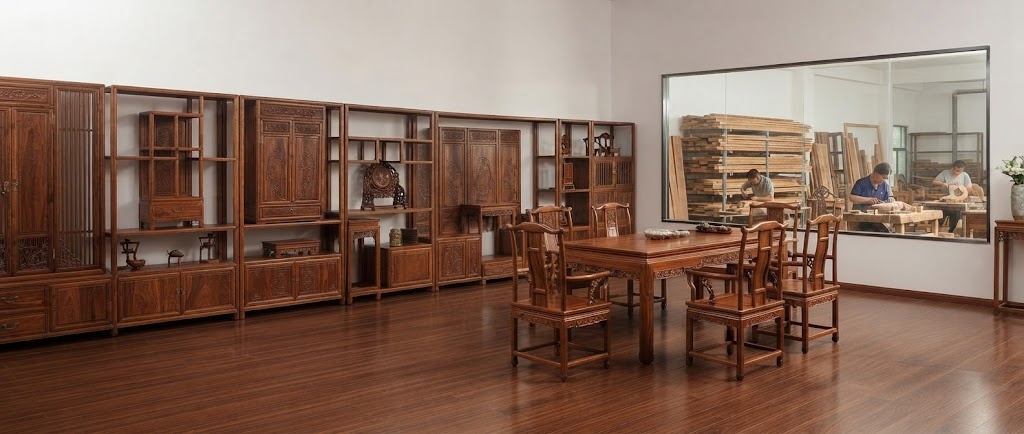
When a supplier claims to sell FSC certified rosewood furniture, they are making two separate claims:
- The wood comes from a forest managed to FSC environmental and social standards.
- The product is covered by a valid FSC chain of custody (CoC) certificate that tracks the material from forest to finished furniture.
Most buyers focus on the first claim. Customs and your end customers care about the second. A factory can legally buy FSC-certified lumber, but if it does not hold its own CoC certificate, it cannot label its furniture as FSC certified. That label is not a marketing badge — it is a controlled trademark.
How to Verify an FSC CoC Certificate
Do not accept a PDF copy of a certificate as proof. Every valid FSC CoC certificate has a license code (format: FSC-C123456) and is listed in the FSC Certificate Database on fsc.org. Verify the following:
- The certificate is active, not expired or suspended.
- The legal entity name matches your supplier's company name exactly.
- The scope covers "furniture manufacturing" or "wood processing," not just trading or logging.
- The certificate covers the geographic origin of the wood they are selling you.
| Verification Step | What to Check | Red Flag |
|---|---|---|
| FSC database lookup | License code is active and matches supplier name | Code not found or certificate expired |
| Certificate scope | Covers furniture production, not just trading | Scope limited to "office" or "trading" |
| Species coverage | Certificate explicitly includes Dalbergia species | Species listed as "mixed tropical timber" only |
| Supplier's CoC number on invoice | FSC license code appears on commercial documents | Supplier refuses to put code on invoice |
CITES Appendix II: The Legal Wall Most Buyers Hit
CITES Appendix II listing means the species is not yet endangered to the point of extinction, but trade must be strictly controlled to prevent that. For Dalbergia cochinchinensis, this translates into a hard requirement: every export shipment needs a CITES export permit issued by the exporting country's CITES Management Authority.
Here is what B2B buyers often misunderstand:
- FSC certification does not replace a CITES permit. They are separate legal systems. FSC is a voluntary sustainability standard. CITES is binding international law.
- The exporter must obtain the CITES permit. You cannot get it on their behalf. If your supplier says "you handle the paperwork," that is a serious warning sign.
- The permit must match the shipment. Species, quantity, weight, and importer name on the permit must match the commercial invoice. Even a minor mismatch can trigger rejection.
A CITES permit is shipment-specific. It cannot be reused, transferred, or "roughly matched." If the permit says 200 pieces and you ship 210, the extra 10 are illegal.
What to Request From Your Supplier (Checklist)
Before you place an order, put these requests in writing. A compliant supplier will provide them without hesitation:
- CITES export permit — a scanned copy of the permit for the specific shipment (or a commitment to provide it before shipping).
- FSC CoC certificate — the full certificate, not just the first page, with the license code visible.
- Species declaration — a document stating the botanical name (Dalbergia cochinchinensis or the specific Dalbergia species used), not just "rosewood."
- FSC invoice — the commercial invoice must carry the FSC claim and the supplier's license code.
- Import permit (if required) — check with your own country's CITES authority. Many countries require an import permit before the shipment departs.
Why the FSC Chain of Custody Matters More Than the Certificate
An FSC CoC certificate is not a single document — it is a system. The FSC chain of custody is the unbroken trail of custody from the certified forest to the final product. Every entity that takes physical possession of the wood must hold a valid CoC certificate, or the chain breaks.
For rosewood furniture, the typical chain looks like this:
- Certified forest → log trader (CoC required)
- Log trader → sawmill (CoC required)
- Sawmill → component manufacturer (CoC required)
- Component manufacturer → furniture factory (CoC required)
- Furniture factory → your warehouse (CoC required)
If your supplier sources from multiple mills, each mill needs its own CoC. Ask your supplier to list all upstream suppliers with their FSC license codes. Then verify each one in the FSC database. This is not excessive — it is standard due diligence for a CITES-listed species.
Percentage-Based Claims vs. Physical Separation
FSC allows two methods for mixing certified and non-certified material:
| Method | How It Works | What It Means for You |
|---|---|---|
| Physical separation | Certified wood is kept separate from non-certified throughout production | You can trace your specific furniture to a certified source |
| Percentage system | Factory mixes certified and non-certified input, but certified volume must meet a minimum threshold | Your furniture may contain non-certified wood — verify the percentage claim |
For a CITES-listed species like Dalbergia cochinchinensis, insist on physical separation. It makes your own documentation cleaner and reduces the risk of a customs challenge.
Common Compliance Failures We See in the Market
Based on patterns observed across importing markets, these are the most frequent reasons rosewood furniture shipments get held:
- Species misidentification — Invoice says "rosewood" without the botanical name. Customs cannot verify CITES status without the species.
- Expired CoC certificate — Supplier shows a certificate that lapsed six months ago. FSC certificates are valid for five years and require annual audits.
- Permit mismatch — CITES permit lists 1,000 kg but the shipment weighs 1,200 kg. The entire shipment can be seized, not just the excess.
- Missing import permit — The buyer's country requires an import permit, but the buyer only arranged the export permit. Check your local CITES authority before shipping.
- Re-export without documentation — If your supplier imported rosewood from a third country and is re-exporting it to you, they need a CITES re-export certificate, not just an export permit.
Practical Steps for Your Next Purchase Order
Treat compliance as a contract condition, not a request. Add these clauses to your purchase agreement:
- Condition precedent: The shipment will not depart until the supplier provides a valid CITES export permit and FSC CoC documents.
- Species warranty: The supplier warrants that the wood is exactly the species stated, and will indemnify you for any customs seizure caused by misdeclaration.
- Documentation deadline: All permits and certificates must be submitted at least 7 days before the planned shipping date.
- Right to verify: You reserve the right to verify all certificates directly with FSC and the CITES Management Authority.
Frequently Asked Questions
Is FSC certification enough to import rosewood legally?
No. FSC certification covers sustainable forest management, not international trade law. You still need a CITES export permit from the exporting country and, in many cases, an import permit from your own country.
Can I buy FSC certified rosewood furniture without a CITES permit?
No. The CITES Appendix II listing of Dalbergia cochinchinensis applies regardless of FSC status. The permit requirement is triggered by the species, not by the certification.
How long does a CITES export permit take to obtain?
It varies by country. Some authorities issue within weeks; others take months. Ask your supplier for a realistic timeline and build it into your lead time. Do not assume a standard duration — confirm with the specific exporting country.
What if my supplier says they have "all the paperwork" but won't share it?
Walk away. A compliant supplier will share certificates and permits without hesitation. Refusal to provide documentation before payment is a strong indicator of a compliance problem.
Does the FSC CoC certificate number need to appear on the invoice?
Yes, for the product to carry an FSC claim. The FSC license code should appear on the commercial invoice, packing list, and delivery documents. If it does not, your claim of "FSC certified" furniture may not hold up in an audit.
Final Recommendation
Importing FSC certified rosewood furniture is viable, but it requires discipline. Verify the FSC chain of custody at every link. Confirm the CITES export permit matches the shipment exactly. Put all documentation requirements in your contract before you pay a deposit.
The cost of verification is small. The cost of a seized shipment — demurrage, legal fees, lost product, and a damaged relationship with your own customers — is far larger. Do the paperwork first, and the furniture will follow.
Need help structuring your compliance requirements? Contact our team with your target species, source country, and destination market — we can help you build a verification checklist for your specific order.