
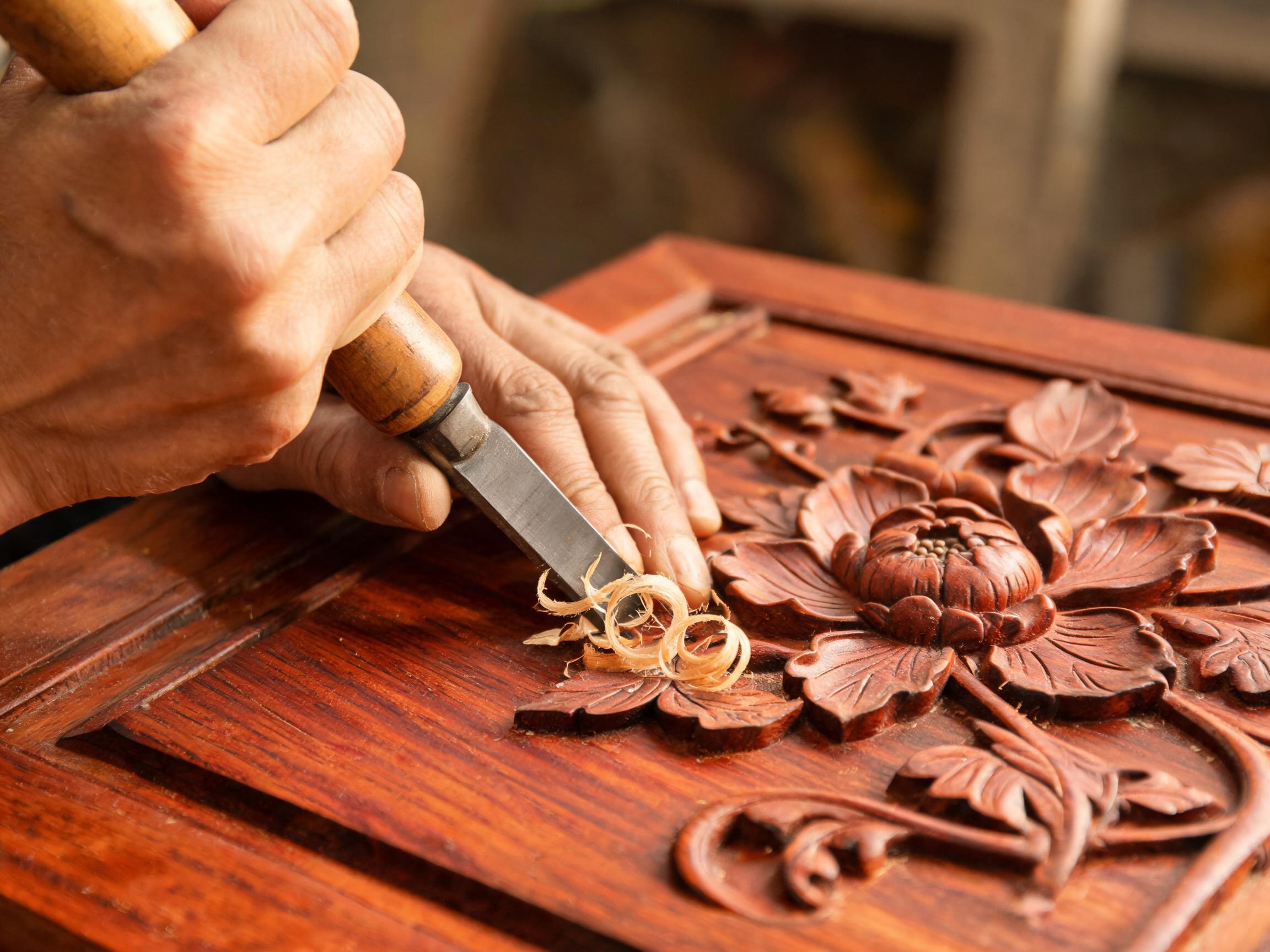
A practical guide for international buyers evaluating rosewood furniture. Learn how to distinguish genuine mortise and tenon construction from glued or doweled imitations, what to check at the factory, and which joinery details indicate traditional Chinese furniture craftsmanship worth the investment.
BUYER GUIDE · TRADITIONAL CHINESE FURNITURE
Mortise & Tenon Joinery in Rosewood Furniture: A B2B Buyer's Quality Assessment Guide
You are sourcing rosewood furniture for a showroom, a hospitality project, or a distribution channel. The vendor sends photos of elegant chairs and tables. The price is competitive. But the piece arrives with a wobbly leg, a cracked rail, or a drawer that sags after six months. The cause is almost always the same: the joinery.
For buyers, mortise and tenon joinery is not a romantic craft detail — it is the structural backbone of the piece. It determines whether your shipment survives transit, whether the furniture holds up under daily use, and whether your customers come back for more. This guide gives you a practical, factory-floor framework for assessing rosewood furniture joinery quality before you commit to an order.
- Genuine mortise and tenon joinery uses interlocking wood-to-wood connections — no nails, no screws, minimal glue. It is the single most reliable indicator of structural integrity in solid wood furniture.
- Rosewood species vary significantly in density and oil content, which directly affects how joinery is cut and how it performs. Verify the exact species and its CITES status before ordering.
- At the factory, check three things: the fit of the joint (should be snug, not loose), the presence of glue squeeze-out at joints, and whether corner blocks or dowels are used as substitutes.
- Ask for joinery photos before production and a pre-shipment inspection report with joinery-specific checkpoints.
Why Mortise and Tenon Joinery Matters for Rosewood Furniture
Rosewood is a dense, heavy hardwood. A single dining chair can weigh 8–12 kg depending on the species and dimensions. That weight puts enormous stress on every joint. A chair leg connected with a simple butt joint and screws will loosen within months of regular use. A properly cut mortise and tenon joint, by contrast, tightens under load — the more weight applied, the firmer the connection.
This is not a marketing claim; it is basic wood mechanics. The tenon (the protruding tongue) fits into the mortise (the matching cavity). When the joint is cut accurately, the wood fibers interlock, distributing stress across a larger surface area than any nail or screw can achieve. In traditional Chinese furniture construction, this method has been used for centuries precisely because it allows furniture to be disassembled, repaired, and reassembled without damage — a practical advantage for shipping and long-term ownership.
How to Distinguish Real Mortise and Tenon Joinery from Imitations
Not everything labeled "mortise and tenon" is genuine. Many factories use shortcuts that look similar from the outside but fail structurally. Here is what to look for.
1. Check the Joint Fit
In genuine construction, the tenon fits into the mortise with minimal clearance — typically 0.1–0.3 mm. You should not be able to see light through the joint line. If the tenon is visibly loose or the joint has gaps, the piece was either poorly machined or assembled with the expectation that glue will fill the space. Glue is not a substitute for a tight fit; it is a supplement.
2. Look for Glue Squeeze-Out
When a joint is properly assembled, a small amount of glue should squeeze out along the joint line. This indicates the joint was fully seated. If you see no squeeze-out and the joint looks clean, the piece may have been assembled with minimal glue — or the joint may be purely decorative, with the actual connection made elsewhere.
3. Inspect the Underside and Hidden Areas
Turn the piece over. Check the underside of a tabletop, the inside of a drawer, the back of a chair rail. Genuine mortise and tenon joints are visible in these areas. If you see dowels (small wooden pegs) or screws, the construction is not traditional mortise and tenon — it is a hybrid method that may be acceptable for low-cost production but does not offer the same structural performance.
4. Test for Movement
Gently press on the joints. A well-constructed piece should feel rigid — no creaking, no flexing. If a joint moves even slightly, it will worsen over time. This test is especially important for chairs and stools, where the leg-to-rail connection bears the most stress.
| Feature | Genuine Mortise & Tenon | Dowelled or Screwed Joint |
|---|---|---|
| Connection method | Interlocking wood-to-wood | Wooden dowels or metal screws |
| Structural integrity | High — tightens under load | Moderate — loosens over time |
| Disassembly & repair | Possible without damage | Difficult; often destructive |
| Typical use | High-end solid wood furniture | Mass-produced, lower-cost items |
| Visual indicator | Tenon visible at joint ends | Small dowel caps or screw heads |
Rosewood Species and Their Impact on Joinery
"Rosewood" is a broad term covering multiple species, and the species you choose affects both joinery quality and regulatory compliance. Here are the key distinctions.
Dalbergia Species (True Rosewood)
This includes Dalbergia odorifera (Huanghuali), Dalbergia cochinchinensis (Siamese rosewood), and Dalbergia latifolia (Indian rosewood). These woods are extremely dense, with high natural oil content. The oil makes the wood resistant to moisture and insects, but it also means glue bonds less effectively. For this reason, traditional construction relies on mechanical interlock — the joint must be tight enough to hold without relying on adhesive. When assessing furniture made from these species, pay extra attention to joint fit.
Pterocarpus Species (Often Called Rosewood in Trade)
Pterocarpus indicus (Burmese padauk or Amboyna) and Pterocarpus macrocarpus (Burmese rosewood) are also marketed as rosewood. They are slightly less dense than Dalbergia species but still hard and stable. Joinery quality requirements are the same, but the wood is slightly more forgiving in machining.
CITES and Compliance
Most true rosewood species are listed under CITES Appendix II, which means international trade requires permits. This is a critical compliance issue for B2B buyers. Before you place an order, confirm that your supplier can provide the necessary CITES documentation. If they cannot, your shipment may be held at customs, incurring storage fees and delays. This is not a minor administrative detail — it can add weeks to your lead time and significant cost to your landed price.
Quality Indicators in Traditional Chinese Furniture Construction
Traditional Chinese furniture construction offers a useful benchmark for assessing joinery quality, even if you are not sourcing strictly antique reproductions. The principles are the same, and they set a high standard.
Corner Joints
In high-quality pieces, corner joints (where two rails meet at a right angle) use a double mortise and tenon or a mitred mortise and tenon. These are more complex to cut but distribute stress across two directions. If you see a simple single tenon at a corner joint, the piece is adequate but not premium.
Stretchers and Railing
Chairs and tables often have horizontal stretchers connecting the legs. In traditional construction, these are joined with a through-tenon that may be wedged for extra strength. Check whether the stretcher is flush with the leg surface or slightly proud (protruding). A proud tenon that has been wedged is a sign of traditional, high-quality workmanship.
Drawer Construction
Drawers are a common failure point. In quality furniture, drawer sides are joined to the front with a dovetail joint, and the drawer bottom is set into a groove — not nailed or stapled. Open the drawer and look at the corner joints. Dovetails that are tight, evenly spaced, and show no gaps are a reliable indicator of overall construction quality.
Back Panels
In cabinets and wardrobes, the back panel should be set into a groove rather than nailed on. This allows the panel to expand and contract with humidity changes without cracking. If you see nails or staples holding the back panel, the piece was made for quick assembly, not longevity.
Factory Assessment Checklist for B2B Buyers
When you visit a factory or review a production sample, use this checklist to evaluate joinery quality systematically.
- Joint fit: Tenon should fit snugly into mortise with no visible gaps. Light should not pass through the joint line.
- Glue application: Look for squeeze-out at joint lines. This indicates full seating. No squeeze-out may mean insufficient glue.
- Hidden areas: Check undersides, drawer interiors, and back panels. These reveal the true construction method.
- Corner joints: Look for double or mitred tenons on high-stress corners (chair legs, table aprons).
- Stretcher joints: Check whether stretchers are flush or proud. Wedged through-tenons indicate traditional quality.
- Drawer construction: Dovetail joints on drawer fronts, grooved bottoms, no nails or staples.
- Wood moisture content: Ask for the moisture meter reading. Rosewood should be 8–12% for indoor furniture. Higher moisture content leads to joint failure as the wood dries and shrinks.
- Finish application: The finish should not obscure the joinery. A heavy lacquer that fills joint lines may be hiding poor fit.
Common Quality Issues and How to Avoid Them
Even with good joinery, rosewood furniture can fail if other factors are not controlled. Here are the most common problems buyers encounter.
Wood Seasoning
Rosewood must be properly seasoned (dried) before machining. If the wood is not dried to the correct moisture content, it will continue to shrink after assembly, causing joints to loosen. Ask your supplier about their drying process. Kiln-dried wood with a recorded moisture content is the industry standard. Air-dried wood may be acceptable for some applications but carries more risk.
Joint Reinforcement
Some factories add corner blocks or metal brackets to reinforce joints. This is not inherently bad — it can add strength — but it should not be a substitute for a properly cut joint. If you see reinforcement, check whether the joint itself is still sound. If the joint is loose and the reinforcement is holding the piece together, the construction is inadequate.
Finish Compatibility
Rosewood's natural oils can interfere with some finishes, causing them to peel or crack. A quality supplier will use a finish specifically formulated for oily hardwoods. Ask what finish is used and whether it has been tested on the specific rosewood species you are ordering.
Cost Implications of Joinery Quality
Genuine mortise and tenon construction is more labour-intensive than dowelling or screwing. A chair that takes 30 minutes to assemble with screws may take 2–3 hours with traditional joinery, depending on the complexity. This labour cost is reflected in the price. As a buyer, you should expect to pay a premium for genuine joinery — typically 20–40% more than comparable pieces with dowelled construction.
However, the premium is justified by lower return rates and higher customer satisfaction. A piece that fails structurally after six months costs you the replacement cost, the shipping cost, and the reputational damage. For B2B buyers, one structural failure can cost more than the savings from a cheaper construction method across an entire container.
Questions to Ask Your Supplier
Before placing an order, ask these specific questions. The answers will tell you a lot about the supplier's competence and transparency.
- What is the exact botanical species of the rosewood used? Can you provide the CITES export permit?
- What is the moisture content of the wood at the time of machining? Can you provide the moisture meter readings?
- What type of joint is used for the leg-to-rail connection? Can you show me a photo of the joint before assembly?
- Is glue used? If so, what type and how much?
- Can I request a pre-shipment inspection that includes disassembling a sample piece to verify the joinery?
- What is your warranty policy for structural defects?
Conclusion: Make Joinery a Contractual Requirement
Mortise and tenon joinery is not a decorative detail — it is a structural specification. For B2B buyers, the most reliable way to ensure quality is to make it a contractual requirement. Specify the joint type, the wood species, the moisture content, and the inspection procedure in your purchase order. Do not rely on verbal assurances or marketing photos.
When you receive a sample, test it. Turn it over, open the drawers, press the joints. If it passes your inspection, you have a supplier worth keeping. If it fails, move on — there are factories that do this properly, and they are not hard to find once you know what to look for.
If you are evaluating rosewood furniture suppliers and need guidance on specific joinery specifications or inspection protocols, contact us with your project details. We can provide reference photos of acceptable joint quality and discuss how to build joinery requirements into your order documentation.