The Tradition of Chinese Rosewood Furniture: Ming and Qing Dynasty Heritage
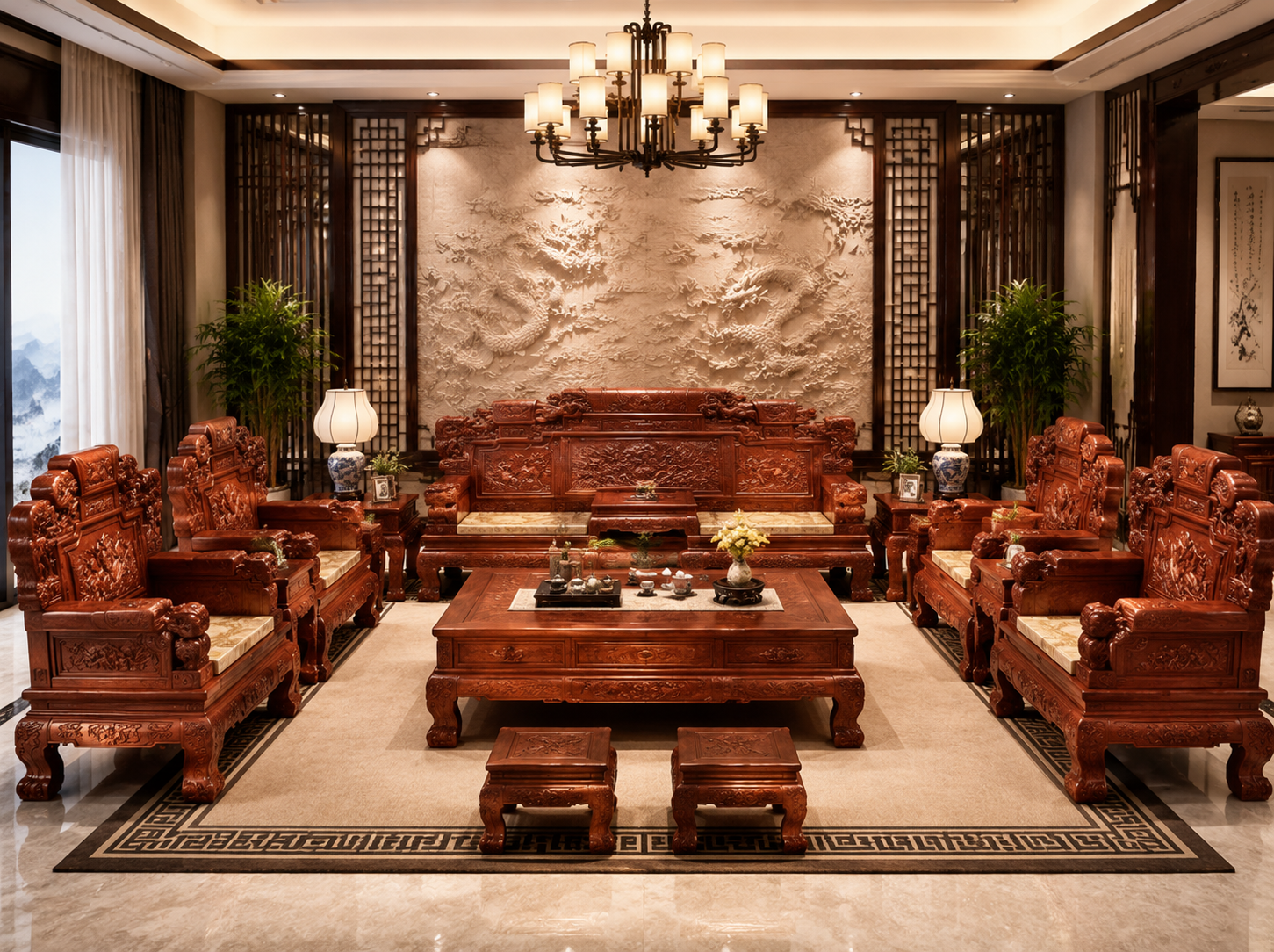
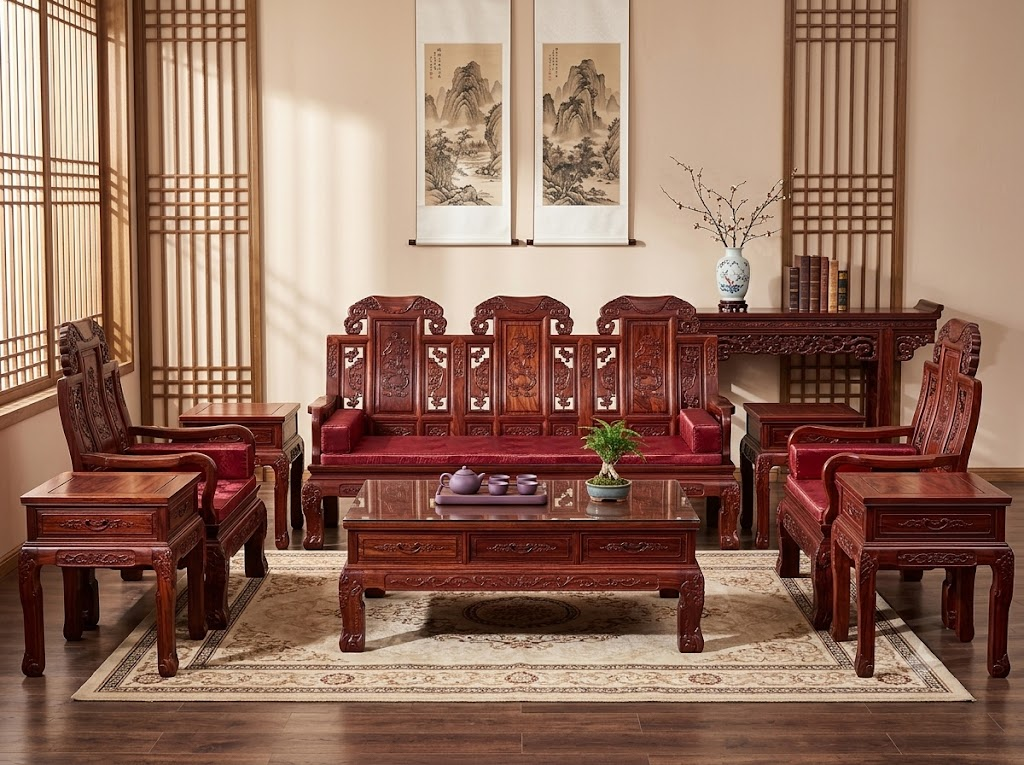
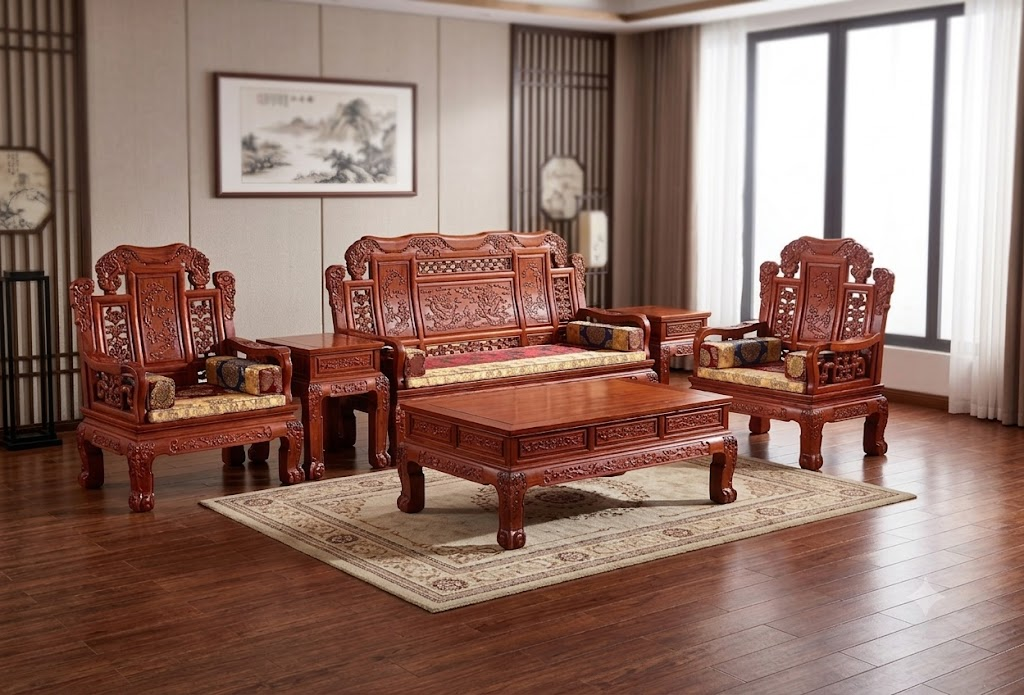
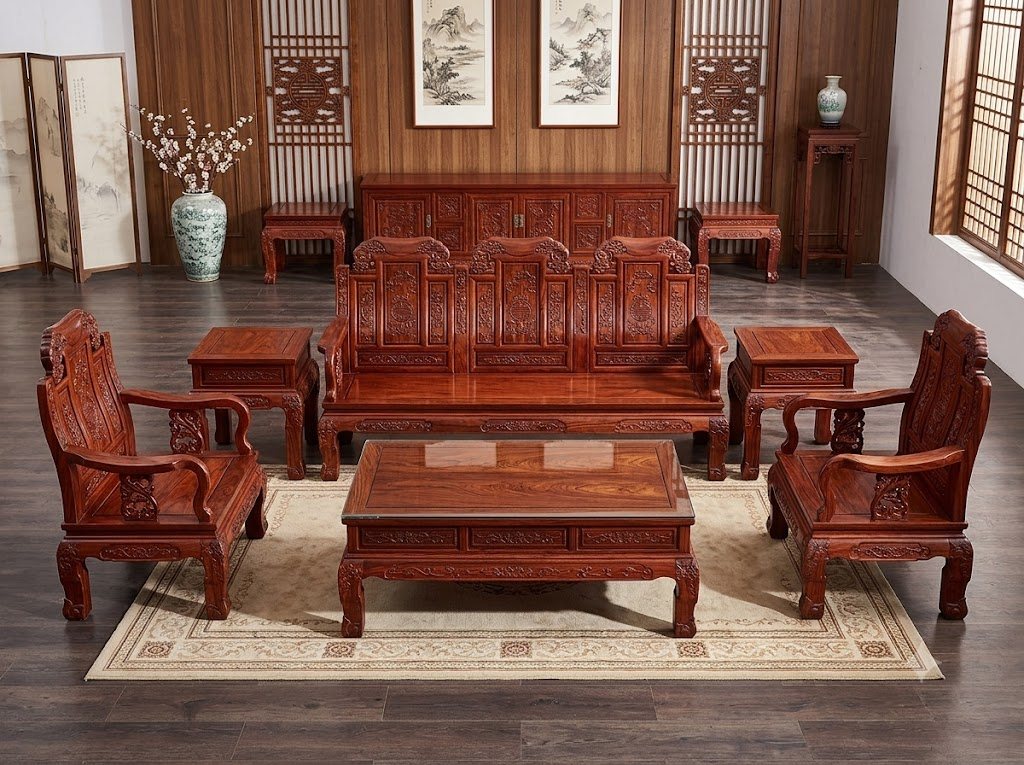
Chinese rosewood furniture represents over 600 years of craft evolution, tracing its origins to the Ming dynasty (1368–1644) when scholar-officials and imperial courts elevated hardwood furniture to an art form. The Ming style is characterized by clean lines, restrained proportions, and structural elegance-every joint visible and every curve functional. The subsequent Qing dynasty (1644–1912) added ornate carving, larger proportions, and symbolic motifs like dragon, phoenix, and bat patterns that conveyed prosperity and authority.
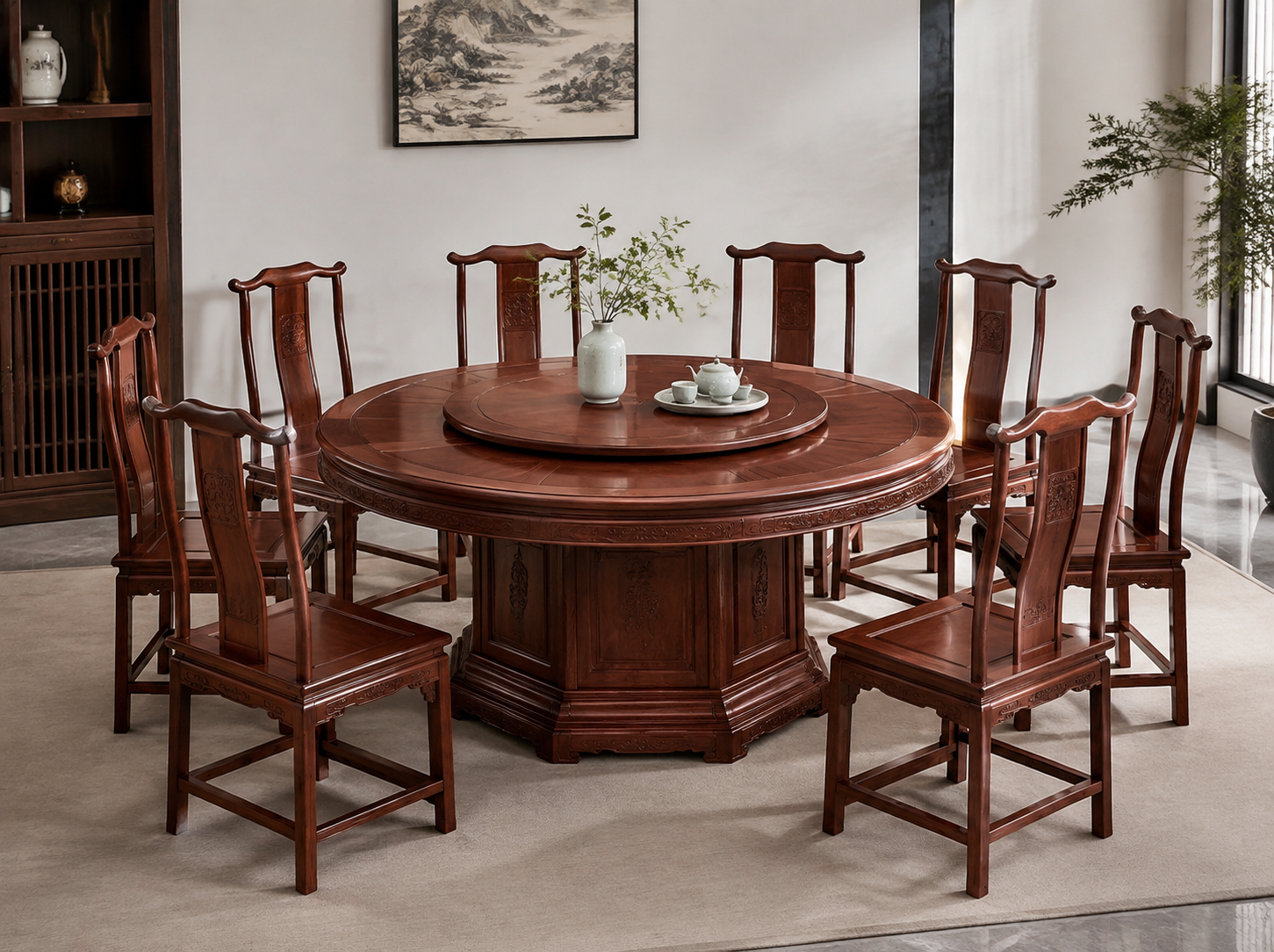
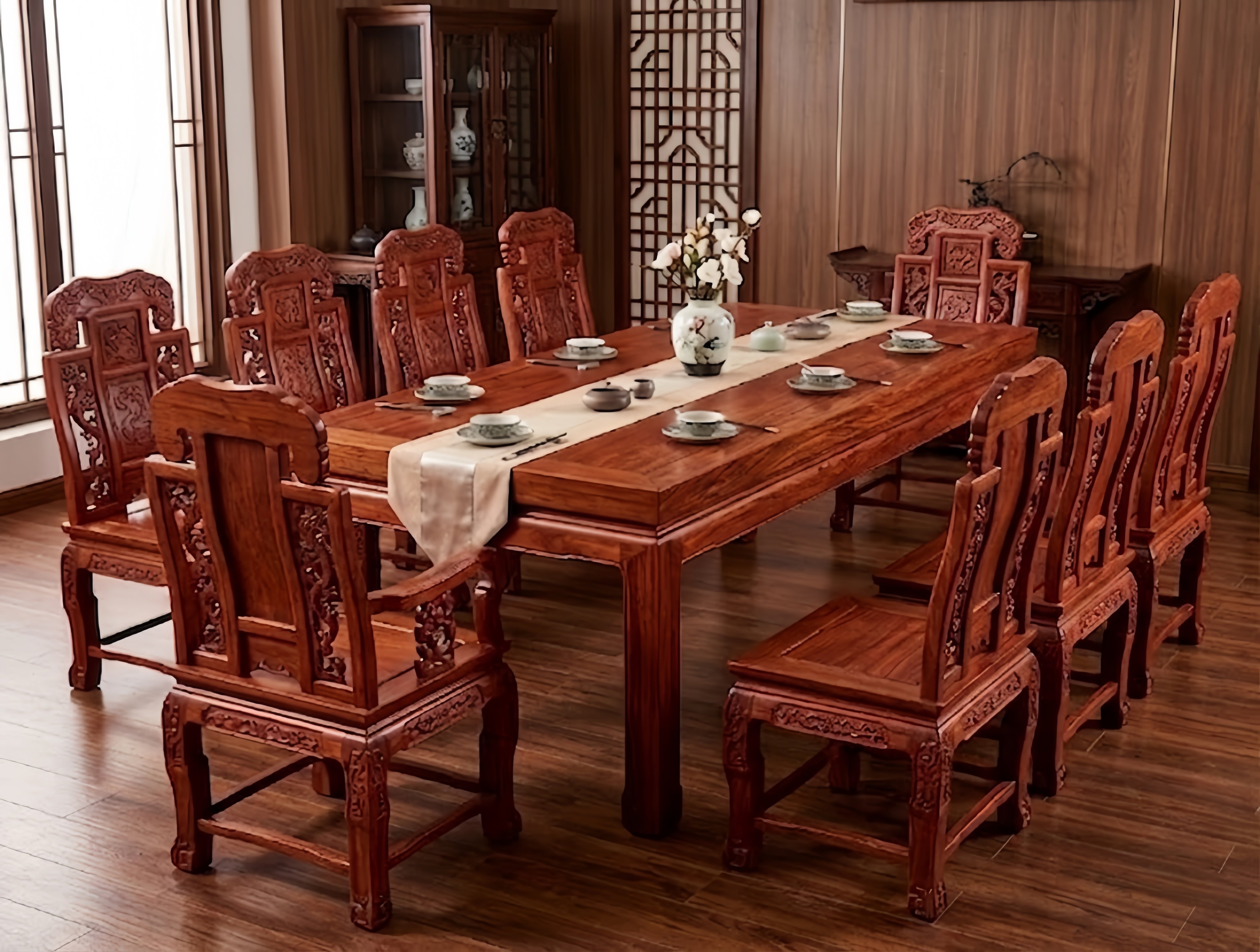
Yunxiao Rosewood Furniture Co., Ltd produces both Ming and Qing style furniture from its 12,000-square-meter factory in Xianyou County, Fujian Province-a region recognized as a center of traditional hardwood furniture craft for over five centuries. The factory's 16 catalog products span sofa sets, dining tables, and bedroom suites, each built with techniques that have changed little since the Ming era: mortise-and-tenon joinery, hand carving, and natural raw lacquer finishing.
For overseas buyers, importing Chinese rosewood furniture means acquiring pieces that carry cultural authenticity, material rarity (Siamese rosewood is CITES Appendix II listed), and structural longevity measured in generations rather than years. This guide covers the historical context, craft techniques, compliance requirements, and procurement process that B2B buyers need to understand when sourcing Chinese rosewood furniture for North American, Southeast Asian, and Australian markets.
Ming Style vs. Qing Style: Understanding the Design Difference
Buyers sourcing Chinese rosewood furniture encounter two primary style traditions. Understanding the distinction helps match products to end-use environments and customer preferences.
| Characteristic | Ming Style | Qing Style |
|---|---|---|
| Lines and Proportions | Clean, minimalist, elegant curves | Bold, heavy, imposing scale |
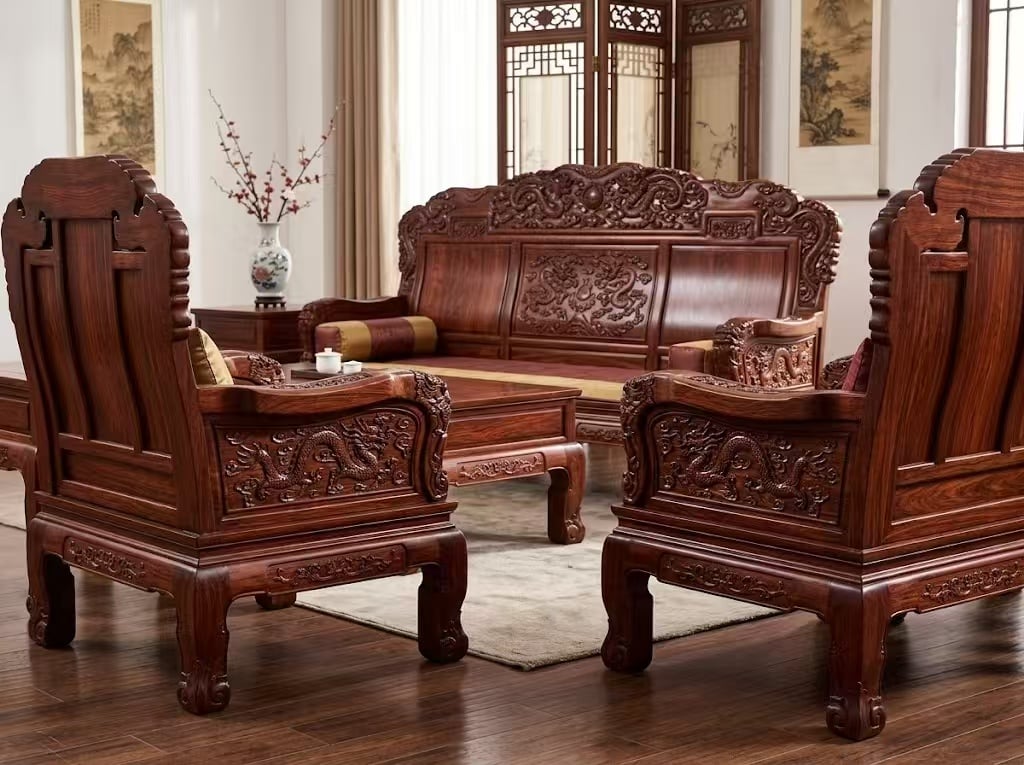
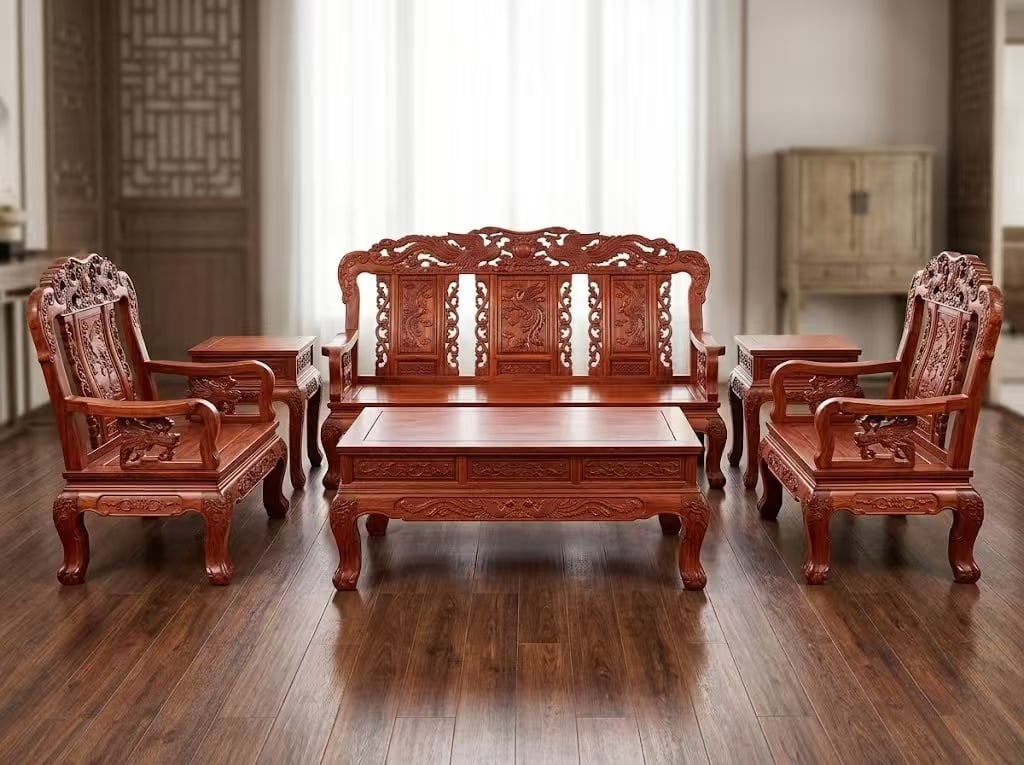
| Carving | Minimal or geometric lattice openwork | Elaborate relief: dragon, phoenix, floral scenes |
| Structural Emphasis | Joinery visible as design feature | Carved panels dominate; structure concealed |
| Suitable For | Contemporary interiors, boutique hotels, modern restaurants | Grand hotel lobbies, reception halls, luxury residences |
| Yunxiao Products | Ming Style Siamese Rosewood Sofa 7-Piece and 9-Piece, Ming Style Round Dining Table 8-Seat | Qing Dynasty Style Carved Sofa 5-Piece, Imperial Dragon Carved Sofa 10-Seat |
Many buyers order both styles for different areas of the same project-Ming style for dining rooms and private spaces, Qing style for lobbies and reception areas where visual impact is paramount.
Siamese Rosewood: The Material Behind Chinese Classical Furniture
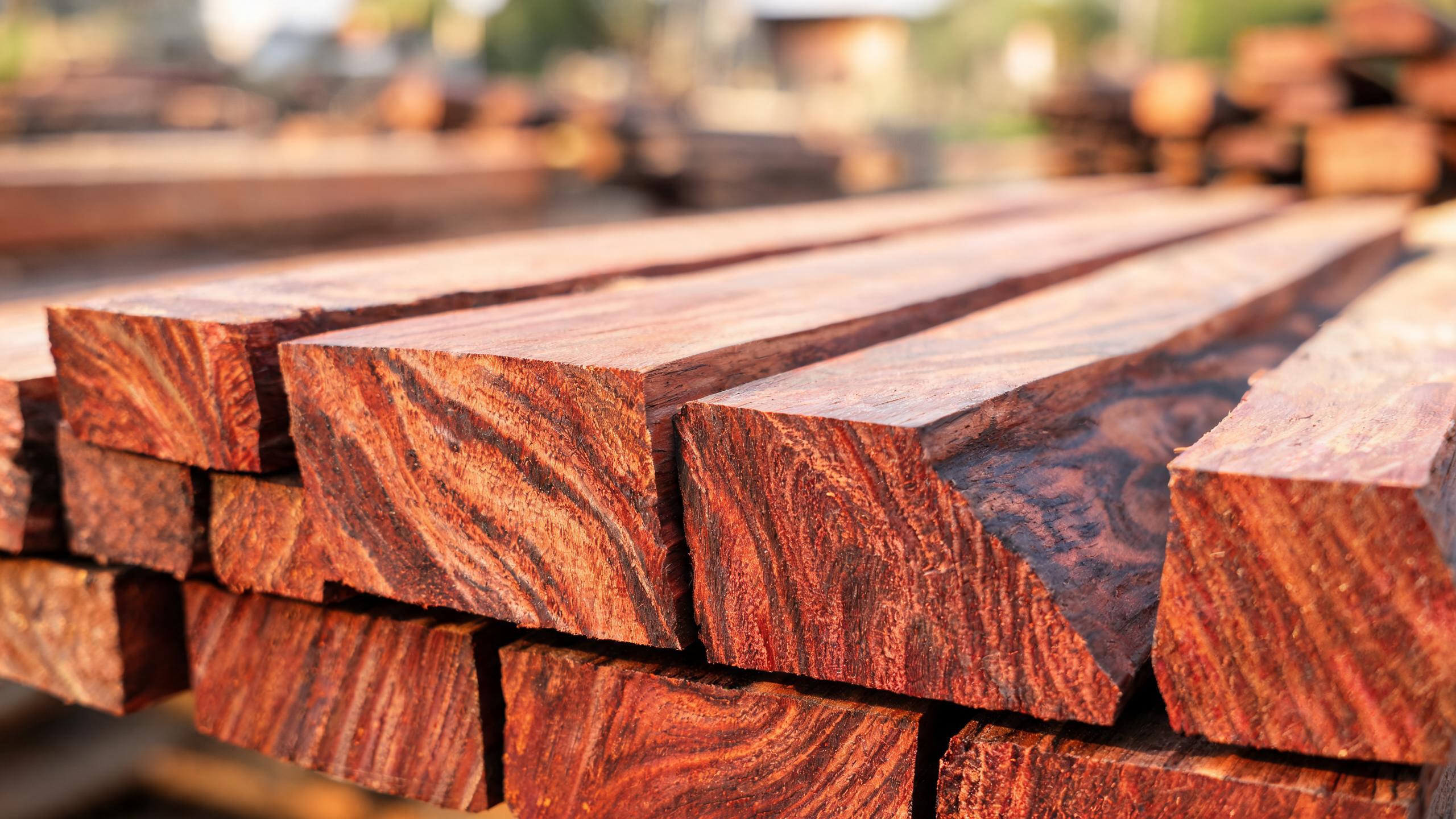
The wood used in Yunxiao's Chinese rosewood furniture is Siamese rosewood (Dalbergia cochinchinensis), a tropical hardwood native to mainland Southeast Asia. This species has been the preferred material for high-end Chinese hardwood furniture since the Ming dynasty, valued for several properties:
- Density and hardness: the wood is dense enough to hold crisp carving detail for centuries without rounding or wearing, yet workable with hand tools when freshly cut.
- Color depth: heartwood ranges from deep reddish-brown to purplish-red, deepening with age and lacquer oxidation. Sapwood is pale yellow and is excluded from visible surfaces.
- Natural durability: the wood contains natural oils and extractives that resist insect attack and fungal decay, making it suitable for tropical Southeast Asian and Australian climates without chemical treatment.
- Grain character: interlocked and wavy grain patterns create a chatoyant (light-shifting) surface that becomes more pronounced with hand-rubbed lacquer finishing.
Siamese rosewood is listed under CITES Appendix II, meaning all international trade requires export permits. Yunxiao is a CITES-registered exporter and includes Appendix II export permits with every shipment. The factory also holds FSC chain-of-custody certification, documenting that timber originates from legally managed sources.
Mortise-and-Tenon Joinery: The Structural Science of Chinese Furniture
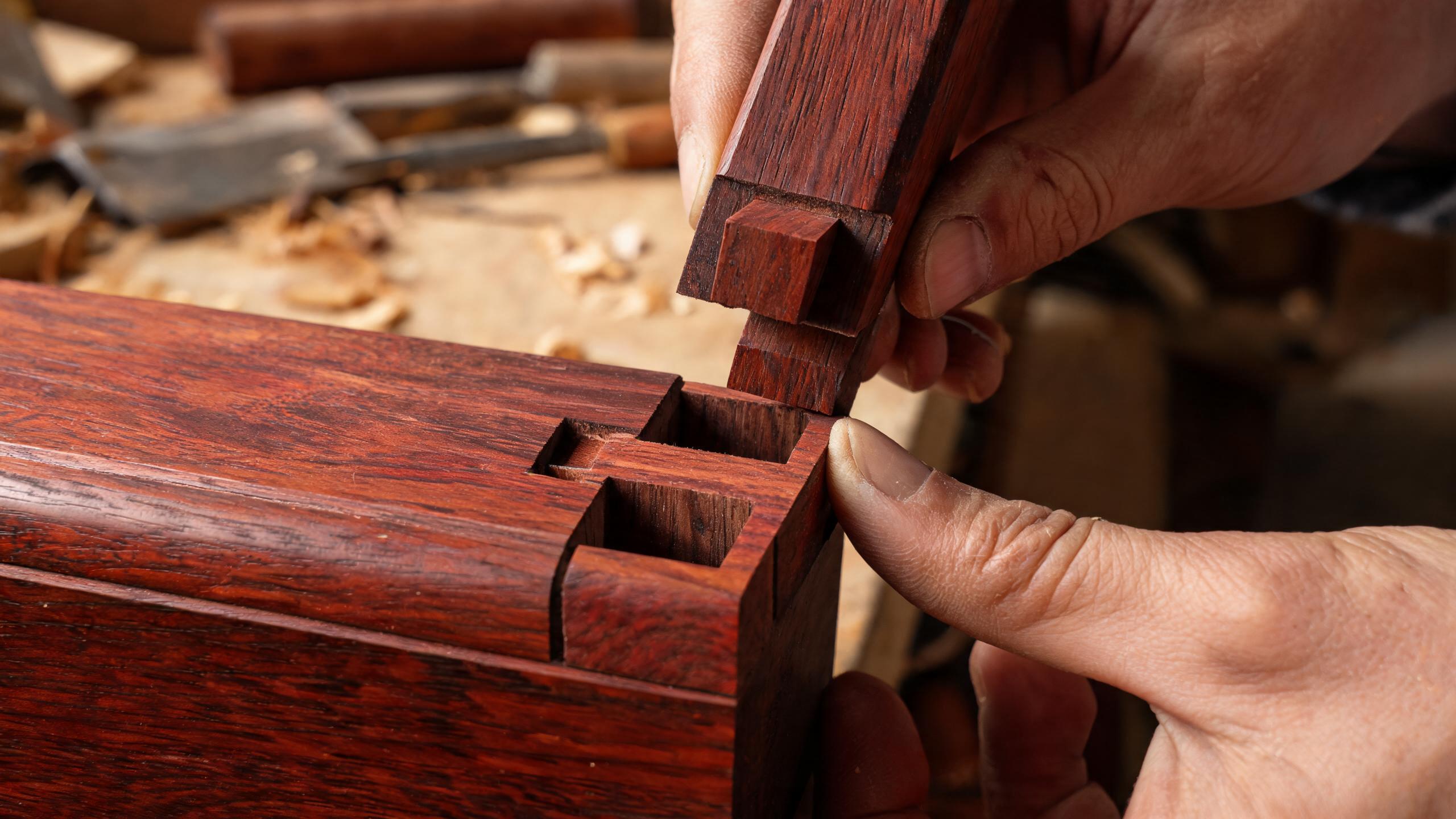
The mortise-and-tenon joint is the defining structural feature of Chinese classical furniture. Yunxiao's craftsmen use several joint variations developed during the Ming dynasty, each engineered for a specific load and stress pattern:
Through-tenon with wedge: used for the primary leg-to-apron connection on tables and chairs. The tenon passes completely through the apron and is split at the tip; a bamboo wedge is driven into the split, expanding the tenon inside the mortise. This joint cannot pull apart under tension and actually tightens with load.
Half-lap mortise-and-tenon: used for stretcher-to-leg connections on chairs and benches. The stretcher tenon fits into a mortise on the inner face of the leg, creating a rigid cross-brace that prevents racking (sideways movement).
Floating-panel frame: used for tabletops, wardrobe doors, and bed panels. The panel sits in a groove cut into the frame, held by wooden buttons that allow lateral movement. This is the critical innovation that lets solid wood furniture survive humidity changes across continents without cracking.
Dovetail drawer joints: used on dresser and wardrobe drawers. The trapezoidal dovetail shape resists pull-out forces and cannot separate under normal use.
No metal screws, nails, or brackets are used in the primary frame of any Yunxiao furniture piece. Bamboo dowel pins are the only secondary fasteners, chosen because bamboo has similar moisture expansion characteristics to rosewood, preventing differential movement at the joint.
Hand Carving Traditions in Xianyou, Fujian
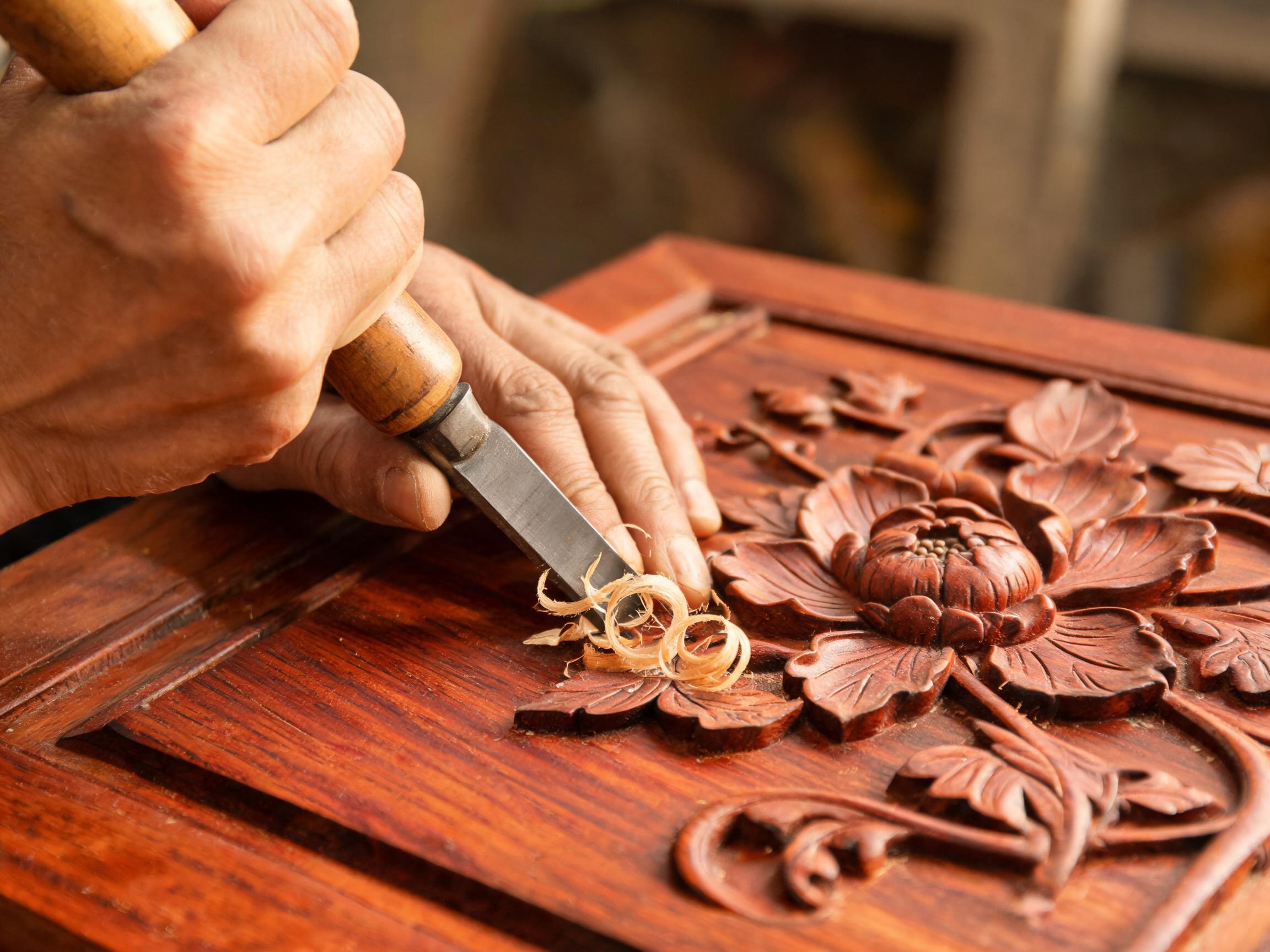
Xianyou County in Fujian Province has been a center of hardwood furniture carving since the Ming dynasty. The region's craftsmen developed a distinctive carving vocabulary that Yunxiao's master artisans continue to practice using traditional hand tools-chisels, gouges, and wooden mallets-rather than power tools.
The carving process for a single backrest panel involves:
- Design transfer: the motif is drawn on paper and transferred to the wood surface using carbon tracing or freehand sketching.
- Background relief: the carver removes the background wood to the first depth level (low relief), establishing the motif silhouette.
- Mid-level shaping: secondary elements are carved to medium relief, creating dimensional layering.
- High-relief detail: the foreground elements (dragon scales, phoenix feathers, floral petals) are carved to full three-dimensional depth.
- Surface finishing: the carving is sanded and detail-cleaned with small chisels before lacquer application.
A single backrest panel with three-step relief carving requires 30 to 40 hours of work by a master artisan. The carving motifs available in Yunxiao's catalog include:
- Dragon: imperial symbol of power; carved in coiled or pursuing-pearl configurations on sofa backrests and bed headboards.
- Phoenix and peony: symbol of prosperity and feminine elegance; commonly paired on reception sofa sets.
- Cloud and Ruyi: auspicious clouds and Ruyi scepter motifs symbolizing good fortune; used on armrests and apron skirts.
- Lattice: geometric openwork patterns (hexagonal, diamond, ice-ray) inspired by Ming dynasty window designs; used for backrest panels and screen panels.
- Bamboo: carved bamboo stalks and leaves symbolizing integrity and resilience; popular on dining chair backs.
Export Documentation for Chinese Rosewood Furniture
Importing Chinese rosewood furniture into North America, Southeast Asia, or Australia requires a specific set of documents that differ from general furniture imports. Because Siamese rosewood is CITES Appendix II listed, the documentation burden is higher, and missing documents will result in customs seizure.
Yunxiao's export team prepares and includes the following with every shipment:
- CITES Appendix II Export Permit: issued by the China CITES Management Authority. This permit certifies that the Dalbergia cochinchinensis timber was legally acquired and that export does not threaten the species' survival. Processing time is 5 to 10 working days. The permit is shipment-specific and non-transferable.
- CITES Re-Export Certificate: required when the shipment transits through a third country (for example, goods routed through Singapore before reaching Australia).
- FSC Chain-of-Custody Certificate: documents the timber's path from forest to factory to finished product. Required by hotel group procurement policies, government buyers, and corporate sustainability programs.
- ISPM-15 Heat Treatment Certificate: confirms that all wooden packaging material (crates, bracing, pallets) has been heat-treated to 56 degrees Celsius for at least 30 minutes, killing wood-boring pests. Mandatory in the US (USDA APHIS), Australia (DAFF), and most other importing countries.
- Phytosanitary Certificate: may be required by certain destination countries for solid wood products.
- Commercial Invoice and Packing List: itemized with HS code 9403.60, country of origin (China), and FOB Xiamen value declaration.
Buyers should engage a customs broker experienced with CITES Appendix II timber products. Standard furniture brokers who have never processed a CITES permit may delay clearance by several weeks.
36-Day Kiln Drying and Cross-Climate Stability
The most common quality failure in exported Chinese hardwood furniture is cracking after delivery-caused by insufficient drying. Solid rosewood shipped from humid Fujian (average 70 percent relative humidity) to dry climates like North American winters (30 to 40 percent relative humidity) or air-conditioned Australian interiors will lose moisture and shrink. If the wood is not properly dried before construction, this shrinkage causes catastrophic cracking.
Yunxiao's drying protocol addresses this at three levels:
Level 1 - Pre-construction kiln drying: every timber batch enters a constant-humidity kiln for 36 days. The kiln cycles through controlled humidity and temperature stages that bring moisture content down to below 14 percent-the equilibrium point for most indoor environments in temperate climates. Moisture is measured with pin meters at multiple points on each board. Any board above 14 percent is re-dried before processing.
Level 2 - Structural accommodation: even properly dried wood experiences minor dimensional changes with seasonal humidity. Floating-panel construction on tabletops, wardrobe doors, and bed panels allows this movement without stress buildup. Mortise-and-tenon joints accommodate micro-movement without loosening.
Level 3 - Finish system: the 8 to 9 coat hand-rubbed raw lacquer finish creates a breathable barrier that slows moisture exchange without sealing the wood completely. This allows gradual acclimatization after delivery rather than sudden stress from rapid moisture loss.
Buyers should request kiln drying records as part of the pre-shipment documentation. Furniture from factories that dry for only 7 to 14 days will almost certainly crack within months of arriving in a dry climate.
Raw Lacquer Finishing: Traditional and Compliant
Chinese classical furniture has traditionally been finished with raw lacquer (natural urushi sap), a technique dating back over 3,000 years. Yunxiao continues this tradition while ensuring the finish meets modern international compliance standards.
The raw lacquer process involves 8 to 9 hand-rubbed coats applied over 20 to 30 days:
- Wood sealing: a thin lacquer primer penetrates the pore structure, stabilizing the surface.
- Filling coats: 3 to 4 coats fill the open grain of rosewood, creating a smooth base.
- Body coats: 3 to 4 additional coats build the finish depth and sheen, hand-rubbed between coats with fine abrasive.
- Final curing: the finished piece cures in a humidity-controlled room (70 to 80 percent relative humidity, 20 to 25 degrees Celsius) for 7 to 10 days. Raw lacquer polymerizes through oxidation and requires humidity to cure properly.
The resulting finish is:
- EU REACH compliant: no restricted chemical substances above regulatory thresholds.
- US CARB compliant: formaldehyde emissions below Phase 2 limits.
- FDA 21 CFR 175.300 compliant: safe for repeated food contact on dining table surfaces.
- Breathable: unlike polyurethane, raw lacquer allows moisture vapor transmission, preventing finish blistering when the wood beneath adjusts to new climate conditions.
ISPM-15 Packaging for International Shipping
Chinese rosewood furniture with hand-carved surfaces requires engineered packaging that protects relief carving, lacquer finishes, and structural joints during ocean freight from Xiamen to global destinations. Yunxiao's packaging protocol meets ISPM-15 standards and includes:
- Carving protection: acid-free tissue paper wrapped around all carved surfaces prevents lacquer rub-off and carving edge chipping from vibration.
- Component separation: tables are disassembled (top separated from base), chairs are individually wrapped, and all components are secured in custom-cut foam slots within the crate.
- Moisture barrier: VCI anti-corrosion film and desiccant packs inside the crate prevent condensation damage during the 14 to 30 day ocean transit.
- ISPM-15 wooden crate: heat-treated to 56 degrees Celsius for 30+ minutes, stamped with the international phytosanitary mark accepted by customs in all major importing countries.
- Internal bracing: wooden cross-braces lock each component in place, preventing shifting that could crack joints or chip carving.
Container loading is supervised at the Xianyou factory warehouse. A 40-foot container typically accommodates 6 to 10 furniture sets depending on product mix. Partial shipments are available for buyers managing multiple project sites.
Sourcing Process for International Buyers
The standard process for importing Chinese rosewood furniture from Yunxiao follows these stages:
- Inquiry (Day 1–2): buyer specifies style preference (Ming or Qing), furniture categories, carving motifs, target market, and order quantity. Factory returns FOB Xiamen pricing, production timeline, and document samples within 48 hours.
- Customization (Day 3–17): for OEM and ODM orders, layout drawings and 3D mockups are delivered within 15 working days. Carving and finish samples can be mailed for approval.
- Deposit and production (Day 18–75): 30 percent T/T deposit initiates production. Standard catalog products take 45 to 60 working days; custom orders take 60 to 75 working days. Weekly progress photos are provided.
- Pre-shipment inspection (Day 76–78): buyer or third-party QC inspects dimensions, carving quality, finish coverage, and joint integrity. Factory photo and video documentation is available for remote inspection.
- CITES permit processing (Day 76–85): the CITES export permit is finalized during the inspection period. Processing takes 5 to 10 working days and cannot begin until production is complete and the shipment contents are finalized.
- Packing and loading (Day 86–88): ISPM-15 crate packing, container loading at the Xianyou warehouse, dispatch to Xiamen port.
- Documentation delivery (Day 88): all export documents are sent to the buyer's freight forwarder for customs filing at the destination port.
Target Markets: North America, Southeast Asia, and Australia
Yunxiao's Chinese rosewood furniture serves three primary export markets, each with specific regulatory and buyer characteristics:
North America (primary market): Buyers include furniture wholesalers, Asian-inspired hospitality groups, interior designers, and Chinese cultural institutions. Key compliance requirements: US Lacey Act declaration for timber legality, CARB Phase 2 formaldehyde limits, FDA 21 CFR 175.300 for dining surfaces, and FSC documentation for corporate procurement. Yunxiao exhibits at the Canton Fair and Shanghai International Furniture Fair, where many North American buyers initiate contact.
Southeast Asia: Buyers include hotel and resort developers furnishing properties in Chinese cultural style, heritage property owners, and furniture distributors serving the ethnic Chinese market. The tropical climate is compatible with rosewood's natural durability, but buyers should still verify 36-day kiln drying to prevent issues in air-conditioned interiors. Large banquet-size dining sets (12-seat square tables) are popular for wedding and event venues.
Australia: Buyers include high-end furniture retailers, resort procurement managers, and Chinese cultural associations. Australia enforces strict ISPM-15 and biosecurity import conditions. All wooden packaging must be heat-treated and marked, and shipments may be inspected by DAFF on arrival. FSC chain-of-custody documentation is increasingly required by Australian corporate buyers.
Frequently Asked Questions
What is the difference between Ming and Qing style Chinese rosewood furniture?
Ming style features clean lines, minimalist proportions, and geometric lattice carving. Qing style is bolder with elaborate relief carving of dragons, phoenixes, and floral scenes. Yunxiao produces both styles; many buyers order Ming style for dining and bedroom spaces and Qing style for lobbies and reception areas.
Is Siamese rosewood legal to import?
Yes, with proper documentation. Siamese rosewood (Dalbergia cochinchinensis) is CITES Appendix II listed, meaning international trade is legal with an export permit. Yunxiao is a CITES-registered exporter and includes Appendix II export permits with every shipment. Buyers should use a customs broker experienced with CITES timber procedures.
How long does production take?
Standard catalog products require 45 to 60 working days from deposit receipt. OEM and ODM custom orders with unique carving patterns or dimensions require 60 to 75 working days. Weekly production progress photos are provided to the buyer.
Will the furniture crack in my climate?
Properly dried and constructed furniture should not crack. Yunxiao kiln-dries all timber for 36 days to below 14 percent moisture content, uses floating-panel construction that accommodates wood movement, and applies a breathable raw lacquer finish that allows gradual acclimatization. Buyers should request kiln drying records as part of pre-shipment documentation.
What carving motifs are available?
Standard motifs include dragon, phoenix and peony, cloud and Ruyi, lattice (hexagonal, diamond, ice-ray), and bamboo. Custom carving patterns are available through OEM and ODM. Each carved backrest panel requires 30 to 40 hours of hand work by a master artisan in Xianyou.
Can I visit the factory?
Yes. Buyers are welcome to visit the Yunxiao factory in Xianyou County, Fujian Province, to inspect production lines, carving workshops, kiln drying facilities, and finished products. The factory also exhibits at the Canton Fair (Guangzhou) and the Shanghai International Furniture Fair.
What documents come with each shipment?
CITES Appendix II export permit, CITES re-export certificate (if transiting a third country), FSC chain-of-custody certificate, ISPM-15 heat treatment certificate, commercial invoice with HS code 9403.60, and packing list. FDA compliance declaration for dining table finishes is included where applicable. All documents are in English.
Do you offer OEM and ODM customization?
Yes. Custom dimensions, exclusive carving patterns, alternative wood species, and finish colors are available. The factory provides layout drawings and 3D mockups within 15 working days, followed by a mailed finish sample for approval before production.
What are the payment terms?
30 percent deposit by T/T with the balance before shipment. L/C (letter of credit) is available for orders above USD 30,000. Trial single sets and refundable samples are available for new buyers.
What trade terms do you offer?
The default trade term is FOB Xiamen, a major South China export port with direct routes to Los Angeles, Sydney, Singapore, and Rotterdam. CIF and DAP terms are available on request. Container loading is supervised at the factory warehouse in Xianyou.