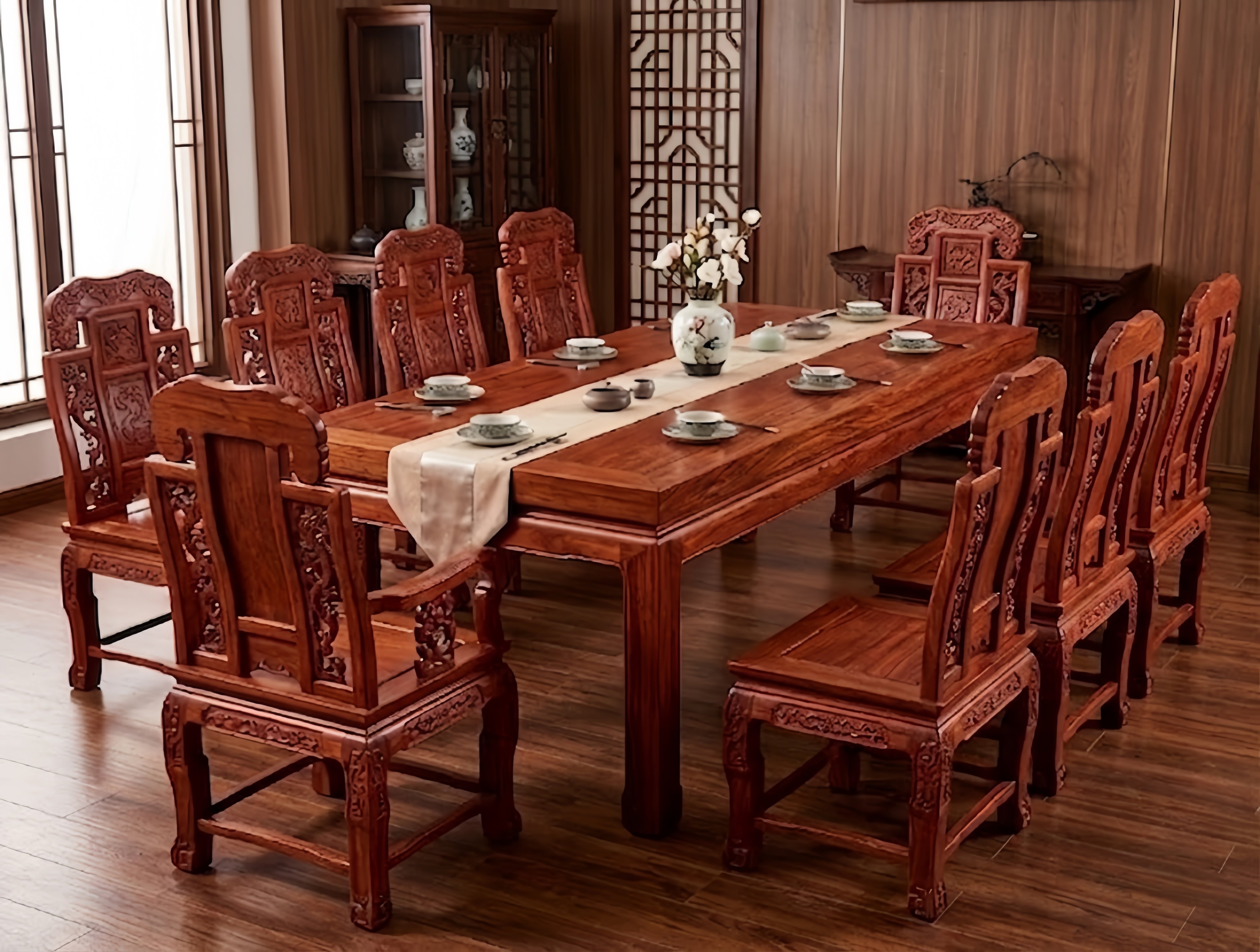
The Living Tradition of Chinese Classical Furniture
Chinese classical furniture represents over six centuries of design evolution, material science, and handcraft tradition. For B2B buyers sourcing Chinese classical furniture for hospitality projects, retail showrooms, or wholesale distribution across Southeast Asia, Australia, North America, and Europe, understanding what distinguishes authentic classical pieces from mass-produced imitations is essential for making informed purchasing decisions.
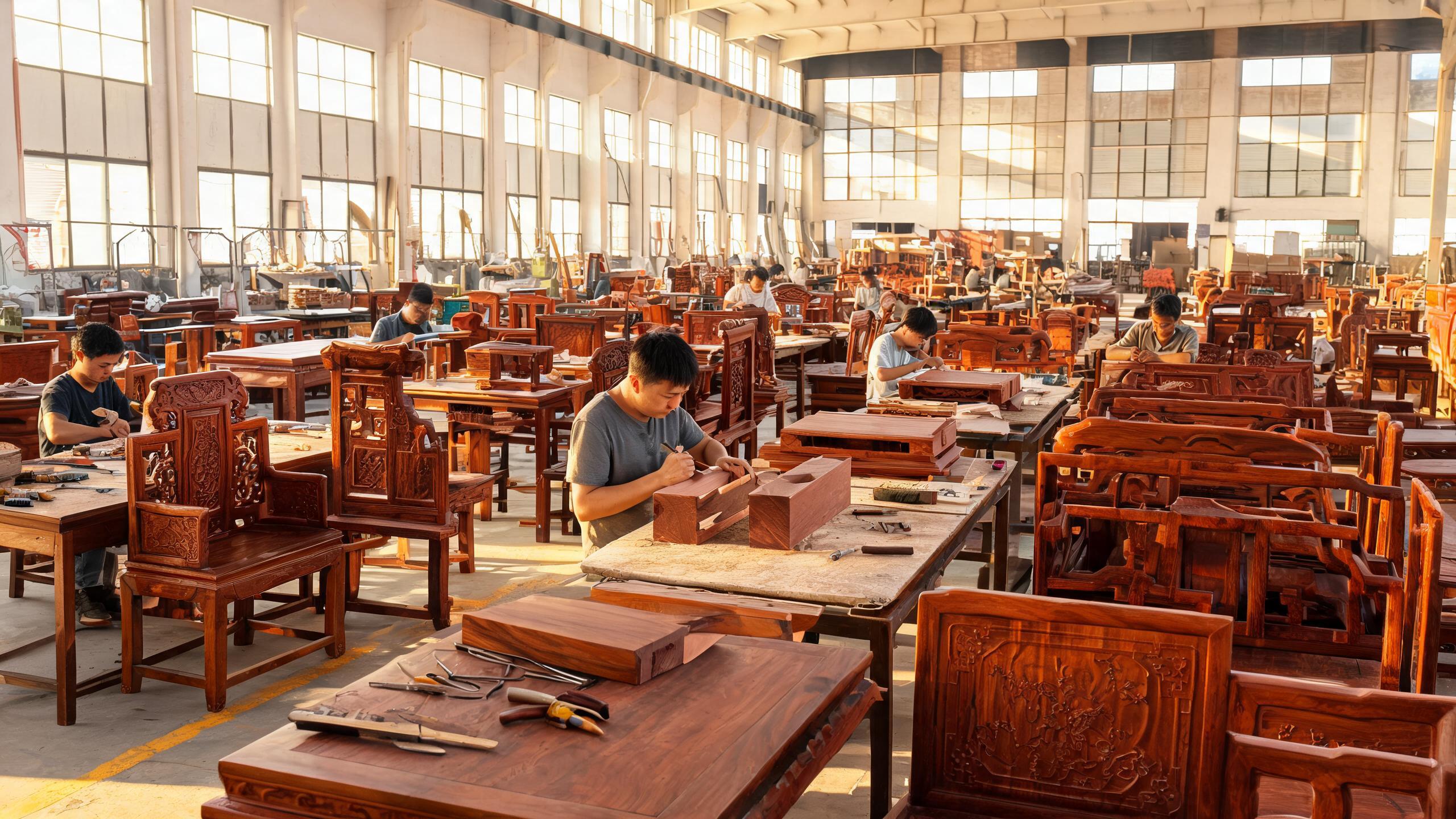
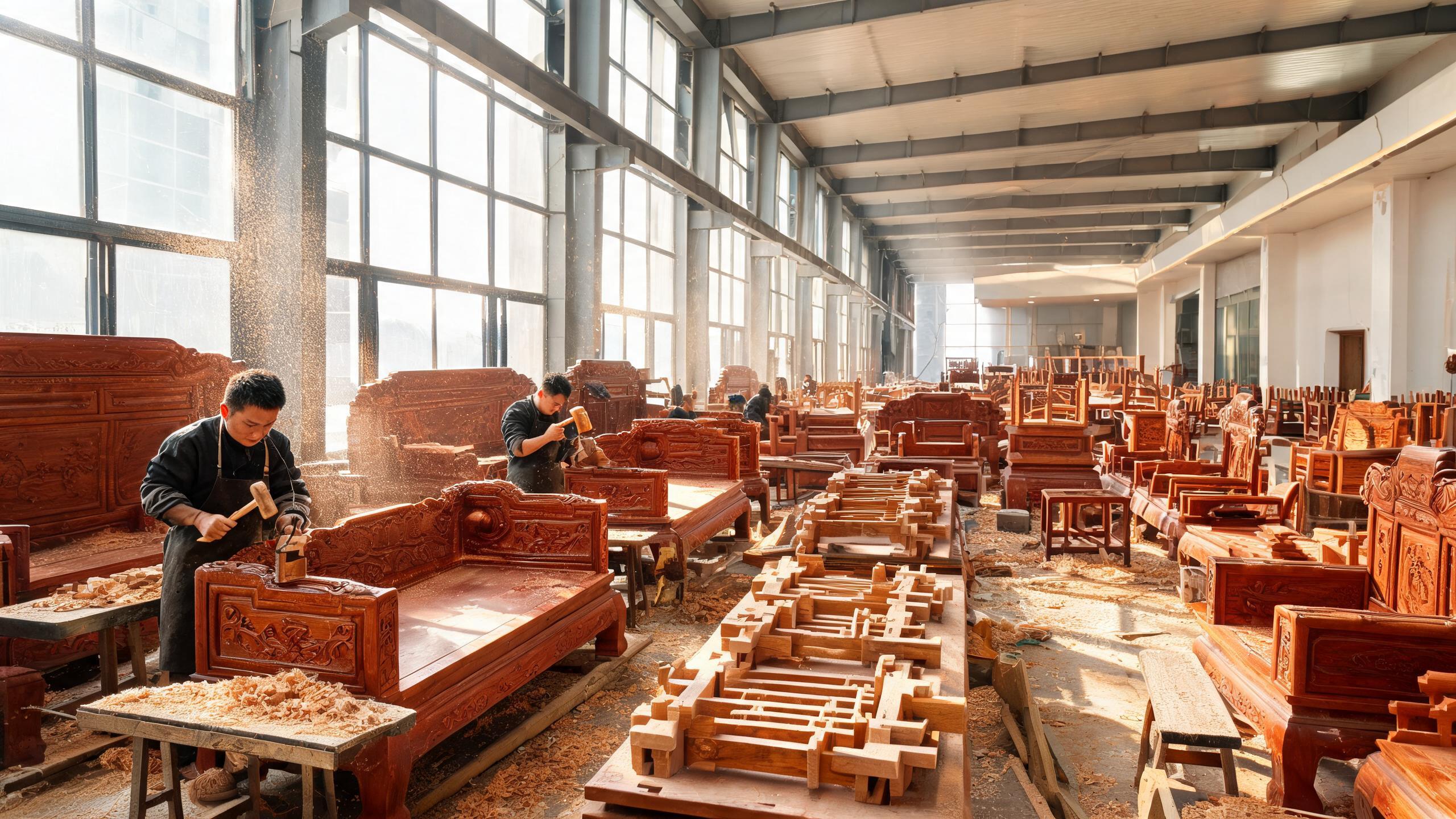
Yunxiao Rosewood Furniture Co., Ltd, founded in 2008 in Xianyou County, Fujian Province, produces authentic Chinese classical furniture from a 12,000-square-meter factory located in one of China's most historically significant hardwood furniture craft regions. The factory's 19 catalog products span Ming dynasty style sofa sets, dining tables, bedroom suites, and standalone pieces, each built with techniques that have changed little since the Ming era: mortise-and-tenon joinery without metal fasteners, hand carving by master artisans, and natural raw lacquer finishing.
This guide provides B2B buyers with a comprehensive understanding of Chinese classical furniture, covering design history, material characteristics, structural markers of authenticity, procurement considerations, and export requirements for international markets.
Ming and Qing Dynasty Design Principles: A Buyer's Guide
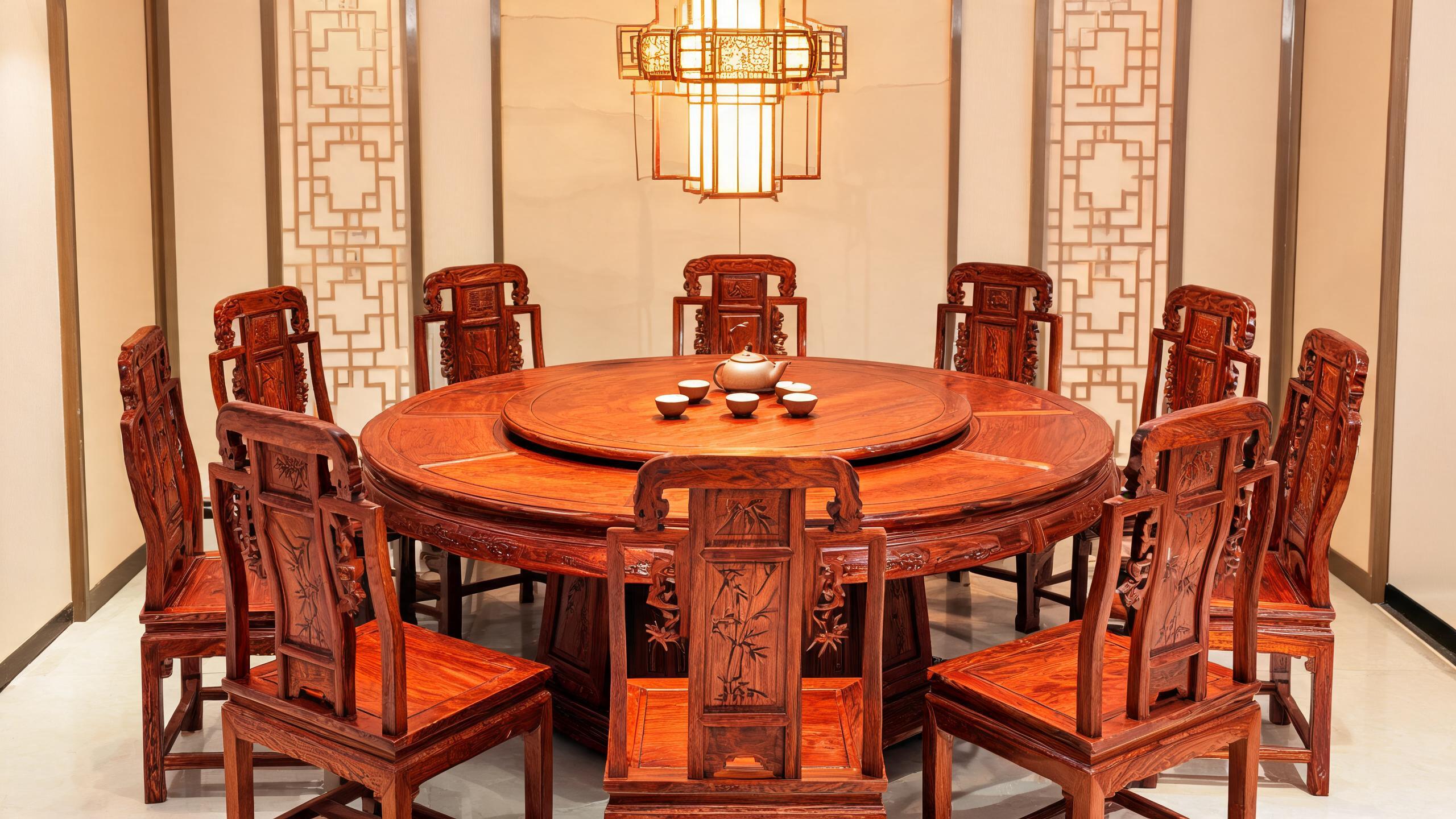
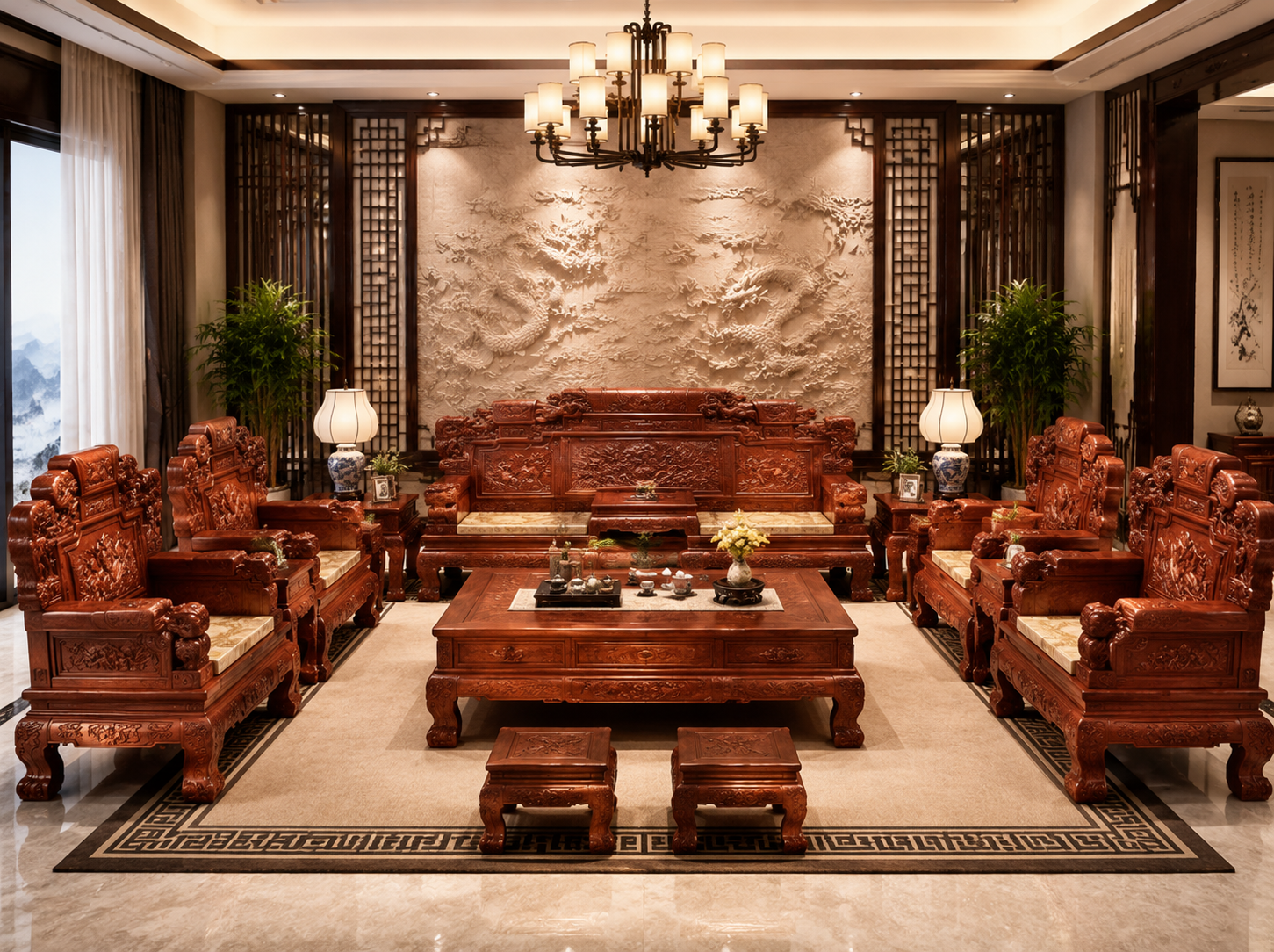
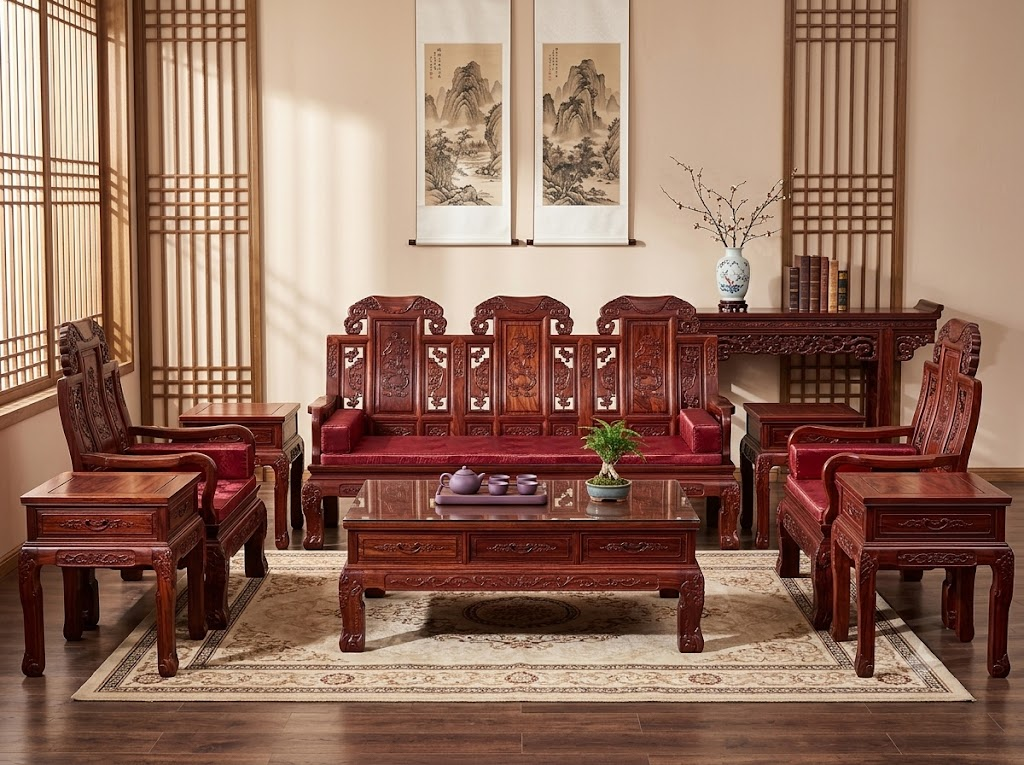
The two dominant design traditions in Chinese classical furniture-Ming and Qing-offer distinctly different aesthetic profiles suited to different applications and buyer preferences. Understanding these differences helps buyers select furniture that matches their project vision and target market.
| Design Characteristic | Ming Style (1368-1644) | Qing Style (1644-1912) |
|---|---|---|
| Visual Character | Clean lines, minimalist proportions, elegant curves | Bold, heavy, imposing scale with ornate decoration |
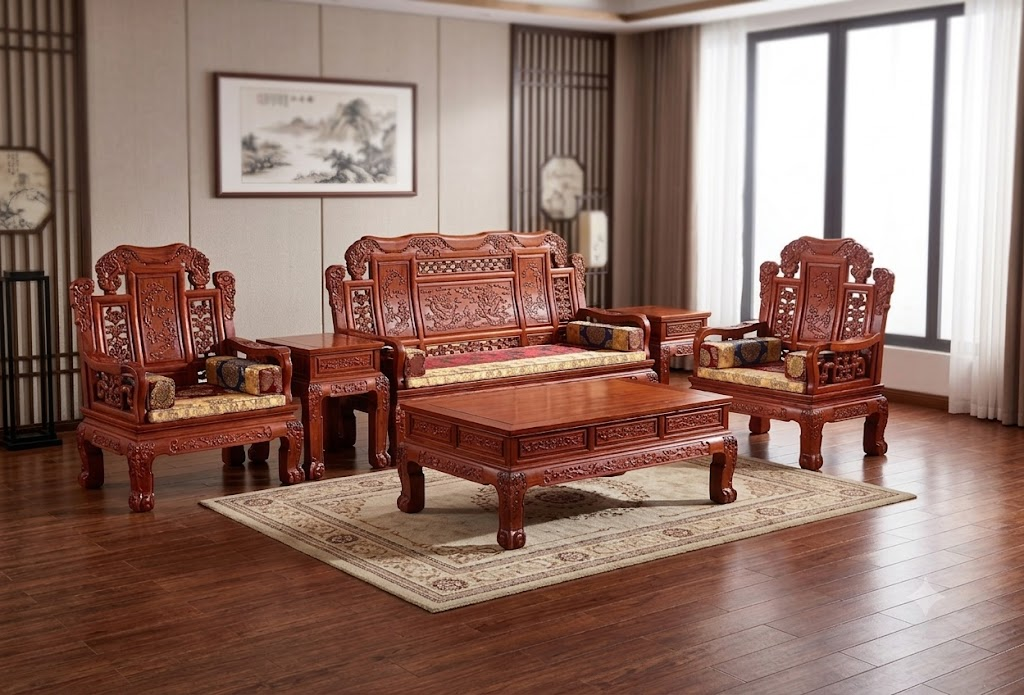
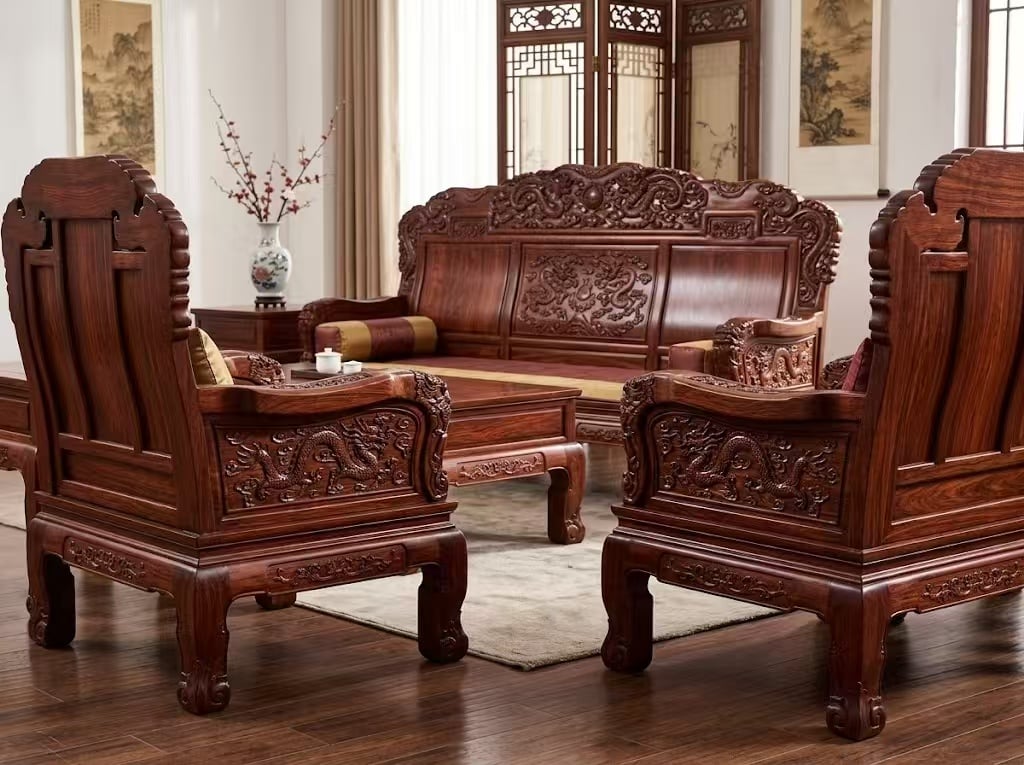
| Carving Approach | Minimal or geometric lattice openwork | Elaborate three-step relief: dragon, phoenix, floral |
| Structural Display | Joinery visible and celebrated as design feature | Carved panels dominate; structure concealed |
| Best Suited For | Contemporary interiors, boutique hotels, modern restaurants | Grand hotel lobbies, reception halls, luxury residences |
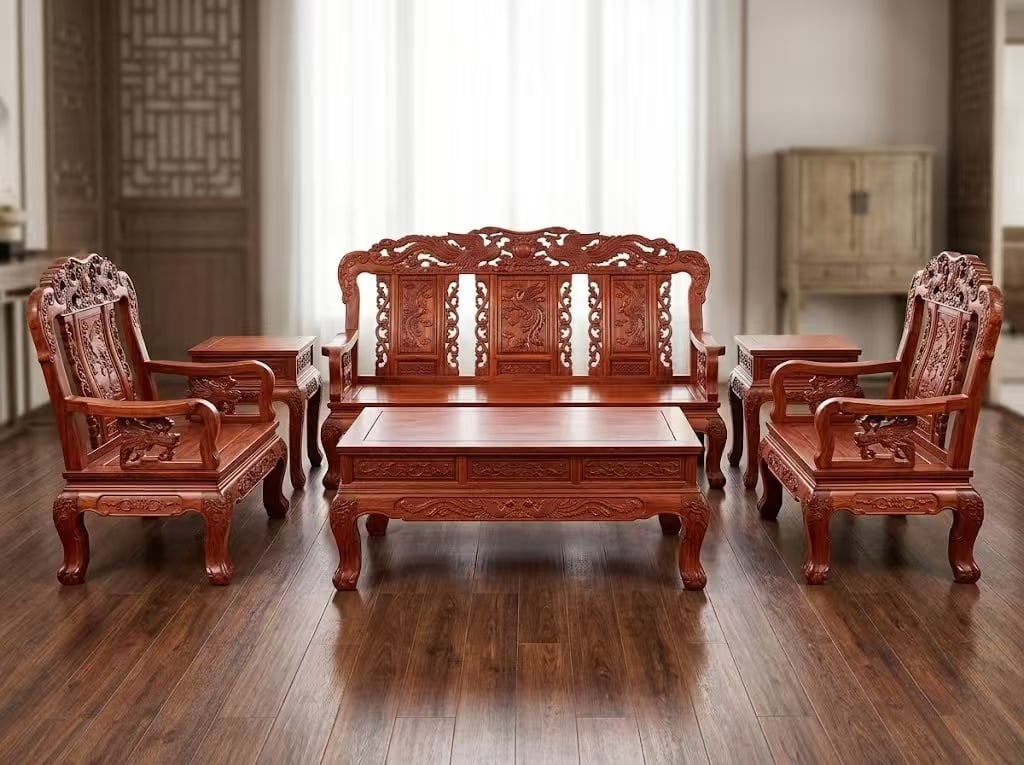
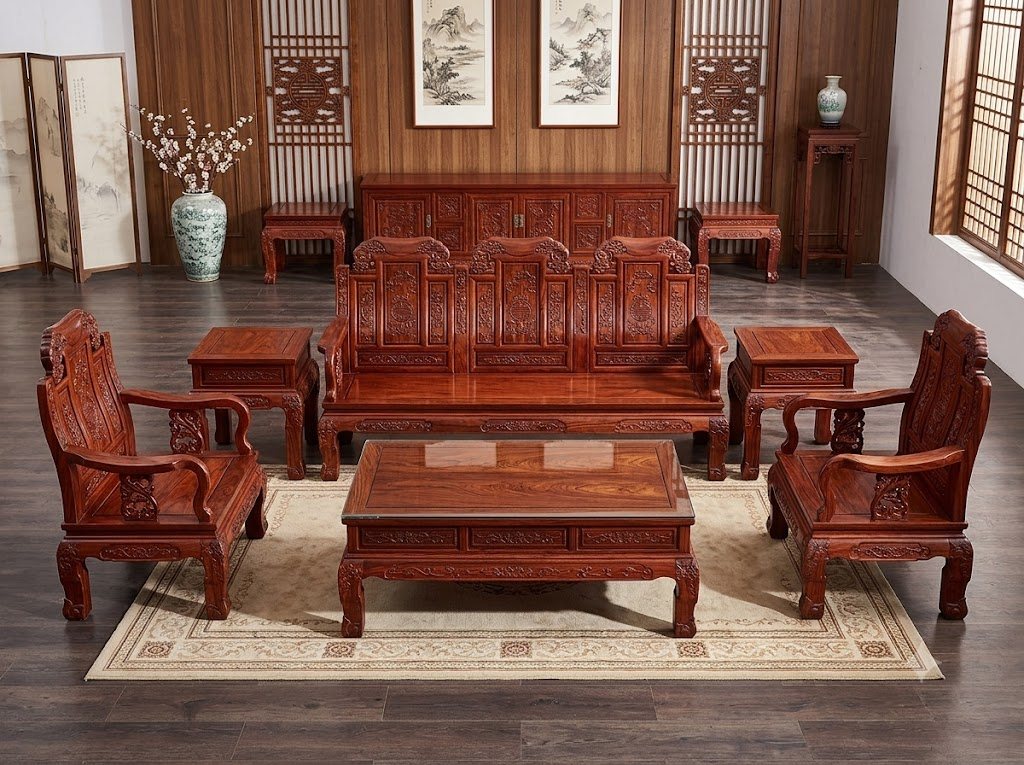
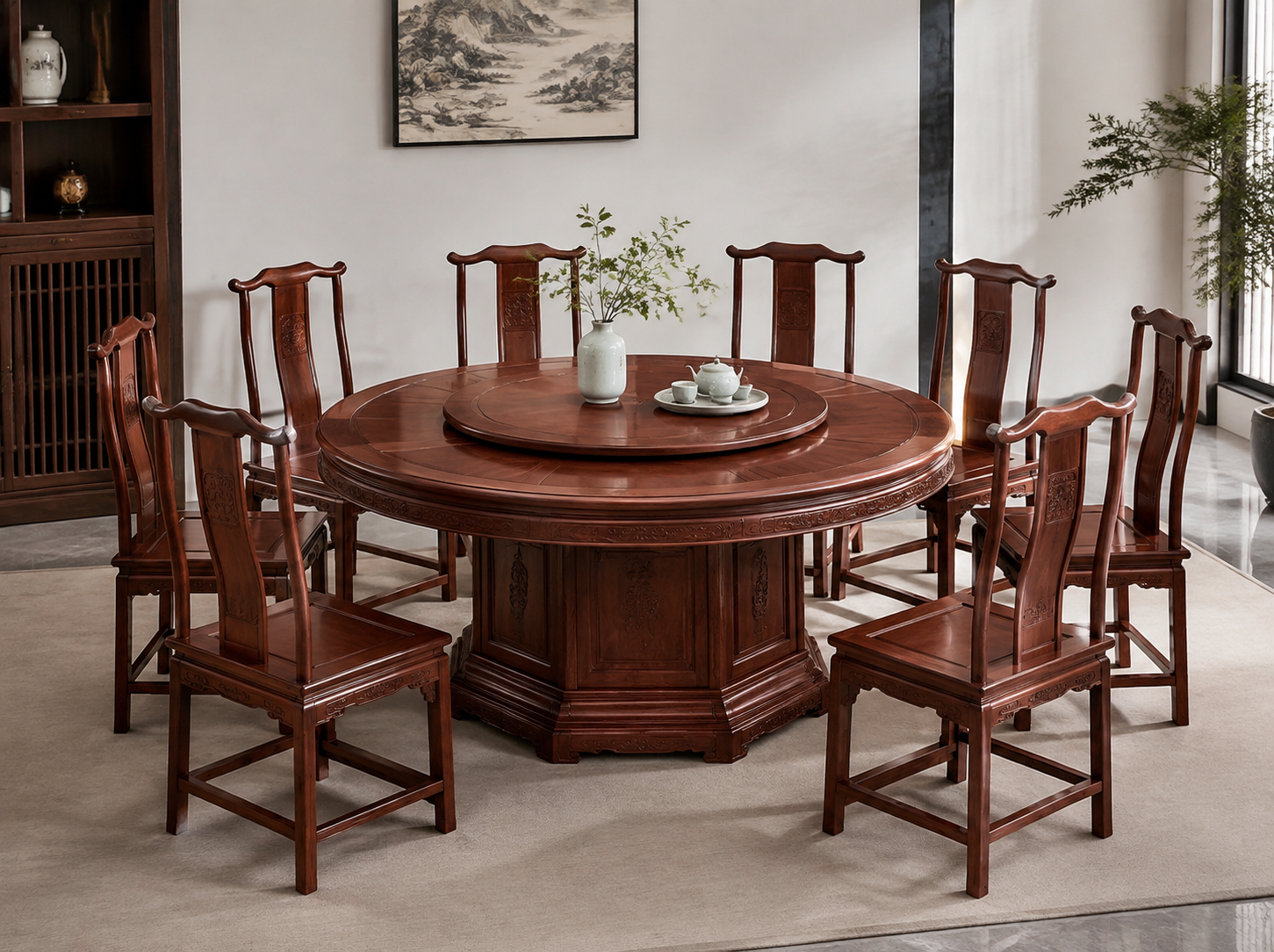
| Yunxiao Products | Ming Style Siamese Rosewood Sofa 7-Piece and 9-Piece; Ming Style Round Dining Table 8-Seat | Qing Dynasty Style Carved Sofa 5-Piece; Imperial Dragon Carved Sofa 10-Seat |
Many designers intentionally combine both styles within the same project-Ming for spaces requiring calm and clarity such as dining rooms and bedrooms, Qing for spaces demanding visual impact such as lobbies and reception halls. This mixed approach allows the furniture's carving and material quality to serve as the primary decorative element while creating varied atmospheric zones within a property.
Siamese Rosewood: The Preferred Material for Classical Chinese Furniture
The material used in Chinese classical furniture determines its carving quality, structural performance, color depth, aging characteristics, and regulatory compliance requirements. Siamese rosewood (Dalbergia cochinchinensis) has been the preferred hardwood for high-end Chinese furniture since the Ming dynasty, valued for several properties:
Density and hardness that hold crisp carving detail for centuries without softening or rounding. Deep reddish-brown heartwood that deepens with age as natural oils migrate toward the surface through breathable raw lacquer. Natural resistance to insects and decay, making it suitable for multi-generational use in residential, hospitality, and institutional settings. Interlocked, wavy grain patterns that create a chatoyant (light-shifting) surface visible under directed light.
Siamese rosewood is CITES Appendix II listed, meaning international trade requires export permits and re-export certificates. Yunxiao is a CITES-registered exporter and prepares Appendix II export permits for every international shipment. FSC chain-of-custody certification documents legal sourcing from certified forests. Yunxiao also works with legally certified Machilus Nanmu and Grade-A aged redwood for buyers seeking alternative materials or needing to avoid CITES documentation requirements.
Authenticating Hand Carving: What B2B Buyers Should Examine
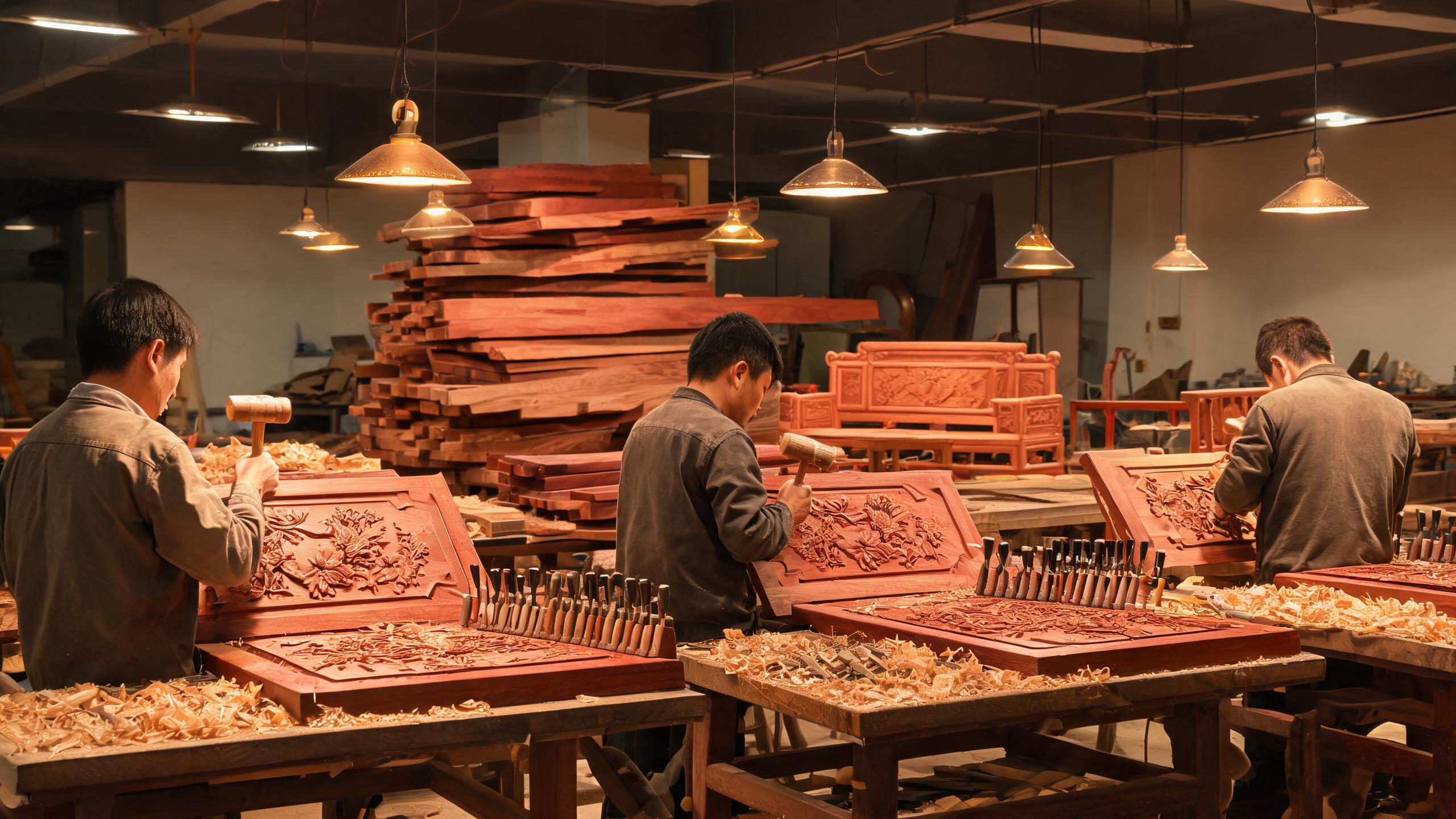
The carving on Chinese classical furniture is its most visible distinguishing feature and the primary indicator of whether a piece is authentically handcrafted or mass-produced. Xianyou County has been a center of hardwood furniture carving since the Ming dynasty, and Yunxiao's master artisans use traditional hand tools-chisels, gouges, and wooden mallets-to create three-step relief carving that machine carving cannot replicate.
Three-step relief carving involves three depth levels: low relief (background removal establishing motif silhouette), medium relief (secondary elements creating dimensional layering), and high relief (foreground elements carved to full three-dimensional depth). A single backrest panel with this technique requires 30 to 40 hours of hand work.
Buyers can verify authentic hand carving by examining four indicators:
- Tool marks: Hand-carved surfaces show subtle irregularities from chisel strokes. Machine carving produces uniform, repetitive patterns with mechanical tool marks.
- Relief depth variation: Authentic three-step relief has distinct depth transitions between background, midground, and foreground. Machine carving tends toward flat or uniformly deep relief.
- Interior corner detail: Hand chisels can reach into acute angles and undercuts that machine bits cannot access. These areas reveal whether carving was done by hand.
- Wood grain response: Hand carvers adjust technique to grain direction of each piece, preventing tear-out. Machine carving ignores grain direction, producing rough patches.
Available carving motifs include dragon, phoenix and peony, cloud and Ruyi, lattice (hexagonal, diamond, ice-ray), and bamboo. Custom motifs incorporating buyer logos, cultural symbols, or region-specific designs are available through OEM customization. Yunxiao provides close-up carving photos during production and can mail carving samples on wood panels for buyer approval.
Structural Joinery: The Engineering Behind Classical Furniture
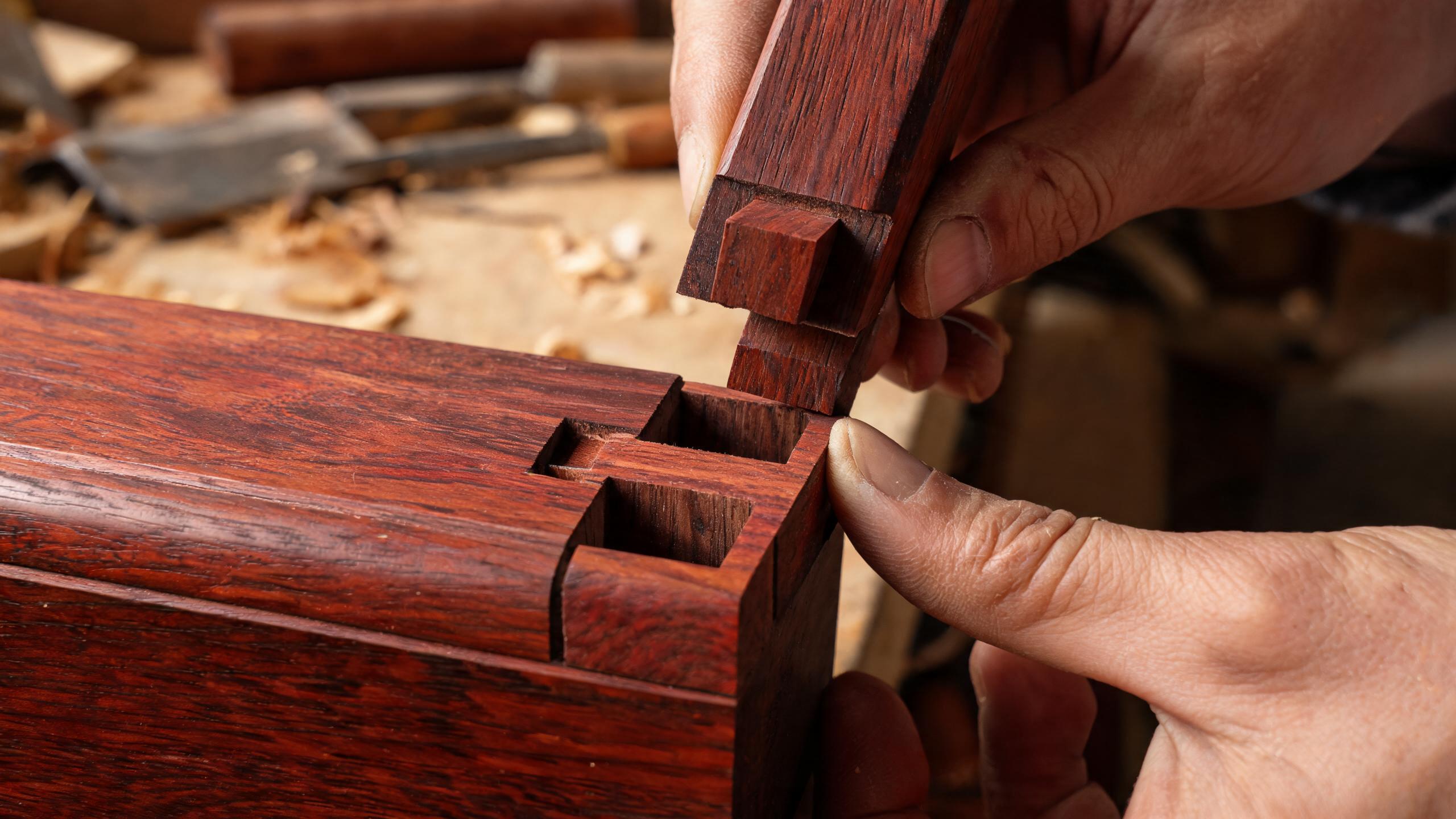
In authentic Chinese classical furniture, joinery is both a structural system and a design feature. Joints are visible and celebrated, not hidden behind brackets or plugs. Buyers evaluating classical furniture should examine the following structural markers:
Through-tenon with wedge: The primary leg-to-apron joint. The tenon passes completely through the apron and is split at the tip; a bamboo wedge is driven into the split, expanding the tenon inside the mortise. This joint is visible from above as a thin line where the wedge meets the apron surface. It cannot pull apart under tension and actually tightens with load.
Floating-panel construction: Visible on tabletops, wardrobe doors, and bed panels. The panel sits in a grooved frame, held by wooden buttons that allow lateral movement. A small gap between the panel edge and the groove wall is normal and intentional, accommodating seasonal wood expansion. Buyers should be suspicious of panels that fit tightly with no gap, as this indicates the piece may crack.
Dovetail drawer joints: Visible when drawers are pulled out. The trapezoidal dovetail shape resists pull-out forces and is a hallmark of quality drawer construction. Hand-cut dovetails have subtle variation that indicates craft work.
Bamboo dowel pins: Used to secure mortise-and-tenon joints. Bamboo is chosen because it has similar moisture expansion characteristics to rosewood, preventing the differential movement that causes joint failure. Metal pins or screws in primary structural joints indicate non-traditional construction.
The 36-Day Kiln Drying Process for Cross-Climate Export
Chinese classical furniture exported from humid subtropical Fujian to destinations in North America, Australia, Southeast Asia, or Europe faces significant humidity differentials. Properly dried timber is essential to prevent cracking, warping, and joint failure in destination climates.
Yunxiao's three-level drying protocol includes: 36-day constant-humidity kiln drying bringing timber moisture content below 14 percent through controlled three-phase process (initial high-temperature moisture removal, intermediate equalization, final stress-relief conditioning). Structural accommodation via floating-panel construction allowing seasonal wood movement. Breathable raw lacquer finish allowing gradual acclimatization without trapping moisture.
This protocol cannot be accelerated without compromising structural integrity. Buyers should request kiln drying records as part of pre-shipment documentation. The 36-day cycle is embedded in the 45 to 60 working day production timeline for standard catalog products.
Raw Lacquer Finishing: Traditional Process, Modern Compliance
The lacquer finish on Chinese classical furniture serves both aesthetic and protective functions. Yunxiao's raw lacquer system involves 8 to 9 hand-rubbed coats applied over 20 to 30 days: wood sealing coat, filling coats to level grain texture, body coats building film thickness, and final curing in a humidity-controlled room for 7 to 10 days.
This finish meets EU REACH chemical safety standards, US CARB formaldehyde emission limits, and FDA 21 CFR 175.300 for repeated food contact on dining table surfaces. Compliance documentation is provided with each shipment.
A key characteristic of raw lacquer is its breathability-unlike polyurethane or nitrocellulose finishes that create a plastic-like barrier, raw lacquer allows moisture vapor transmission while protecting the surface. This means the wood continues to interact with its environment, developing a deeper, richer patina over the first two to three years. This aging process is the hallmark of authentic classical furniture, distinguishing it from synthetic-finished pieces that remain static.
Product Catalog: Classical Furniture for Every Space
Yunxiao's 19-product catalog covers four furniture categories, allowing buyers to source coordinated classical furniture for entire projects from a single manufacturer:
| Category | Models | Configurations | Typical Applications |
|---|---|---|---|
| Sofa Sets | 6 models | 3 to 10 seats | Lobby, reception, living room, lounge |
| Dining Sets | 6 models | 4 to 12 seats | Restaurant, banquet hall, private dining |
| Bedroom Suites | 4 models | 3 to 6 pieces | Guest rooms, master suites, resort rooms |
| Standalone Pieces | 3 models | Armchair, cabinet, tea table | Accent pieces, study, tea room |
Carving motifs across the catalog include Ming-style geometric lattice, Qing-style dragon and phoenix relief, cloud and Ruyi patterns, and bamboo motifs. Each backrest panel with three-step relief carving requires 30 to 40 hours of hand work by a master artisan.
Export Documentation for Chinese Classical Furniture
Importing Chinese classical furniture made from Siamese rosewood requires specific documentation at customs. Yunxiao's internal export team prepares complete documentation for every shipment:
- CITES Appendix II export permit: Shipment-specific and non-transferable. Processing takes 5 to 10 working days and cannot begin until shipment contents are finalized.
- FSC chain-of-custody certificate: Documents legal timber sourcing. Required by many international hotel chains and government procurement programs.
- ISPM-15 heat treatment certificate: Confirms wooden packaging material heat-treated at 56 degrees Celsius for 30+ minutes.
- EU REACH and US CARB compliance declarations: Confirm lacquer finishes meet chemical safety standards.
- FDA 21 CFR 175.300 compliance: For dining table surfaces, confirms food-contact safety.
- Commercial invoice with HS code 9403.60: Required for customs declaration.
- Packing list: Itemized contents with dimensions and weight.
Missing or incorrect CITES permits are the single most common cause of rosewood furniture shipments being held at port. Buyers should engage customs brokers experienced with CITES Appendix II timber procedures and request document samples during the quotation stage.
Integrating Classical Furniture Into Contemporary Spaces
Chinese classical furniture is no longer confined to traditional Chinese interiors. Contemporary designers and hospitality groups across North America, Australia, and Southeast Asia are integrating classical pieces into diverse interior styles:
| Application | Recommended Style | Design Integration |
|---|---|---|
| Boutique hotel lobby | Qing-style carved sofa set (5-6 piece) | Statement piece against minimalist backdrop; carving as visual anchor |
| Fine dining restaurant | Ming-style round dining set (8-seat) | Clean lines complement modern plating; FDA-compliant food surface |
| Resort guest suite | Ming-style bedroom suite (3-5 piece) | Calming aesthetic; climate-stable construction for tropical AC |
| Cultural center | Imperial Dragon 10-seat sofa set | Full imperial scale; dragon motif as cultural narrative |
| Luxury residence | Four-poster bedroom suite + reception sofa | Coordinated whole-house program; Ming and Qing mix |
The key to successful integration is allowing the furniture's carving and material quality to serve as the primary decorative element, with surrounding architecture and soft furnishings kept restrained.
OEM and ODM Customization for Classical Furniture
Yunxiao supports OEM and ODM customization for buyers who need exclusive classical designs or project-specific dimensions. The customization workflow includes: requirement brief with style preference, dimensions, carving motifs, and target market (Day 1), layout drawings with joinery details and carving placement (Day 5-7), 3D mockups showing finished appearance including wood color and carving depth (Day 8-12), revision cycle allowing one round of adjustments (Day 13-15), final approval and deposit, finish sample mailing on wood blocks, 45 to 60 working days production for standard or 60 to 75 for custom, quality inspection, and ISPM-15 crate packing.
Custom carving motifs can incorporate hotel logos, cultural symbols, or region-specific designs. For container-quantity orders, exclusivity agreements can grant sole rights to specific designs in defined geographic markets. Custom carving templates remain the buyer's property and are not reused without consent.
Quality Control Standards for Classical Furniture Export
Yunxiao's quality control for classical furniture covers the full production chain with four documented checkpoints: timber verification (36-day kiln drying records, heartwood ratio verification, density sorting), carving inspection (design accuracy against approved drawings, relief depth consistency, surface finish before assembly), assembly verification (joinery tightness, dimensional accuracy, structural integrity), and finish assessment (lacquer coverage, color consistency compared to approved sample, surface sheen under controlled lighting). Third-party pre-shipment inspection is welcomed and accommodated at the buyer's expense.
Value Retention: Classical Furniture as Investment
Unlike mass-produced furniture that depreciates from purchase, authentic Chinese classical rosewood furniture has inherent material value that tends to appreciate over time. Siamese rosewood is CITES Appendix II listed with finite supply, creating a floor under material value. The hand-craft labor invested in each piece-representing 30 to 40 carving hours per backrest panel, 36 days of kiln drying, and 20 to 30 days of lacquer finishing-cannot be replicated at lower cost. For B2B buyers, this value retention characteristic is a selling point when marketing classical furniture to end customers.
Frequently Asked Questions
What is the difference between Ming and Qing style classical furniture?
Ming style features clean lines, minimalist proportions, and geometric lattice carving, suitable for contemporary interiors. Qing style is bolder with elaborate relief carving of dragons, phoenixes, and floral scenes, suitable for grand lobbies and reception halls. Many buyers combine both styles within the same project.
Is Siamese rosewood legal to import?
Yes, with proper documentation. Siamese rosewood (Dalbergia cochinchinensis) is CITES Appendix II listed, requiring export permits for international trade. Yunxiao is a CITES-registered exporter and prepares permits for every shipment. Use a customs broker experienced with CITES timber procedures.
How can I tell if classical furniture is hand-carved or machine-carved?
Hand-carved surfaces show subtle tool mark variations, distinct three-step relief depth transitions, accessible interior corner detail, and grain-direction-aware carving. Machine carving produces uniform depth, repetitive patterns, and rough patches. Yunxiao provides close-up carving photos and can mail carving samples on wood panels.
Will the rosewood color change over time?
Yes. Siamese rosewood with raw lacquer finish deepens in color over the first two to three years as the lacquer polymerizes and wood oils migrate. This patina development is the hallmark of authentic classical furniture, distinguishing it from synthetic-finished pieces that remain static.
What carving motifs are available?
Available motifs include dragon, phoenix and peony, cloud and Ruyi, lattice (hexagonal, diamond, ice-ray), and bamboo. Custom motifs incorporating buyer logos or cultural symbols are available through OEM customization. Each backrest panel requires 30 to 40 hours of hand work.
How long does production take?
Standard catalog products: 45 to 60 working days from deposit receipt. OEM and ODM custom orders: 60 to 75 working days. The 15-day design approval cycle precedes production for custom orders. The 36-day kiln drying cannot be accelerated. Weekly production photos provided.
Can I order custom classical designs with exclusive carving?
Yes. OEM and ODM customization includes exclusive carving patterns, custom dimensions, and finish colors. Design proposals with 3D mockups within 15 working days. Carving samples on wood panels mailed for approval. Exclusivity agreements available for container-quantity orders.
What documents come with classical furniture shipments?
CITES Appendix II export permit, FSC chain-of-custody, ISPM-15 heat treatment certificate, EU REACH and US CARB compliance, FDA 21 CFR 175.300 for dining surfaces, commercial invoice with HS code 9403.60, and packing list. All in English.
What are the payment and trade terms?
30 percent T/T deposit, balance before shipment. L/C available above USD 30,000. Trial single sets and refundable samples available. FOB Xiamen default with direct routes to Los Angeles, Sydney, Singapore, Rotterdam. CIF and DAP available.
Can classical furniture work in modern interior designs?
Yes. Designers integrate classical rosewood pieces into contemporary spaces by using Ming-style furniture for clean, minimalist environments and Qing-style as statement pieces. The key is allowing the furniture's carving and material quality to serve as the primary decorative element with restrained surroundings.