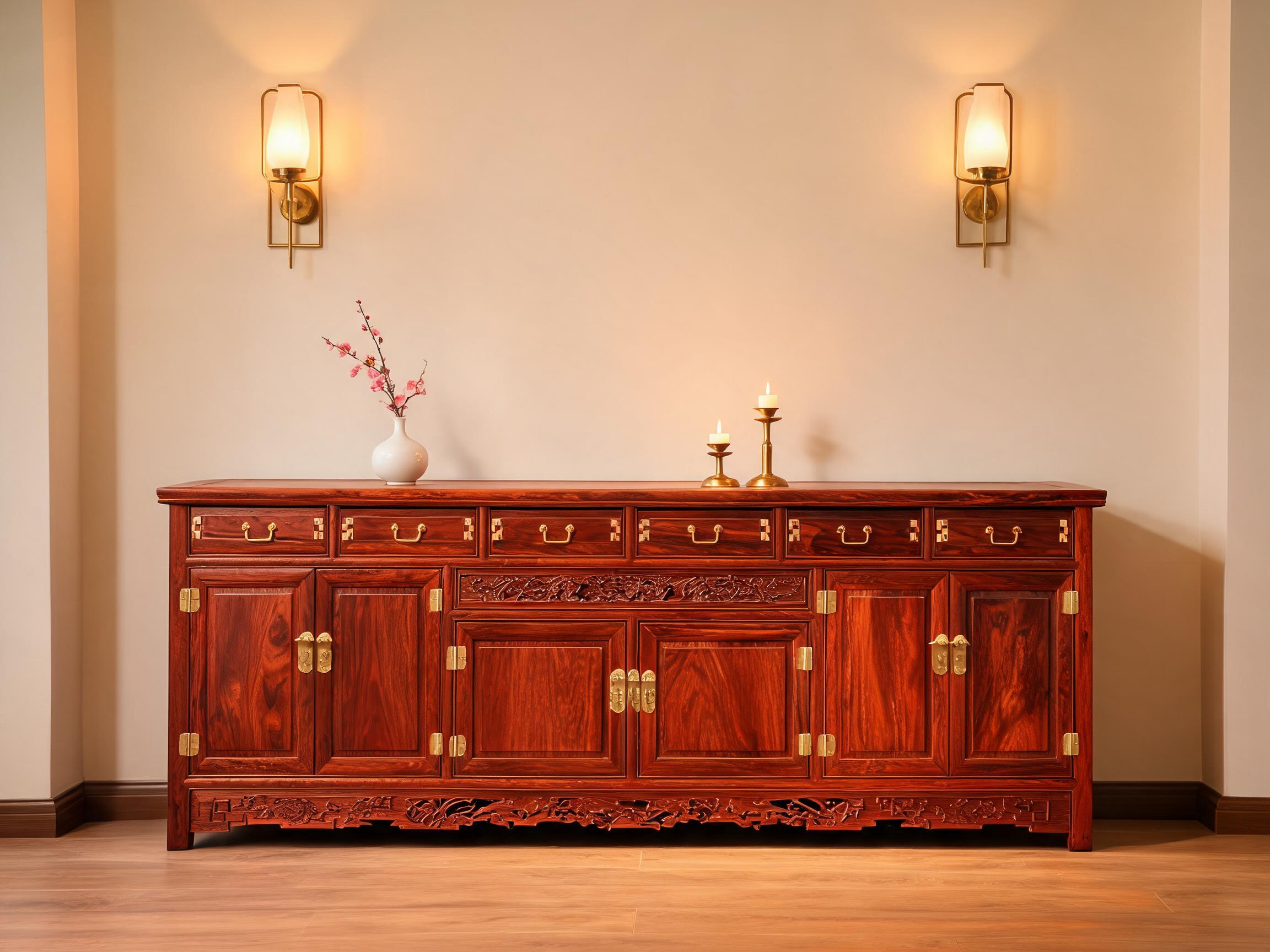
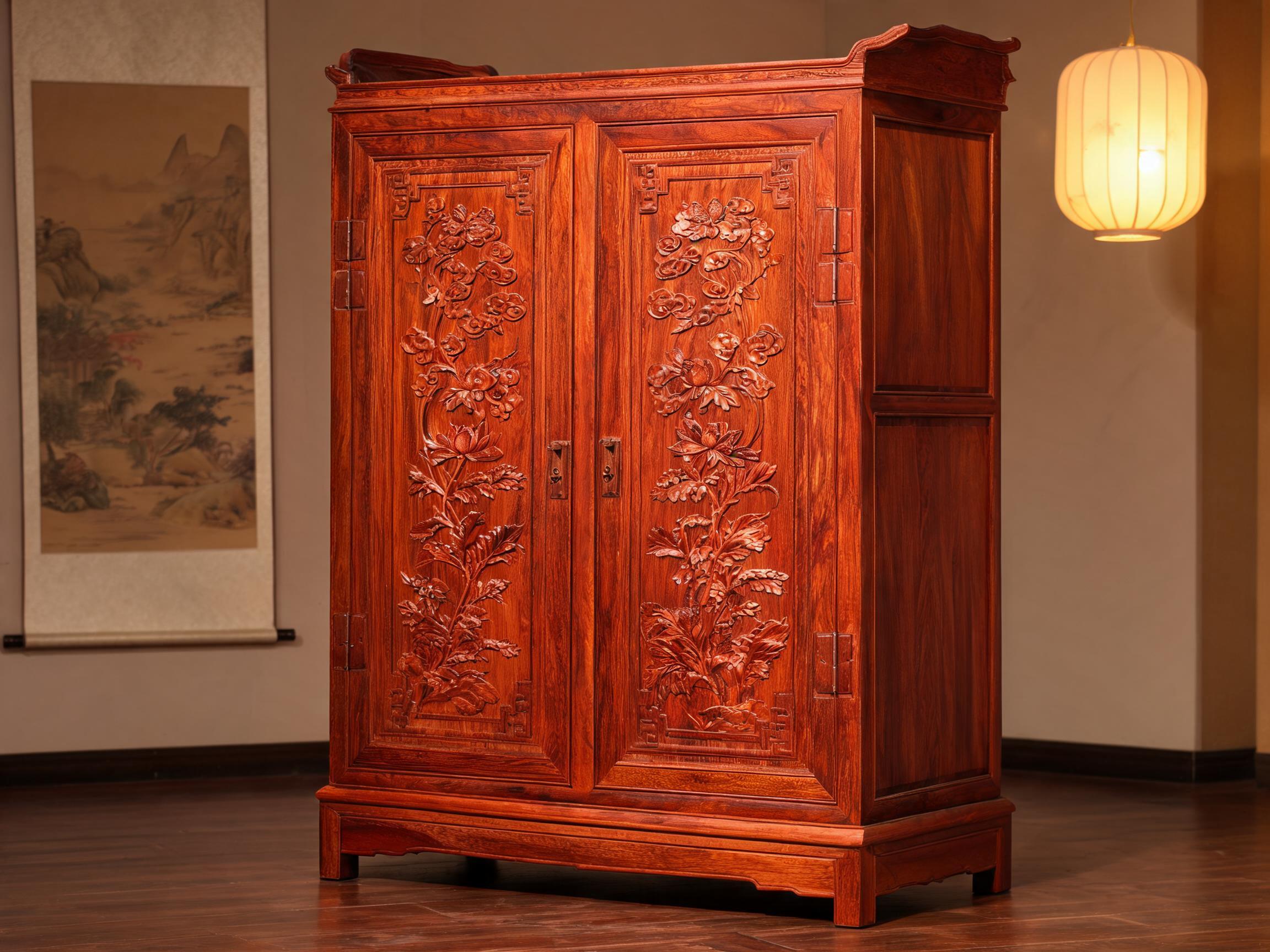
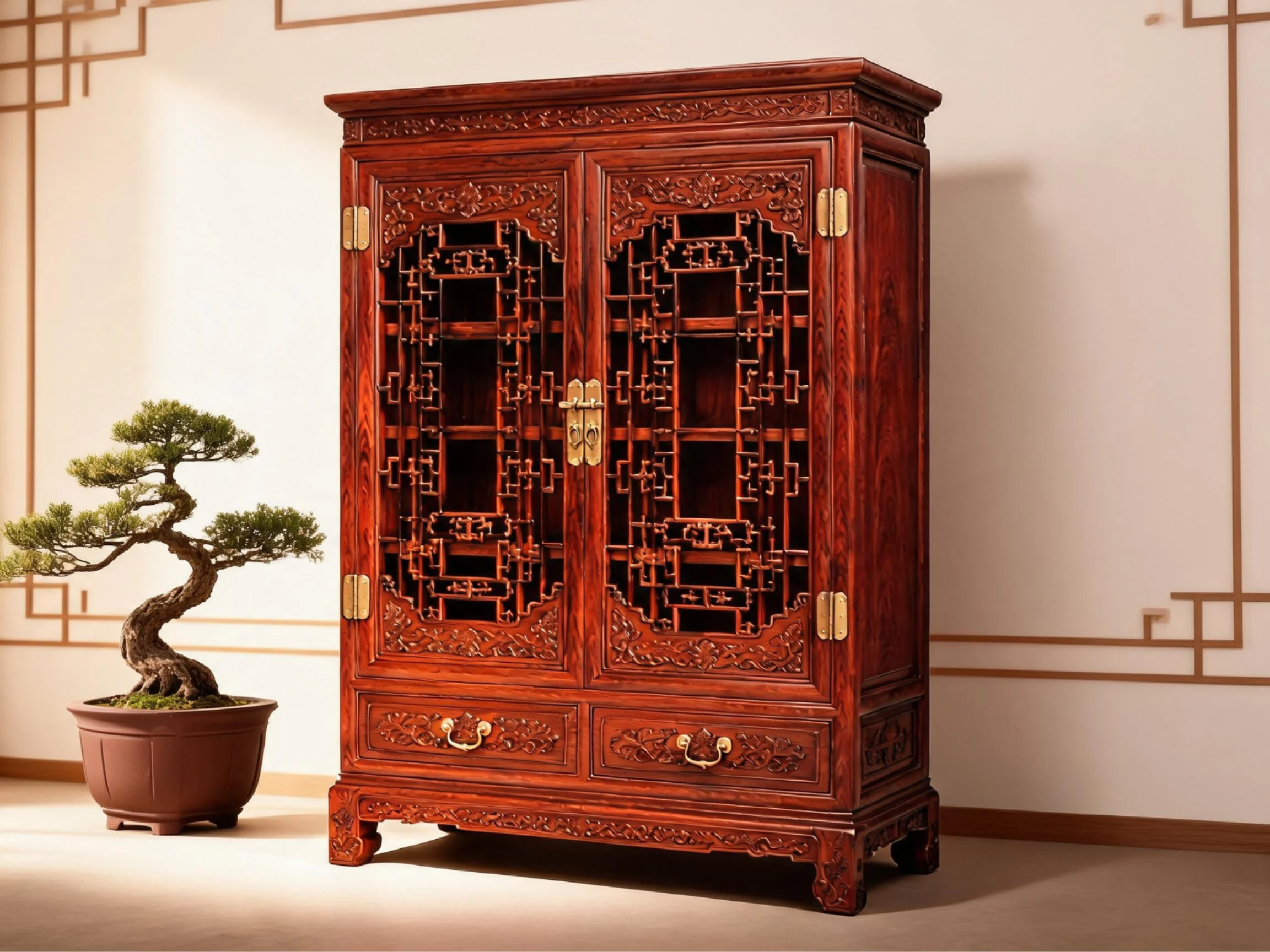
Evaluating a Solid Wood Chest of Drawers Supplier
When B2B buyers search for a solid wood chest of drawers, they are typically hotel procurement managers, furniture wholesalers, or interior design firms seeking a reliable source of solid wood storage for bedrooms, guest rooms, or residential projects. The chest of drawers is one of the most frequently used pieces of furniture in a bedroom, and its drawer construction, joinery quality, and finish determine both the daily experience and the long-term reliability of the piece. Yunxiao Rosewood Furniture Co., Ltd, established in 2008 in Xianyou County, Fujian Province, manufactures solid Siamese rosewood chests of drawers from a 12,000-square-meter factory. Every chest uses hand-cut dovetail drawer joints, mortise-and-tenon joinery without metal fasteners, 36-day kiln-dried timber below 14 percent moisture, and hand-rubbed raw lacquer meeting EU REACH and US CARB standards. FSC chain-of-custody, CITES Appendix II export permits, and ISPM-15 packaging accompany every shipment. This guide provides a complete framework for evaluating a chest of drawers supplier, covering drawer construction, wood selection, structural engineering, finish, customization, and export compliance.
Why Drawer Construction Is the Heart of a Chest of Drawers
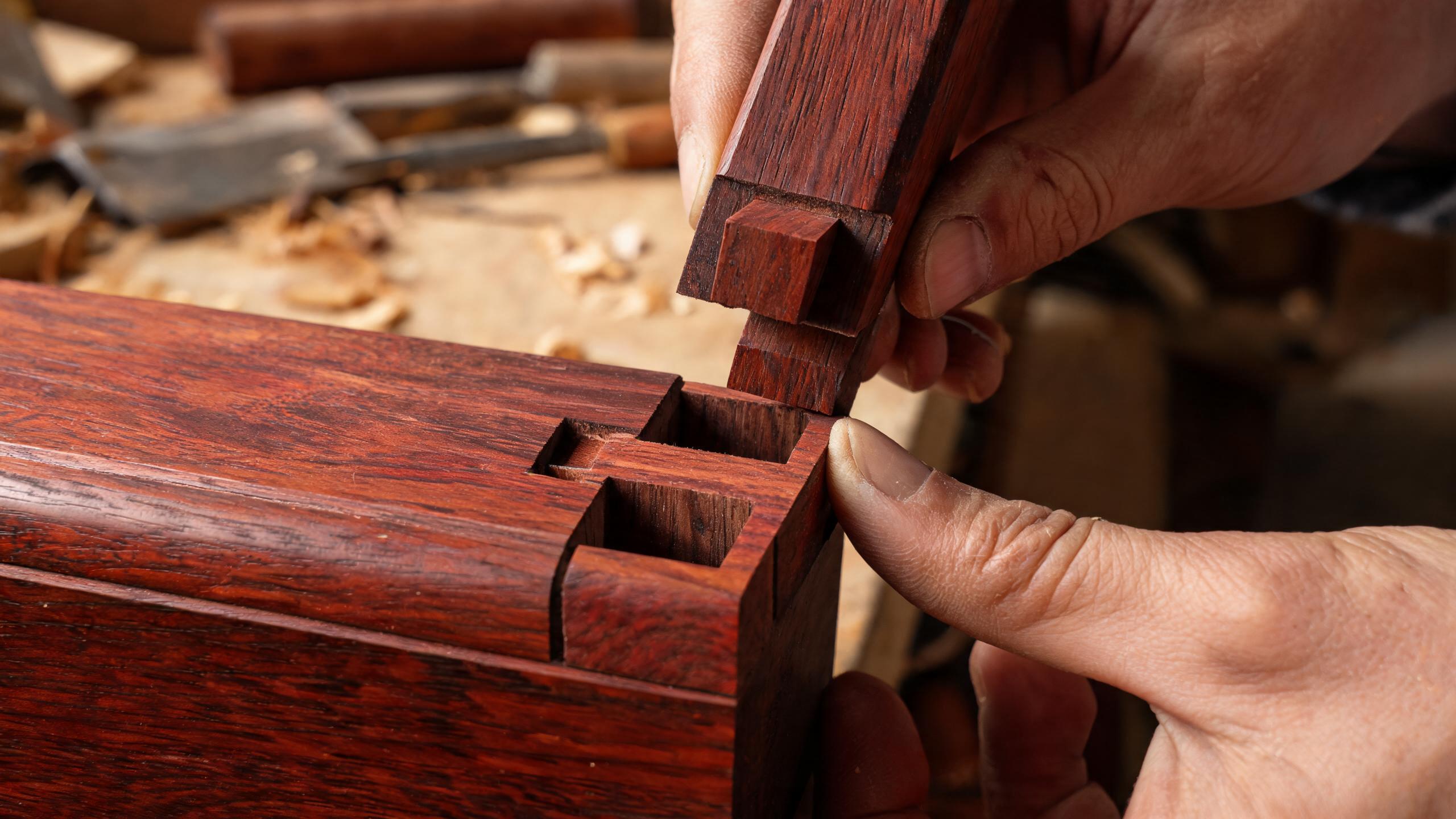
The drawer is the most frequently used component of a chest of drawers, and its construction quality directly affects the daily experience of the piece. Dovetail joinery is the traditional method for connecting drawer sides to the drawer front, creating interlocking joints that resist the pull-out forces generated when drawers are opened and closed repeatedly. Yunxiao crafts drawers using hand-cut dovetail joints. The dovetail is a series of interlocking pins and tails cut into the drawer sides and front, shaped like a fan-tailed bird. When assembled, the pins and tails lock together, and the joint physically cannot be pulled apart along the drawer axis. This is the strongest drawer joint available and is the standard for high-end furniture. Buyers can verify authentic dovetail construction by opening a drawer and examining the corners. Hand-cut dovetails show slight variation in spacing and angle, while machine-cut dovetails are perfectly uniform. Drawers that use butt joints, staples, or metal brackets instead of dovetails are lower quality and will loosen over time.
Wood Selection for a Chest of Drawers
The material chosen for a chest of drawers determines its structural capacity, drawer smoothness, carving clarity, aging behavior, and regulatory compliance. Siamese rosewood (Dalbergia cochinchinensis) offers specific advantages for chest construction. Its density of 0.90 to 1.00 grams per cubic centimeter allows the frame to support heavy drawer loads without sagging, while a heartwood ratio of 80 percent or higher ensures uniform reddish-brown color. The 36-day kiln drying brings moisture content below 14 percent, preventing drawer binding and frame warping in export climates. High dimensional stability keeps the chest square and flat across climate changes. Over time the breathable lacquer allows the wood to develop a richer patina. Siamese rosewood is CITES Appendix II listed, requiring export permits for international trade. For buyers seeking alternatives, legally certified Machilus Nanmu and Grade-A aged redwood are also available with full FSC documentation.
The 36-Day Kiln Drying Protocol for Chests of Drawers
Moisture content is particularly critical for a chest of drawers because warped components cause drawer binding, door misalignment, and structural instability. Furniture built in humid subtropical Fujian and shipped to dry North American, European, or Australian climates faces significant humidity differential that can destroy improperly dried chests. Yunxiao 36-day constant-humidity kiln drying protocol brings timber moisture content below 14 percent through a controlled three-phase process. The initial high-temperature phase removes free moisture from cell lumens. The intermediate equalization phase allows the moisture gradient to balance throughout the timber cross-section. The final stress-relief conditioning phase relieves drying stresses that would otherwise cause warping after assembly. This protocol cannot be accelerated without compromising structural integrity and is embedded in the 45 to 60 working day production timeline. Buyers should request kiln drying records as part of pre-shipment documentation.
Structural Engineering for a Chest of Drawers
A chest of drawers must support the weight of its drawers and their contents while remaining perfectly stable and square. Traditional Chinese mortise-and-tenon joinery provides the structural integrity required for this demanding application. The through-tenon with wedge joint connects the vertical stiles to the horizontal rails at each frame intersection. The tenon passes completely through the rail and is split at the tip, with a bamboo wedge driven into the split expanding the tenon inside the mortise. This joint cannot pull apart under tension and actually tightens with load. Floating-panel construction on the back panel and drawer fronts allows seasonal wood movement. Additional structural features include dovetail joints in drawer compartments resisting pull-out forces, and bamboo dowel pins securing all tenon joints with matching moisture expansion characteristics to rosewood. Metal screws or brackets in primary structural joints indicate non-traditional construction.
Drawer Configuration and Interior Layout
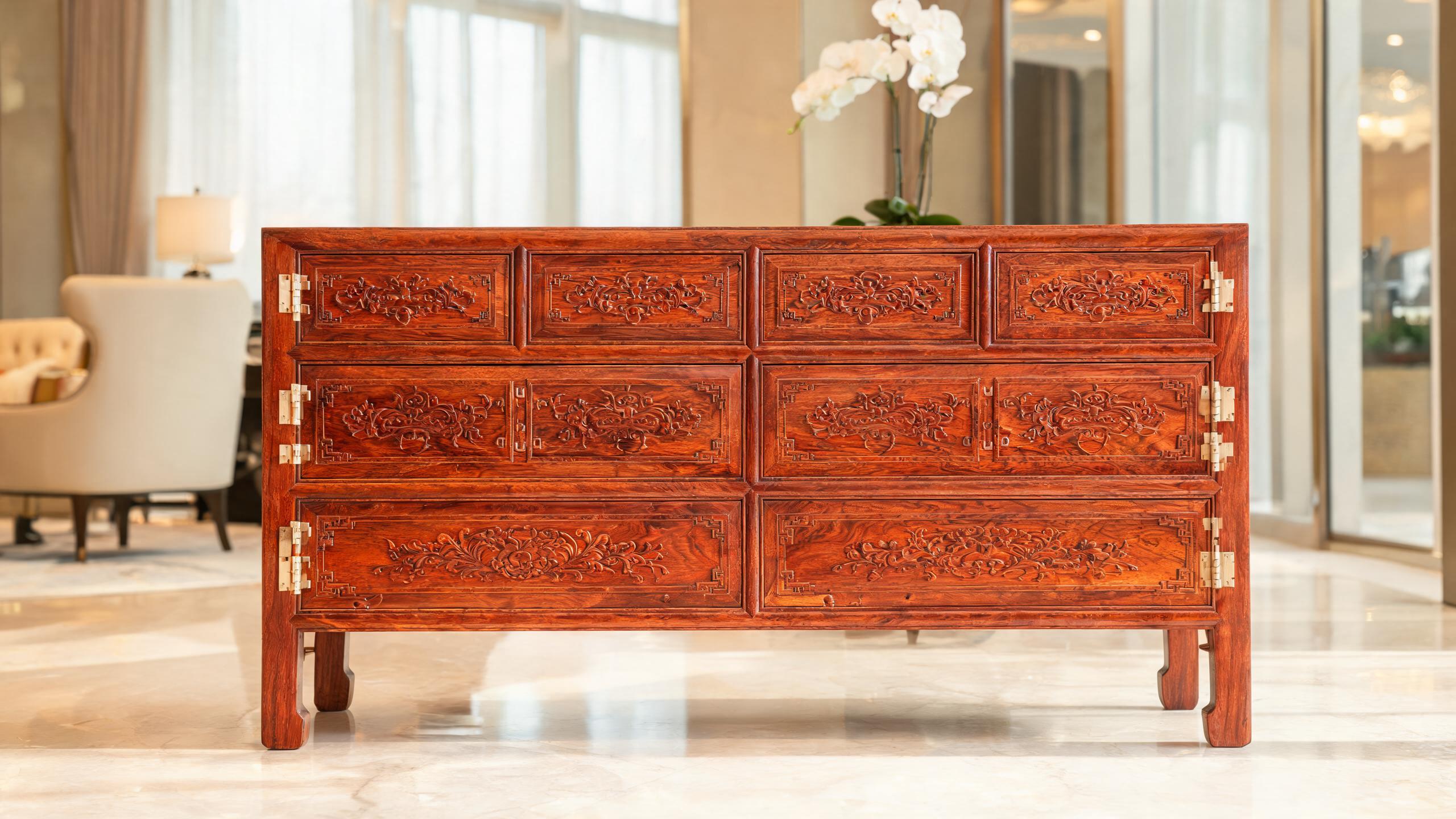
The interior configuration of a chest of drawers determines its functionality for different storage applications. Yunxiao offers OEM and ODM customization of interior features to suit specific storage requirements. Drawer configuration options range from three to six dovetail drawers with varied depths for clothing, linens, and accessories. Felt-lined drawers protect delicate items, and locking compartments with traditional brass locks provide secure storage of valuables in hospitality environments. For hospitality and residential projects requiring multiple chests, consistent interior configuration ensures uniform storage appearance across the property. Custom interior layouts showing drawer placement are provided as part of the 15-day design approval cycle.
| Chest Size | Drawers | Typical Use | Best Setting |
|---|---|---|---|
| Compact | 3 | Guest room basics | Boutique hotels |
| Standard | 4-5 | Full wardrobe | Residential bedrooms |
| Large | 6 | Master suite storage | Luxury residences |
Finish Systems for Chests of Drawers
The finish on a chest of drawers serves both aesthetic and protective functions. Yunxiao uses a hand-rubbed raw lacquer system involving 8 to 9 coats applied over 20 to 30 days. The process includes a wood sealing coat that penetrates and hardens surface fibers, filling coats that level grain texture, body coats building film thickness for moisture and scratch protection, and final curing in a humidity-controlled room for 7 to 10 days. This finishing system meets EU REACH chemical safety regulation, US CARB formaldehyde emission limits, and FDA 21 CFR 175.300 for repeated food contact. Unlike polyurethane finishes that create a plastic-like barrier, raw lacquer is breathable, allowing moisture vapor transmission while protecting the surface. This breathability prevents the blistering and peeling that synthetic finishes suffer when moisture migrates through wood, and over the first two to three years the raw lacquer continues to polymerize, creating a deeper, richer patina.
Customization and OEM for Chests of Drawers
Yunxiao supports both OEM and ODM customization for buyers needing project-specific chests of drawers. The OEM model accommodates buyer-provided specifications for dimensions, drawer configuration, and finish requirements. The ODM model allows buyers to communicate the storage concept and target setting, with the factory design team creating the product within a 15-working-day design approval cycle. The full customization workflow includes requirement brief, layout drawings, 3D mockups, revision cycle, finish sample mailing, and production. Custom options include chest dimensions for specific spaces, drawer count and depth, hardware selection, and finish color. For container-quantity orders, exclusivity agreements can grant sole rights to specific designs in defined geographic markets. Buyers should provide the available floor space, the required drawer count, and the intended use when requesting a quote.
Export Documentation for Chest of Drawers Shipments
Importing a chest of drawers made from Siamese rosewood requires specific documentation at customs. The CITES Appendix II export permit is required for Siamese rosewood and is shipment-specific and non-transferable, with processing taking 5 to 10 working days. The FSC chain-of-custody certificate documents legal timber sourcing. The ISPM-15 heat treatment certificate confirms wooden packaging meets biosecurity requirements for Australia and other strict markets. EU REACH and US CARB compliance declarations confirm lacquer finishes meet chemical safety standards. A commercial invoice with HS code 9403.60 is required for customs declaration. Missing CITES permits are the single most common cause of rosewood furniture shipments being held at port. Buyers should engage customs brokers experienced with CITES Appendix II timber procedures and request document samples during the quotation stage.
Quality Control for Chest of Drawers Manufacturing
Yunxiao quality control system provides documented verification at each production stage. Timber verification confirms moisture content readings from the 36-day kiln drying cycle, heartwood ratio at 80 percent or higher, and density sorting to 0.90 to 1.00 g/cm3. Drawer construction inspection verifies dovetail joint fit, drawer slide smoothness, and drawer bottom floating-panel correctness. Assembly verification checks frame squareness, drawer levelness, and joinery tightness. Finish assessment evaluates lacquer coverage, color consistency compared to the approved sample, and surface sheen under controlled lighting. Third-party pre-shipment inspection is welcomed and accommodated at the buyer expense, providing access to production records, kiln drying logs, and material documentation.
Target Markets and Buyer Profiles for Chests of Drawers
In Southeast Asia, typical buyers include hotel developers, furniture distributors, and interior firms, with key requirements of CITES permits, tropical climate stability, and durable drawer construction. In North America, high-end retailers, interior designers, and residential developers require Lacey Act compliance, CARB limits, FSC, and drawer quality. In Australia, luxury resorts, antique retailers, and interior designers face strict ISPM-15 enforcement, biosecurity, and FSC chain-of-custody requirements. In Europe, design boutiques, museums, and Asian restaurants require EU Timber Regulation, REACH compliance, and FSC documentation. FOB Xiamen is the default trade term, with direct sailing routes to Los Angeles, Long Beach, Sydney, Melbourne, Singapore, and Rotterdam.
Ordering Process, Payment, and Lead Times
The standard ordering process with Yunxiao follows a clear sequence: quotation and specification confirmation, design approval for custom pieces, deposit payment, production, quality inspection, and shipment. Container orders take 45 to 60 working days after deposit, with fully custom designs taking 60 to 75 working days. Payment terms typically require a 30 percent T/T deposit to begin production, with the balance due before shipment, and L/C available above USD 30,000. Trial single pieces and refundable samples are available for buyers who want to verify quality before committing to container quantities. Buyers should plan for the CITES permit processing time of 5 to 10 working days, which runs in parallel with production.
Common Risks When Sourcing Solid Wood Chests of Drawers
1. Drawer joints that loosen. Butt joints and staples fail under repeated use. Verify hand-cut dovetail construction. 2. Insufficient moisture content verification. Warped frames cause drawer binding. Request documented kiln drying records. 3. Veneer over particleboard. Examine exposed edges and request construction photographs. 4. Missing CITES permits. Each rosewood shipment needs its own permit. Confirm availability before finalizing order details. 5. Neglecting drawer depth planning. Request layout drawings showing the chest within actual room dimensions before ordering.
Frequently Asked Questions
What wood do you use for solid wood chests of drawers?
Primary material is solid Siamese rosewood (Dalbergia cochinchinensis), CITES Appendix II listed. Also available in legally certified Machilus Nanmu and Grade-A aged redwood. All timber carries FSC chain-of-custody documentation and undergoes 36-day kiln drying.
Are the drawers dovetailed?
Yes. All drawers use hand-cut dovetail joints that resist pull-out forces and last for generations. Drawer bottoms use floating-panel construction allowing seasonal wood movement without cracking.
Can you customize the drawer configuration?
Yes. OEM and ODM customization covers drawer count, depth, hardware, and finish colors. Design proposals with 3D mockups within 15 working days. Free layout drawings provided.
What is the minimum order quantity?
Trial single pieces available for new buyers. For wholesale partners, container-load orders are standard. A 40-foot container holds multiple chests depending on configuration.
How long does production take?
Standard catalog: 45 to 60 working days from deposit. Custom OEM and ODM: 60 to 75 working days plus 15-day design approval. The 36-day kiln drying cannot be accelerated.
Will the drawers bind in humid climates?
Properly dried and constructed chests should not bind. 36-day kiln drying to below 14 percent moisture and floating-panel drawer bottoms allow seasonal wood movement without binding.
Are the lacquer finishes safe for bedrooms?
Yes. Our 8 to 9 coat hand-rubbed raw lacquer meets EU REACH, US CARB, and FDA 21 CFR 175.300 standards. Raw lacquer produces no harmful VOC emissions after curing.
Do you provide CITES export permits?
Yes. As a CITES-registered exporter, we prepare Appendix II export permits for every international shipment. Permits are shipment-specific and non-transferable. Processing takes 5 to 10 working days.