What Is a Rosewood Tea Table and Why Material Matters for Tea Culture Furniture
A rosewood tea table is a low or standard-height table crafted from solid Dalbergia cochinchinensis hardwood, designed as the central furniture piece for tea ceremony settings, tea rooms, cultural spaces, and hospitality tea service areas. For B2B buyers sourcing tea tables for hotels, restaurants, cultural centers, tea houses, or luxury residences across Southeast Asia, Australia, North America, and Europe, the choice of material and construction method directly affects the table stability during daily use, its resistance to moisture from tea preparation, and its visual harmony with surrounding classical furniture.
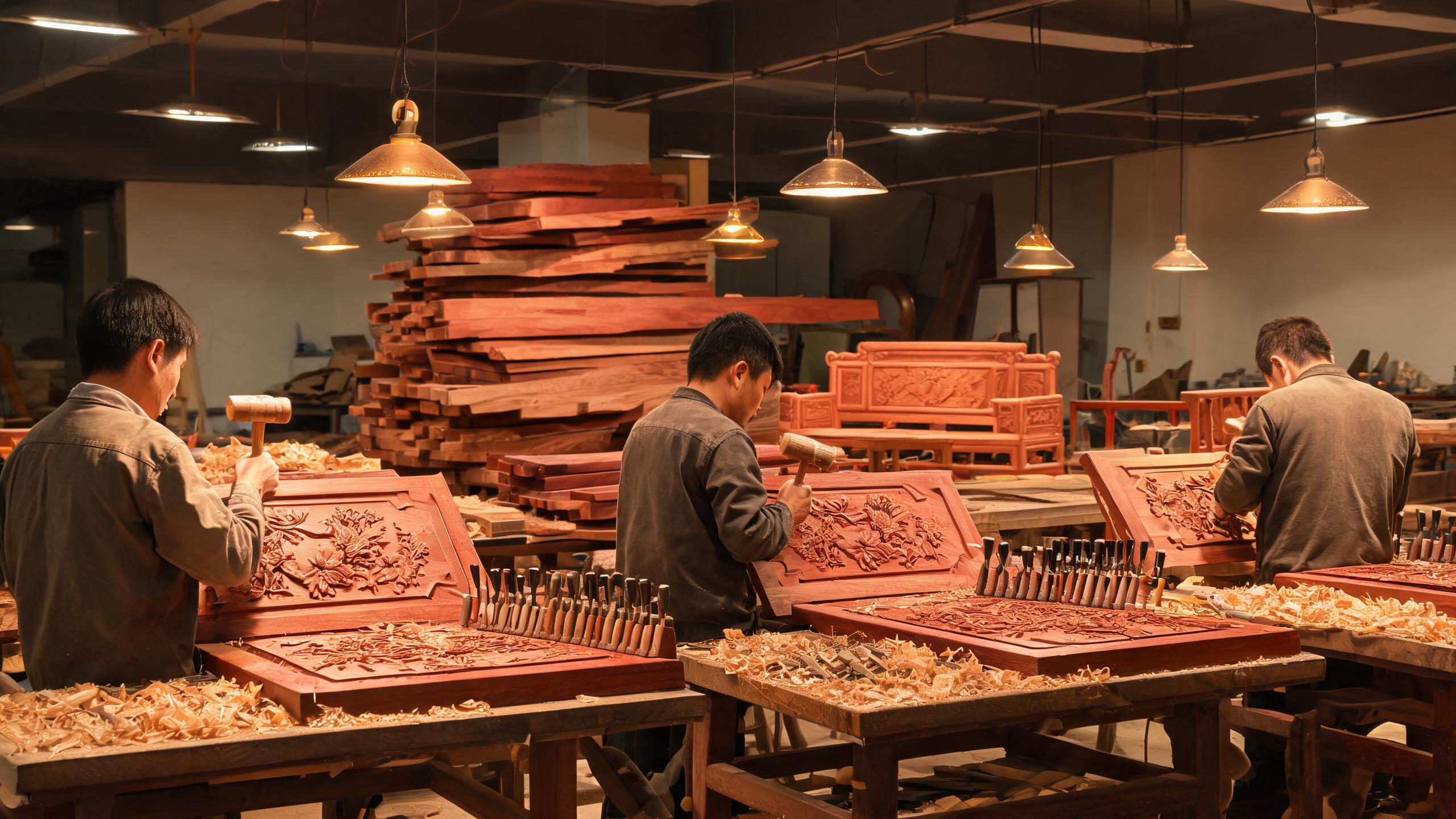
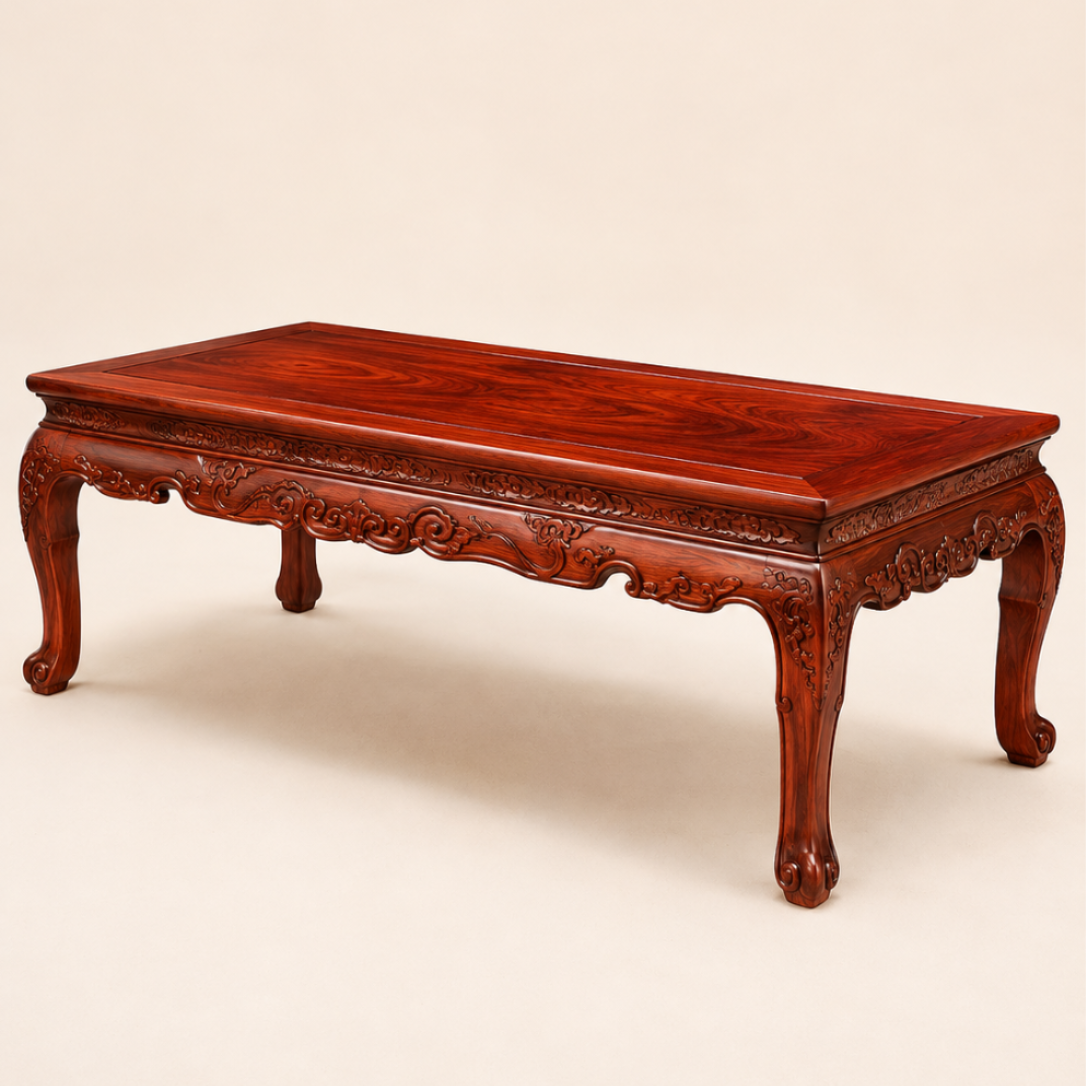
Yunxiao Rosewood Furniture Co., Ltd, founded in 2008 in Xianyou County, Fujian Province, manufactures solid Siamese rosewood tea tables from a 12,000-square-meter factory in one of China most historically significant hardwood furniture craft regions. Our Classical Siamese Rosewood Tea Table with Carved Cloud Apron represents the convergence of traditional Chinese joinery, hand carving, and modern export compliance that distinguishes authentically crafted tea culture furniture from mass-produced alternatives.
This guide provides B2B buyers, procurement managers, and interior designers with a comprehensive framework for evaluating rosewood tea table suppliers, covering material characteristics, structural engineering for daily tea use, carving authentication, moisture protection, quality control, export documentation, and customization for project-specific requirements.
Siamese Rosewood: The Traditional Material for Tea Furniture
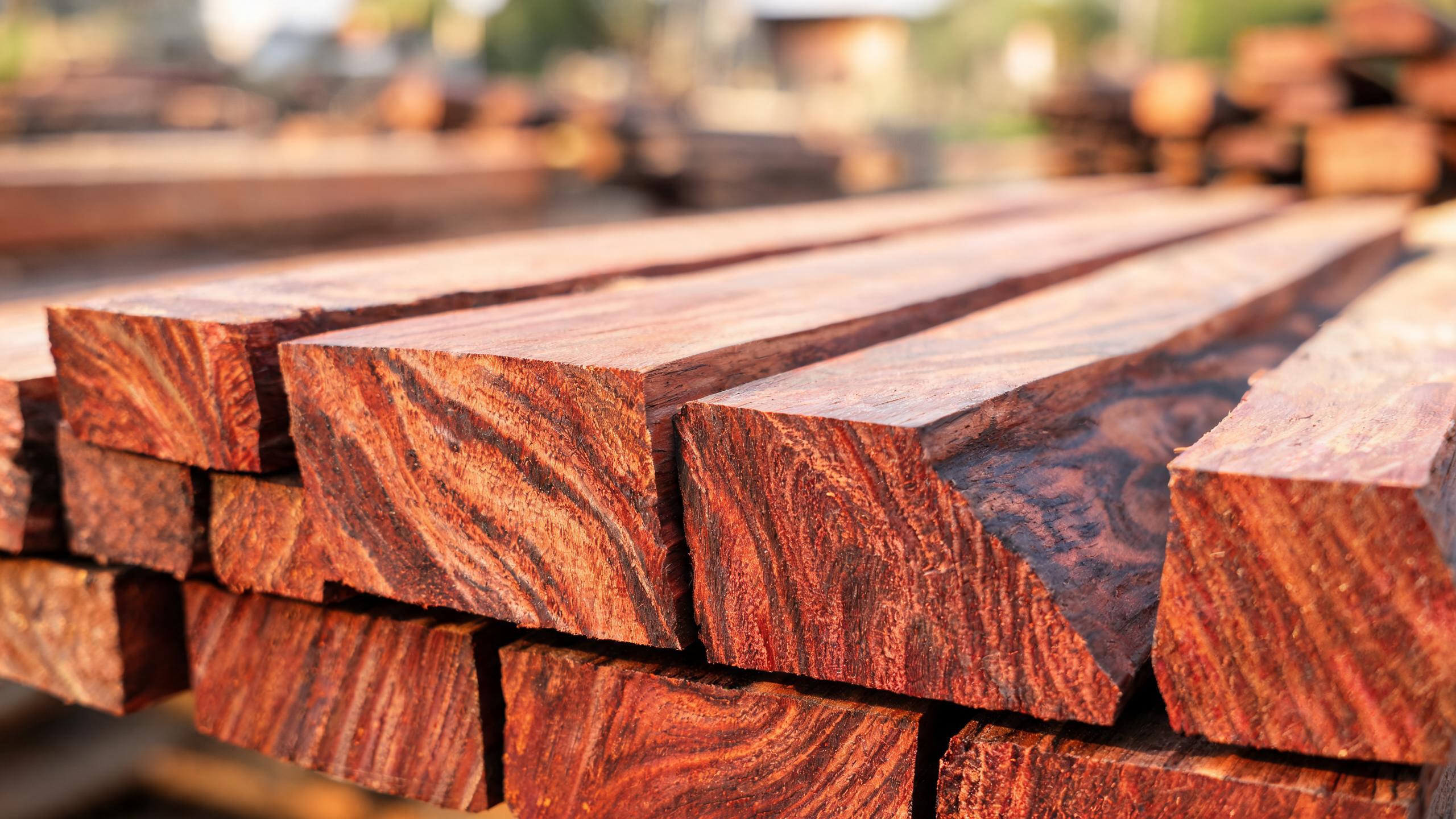
The material chosen for a tea table determines its performance under the unique conditions of tea preparation: frequent exposure to hot water, tea oils, temperature fluctuations from heated vessels, and ambient humidity changes. Siamese rosewood (Dalbergia cochinchinensis) has been used for tea furniture since the Ming dynasty because its natural properties are particularly suited to these conditions.
| Material Property | Specification | Benefit for Tea Table Use |
|---|---|---|
| Density | 0.90-1.00 g/cm3 | Tabletop resists denting from teaware and water vessels |
| Heartwood ratio | 80% or higher | Uniform color across tabletop visible during tea service |
| Moisture content | Below 14% after 36-day kiln drying | Prevents warping from hot water spills and steam exposure |
| Water resistance | Natural, enhanced by raw lacquer | Surface withstands tea spills without staining |
| Thermal stability | High dimensional stability | Resists movement from heated teapots placed on surface |
| Aging behavior | Deepens through breathable lacquer | Tea oils enhance patina development over years of use |
Siamese rosewood is CITES Appendix II listed, requiring export permits for international trade. Yunxiao is a CITES-registered exporter and prepares permits for every shipment. FSC chain-of-custody certification documents legal sourcing. For buyers seeking alternatives, legally certified Machilus Nanmu and Grade-A aged redwood are also available.
Hand-Carved Cloud Apron: Cultural Symbolism and Craft Authentication
The cloud apron is the most visually distinctive feature of a classical Chinese tea table, serving both decorative and symbolic functions. In Chinese cultural tradition, cloud motifs (yun wen) represent good fortune, harmony, and the connection between earthly and celestial realms. The Ruyi pattern, often integrated with cloud designs, symbolizes wish-fulfillment and prosperity. For tea furniture, these motifs create an atmosphere of cultural authenticity that enhances the tea ceremony experience.
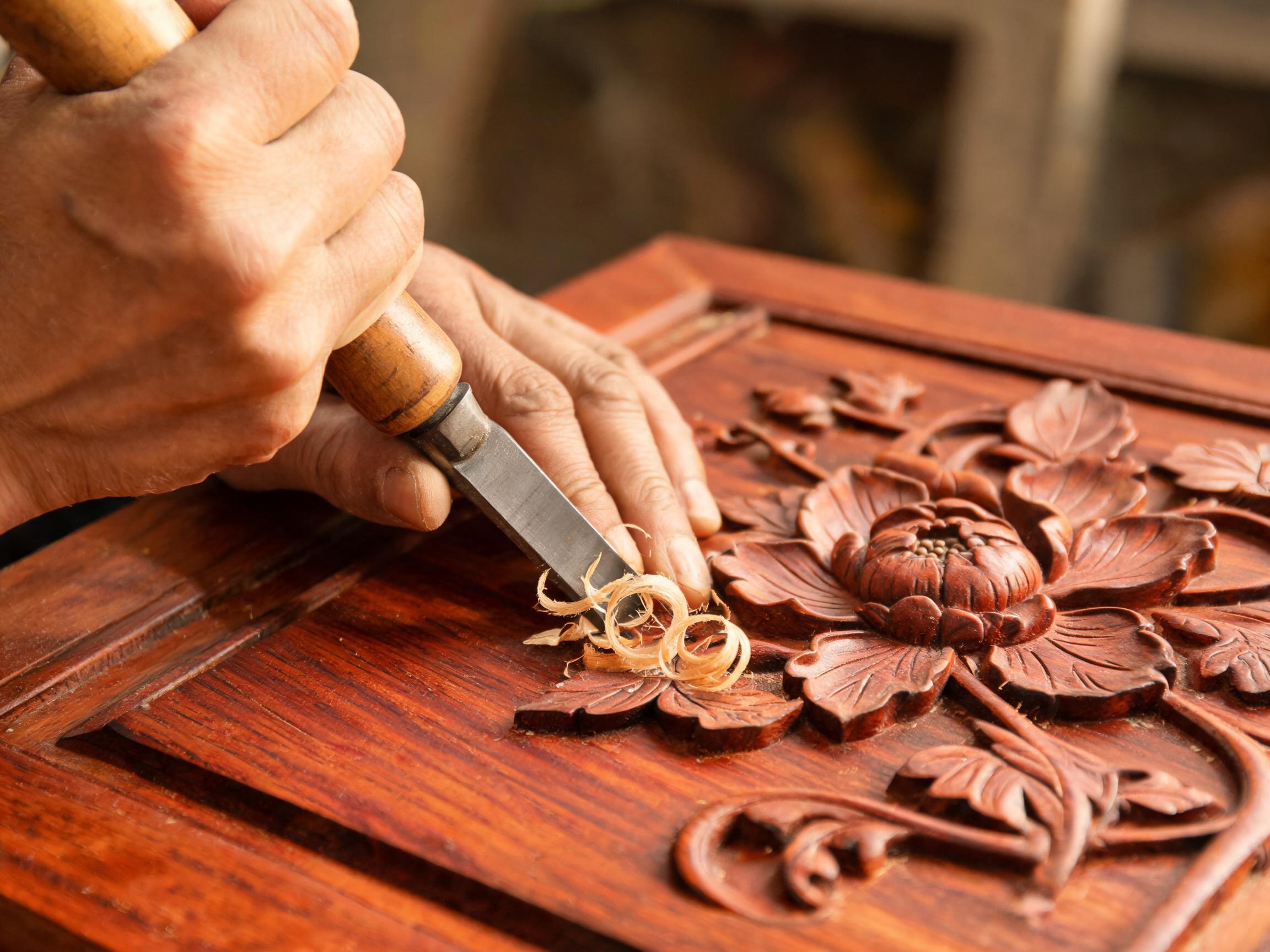
Yunxiao master artisans in Xianyou County use traditional hand tools to create three-step relief carving on the cloud apron. Low relief establishes the cloud silhouette by removing background material. Medium relief creates dimensional layering of secondary cloud curls and Ruyi curves. High relief brings the foreground cloud elements to full three-dimensional depth, creating a surface that catches light differently throughout the day as natural illumination changes in the tea room.
A single cloud apron panel with three-step relief requires 30 to 40 hours of hand work. Available carving motifs for tea table aprons include cloud and Ruyi (the traditional choice for tea furniture), dragon (for ceremonial or imperial-style settings), lattice geometric patterns (for Ming-style minimalist aesthetics), and bamboo (symbolizing integrity and resilience). Custom motifs incorporating tea house logos or cultural symbols are available through OEM customization.
Buyers can verify authentic hand carving by examining tool marks for subtle chisel stroke irregularities, relief depth variation showing distinct transitions between carving levels, interior corner detail where hand chisels reach angles machine bits cannot access, and wood grain response where hand carvers adjust technique to prevent tear-out. Machine carving produces uniform, repetitive patterns with mechanical tool marks that lack these authentic indicators.
Structural Joinery: Engineering a Tea Table for Daily Use
A tea table must support the weight of teaware, water vessels, and sometimes heated pots while maintaining absolute stability during use. Any wobbling or movement disrupts the tea ceremony. Traditional Chinese mortise-and-tenon joinery provides the structural integrity required for this demanding application.
The through-tenon with wedge joint connects table legs to the apron. The tenon passes completely through the apron and is split at the tip. A bamboo wedge is driven into the split, expanding the tenon inside the mortise. This joint cannot pull apart under tension and actually tightens with load, making it ideal for tables bearing heavy tea sets and water containers. The wedge is visible from above as a thin line where it meets the apron surface, serving as a visible marker of traditional construction.
Floating-panel construction on the tabletop allows seasonal wood movement. The tabletop panel sits in a grooved frame, held by wooden buttons that permit lateral expansion and contraction. This construction is critical for tea tables because the tabletop is frequently exposed to moisture from tea preparation. A tightly fitted panel without expansion gap would crack when moisture causes the wood to expand. The small gap between panel edge and groove wall is intentional and normal.
Additional structural features include half-lap mortise-and-tenon joints for stretcher-to-leg connections preventing racking and lateral movement, bamboo dowel pins securing tenon joints with similar moisture expansion characteristics to rosewood, and dovetail joints in any drawer compartments resisting pull-out forces. Metal screws or nails in primary structural joints indicate non-traditional construction and should be considered a quality red flag.
Moisture Protection: Kiln Drying and Lacquer for Tea Environments
Tea tables face unique moisture challenges compared to other furniture. Hot water spills, steam from teapots, ambient humidity from water features in tea rooms, and condensation from cold teaware all expose the wood surface to repeated moisture cycles. Without proper drying and finishing, these conditions cause warping, cracking, and finish failure.
Yunxiao 36-day constant-humidity kiln drying protocol brings timber moisture content below 14 percent through a three-phase process. The initial high-temperature phase removes free moisture from cell lumens. The intermediate equalization phase allows the moisture gradient to balance throughout the timber cross-section. The final stress-relief conditioning phase relieves drying stresses. This protocol cannot be accelerated without compromising structural integrity and is embedded in the 45 to 60 working day production timeline.
The raw lacquer finishing system provides the critical moisture barrier for tea table surfaces. The 8 to 9 coat hand-rubbed system includes a wood sealing coat that penetrates and hardens the surface fibers, filling coats that level grain texture to create a smooth surface, body coats building film thickness for moisture protection, and a final curing in a humidity-controlled room for 7 to 10 days. Unlike polyurethane finishes that create a plastic-like barrier trapping moisture, raw lacquer is breathable, allowing moisture vapor transmission while protecting the surface. This breathability prevents the blistering and peeling that synthetic finishes suffer when moisture migrates through the wood.
The lacquer finish meets EU REACH chemical safety standards, US CARB formaldehyde emission limits, and FDA 21 CFR 175.300 for repeated food contact, ensuring that tea prepared on the table surface is not exposed to harmful chemical transfer.
Tea Table Sizing and Configuration for Different Settings
Selecting the right tea table dimensions requires understanding the intended use setting, number of participants, and spatial constraints. Yunxiao tea table can be configured through OEM and ODM customization for different applications:
| Application Setting | Recommended Dimensions | Design Considerations |
|---|---|---|
| Hotel tea lounge | Standard height, 120-140cm length, 4-6 seats | Cloud apron visible to seated guests; stable for service |
| Traditional tea house | Low height, 80-100cm length, floor seating | Low table for floor cushion seating; larger apron carving |
| Cultural center | Large, 150-180cm length, 6-8 seats | Custom cultural motif carving; demonstration table |
| Private tea room | Compact, 90-110cm length, 2-4 seats | Intimate setting; cloud and Ruyi pattern for ambiance |
| Restaurant tea service | Standard height, 130cm length, 4 seats | FDA-compliant finish; moisture-resistant surface |
For multi-table projects, the same carving team produces all cloud apron panels, ensuring consistency across the batch. Custom dimensions, carving depth, and apron pattern variations are available through OEM customization.
Export Documentation for Rosewood Tea Table Shipments
Importing a rosewood tea table made from Siamese rosewood requires specific documentation at customs. Yunxiao internal export team prepares complete documentation for every shipment to prevent delays at port:
- CITES Appendix II export permit: Required for Siamese rosewood. Shipment-specific and non-transferable. Processing takes 5 to 10 working days after shipment contents are finalized.
- FSC chain-of-custody certificate: Documents legal timber sourcing from certified forests. Required by many hotel chains and cultural institution procurement programs.
- ISPM-15 heat treatment certificate: Confirms wooden packaging heat-treated at 56 degrees Celsius for 30-plus minutes, meeting biosecurity requirements for Australia, New Zealand, and other strict markets.
- EU REACH and US CARB compliance declarations: Confirm the raw lacquer finish meets chemical safety standards for European and North American import.
- FDA 21 CFR 175.300 compliance: Confirms the table surface is safe for repeated food and beverage contact, important for tea service applications.
- Commercial invoice with HS code 9403.60: Required for customs declaration of wooden furniture.
- Packing list: Itemized contents with dimensions and weight for each crate.
Missing CITES permits are the single most common cause of rosewood furniture shipments being held at port. Buyers should request document samples during quotation and engage customs brokers experienced with CITES Appendix II timber procedures.
Quality Control for Tea Table Manufacturing
Yunxiao quality control system provides documented verification at each production stage for tea table manufacturing. Timber verification confirms moisture content readings from the 36-day kiln drying cycle, heartwood ratio at 80 percent or higher, and density sorting to 0.90 to 1.00 g/cm3 for consistent structural response. Carving inspection verifies design accuracy against approved drawings, relief depth consistency across the cloud apron, and surface finish quality before assembly. Assembly verification checks joinery tightness, table stability, leg levelness, and dimensional accuracy against specifications. Finish assessment evaluates lacquer coverage, color consistency compared to the approved sample, and surface sheen under controlled lighting.
Third-party pre-shipment inspection is welcomed and accommodated at the buyer expense. The factory provides full cooperation with inspection agents, including access to production records, kiln drying logs, and material documentation. For multi-table orders, the factory assigns the same carving artisan to all cloud apron panels, ensuring consistent carving depth and pattern execution.
OEM and ODM Customization for Tea Table Projects
Yunxiao supports both OEM and ODM customization for buyers needing project-specific tea table designs. The OEM model accommodates buyer-provided specifications for dimensions, carving drawings, and finish requirements. The ODM model allows buyers to communicate the concept and target setting, with the factory design team creating the product within a 15-working-day design approval cycle.
The full customization workflow includes requirement brief with dimensions, seating capacity, carving motif, and target market on Day 1; layout drawings with joinery details and carving placement from Day 5 to 7; 3D mockups showing finished appearance including wood color and carving depth from Day 8 to 12; revision cycle allowing one round of adjustments from Day 13 to 15; final approval and deposit; finish sample mailing on wood blocks; 45 to 60 working days production for standard or 60 to 75 for fully custom designs; quality inspection and ISPM-15 crate packing.
Custom carving options include cloud and Ruyi patterns in varying complexity levels, dragon motifs for ceremonial settings, lattice geometric patterns for Ming-style aesthetics, and custom designs incorporating tea house logos or cultural symbols. Custom table dimensions accommodate specific seating arrangements, from intimate two-person tea sessions to large group demonstrations.
Target Markets and Buyer Profiles for Rosewood Tea Tables
| Market Region | Typical Buyer | Key Requirements |
|---|---|---|
| Southeast Asia | Tea house owners, hotel developers, cultural centers | CITES permits, tropical climate stability, large tea ceremony tables |
| North America | Asian cultural associations, high-end restaurants, tea retailers | Lacey Act compliance, CARB limits, FDA food-contact compliance, FSC |
| Australia | Cultural institutions, luxury resorts, tea importers | Strict ISPM-15 enforcement, biosecurity, FSC chain-of-custody |
| Europe | Design boutiques, cultural museums, Asian restaurants | EU Timber Regulation, REACH compliance, FSC documentation |
FOB Xiamen is the default trade term, with direct sailing routes to Los Angeles, Long Beach, Sydney, Melbourne, Singapore, and Rotterdam. Partial shipments available for long-term partners with staged delivery scheduling.
Common Risks When Sourcing Rosewood Tea Tables
1. Insufficient moisture content verification. Tea tables face repeated moisture exposure from tea preparation. Request documented kiln drying records showing moisture below 14 percent. Tables with higher moisture content will warp and crack when exposed to hot water and steam.
2. Non-breathable finishes in tea environments. Synthetic finishes trap moisture and blister when water migrates through the wood. Raw lacquer is breathable and self-regulating. Verify the finish type before ordering.
3. Inadequate joinery for daily use. Tea tables must be absolutely stable during use. Through-tenon with wedge joints provide the required rigidity. Metal screws loosen under repeated lateral force from tea service movements.
4. Missing CITES permits. Each shipment needs its own CITES Appendix II export permit. Confirm permit availability before finalizing order details. Missing permits are the most common cause of port delays.
5. Neglecting thermal stability. Heated teapots placed directly on the table surface create localized thermal stress. Ensure the table uses properly dried timber with adequate lacquer film thickness to distribute thermal load.
Frequently Asked Questions
What wood species is the tea table made from?
Our tea table is constructed from solid Siamese rosewood (Dalbergia cochinchinensis), CITES Appendix II listed. We also offer legally certified Machilus Nanmu and Grade-A aged redwood for buyers needing alternative materials. All timber undergoes 36-day kiln drying to below 14 percent moisture and carries FSC chain-of-custody documentation.
What is the cloud apron carving and how is it made?
The cloud apron is a carved panel beneath the table edge featuring traditional Chinese cloud and Ruyi motifs symbolizing good fortune and harmony. Each apron is hand-carved by Xianyou master artisans using three-step relief carving, requiring 30 to 40 hours per panel. Machine carving cannot replicate the depth variation and tool character of authentic hand work.
What is the production lead time for a tea table?
Standard catalog production takes 45 to 60 working days from deposit receipt. Custom OEM and ODM orders require 60 to 75 working days plus a 15-day design approval cycle. The 36-day kiln drying cannot be accelerated. CITES permit processing takes 5 to 10 working days concurrent with final production.
Will the table surface be damaged by tea spills?
Our 8 to 9 coat hand-rubbed raw lacquer provides a moisture-resistant surface that withstands tea spills and hot water. The lacquer meets FDA 21 CFR 175.300 for repeated food and beverage contact. Raw lacquer is breathable, preventing the blistering that synthetic finishes suffer when moisture migrates through wood. Spills should be wiped promptly to maintain the finish.
Can the table dimensions be customized for our tea room?
Yes. OEM and ODM customization covers table height, length, width, seating capacity, carving motif, apron design, and finish color. Design proposals with 3D mockups provided within 15 working days. Free layout drawings showing table placement within room dimensions available for project buyers.
What export documentation is provided with the tea table?
Every shipment includes CITES Appendix II export permit, FSC chain-of-custody certificate, ISPM-15 heat treatment certificate, EU REACH and US CARB compliance declarations, FDA 21 CFR 175.300 compliance, commercial invoice with HS code 9403.60, and itemized packing list. All documents in English.
Is the tea table stable enough for daily tea ceremony use?
Yes. Through-tenon with wedge joints connect legs to apron, tightening with load and preventing wobble. Floating-panel tabletop construction accommodates wood movement without cracking. Bamboo dowel pins secure joints with matching moisture expansion characteristics. The table provides absolute stability required for precise tea service movements.
What is the minimum order quantity for tea tables?
Trial single table orders are available for new buyers. For wholesale partners, container-load orders are standard. A 40-foot container holds approximately 15 to 20 tea tables depending on dimensions. Refundable sample tables available for qualified buyers evaluating new designs.
How is the tea table packaged for export shipping?
Multi-layer export packaging includes acid-free tissue on all carved surfaces, custom-cut EPE foam brackets shaped to the table profile, corner protectors, VCI anti-corrosion film with desiccant packs, and ISPM-15 heat-treated wooden crates with internal bracing. Container loading supervised with photos provided before departure.