
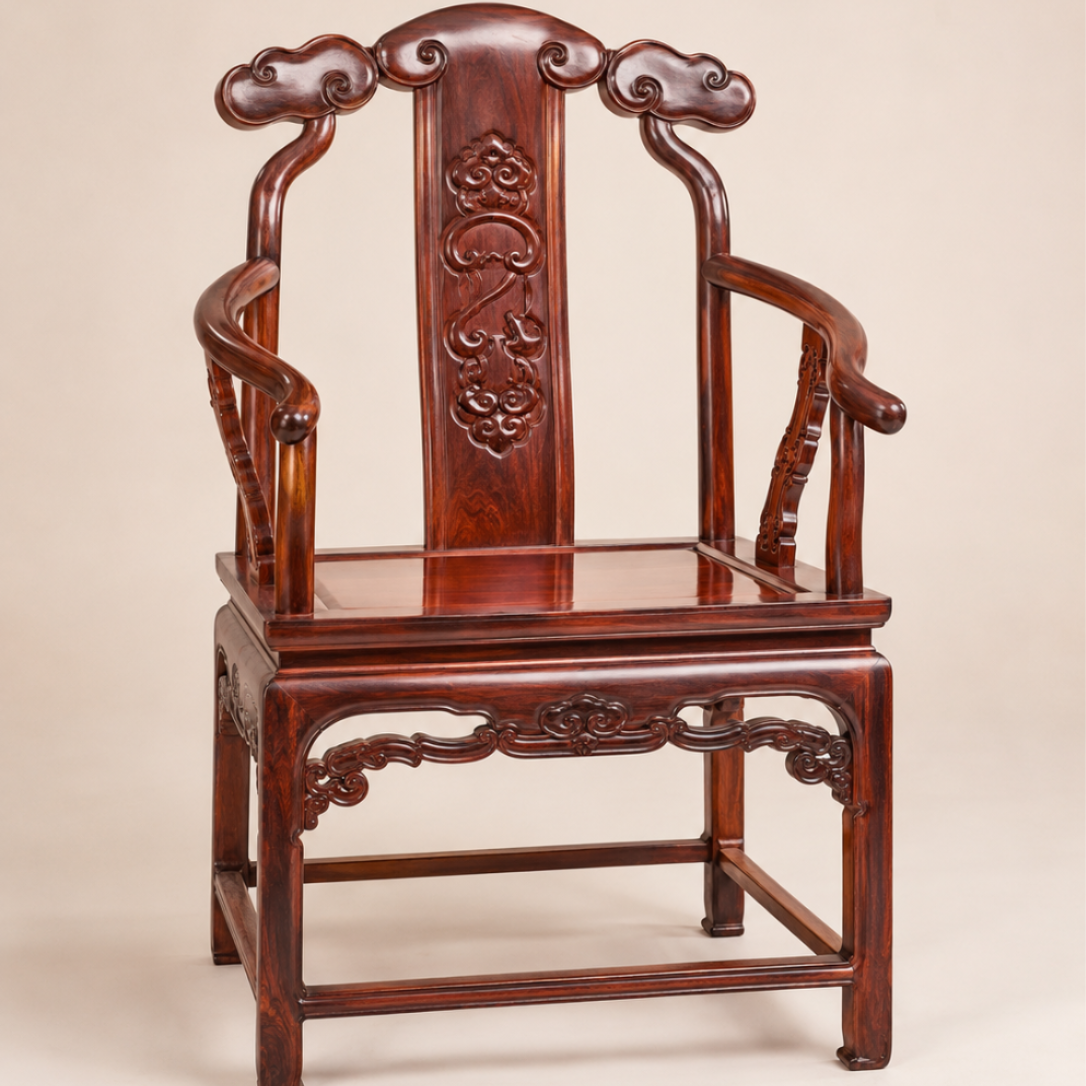
Understanding rosewood armchair Options for Wholesale and Project Procurement
When sourcing rosewood armchairs for wholesale distribution, hospitality projects, or interior design programs, buyers face a market where the term "rosewood" covers multiple wood species, construction methods, and quality tiers. This guide focuses on solid Siamese rosewood (Dalbergia cochinchinensis) armchairs manufactured for export to Europe, North America, Australia, and Southeast Asia. Unlike veneered or finger-jointed alternatives, solid rosewood armchairs offer structural longevity, carving depth that improves with age, and resale value that appeals to collectors and hospitality clients alike.
The procurement process for a rosewood armchair order differs significantly from consumer retail purchases. B2B buyers must verify timber legality, assess joinery quality, confirm finish compliance with destination market regulations, and coordinate shipping documentation. A single armchair may serve as a sample for a larger container order, so the evaluation criteria must extend beyond aesthetics to include structural soundness, moisture stability, and documentation completeness.
Wood Species and Timber Legality for rosewood armchair Export
Siamese rosewood (Dalbergia cochinchinensis) is listed on CITES Appendix II, meaning international trade requires export permits from the country of origin. Yunxiao Rosewood Furniture sources legally certified timber and includes CITES permits with every shipment. Buyers importing into the European Union must also comply with the EU Timber Regulation (EUTR), which requires due diligence on timber legality. In the United States, the Lacey Act requires importers to declare wood species and country of harvest.
Some suppliers substitute cheaper species such as Macassar ebony, stained hardwood, or engineered boards while marketing them as "rosewood." Genuine Siamese rosewood has a distinctive reddish-brown heartwood with darker streaks, fine texture, and natural oil content that enhances durability. Buyers should request a timber test report or laboratory identification if the species claim is critical for their market positioning.
Construction Methods: Mortise-and-Tenon Joinery in rosewood armchair
Traditional Chinese furniture construction relies on mortise-and-tenon joinery, where interlocking wooden joints replace metal fasteners. This method offers several advantages for export furniture: no rust risk in humid climates, no loosening from vibration during shipping, and structural flexibility that accommodates natural wood movement. Yunxiao's armchairs use bamboo dowel pins to secure tenon joints, a technique that further reinforces the connection without introducing metal components.
Buyers should inspect the joinery by examining joint visibility, checking for gaps, and testing stability. A well-constructed mortise-and-tenon joint should be nearly invisible on the surface, with no movement when pressure is applied. Avoid chairs that use screws, nails, or brackets in primary load-bearing joints, as these are prone to failure over time in overseas environments.
Key Joinery Inspection Points
- Check that all primary joints are wood-to-wood connections without visible metal
- Look for tight-fitting joints with no visible gaps or filler
- Test lateral stability by applying side pressure to the armrest and backrest
- Verify that bamboo dowel pins are used rather than glue-only connections
- Inspect the underside of joints for clean mortise cuts without splintering
Moisture Content and Climate Stability for rosewood armchair
One of the most critical factors in export furniture quality is moisture content management. Wood that is not properly dried will shrink, crack, or warp when moved to a different climate. Yunxiao subjects every piece to a 36-day constant humidity drying process, bringing moisture content to 8-12 percent, followed by a 48-hour equalization period. This range is suitable for most indoor environments in Europe, North America, Australia, and Southeast Asia.
Buyers in extremely dry climates (such as desert regions or heated winter interiors) or extremely humid climates (tropical coastal areas) should discuss additional conditioning options. Request a moisture meter reading before shipment if your destination climate is outside the typical 40-70 percent relative humidity range.
Lacquer Finishes and Food-Contact Compliance
The finish on a rosewood armchair serves both protective and aesthetic functions. Yunxiao uses a multi-coat raw lacquer (natural urushi) finish, with each coat cured for 24 hours and hand-rubbed with pumice stone for a satin sheen. This penetrating finish nourishes the wood rather than forming a thick surface film, allowing the grain to remain visible and the wood to breathe.
For dining chairs or seating used in food service environments, the lacquer must comply with food-contact regulations. Yunxiao's glossy lacquer finish meets FDA 21 CFR 175.300 requirements for food-contact surfaces. The eco-friendly beeswax and lacquer formulation also complies with EU REACH and US CARB standards for volatile organic compound emissions. Buyers should request finish compliance documentation if their project involves hospitality or food service applications.
Carving Quality and Motif Selection
Hand carving is a defining feature of classical rosewood furniture. Yunxiao's master artisans in Xianyou County hand-chisel traditional motifs including ruyi sceptre, dragon, phoenix, cloud, bamboo, and lattice patterns. The Classical Siamese Rosewood Armchair with Carved Ruyi Backrest requires approximately 18 carving hours per piece, with relief cuts at 2-4 mm depth.
When selecting carving motifs, consider the target market's cultural familiarity and design preferences. Ruyi and cloud motifs are versatile and widely appreciated. Dragon and phoenix patterns carry stronger cultural associations and may suit buyers specializing in Asian-inspired interiors. Bamboo and lattice patterns offer a cleaner aesthetic that blends well with contemporary design schemes.
| Motif | Carving Hours | Relief Depth | Best For |
|---|---|---|---|
| Ruyi Sceptre | ~18 hours | 2-4 mm | Versatile, widely appreciated |
| Dragon | ~20 hours | 3-5 mm | Asian-inspired interiors, statement pieces |
| Phoenix | ~20 hours | 3-5 mm | Reception and hospitality settings |
| Bamboo | ~16 hours | 2-3 mm | Contemporary-blend aesthetics |
| Lattice | ~14 hours | 1-3 mm | Clean, minimalist design schemes |
Dimensional Specifications and Space Planning
The Classical Siamese Rosewood Armchair measures 62 cm in width, making it suitable for European apartments, study rooms, and boutique hotel lounge areas where full sofa sets are too large. When ordering for specific spaces, buyers should provide room dimensions, intended seating capacity, and any clearance requirements for accessibility standards.
For hospitality projects, consider mixing armchair sizes and styles to create visual interest while maintaining a cohesive material palette. A typical arrangement might pair two armchairs with a tea table in a guest room, or use a row of armchairs in a lobby waiting area. Request free layout drawings from Yunxiao's project team to optimize furniture placement before finalizing the order.
Quality Control and Inspection Protocol
Before shipment, each armchair undergoes a quality control inspection covering structural integrity, surface finish, carving detail, and dimensional accuracy. Buyers ordering full containers can request a pre-shipment inspection report with photographs. Key inspection points include:
- Joint stability: no movement or creaking when seated
- Surface finish: uniform sheen, no brush marks, no dust inclusions
- Carving detail: clean relief cuts, no chipped or broken motifs
- Moisture content: 8-12% verified with moisture meter
- Dimensional accuracy: within 2 mm tolerance of specified measurements
- Wood color consistency: single-batch timber allocation for grain and color matching
Packaging and Shipping for rosewood armchair Export
Yunxiao uses ISPM-15 heat-treated export crates with EPS foam protection for ocean freight. Each chair is individually wrapped in moisture barrier material and braced within the crate to prevent movement during transit. The packaging is engineered to protect delicate relief carvings from impact damage.
Container orders typically take 45-60 working days from deposit to shipment. Partial shipments are available for long-term partners who need to stage deliveries for multi-phase projects. Buyers should provide their destination port, preferred Incoterms (FOB, CIF, or DDP), and any warehouse receiving restrictions when requesting a quote.
OEM and ODM Customization Options
Beyond standard designs, Yunxiao offers OEM and ODM customization for buyers who need specific dimensions, carving patterns, or finish options. Custom orders may include modified seat heights for accessibility compliance, bespoke carving motifs for brand identity, or adjusted dimensions for specific room layouts. Minimum order quantities for custom designs are typically discussed during the quotation process, and sample chairs can be produced for approval before bulk production.
Pricing Factors and Cost Optimization
The cost of a rosewood armchair order depends on several variables: wood species grade, carving complexity, finish type, order quantity, and customization level. Single-batch timber allocation ensures color and grain consistency but may increase cost for small orders. Buyers can optimize costs by ordering in container quantities, selecting standard carving motifs, and providing clear specifications to minimize production revisions.
Common Procurement Mistakes and How to Avoid Them
Many B2B buyers new to rosewood furniture procurement make avoidable errors. Common mistakes include: failing to verify timber legality documentation, accepting chairs without moisture content certification, overlooking joinery quality in favor of surface appearance, and not accounting for acclimatization time after delivery. Each of these can lead to customer complaints, customs delays, or product failure in the destination market.
FAQ: rosewood armchair Sourcing
What wood species is used in the rosewood armchair?
The armchair is built from solid Siamese rosewood (Dalbergia cochinchinensis) with no veneer, MDF, or finger joints in load-bearing components. FSC chain-of-custody and CITES Appendix II export permits are included with each shipment.
How long does production take for a container order?
Container orders take 45-60 working days after deposit confirmation. Partial shipments are available for long-term partners with multi-phase project schedules.
Can I order a sample armchair before a bulk order?
Yes, Yunxiao offers trial single sets and refundable samples. The sample allows you to verify wood quality, carving detail, finish, and dimensions before committing to a full container order.
What certifications come with the furniture?
Each shipment includes FSC chain-of-custody certificates, CITES Appendix II export permits, and finish compliance documentation for EU REACH, US CARB, and FDA 21 CFR 175.300 where applicable.
How is the furniture packaged for export?
All furniture is packed in ISPM-15 heat-treated export crates with EPS foam protection and moisture barrier wrapping. Each piece is individually braced to prevent movement during ocean freight.
Can I customize the carving motif and dimensions?
Yes, OEM and ODM customization is available for carving patterns, seat dimensions, and finish options. Custom designs typically require a sample approval process before bulk production begins.
What moisture content should the wood have?
Wood is kiln-dried to 8-12 percent moisture content with a 48-hour equalization period. This range is suitable for most indoor environments in target export markets. Request a moisture meter reading for extreme climate destinations.
What is the minimum order quantity?
Minimum order quantities vary by product and customization level. Contact the export team with your requirements for specific MOQ information. Trial single sets are available for initial evaluation.
Do you provide layout drawings for projects?
Yes, free layout drawings are provided for hospitality and interior design projects. The project team can optimize furniture placement based on room dimensions and intended seating capacity.