Decoding the rosewood dining table 6 chairs Search
Buyers searching for a chinese rosewood dining table and chairs combination are looking for the authentic classical article - Ming-style clean lines or Qing-style relief carving - and a way to verify that what they import is genuinely hand-made from legally sourced rosewood rather than a machine-carved substitute wearing classical styling. This page is that verification guide: what makes a dining set authentically Chinese classical, how to authenticate hand carving on samples or inspection reports, and how the compliance file proves legal rosewood from forest to port.
Yunxiao Rosewood Furniture Co., Ltd manufactures in Xianyou County, Fujian Province - a hardwood carving center since the Ming dynasty. The factory's master artisans carve with traditional hand tools - chisels, gouges, and wooden mallets - in three-step relief, and every Siamese rosewood shipment carries a CITES Appendix II permit proving legal, regulated timber.
Two verifiable claims separate authentic classical dining furniture from imitations: hand carving and legal rosewood. Both are documentable and testable before you pay a deposit.
Ming vs Qing: Choosing Your Classical Language
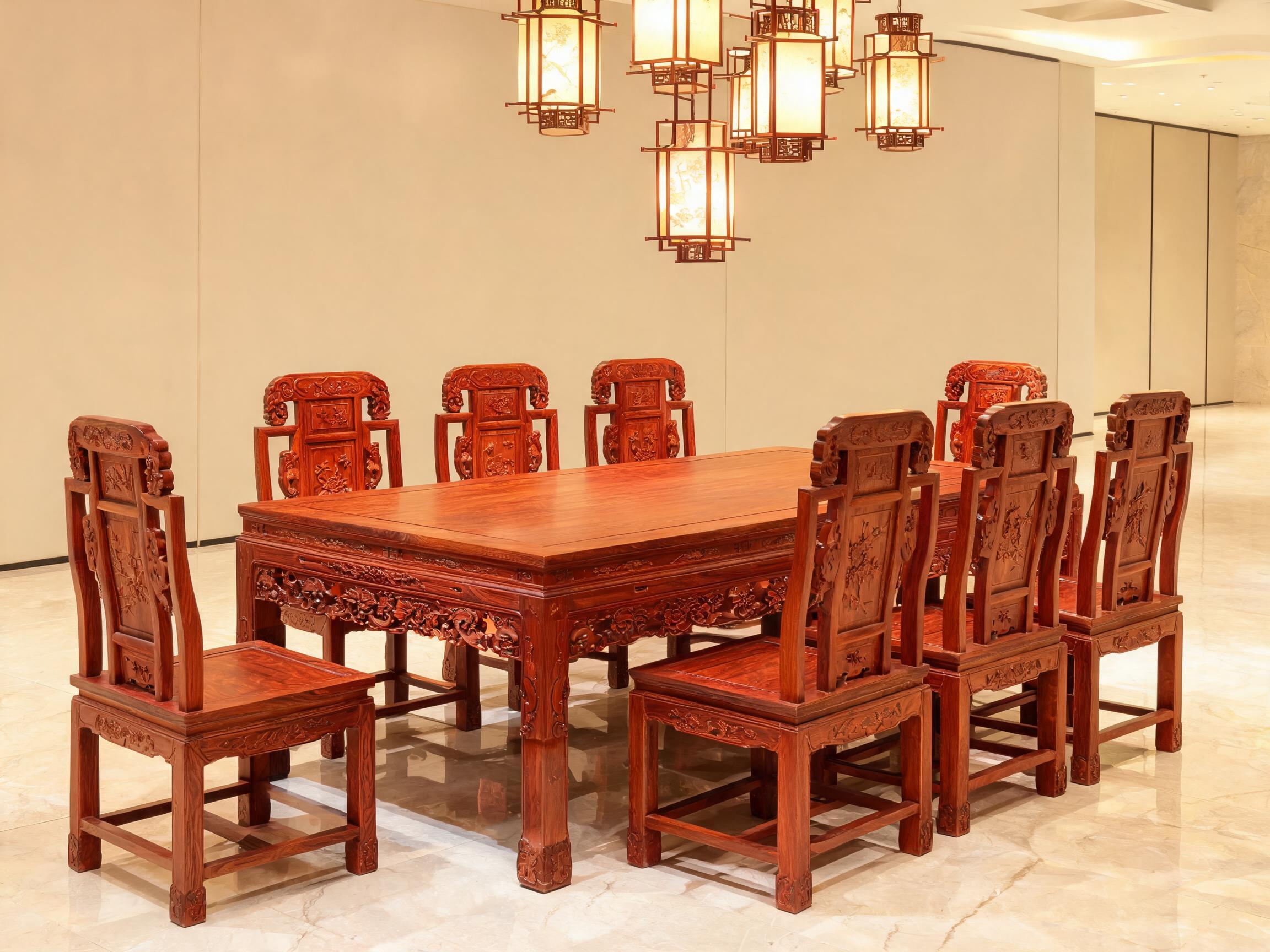
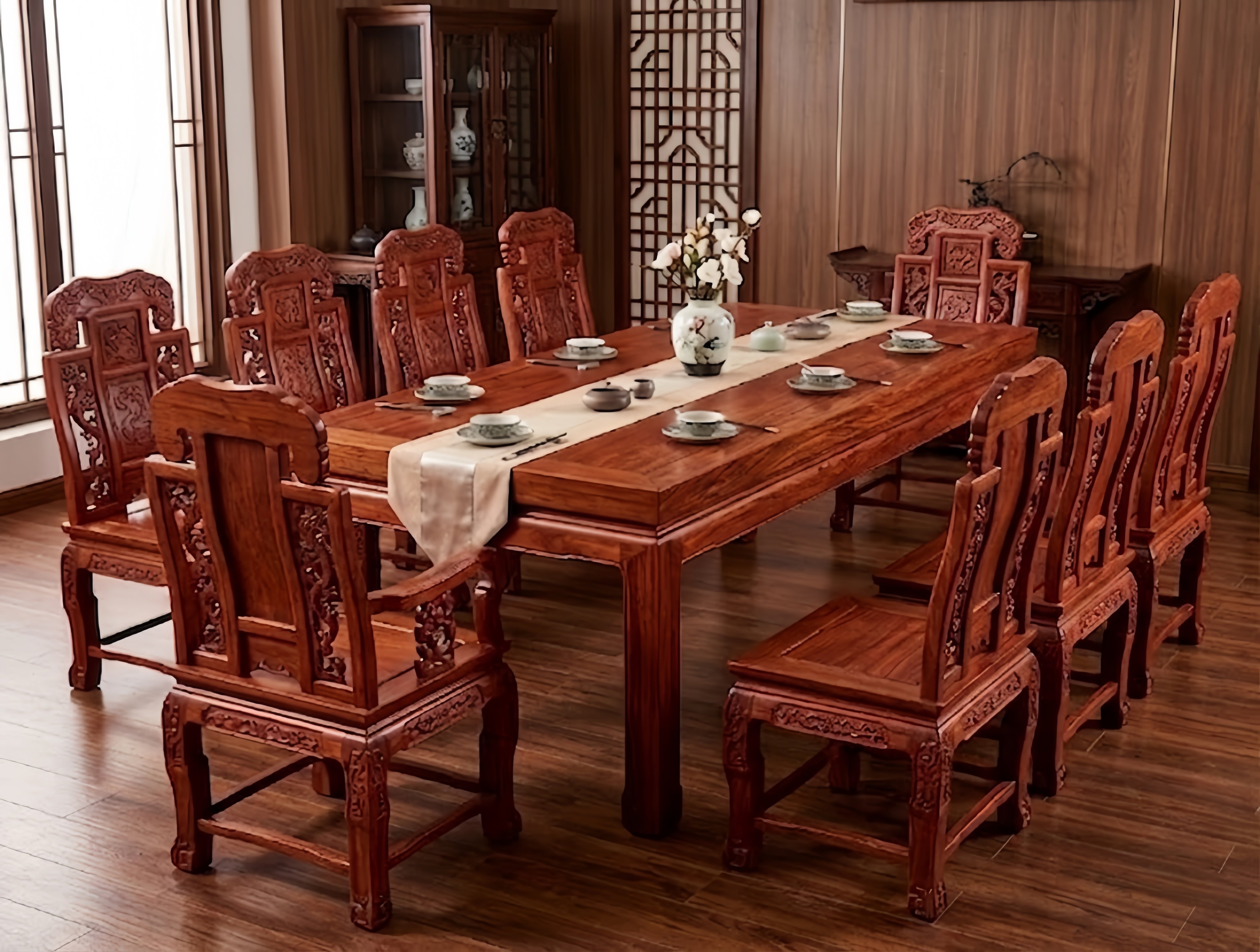
The two classical languages serve different interiors, and choosing between them is the first specification decision. Ming style (1368-1644) runs clean lines, minimalist proportions, and geometric lattice carving - it suits contemporary interiors, boutique hotels, and modern restaurants where the furniture anchors calm. Qing style (1644-1912) runs bold scale and elaborate three-step relief of dragons, phoenixes, and floral scenes - it anchors grand lobbies, formal dining rooms, and spaces that demand visual impact.
| Characteristic | Ming Style | Qing Style |
|---|---|---|
| Lines | Clean, minimal, elegant curves | Bold, heavy, imposing scale |
| Carving | Geometric lattice, restrained | Elaborate relief: dragon, phoenix, floral |
| Best suited for | Contemporary interiors, boutique hotels | Grand lobbies, formal dining rooms |
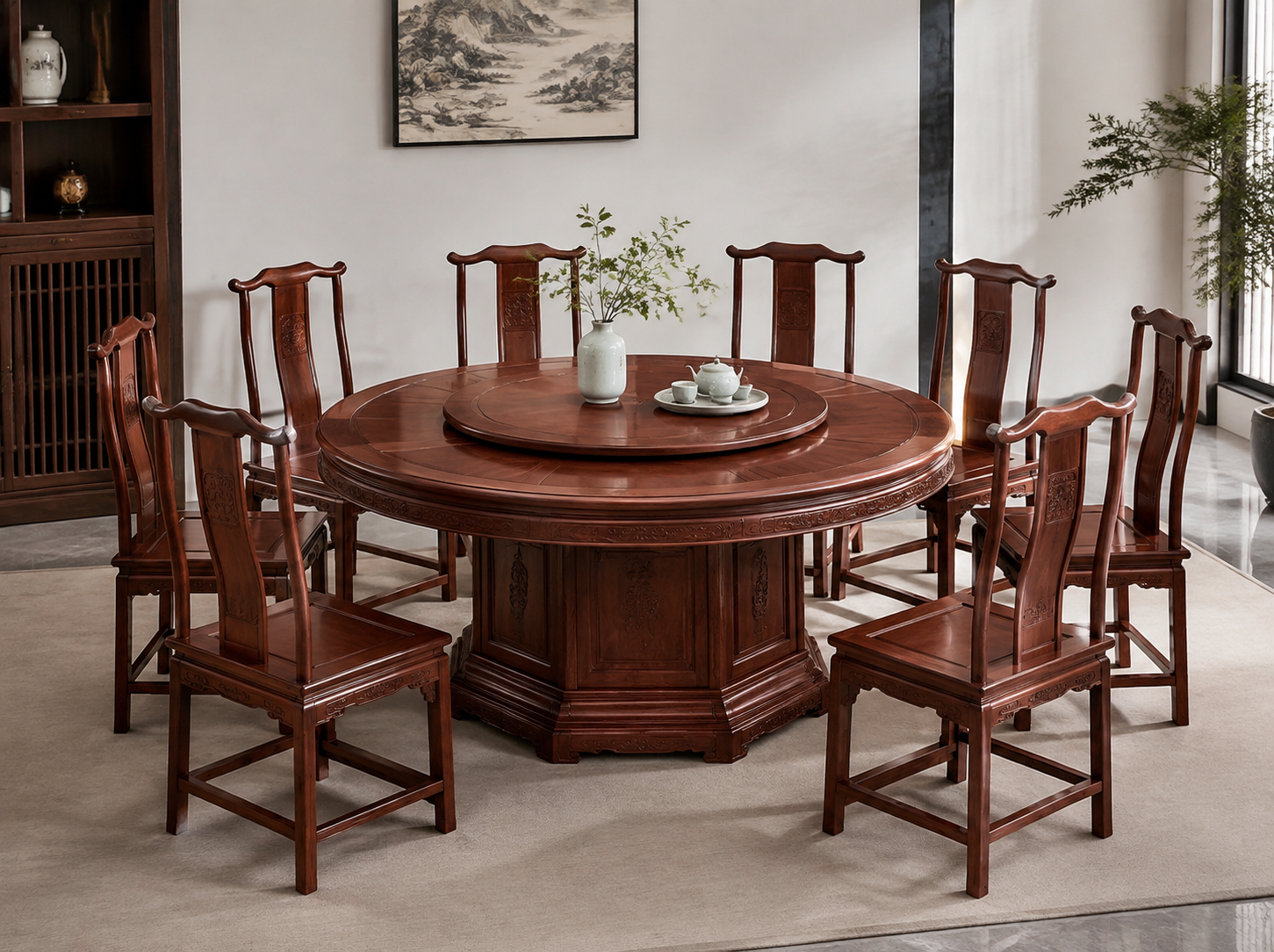
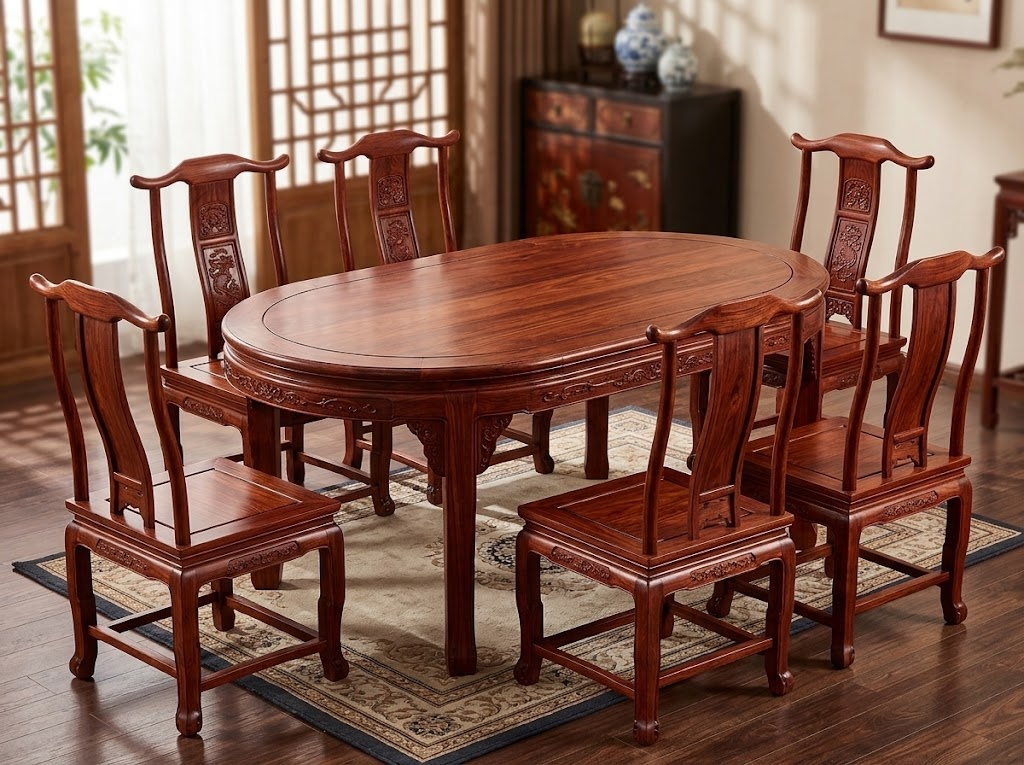
| Catalog anchors | Ming Round 8-Seat Set; Oval 6-Seat with Ming chairs | 12-Seat Banqueting Set; 10-Seat carved sets |
Many project buyers run both languages in one program - Ming for dining rooms and suites, Qing-scale pieces for lobbies and reception - keeping one material story across varied spaces.
Authenticating Hand Carving: Four Field Tests
Hand carving is the primary authenticity marker, and it is testable on samples, photos, and inspection reports. Four field tests distinguish hand work from machine imitation:
- Tool marks: hand-carved surfaces show subtle chisel-stroke irregularities; machine carving shows uniform, repetitive patterns with mechanical tool marks.
- Relief depth variation: authentic three-step relief has distinct background, midground, and foreground depth transitions; machine carving tends flat or uniformly deep.
- Interior corner detail: hand chisels reach acute angles and undercuts that machine bits cannot access; examine inside corners for evidence.
- Grain response: hand carvers adjust technique to grain direction, preventing tear-out; machine carving ignores grain, leaving rough patches at direction changes.
Each backrest panel takes 30 to 40 hours of hand work in three-step relief; a 10-chair set represents 300 to 400 hours of carving labor. That labor intensity is why authentic carving carries its price - and why imitations cut the corner.
Proving Legal Rosewood: The CITES File
Siamese rosewood (Dalbergia cochinchinensis) is CITES Appendix II listed - trade is regulated, not prohibited. Yunxiao is a CITES-registered exporter; every shipment carries its own Appendix II export permit, which is shipment-specific, non-transferable, and prepared in 5 to 10 working days once contents are finalized.
The permit pairs with FSC chain-of-custody documentation covering legal sourcing. For US buyers, the Lacey Act requires a declaration covering species and origin; for EU buyers, EUDR due-diligence obligations require legality evidence that the FSC chain supports. Request document samples at quotation - before any deposit - and confirm your customs broker handles CITES Appendix II timber routinely.
Joinery, Drying, and Climate as Authentication
Traditional joinery is itself an authentication layer, because it cannot be faked cheaply. Authentic classical dining furniture uses through-tenon with wedge joints on legs and posts, half-lap joints on stretchers, dovetail joints in drawers, bamboo dowel pins securing tenons, and floating panels with an intentional seasonal gap.
The machine-age substitutes are red flags: screws in primary structural joints, glue-only butt joints, and panels fitted tight with no movement gap - the last one paradoxically indicating future cracking rather than quality. When commissioning third-party inspection, ask the inspector to photograph primary joints specifically; the joinery report tells you more about authenticity than the carving photos.
Authentic classical furniture is not only about carving - the engineering is part of the tradition. The 36-day constant-humidity kiln drying protocol (three phases: moisture removal, equalization, stress relief) brings timber below 14 percent moisture so the joinery stays tight in destination climates. A machine-era workshop skipping this step produces furniture that opens joints within a year of landing in a dry interior - the fastest way to distinguish craft from styling after purchase.
Regional Motif Preferences Across Markets
Classical motifs are not decoration choices - they are market signals, and importers who match them outsell those who guess. Dragon and phoenix relief carries the strongest resonance in East Asian communities across Southeast Asia and North America, where the motifs read as prosperity and authority; they are the default choice for banquet halls and private dining rooms serving those communities. Cloud and Ruyi patterns travel well across markets with their good-fortune meaning and moderate visual weight, making them the safest single-motif program for a first container. Lattice - hexagonal, diamond, ice-ray - is the motif of choice for Western contemporary interiors because it reads as geometry rather than iconography, which is why the Ming-style chair programs carry it. Bamboo bridges East and West cleanly and photographs exceptionally well in retail listings.
A practical rule from project experience: specify the motif per destination channel rather than per container, and where one container serves mixed markets, weight it toward cloud and Ruyi or lattice with a minority of figurative panels.
The Authentication Inspection Shot List
When a third-party inspection supports an authenticity claim, the shot list should target evidence rather than appearance. Six photographs prove more than sixty: macro shots of carving surfaces showing tool-mark irregularities; a raking-light profile of a backrest showing the three relief depth steps; interior corner close-ups where chisels reached undercuts; the primary leg-to-apron joint showing the through-tenon wedge; the tabletop edge showing the floating-panel gap; and the CITES permit number photographed beside the crate it covers. An inspection file with those six images documents hand carving, traditional joinery, and legal timber in one package that supports listings, customs, and resale.
Book the inspection after finish assessment and before crating so the joints and panel gaps remain visible; once crated, the evidence is behind a wall.
Provenance Practices From the Museum Trade
Museum curators and serious collectors treat documentation as part of the object, and importers can borrow the practice cheaply. Keep the CITES permit with the shipment records rather than filing it away as a customs formality - the permit number ties the timber to a legal trade chain. Retain the FSC chain-of-custody certificate, the carving program drawings (which remain buyer property under OEM terms), and the inspection photo file. A dining set sold with its documentation file commands a premium in the secondary market and clears due-diligence questions instantly in regulated channels - the same way a painting with provenance outperforms an identical painting without it.
For retail programs, the practice translates into a listing paragraph: this set ships with its CITES permit reference, FSC chain-of-custody, and inspection photographs - three documents imitators cannot produce.
The Catalog's Classical Dining Anchors
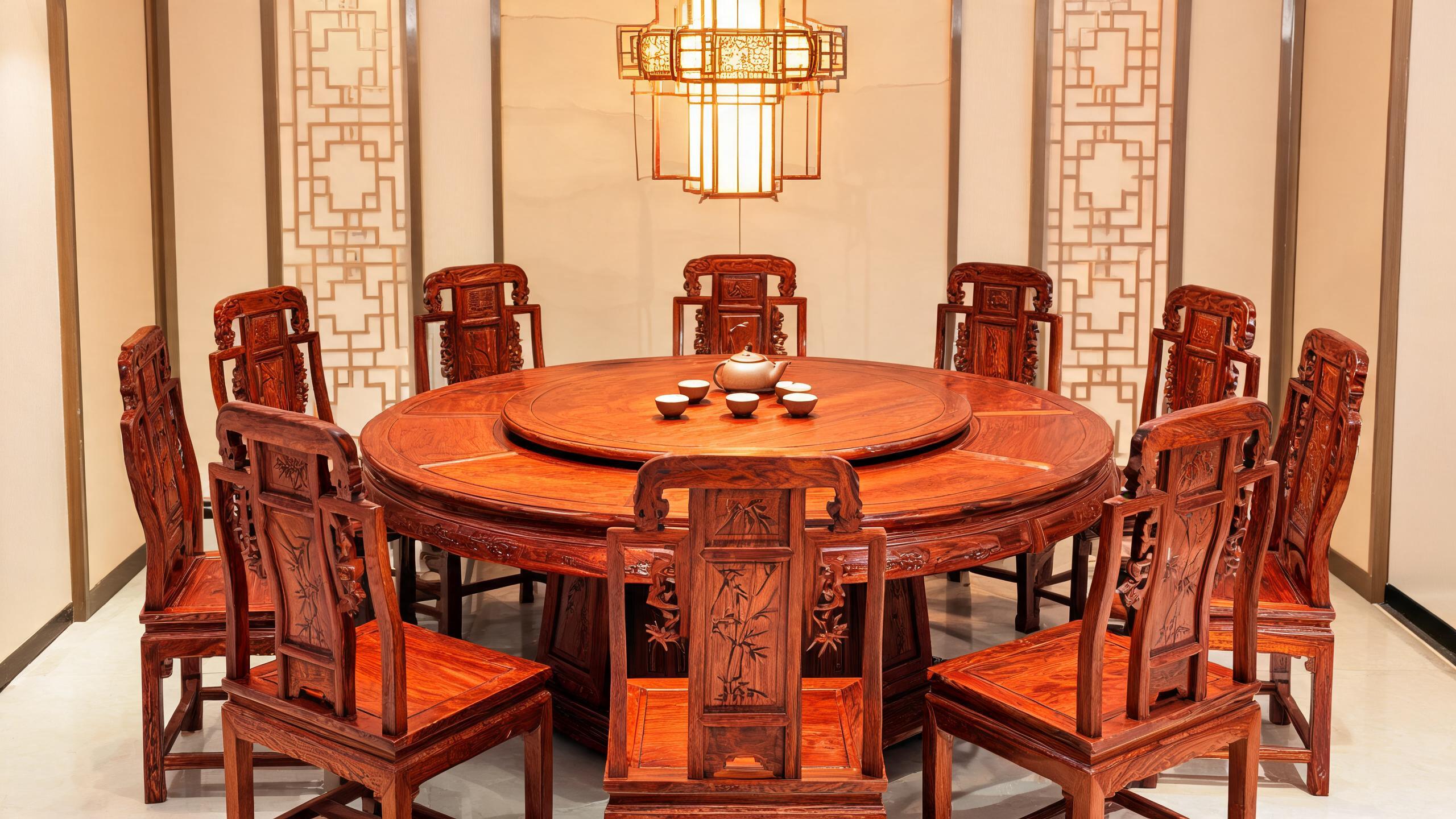
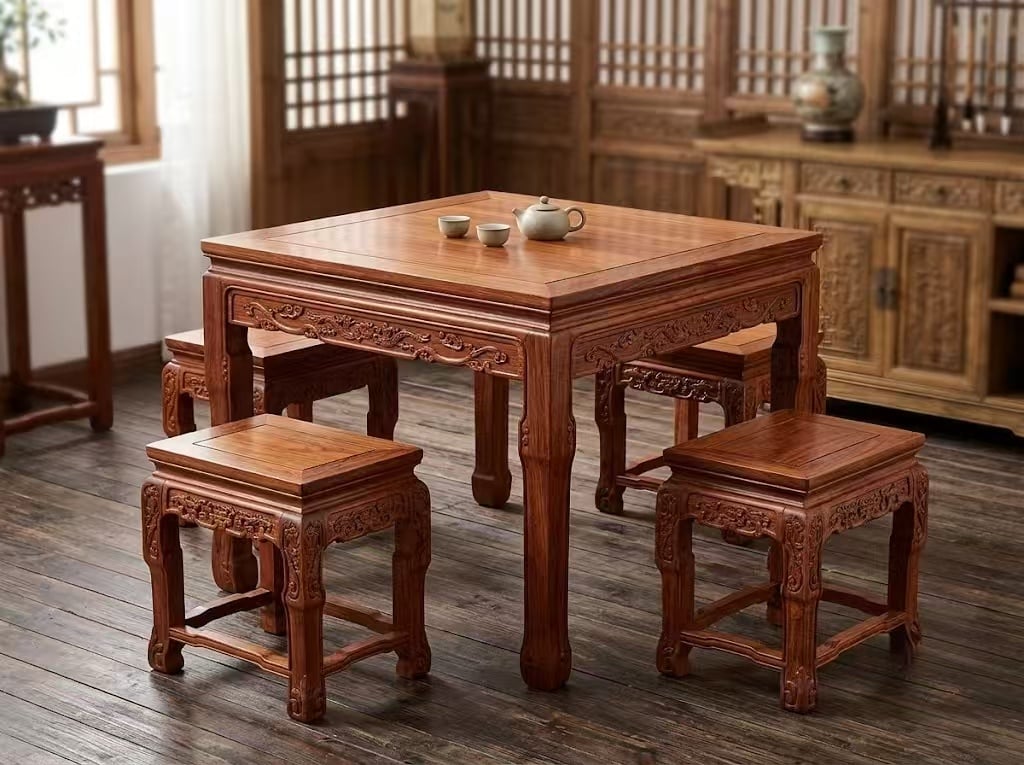
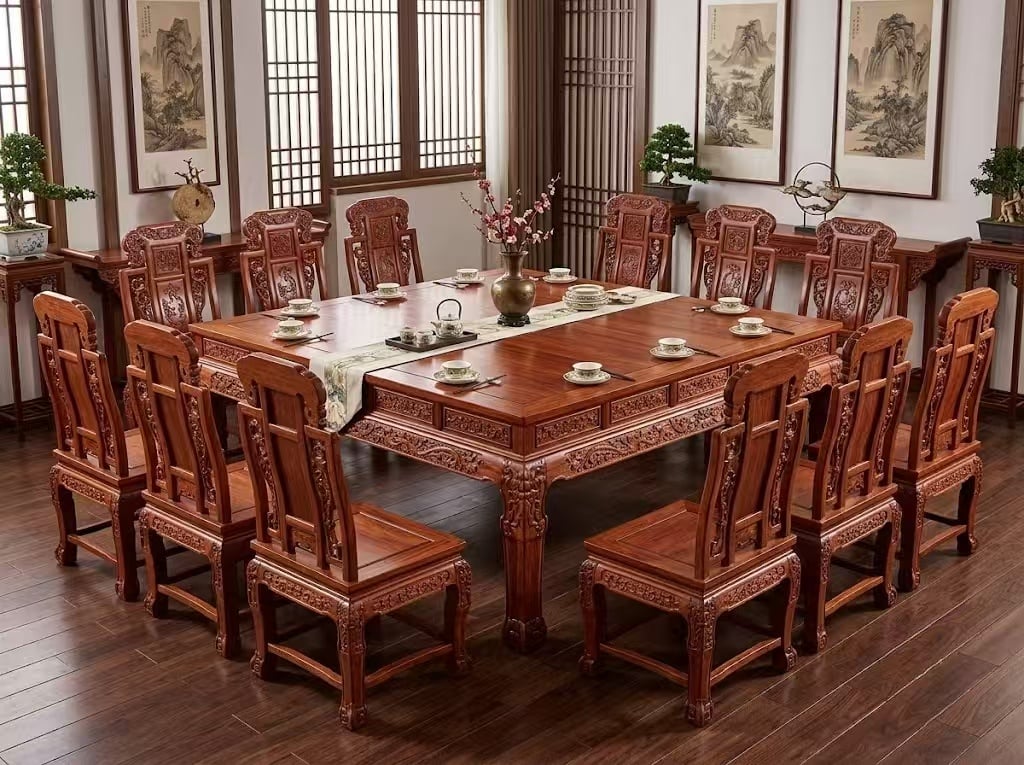
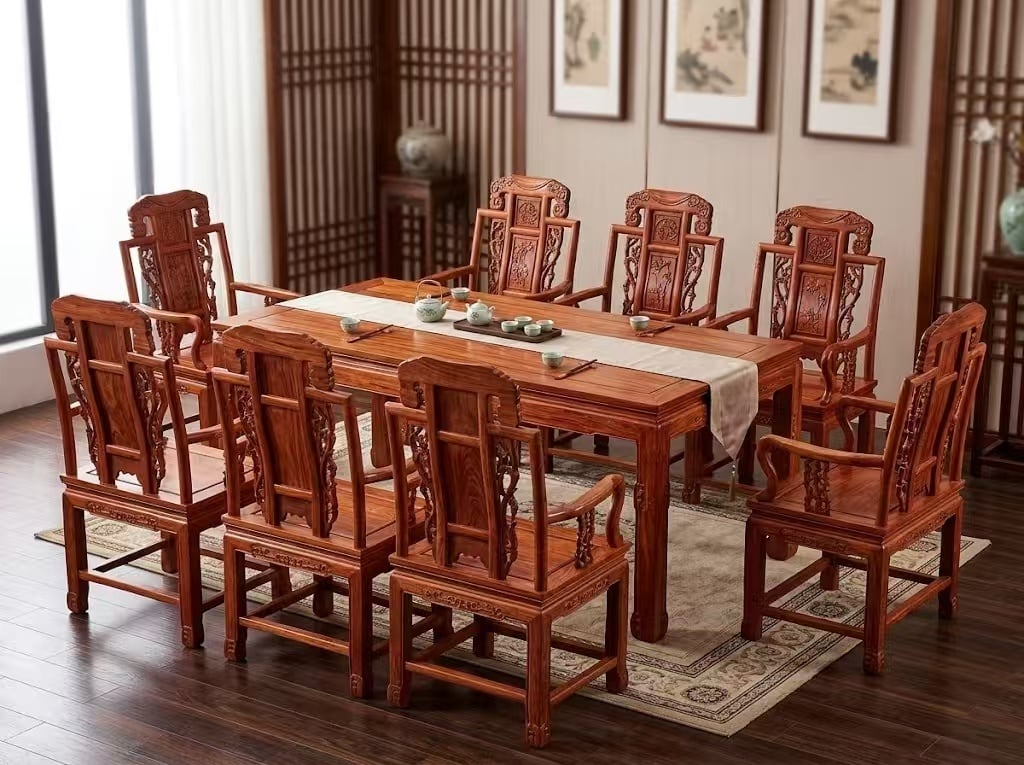
The dining catalog spans both classical languages across five anchor models: the Ming Style Round Redwood Dining Table 8-Seat Set (clean-line classical for contemporary dining rooms); the Oval 6-Seat Set with Ming Style Chairs (family dining scale); the Rectangular 8-Seat Set with Bamboo Carved Chairs (formal rectangular format with bamboo motif); the Square 12-Seat Banqueting Set with Carved Chairs (Qing-scale formal dining); and the Square 4-Seat Compact Set (entry classical for compact spaces). Two further carved sets - the Rectangular 10-Seat and its 12-seat sibling - extend the banqueting line.
Patina Development and Value Retention
Raw lacquer develops patina over the first two to three years as natural oils migrate through the breathable finish, producing a deepening surface that synthetic finishes cannot replicate. This is a commercial argument, not only an aesthetic one: CITES-limited rosewood supply plus non-replicable hand labor creates a value floor that mass-produced furniture lacks.
For retail buyers, patina development supports a resale narrative: the furniture ages like hardwood floors rather than depreciating like flat-pack. For project buyers in hospitality, it means the dining room photographs better in year three than in year one.
Custom Motifs for Project Buyers
OEM customization incorporates hotel logos, cultural symbols, or region-specific designs into backrest and apron carving, within the 15-day design approval cycle that includes layout drawings, 3D mockups, and one revision round. Custom carving templates remain buyer property and are never reused without consent - an exclusivity point worth negotiating for regional distribution programs.
Quality Verification and the Export Pathway
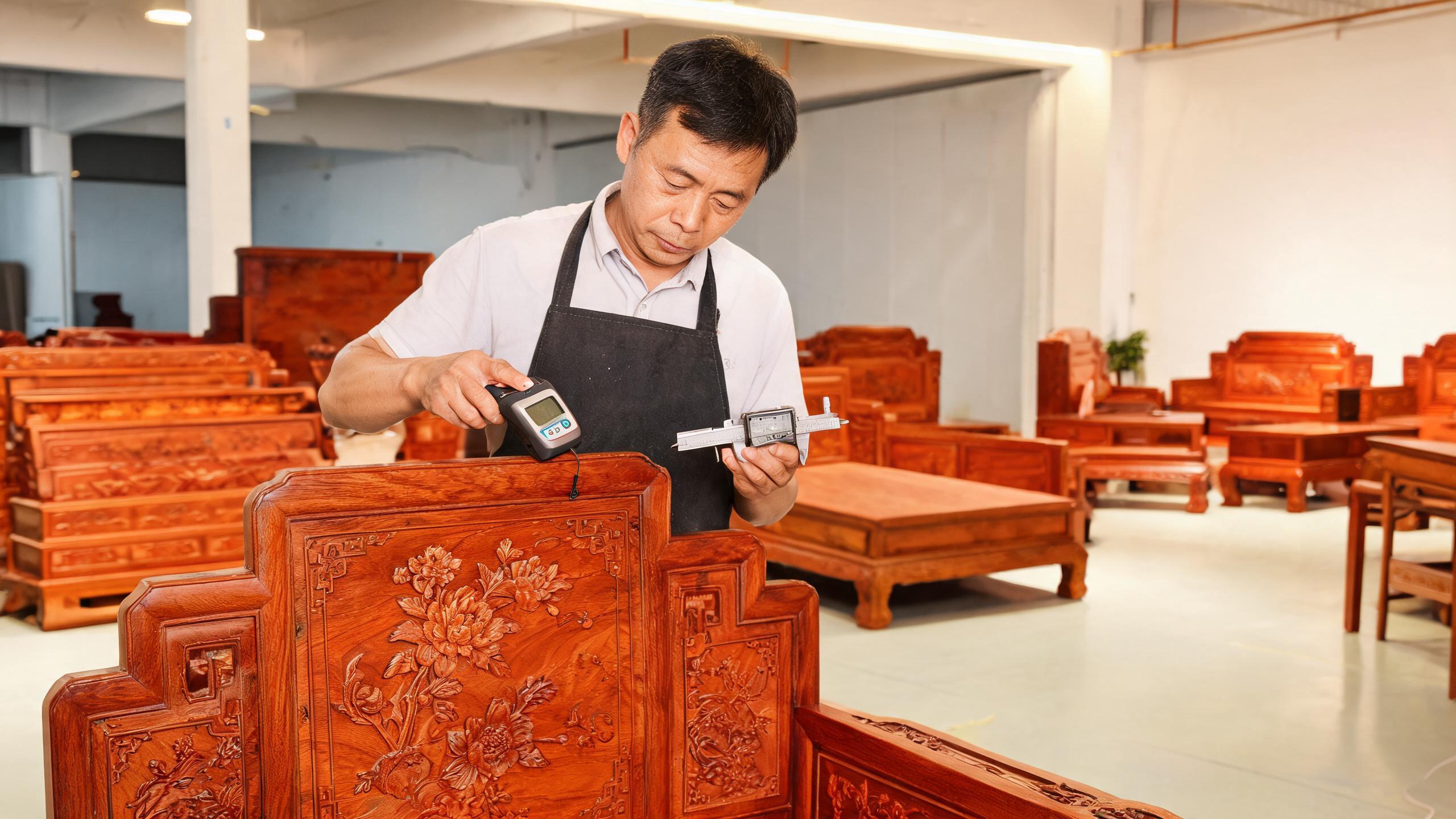
Four documented checkpoints govern production: timber verification (moisture below 14 percent after 36-day kiln drying, heartwood ratio 80 percent or higher, density 0.90-1.00 g/cm³), carving inspection (accuracy and relief depth against approved drawings), assembly verification (joinery tightness and dimensions), and finish assessment (lacquer coverage, color consistency, sheen). Third-party pre-shipment inspection is welcomed at buyer expense with full access to production records and kiln drying logs.
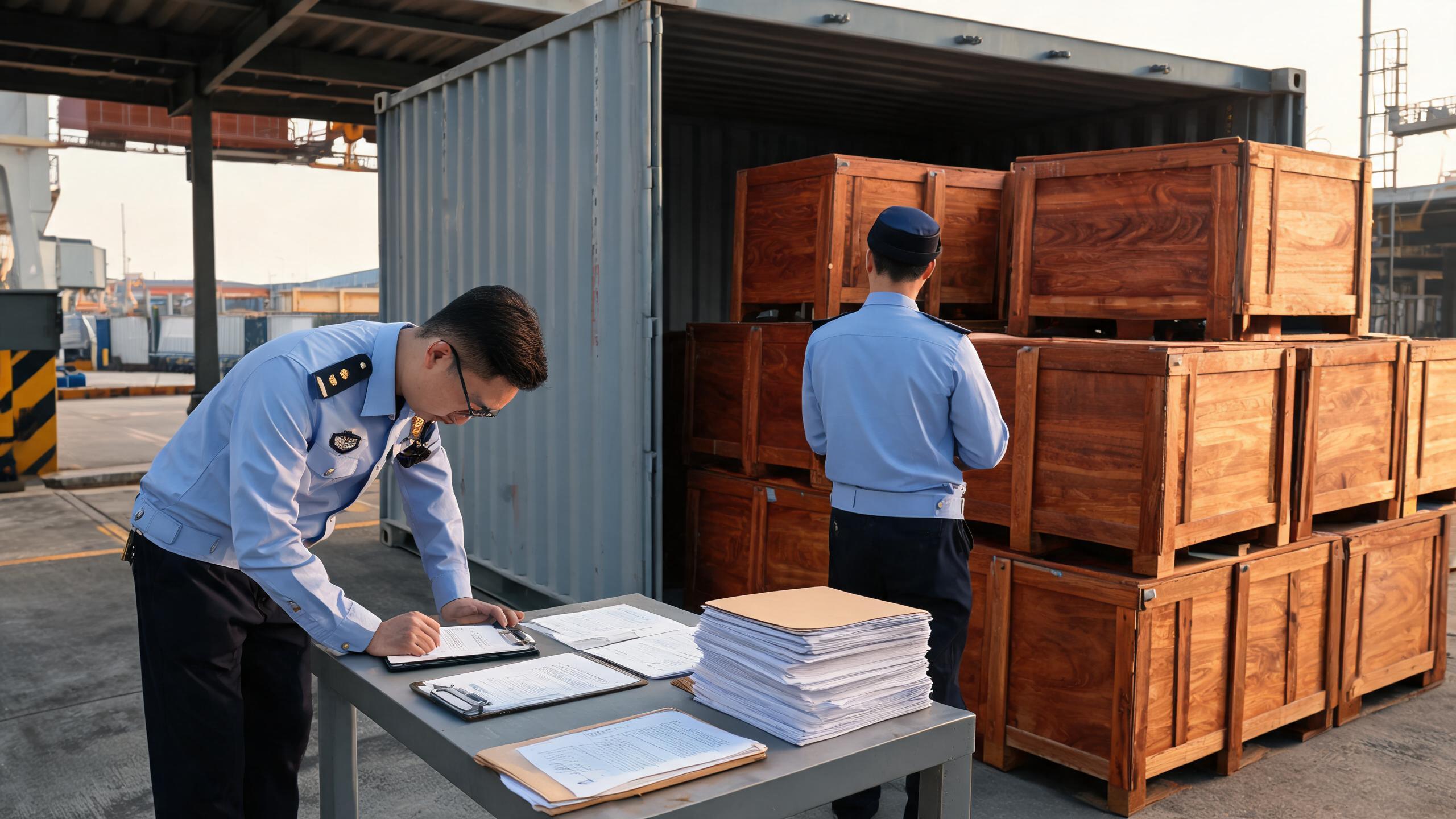
The complete export file: CITES Appendix II export permit, FSC chain-of-custody, ISPM-15 heat treatment certificate, REACH and CARB declarations, FDA 21 CFR 175.300 compliance for dining surfaces, commercial invoice with HS code 9403.60, and packing list - all in English. Production runs 45 to 60 working days standard, 60 to 75 custom; ocean transit 14 to 30 days from Xiamen. Engage brokers experienced with regulated timber before booking vessel space.
Working With a Xianyou Factory: Process and Timeline
Xianyou County in Putian, Fujian has been a center of hardwood furniture craft since the Ming dynasty; buying from the craft region means buying from carvers whose technique is regional heritage, not factory training. A typical engagement: specification and quotation within 48 hours, design approval for custom work in 15 working days, production with weekly photos, inspection window before crating, supervised container loading with photos, and loading-to-port documentation. Payment terms: 30 percent T/T deposit, balance before shipment, L/C above USD 30,000; trial single sets and refundable samples available for verification before container volume.
Frequently Asked Questions
What makes a dining set authentically Chinese classical?
Ming or Qing design language executed in hand carving at 30-40 hours per backrest panel, traditional joinery - through-tenon, floating panels, bamboo dowels - and legally regulated rosewood with a CITES Appendix II permit.
How can I tell hand carving from machine carving?
Four field tests: chisel-stroke irregularities versus uniform tool marks; distinct three-step relief depth transitions; hand-reachable interior corner detail; and grain-direction adjustment without tear-out.
Is it legal to import Chinese rosewood?
Yes - Appendix II listing means regulated trade, not prohibition. Each shipment carries its own non-transferable export permit; request document samples at quotation.
What documents prove legal rosewood?
The CITES Appendix II export permit plus FSC chain-of-custody; the Lacey Act declaration for US imports and EUDR due-diligence evidence for EU imports build on the same file.
Ming or Qing style - which should I import?
Ming suits contemporary and boutique interiors; Qing anchors grand formal spaces. Many buyers run both in one program across room types while keeping one material story.
Does raw lacquer patina affect resale value?
Positively - the deepening two-to-three-year patina is a hallmark of authentic classical furniture and supports value-retention arguments at retail and in hospitality projects.
Can I commission custom classical motifs?
Yes - hotel logos, cultural symbols, and region-specific designs within OEM scope; templates remain buyer property, with 15-day design approval and 3D mockups.
What joinery should authentic classical sets use?
Through-tenon with wedge, half-lap stretchers, dovetail drawers, bamboo dowel pins, and floating panels with a seasonal gap. Screws and glue-only joints are red flags.
How do I verify authenticity before paying a deposit?
Document samples at quotation, carving samples on wood panels by mail, weekly production photos, and third-party inspection with access to production records and kiln logs.
What is the lead time for authentic classical sets?
45-60 working days standard, 60-75 custom; the 36-day kiln cycle is embedded; CITES permits run concurrently at 5-10 working days; ocean transit adds 14-30 days.
Which motifs sell best in Western markets?
Lattice and bamboo - they read as geometry and nature rather than iconography, which suits contemporary Western interiors; cloud and Ruyi is the safest single-motif program for mixed-market containers.
What documentation should travel with the set for resale?
Keep the CITES permit reference, FSC chain-of-custody certificate, carving program drawings, and the inspection photo file with the set - a documented set commands a premium and clears due-diligence instantly.