Understanding Siamese Rosewood
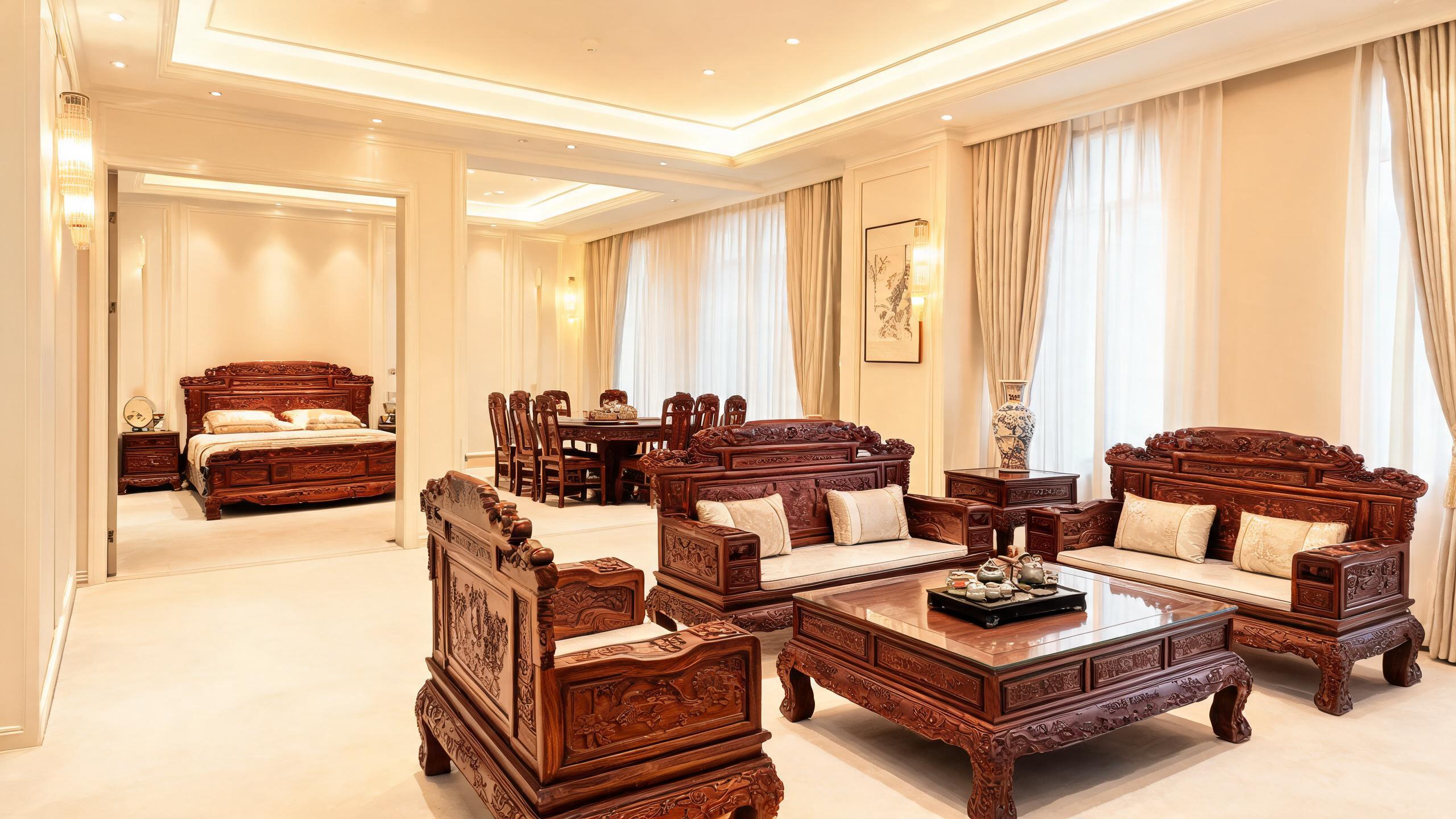
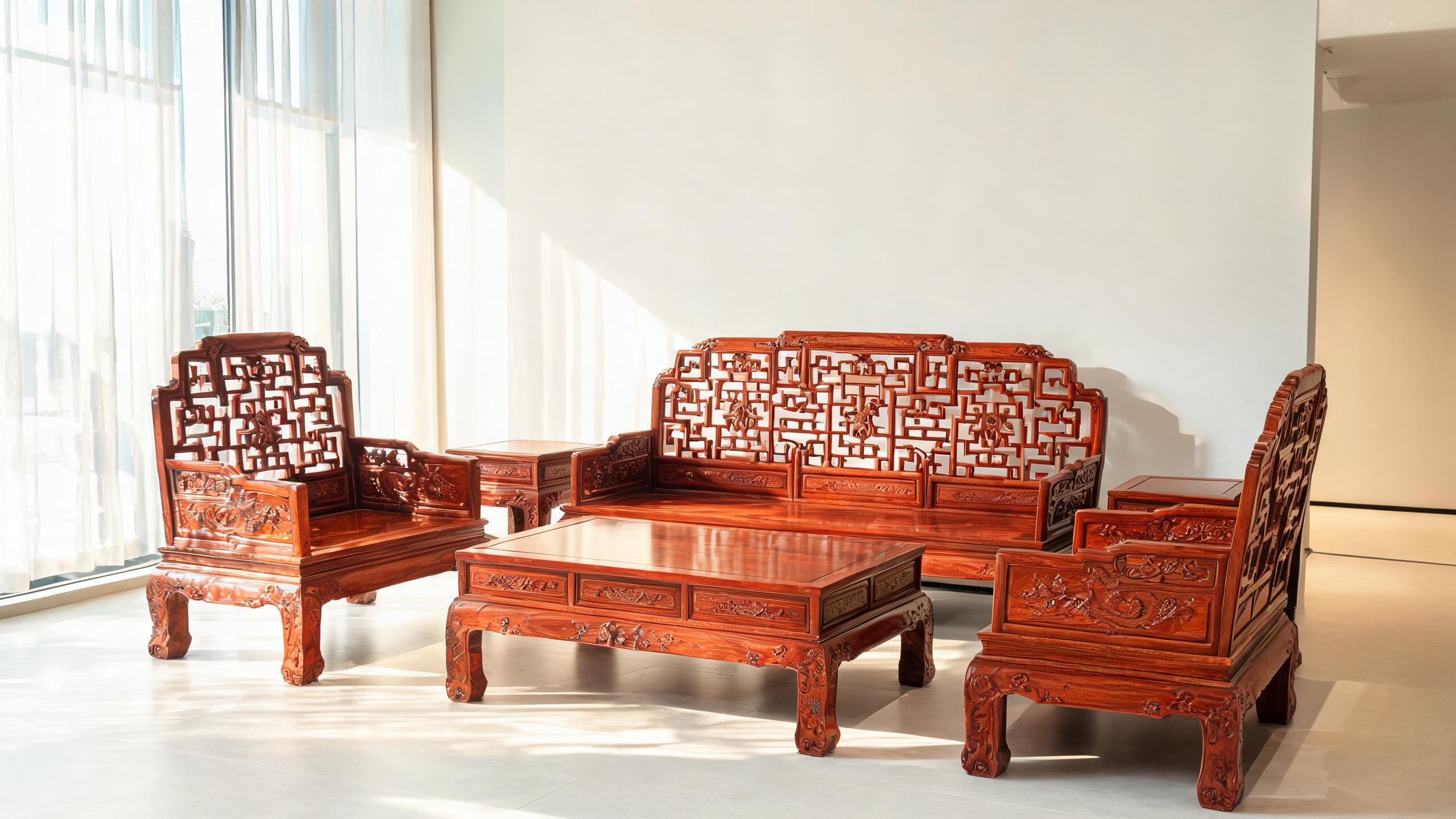
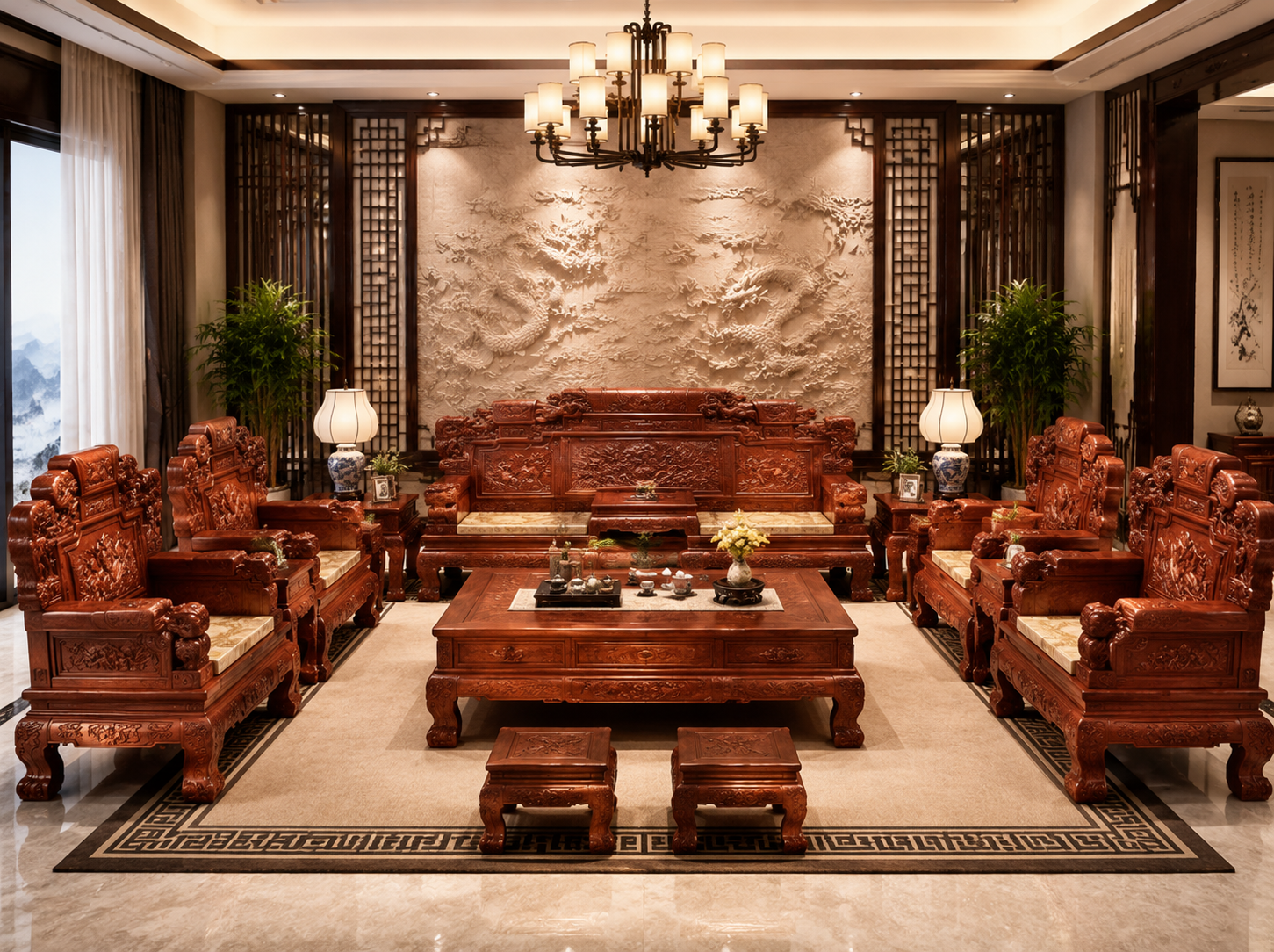
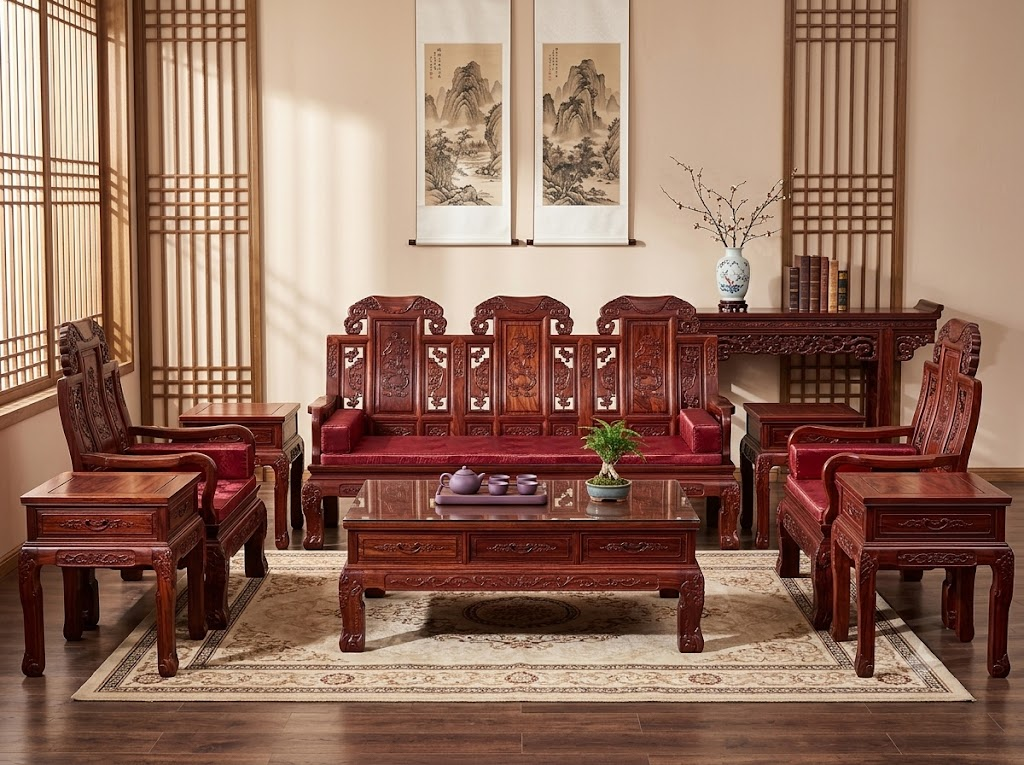
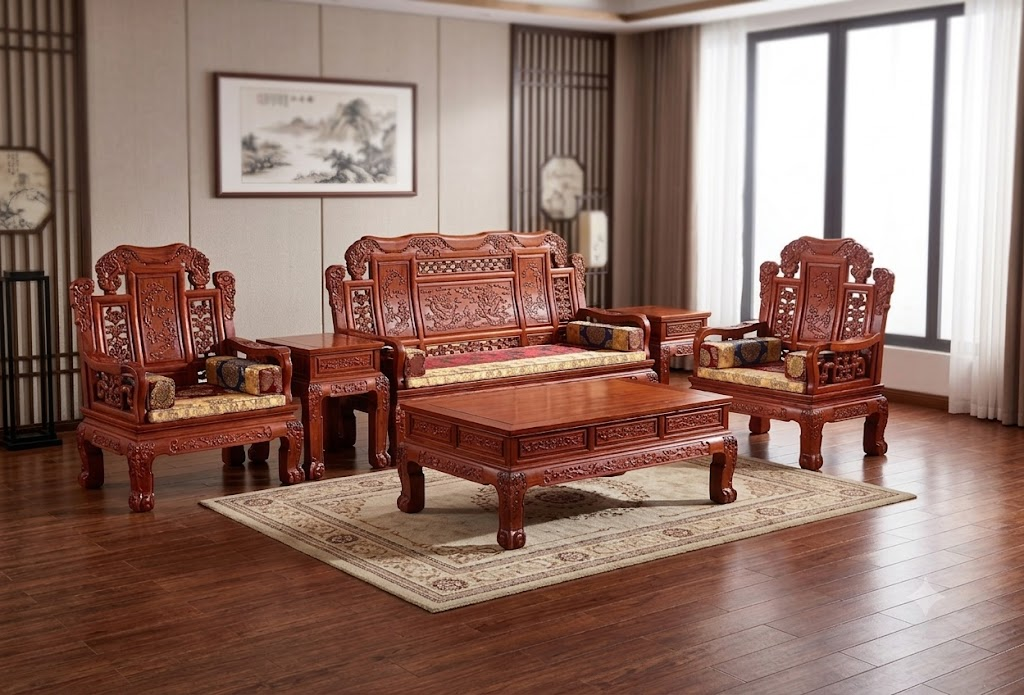
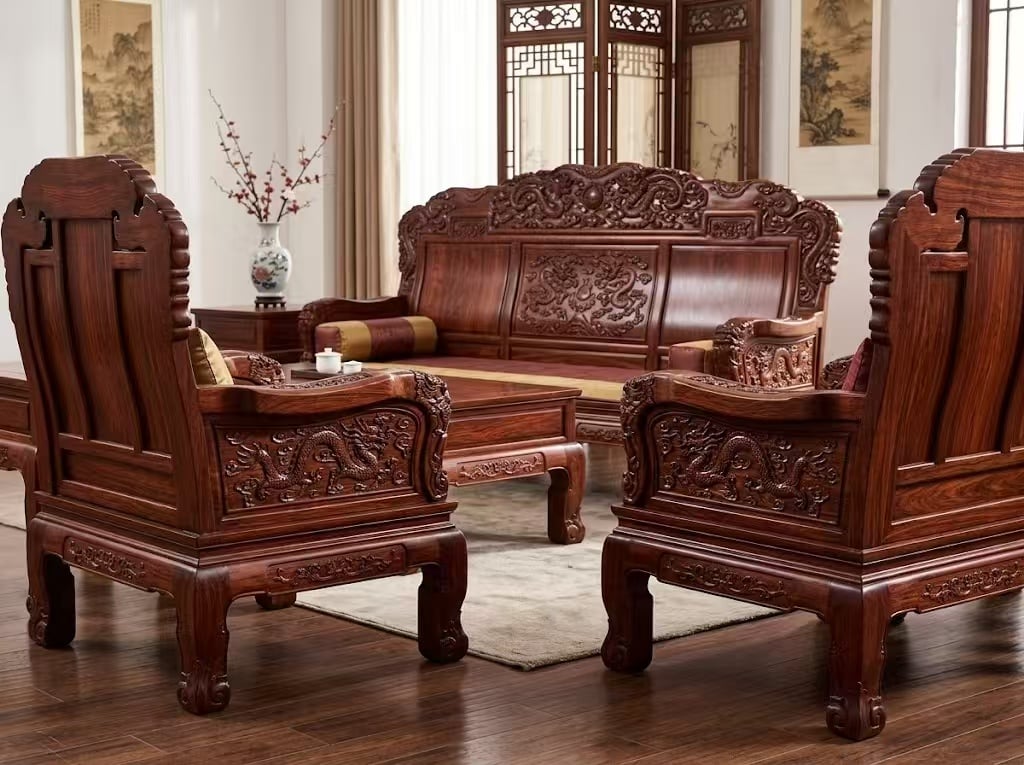
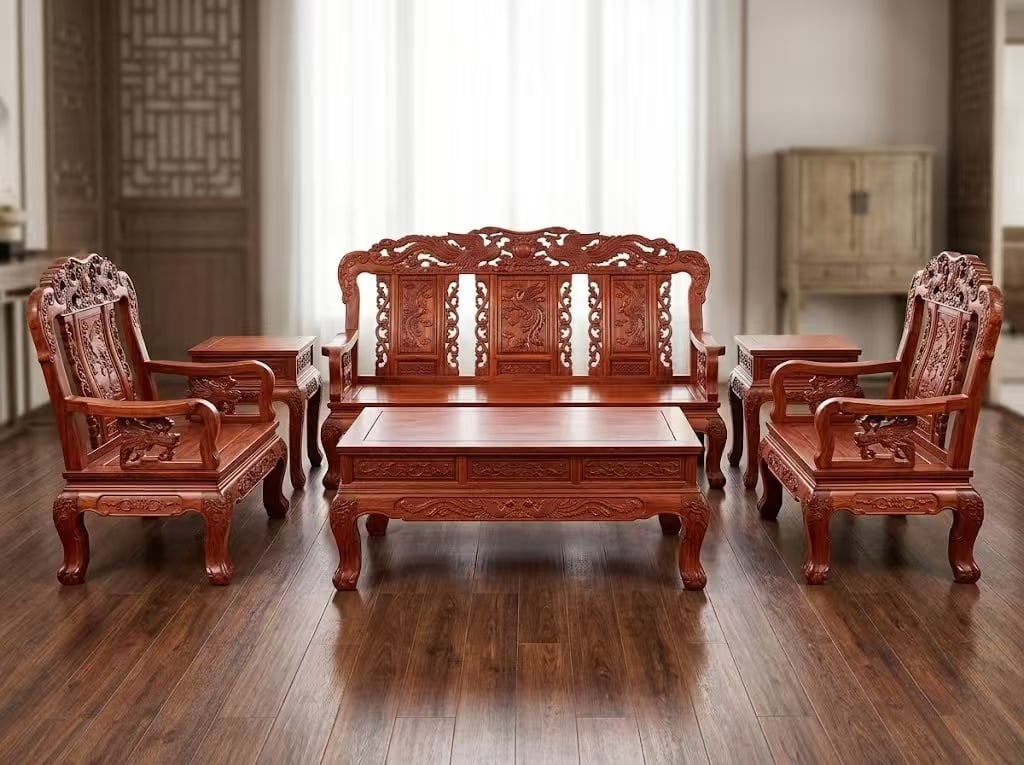
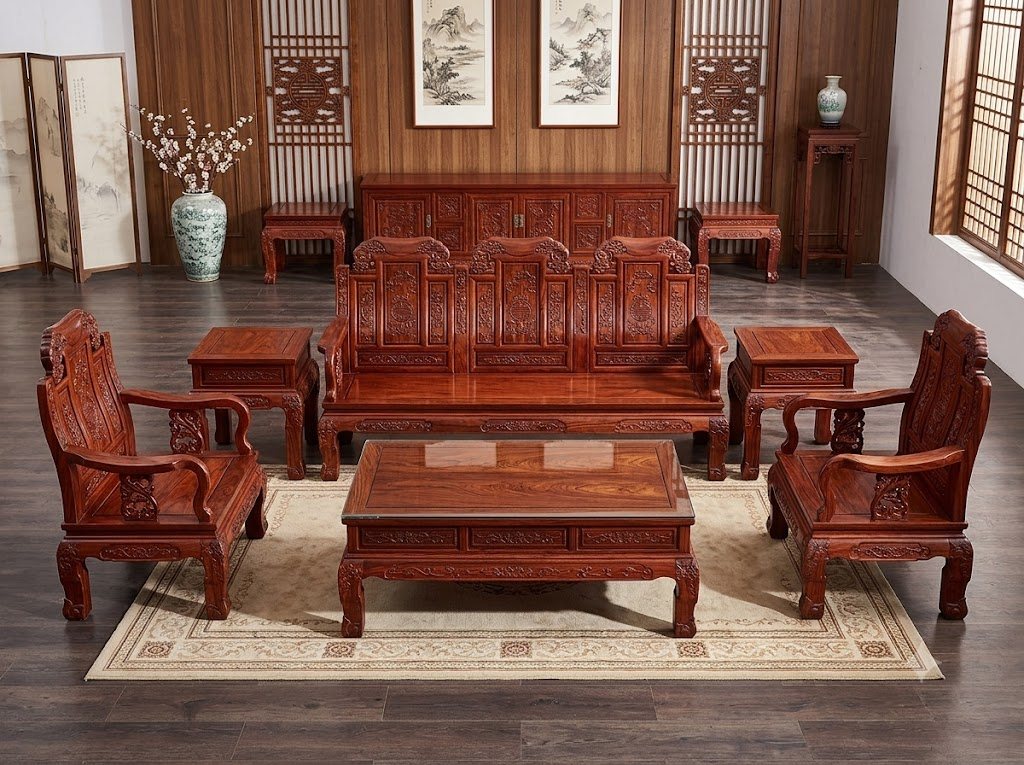
Siamese rosewood, Dalbergia cochinchinensis, is the definitive carving hardwood of the classical Chinese furniture tradition and the primary material behind Yunxiao Rosewood Furniture Co., Ltd's catalog. Dense, deep reddish-brown, and naturally resistant to insects and decay, it holds crisp relief detail that softer species cannot, which is why the most demanding motifs in classical furniture, five-claw dragons, phoenix backrests, lattice panels, are cut into it.
This guide is for buyers who specify by species: procurement teams, hospitality groups, and designers who need to know where Dalbergia cochinchinensis comes from, how its quality is graded, what CITES Appendix II status means for their shipments, how the wood behaves across Southeast Asian, Australian, and North American climates, and how to maintain it for end clients. Everything below reflects Yunxiao's actual practice as a CITES-registered exporter operating from Xianyou County, Fujian, since 2008.
Why This Species Dominates Classical Carving
Three material properties make Dalbergia cochinchinensis the benchmark carving wood. First, density: Yunxiao sorts timber into 0.90 to 1.00 g/cm3 bands, and that mass lets chisels hold edges and fine lines without crumbling. Second, heartwood character: with a grading threshold of 80 percent heartwood or higher, the deep tonal figure reads consistently across large carved surfaces. Third, working behavior: the wood accepts the hand-rubbed raw lacquer system beautifully, building depth over 8 to 9 coats without obscuring grain.
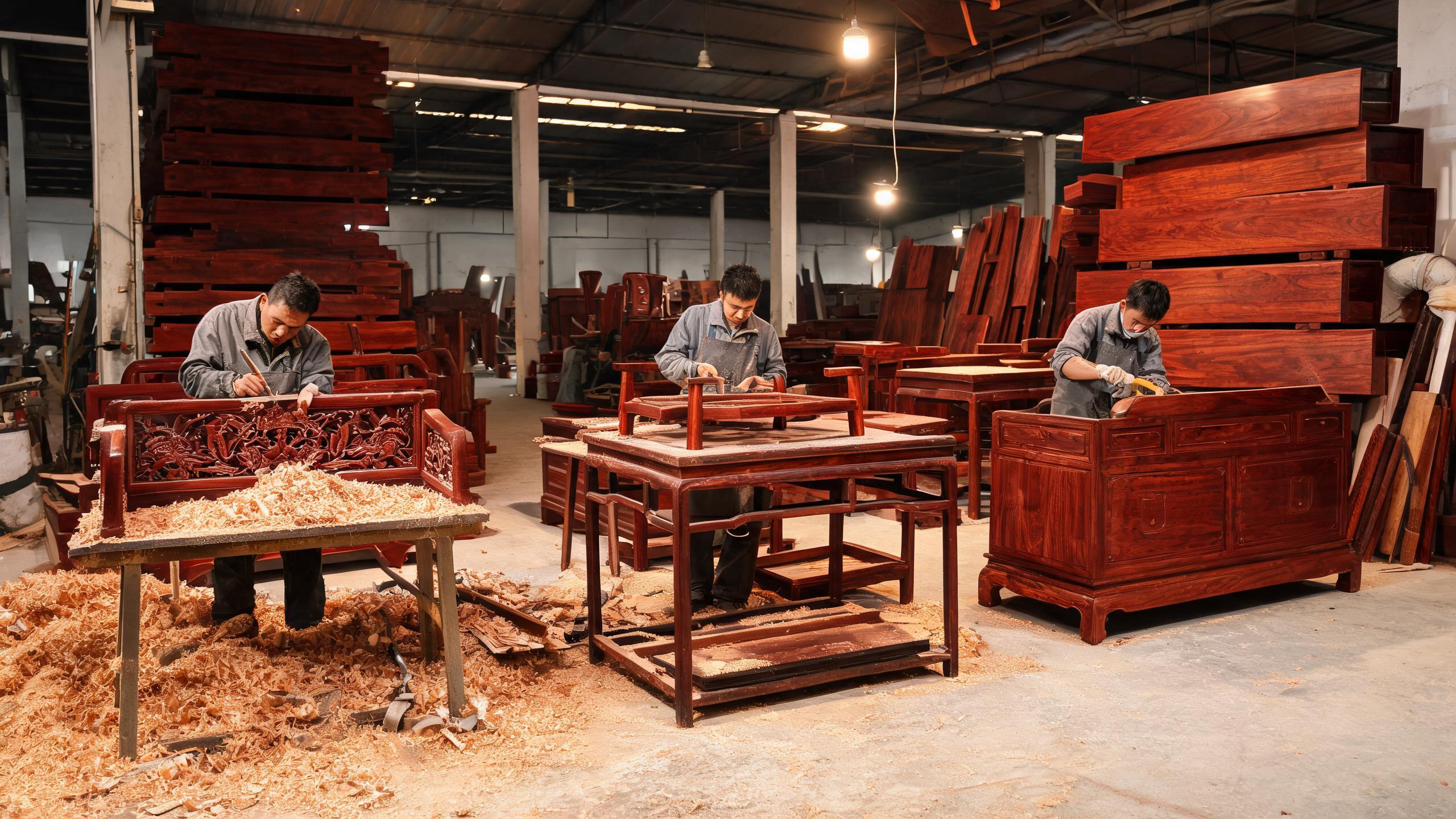
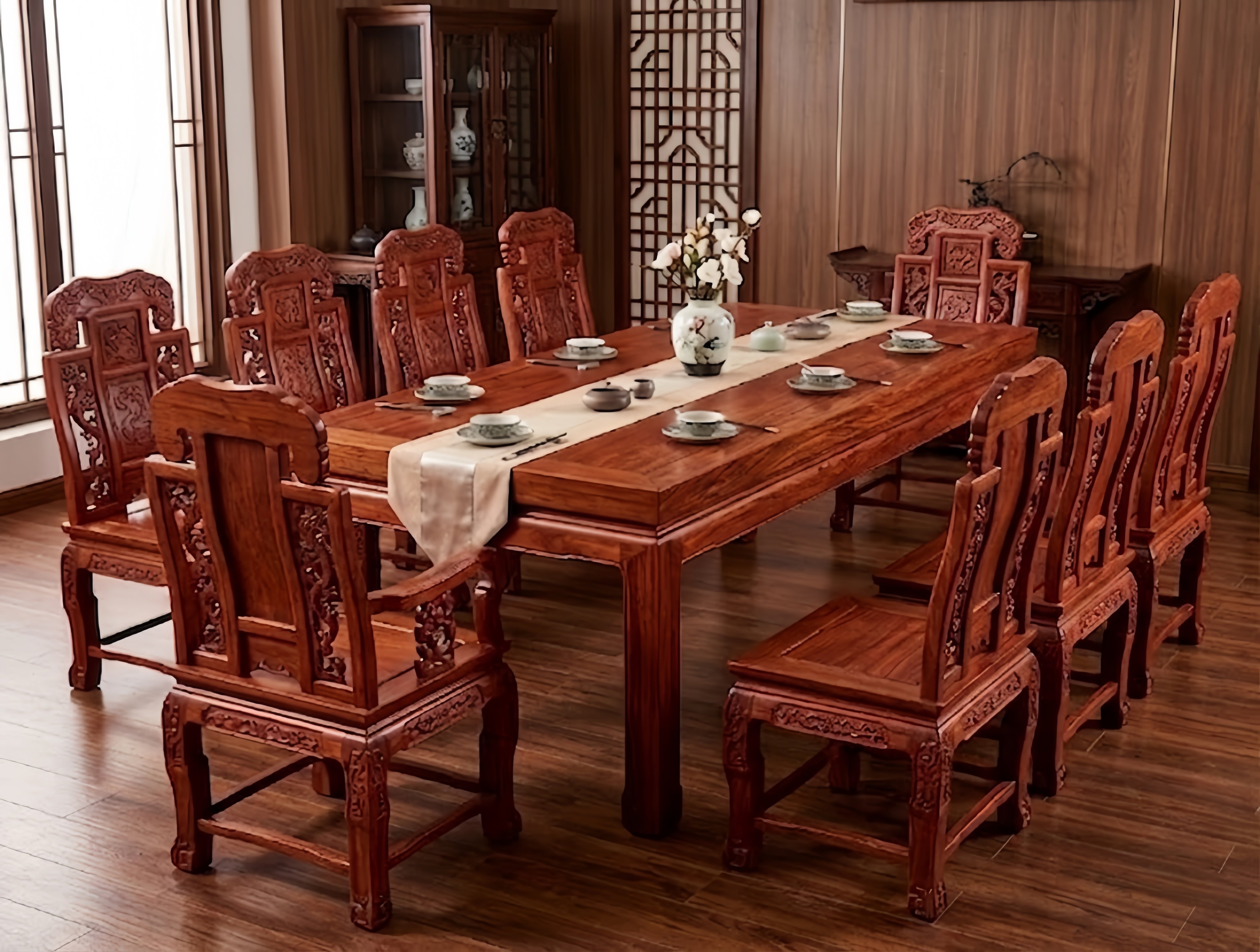
The labor economics follow from the material. A master artisan spends roughly 40 hours on a single five-claw dragon armrest for the Imperial Dragon 10-seat set. Species that carve faster usually do so because they are softer, and softer wood loses detail within years of handling. Buyers purchasing carving as an asset choose the dense species deliberately, and they budget for the artisan hours it deserves.
CITES Appendix II: What It Means for Your Shipment
Dalbergia cochinchinensis is listed on CITES Appendix II, which means international trade is legal and regulated, not prohibited. The regulation operates through export permits that are shipment-specific and non-transferable: each container of Siamese rosewood furniture travels with its own permit, processed in 5 to 10 working days, naming the exporter of record and the shipment it covers.
For buyers this creates three practical rules. Order from a CITES-registered exporter that holds permits in its own name, because permits sourced through third parties create chain-of-custody risk. Confirm permit timelines in the production schedule, since the 5 to 10 day processing runs concurrently with final production. And brief your customs broker in advance, because brokers unfamiliar with Appendix II timber cause the majority of port delays in this category. Yunxiao's internal export team prepares the full stack, and permit samples are available at quotation stage.
Drying Siamese Rosewood for Export Climates
Dense tropical hardwood is stable in furniture only if it is dried on a disciplined schedule. Yunxiao's protocol runs 36 days of constant-humidity kiln drying in three phases: a high-temperature initial phase drives free moisture out of the cell structure, an equalization phase lets the moisture gradient balance through the timber cross-section, and a conditioning phase relieves internal stresses that would otherwise warp the wood after machining. The target is below 14 percent moisture, verified by documented readings per batch.
The cycle cannot be compressed honestly. Rushed drying leaves residual stress that surfaces months later as checking and warping in the destination climate, which is why the 36-day program sits inside every lead time Yunxiao quotes: 45 to 60 working days for catalog, 60 to 75 for custom. Buyers comparing suppliers should compare drying schedules, because a suspiciously fast lead time on solid rosewood almost always means skipped drying, and skipped drying is invisible until it is your warranty claim.
Sourcing Heritage: The Xianyou Craft Ecosystem
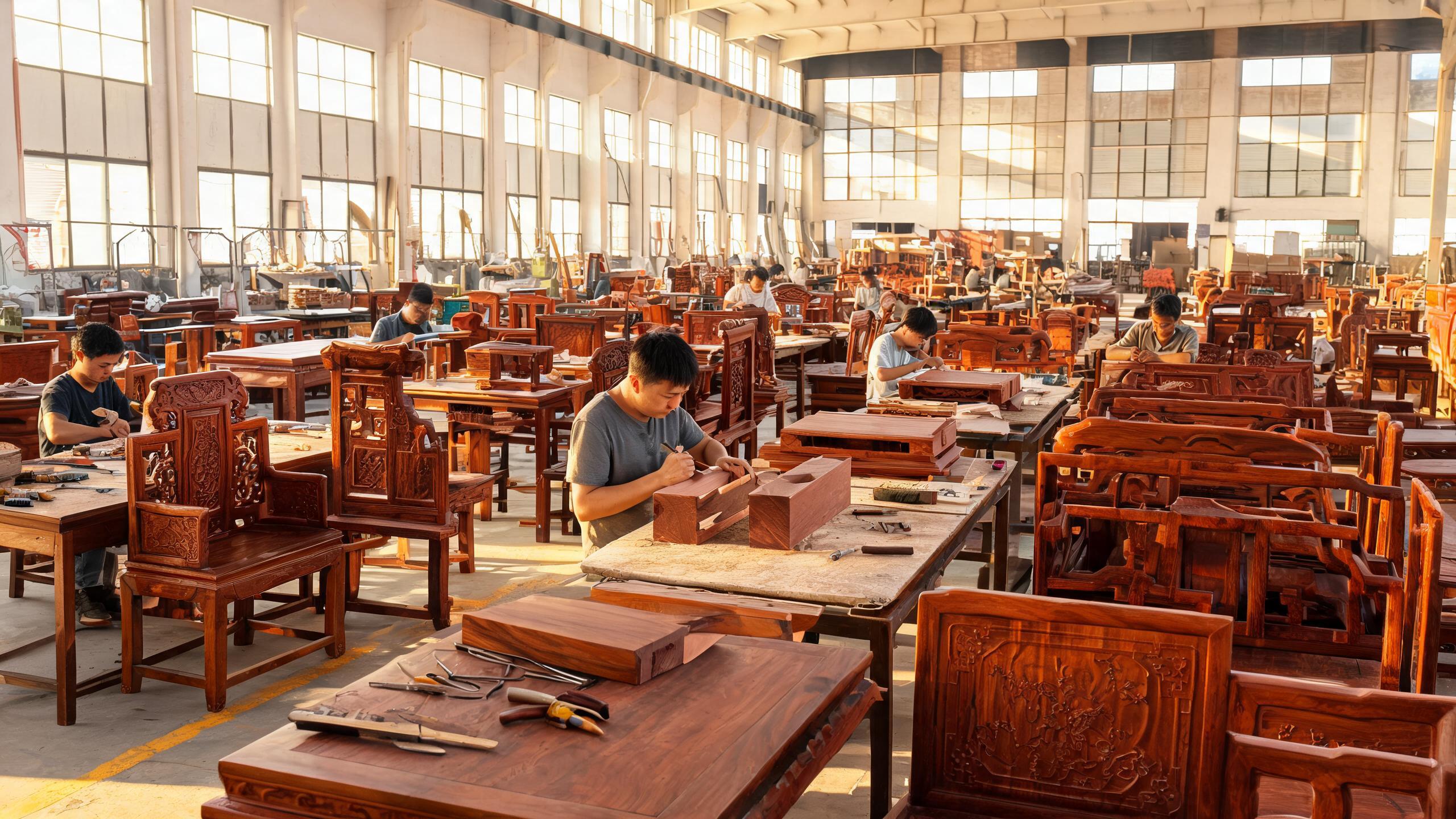
Species knowledge is geographical. Xianyou County in Putian, Fujian, is recognized as a hometown of traditional Chinese hardwood craft, with carving lineages that pass motifs and techniques through generations of artisans. Yunxiao was founded there in 2008 and operates a 12,000-square-meter factory whose carving masters hand-chisel dragon, phoenix, cloud, lattice, ruyi, and bamboo motifs using traditional tools and regional methods.
The ecosystem matters to buyers for a concrete reason: artisan supply. The hands that can cut a correct five-claw dragon at relief depth are trained over years, and they cluster where the tradition lives. A factory inside that ecosystem staffs carving benches with genuine masters; a factory elsewhere often cannot, whatever its marketing says. Craft heritage is a capacity question, not decoration, and it shows up directly in the crispness of the carving you uncrate.
Siamese Rosewood Compared With Alternative Species
Yunxiao works three legally certified species, and buyers should match species to program rather than defaulting:
| Species | Character | Documentation | Best Program Fit |
|---|---|---|---|
| Siamese rosewood (Dalbergia cochinchinensis) | Dense, deep red-brown, holds fine relief | CITES App. II permits plus FSC | Heritage carving programs, flagship sets |
| Machilus Nanmu | Lighter color, finer grain, subtle figure | FSC chain-of-custody, no CITES | Contemporary classical, markets avoiding CITES handling |
| Grade-A aged redwood | Tropical hardwood, distinctive grain range | FSC chain-of-custody | Visual differentiation programs |
All three receive the same 36-day drying, mortise-and-tenon construction with bamboo dowel pins, and raw lacquer finishing, so switching species changes look and paperwork, not structural quality. The choice is a merchandising decision that should be written into the specification, not a substitution discovered at goods receipt.
Climate Performance Across Target Markets
The species' reputation for cracking comes from badly dried timber, not from the wood itself. Correctly prepared Dalbergia cochinchinensis handles the full span of Yunxiao's export markets when moisture control and construction allowances are engineered in:
- Southeast Asian tropical humidity: sub-14-percent moisture timber plus breathable lacquer keeps vapor moving; kiln logs are available per batch.
- Australian coastal and biosecurity regime: ISPM-15 heat-treated crates, VCI barriers, and desiccant packing satisfy strict inspection; certificates accompany every shipment.
- North American heated-dry interiors: floating panels with expansion clearance absorb seasonal movement; construction standards are documented per product.
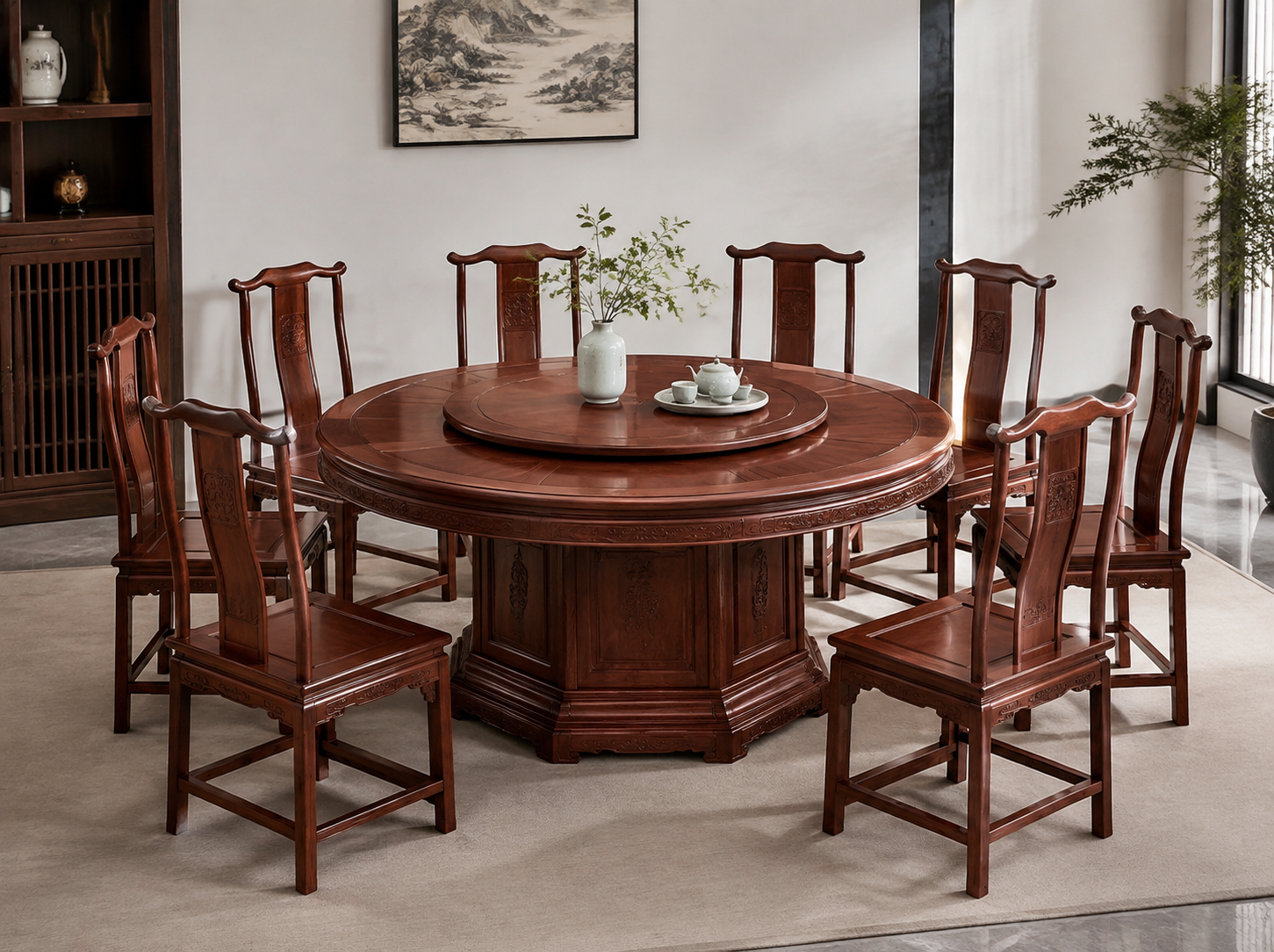
Floating-panel construction is the detail to demand: tabletops, wardrobe doors, and bed panels sit in grooved frames with intentional gaps, so seasonal movement is absorbed structurally rather than fought. The breathable raw lacquer completes the system by letting vapor move through the finish instead of trapping it.
Finishing Dense Rosewood: The Raw Lacquer System
Finishing Dalbergia cochinchinensis is slow by design. The hand-rubbed raw lacquer process lays 8 to 9 coats over 20 to 30 days: a sealing coat stabilizes the surface, filling coats level the open grain, body coats build protective film, and a 7 to 10 day humidity-controlled cure hardens the system. The result is a finish that reads as depth rather than coating.
Compliance is engineered into the chemistry: the finish meets EU REACH chemical safety requirements, US CARB formaldehyde emission limits, and FDA 21 CFR 175.300 for repeated food contact on dining surfaces, with declarations provided per shipment. Finish samples on wood blocks are mailed before production so buyers approve color and sheen under their own lighting, and the finish develops patina with age rather than requiring refinishing, which is the whole point of choosing this species.
The Documentation Chain for a Siamese Rosewood Order
Species sourcing lives or dies on paperwork. A complete Yunxiao shipment carries its evidence chain end to end: the CITES Appendix II export permit that legalizes trade in Dalbergia cochinchinensis, processed in 5 to 10 working days concurrent with production; the FSC chain-of-custody certificate documenting legal timber origin, issued with the shipment; the ISPM-15 certificate confirming heat-treated packaging at 56 degrees Celsius for over 30 minutes, applied at packing; REACH and CARB declarations covering finish chemistry; and the commercial invoice under HS code 9403.60 with an itemized packing list manifesting every crate.
Request samples of each at quotation. Document-ready suppliers clear ports; document-poor suppliers create them, and the difference surfaces as weeks of demurrage. Buyers who plan phased or partial shipments should note that each shipment carries its own CITES permit, so documentation schedules multiply with delivery schedules.
Care, Patina, and Lifetime Value
End clients buy Siamese rosewood furniture as a lifetime asset, and honest care guidance protects the brand behind it. Daily care is dry dusting and avoidance of direct heat sources. The raw lacquer finish is breathable, so the wood continues interacting with indoor humidity and develops a deeper patina over years without blistering or peeling; unlike barrier coatings, it does not require periodic refinishing.
Structurally, the no-metal joinery means nothing to tighten: mortise-and-tenon joints with bamboo dowels move with the wood and stay tight. Retailers should pass a simple care card with each set, and Yunxiao's remote installation guidance covers placement clearances that prevent impact damage during room use. Handled this way, a carved set bought today is furniture a client's heirs argue over, which is exactly the story premium retail programs sell.
Specifying a Siamese Rosewood Program
Turning species knowledge into an order takes five inputs: the configurations and seat counts your market supports, Siamese rosewood as the declared species, carving density by rung of your ladder, destination market for the compliance stack, and estimated annual quantity for timber allocation. Yunxiao returns itemized FOB Xiamen quotations with production timeline, document samples, and container loading plans within 48 hours.
Buyers running multi-year programs should state the program horizon early, because Yunxiao reserves density-matched allocations for program partners, which is what keeps container three matching container one. From trial single set to phased containers, the species, the craft, and the paperwork all come from one accountable exporter.
Frequently Asked Questions
Is Siamese rosewood furniture legal to buy?
Yes. Dalbergia cochinchinensis is CITES Appendix II listed, meaning legal trade with shipment-specific export permits. Yunxiao is a CITES-registered exporter and prepares permits for every shipment.
How do we verify the species is genuine?
CITES permits and FSC chain-of-custody documents name the species per shipment, and density and heartwood grading records are available on request. Third-party material verification is welcome.
Will it crack in a dry climate?
Not when correctly prepared. Timber is kiln-dried 36 days to below 14 percent moisture, and floating-panel construction absorbs seasonal movement. Kiln logs are available per batch.
What makes it different from other rosewoods?
Density of 0.90 to 1.00 g/cm3 and a deep heartwood figure let it hold crisp relief detail that softer species lose, which is why master carvers prefer it for dragon and phoenix motifs.
Can we avoid CITES paperwork?
Yes, by specifying Machilus Nanmu or Grade-A aged redwood, both FSC documented, with the same drying, joinery, and finishing standards, in lighter visual registers.
How is the wood graded?
Heartwood ratio of 80 percent or higher, density banding to 0.90 to 1.00 g/cm3, and moisture below 14 percent after the 36-day cycle, verified by documented readings.
How should end clients care for it?
Dry dusting, no direct heat exposure, and patience with patina. The breathable raw lacquer needs no refinishing, and metal-free joinery means nothing to retighten.
How long does a Siamese rosewood order take?
45 to 60 working days for catalog products and 60 to 75 for custom, including the non-negotiable 36-day drying cycle, with CITES permits processed concurrently.
Does every shipment need its own CITES permit?
Yes. Permits are shipment-specific and non-transferable, so phased or partial shipments each carry their own documentation, prepared by the in-house export team.
Which species should our program choose?
Choose Siamese rosewood for heritage carving and flagship sets; Machilus Nanmu for contemporary programs or markets where CITES handling adds friction; aged redwood for grain differentiation. All share structural standards.