Why Manufacturer Claims Need Verification
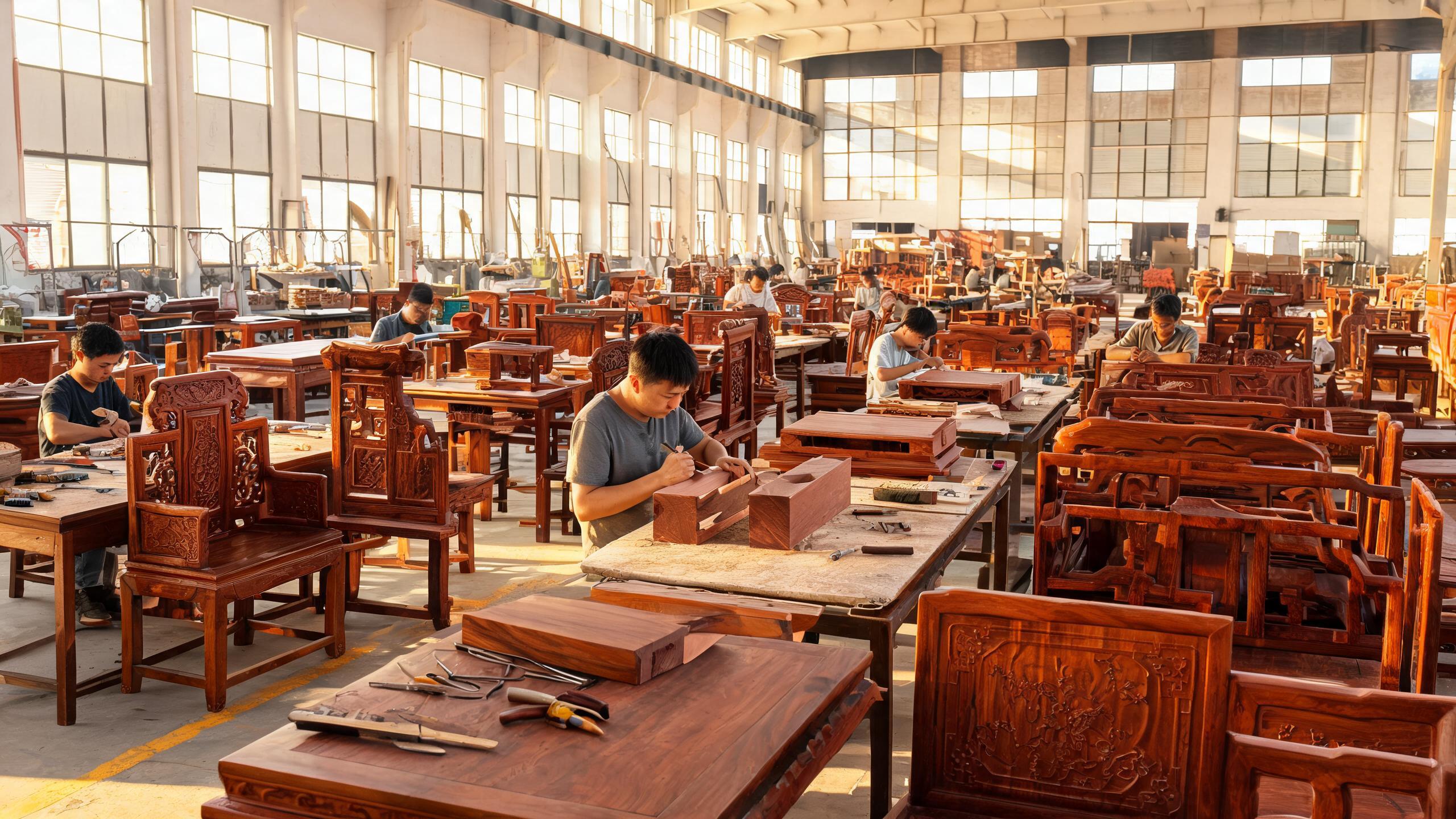
Every supplier website says factory direct. In the classical furniture trade, the phrase covers everything from a genuine 12,000-square-meter manufacturing facility to a rented office reselling workshop output. The difference decides your quality consistency, your documentation integrity, and your ability to customize. This guide sets out how B2B buyers verify a rosewood furniture manufacturer before committing container budgets, using Yunxiao Rosewood Furniture Co., Ltd as the worked example of what verifiable evidence looks like.
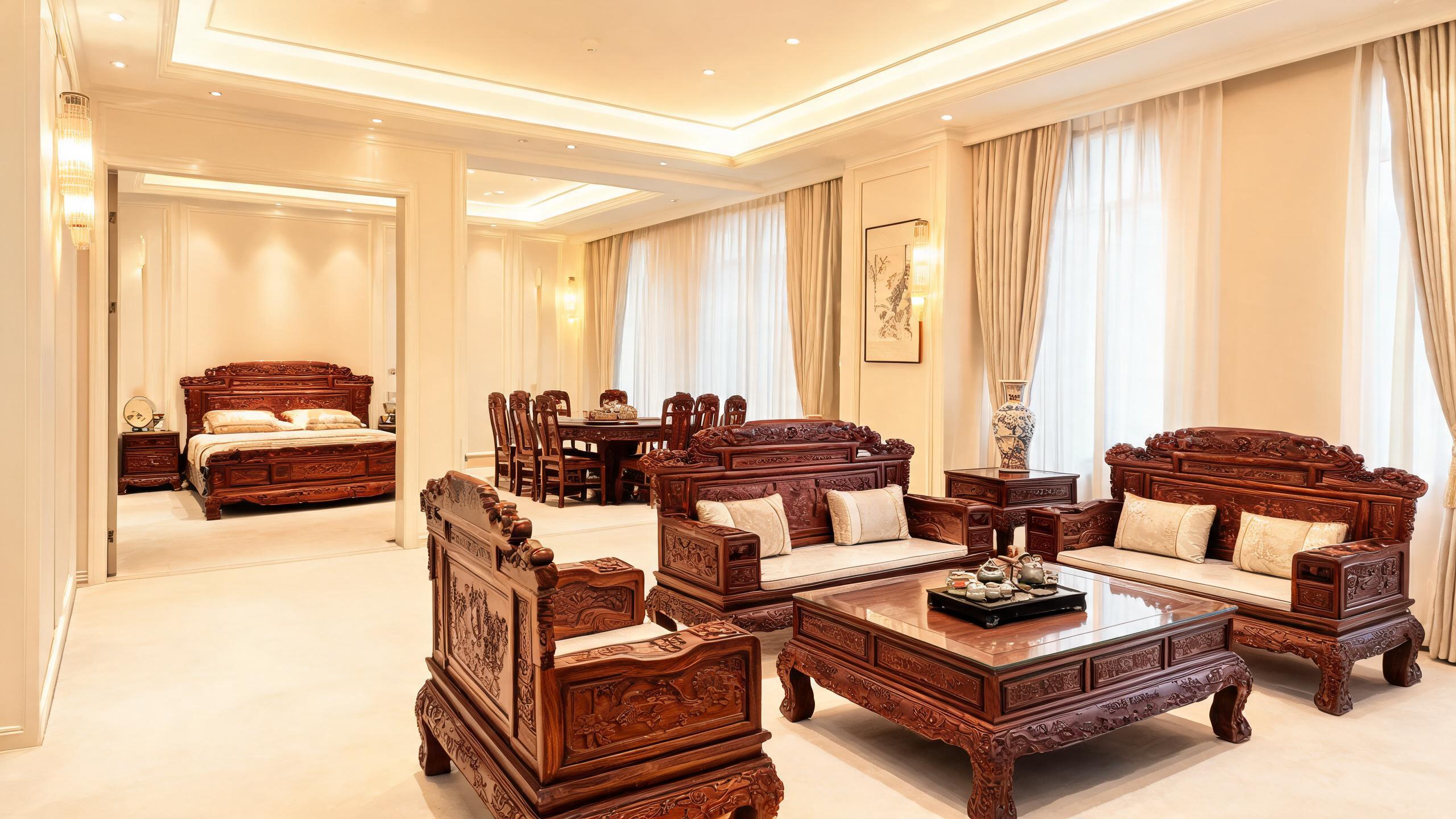
Yunxiao was established in 2008 in Xianyou County, Putian City, Fujian, the traditional hometown of Chinese hardwood craft, and exports to wholesalers, hotels, and designers across Southeast Asia, Australia, North America, and Europe. Every claim in this guide maps to a document, record, or inspection a buyer can actually request, because in this trade a claim without evidence is marketing.
The Trading Company Screen: Five Tests
Before any audit, apply five quick tests that separate manufacturers from resellers. Each pairs a common claim with the evidence that substantiates it and the red flag that exposes the gap.
| Claim | Verifiable Evidence | Red Flag |
|---|---|---|
| We own our factory | Business license with factory address; video walkthrough of production zones | Stock photos; refusal to film specific zones |
| We dry our own timber | Kiln logs with moisture readings per batch | No drying records; instant material availability claims |
| We carve in-house | Named artisan teams; carving hour estimates per piece | Carving quoted as outsourced add-on |
| We hold CITES registration | Permit samples naming the exporter of record | Permits promised from a third party |
| We control export packing | Packing specification sheets; loading photos | Packing details unknown at quotation |
A genuine manufacturer answers all five with documents; a reseller changes the subject. Yunxiao's answers: an owned facility in Xianyou, 36-day kiln logs, named carving teams quoting roughly 40 hours per imperial dragon armrest, CITES permits issued in its own name, and per-shipment packing specifications. Run the five tests on every candidate supplier before any other diligence step.
Inside the Factory: Production Zones From Timber Yard to Crate
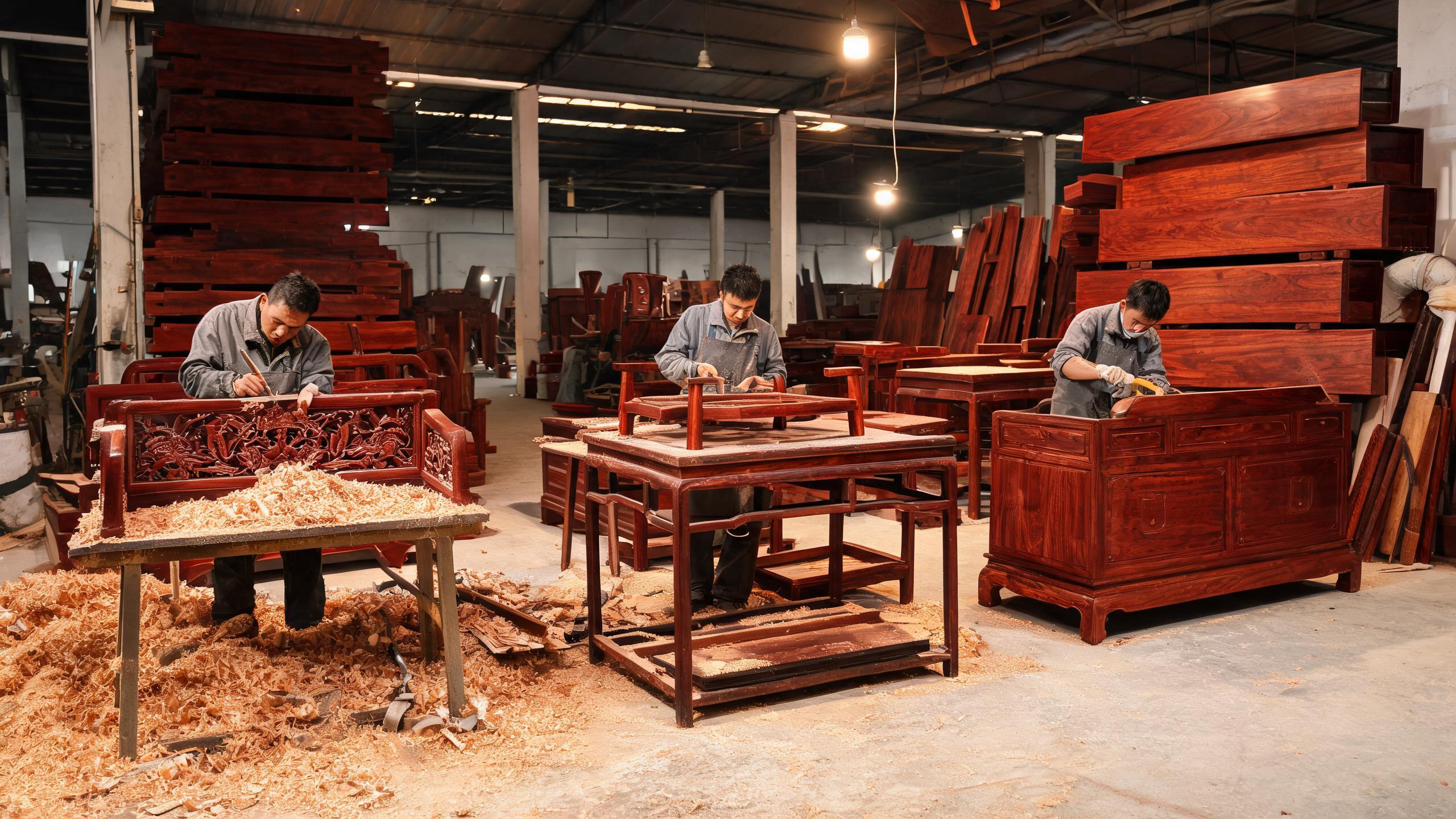
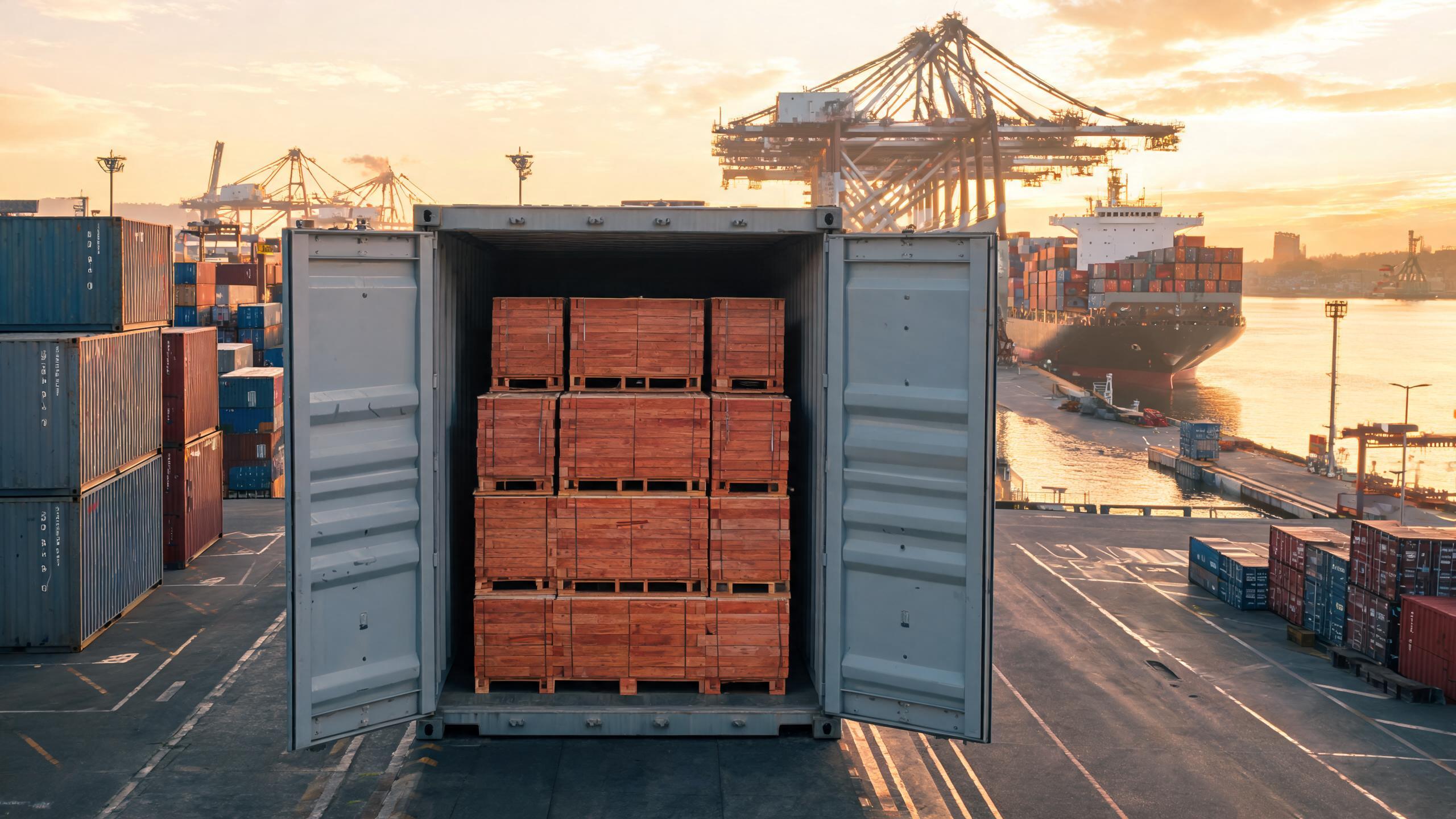
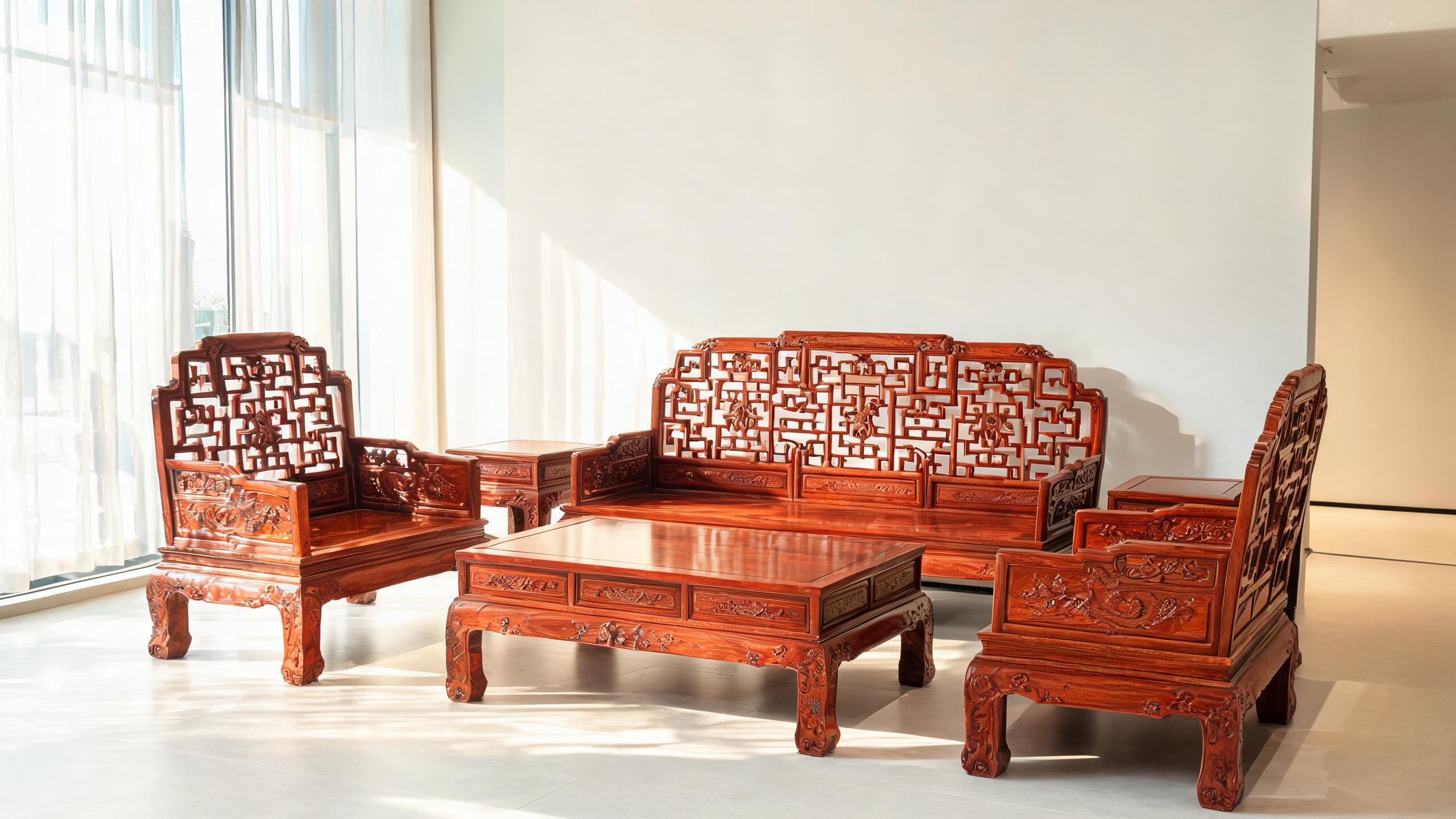
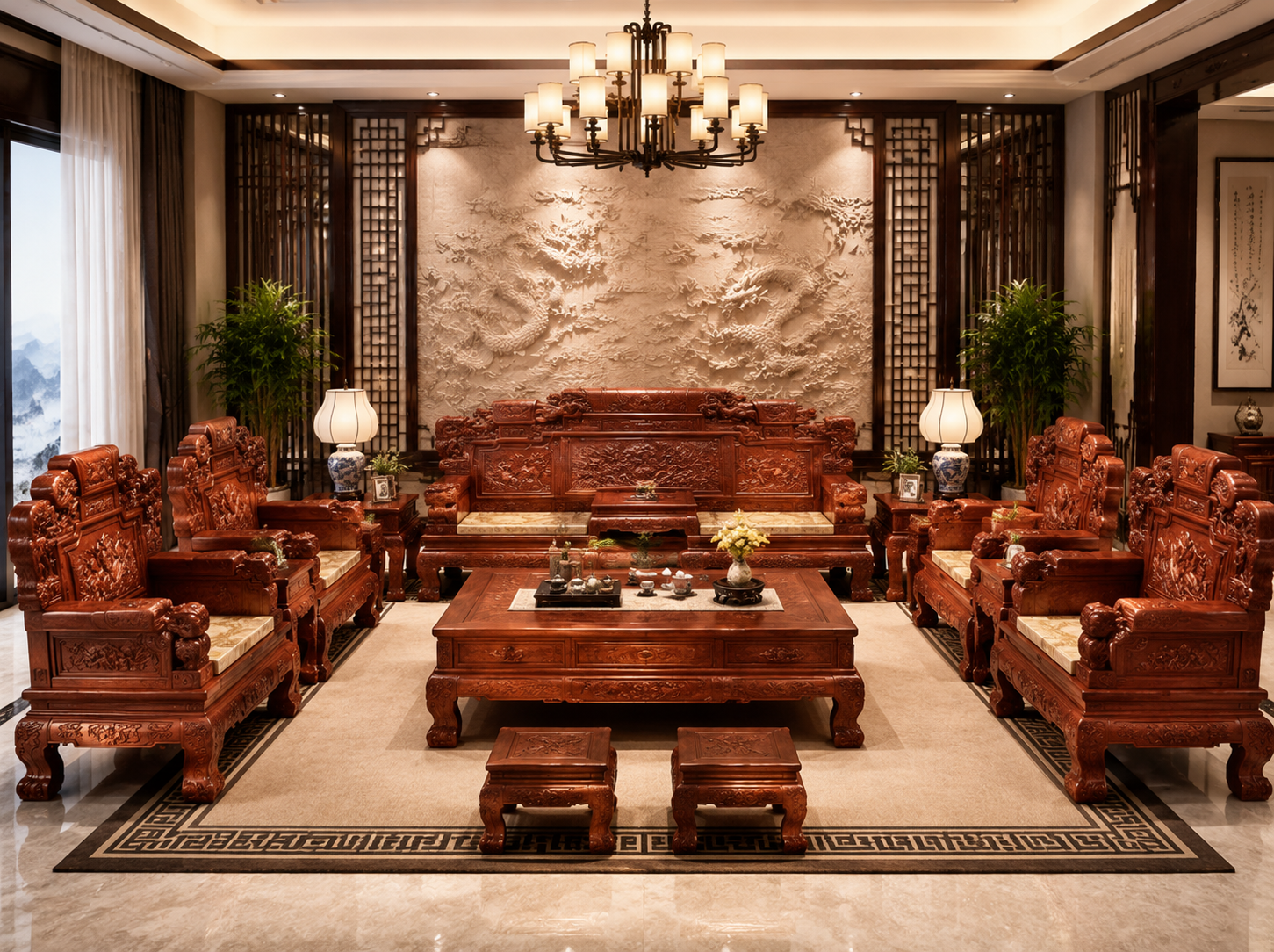
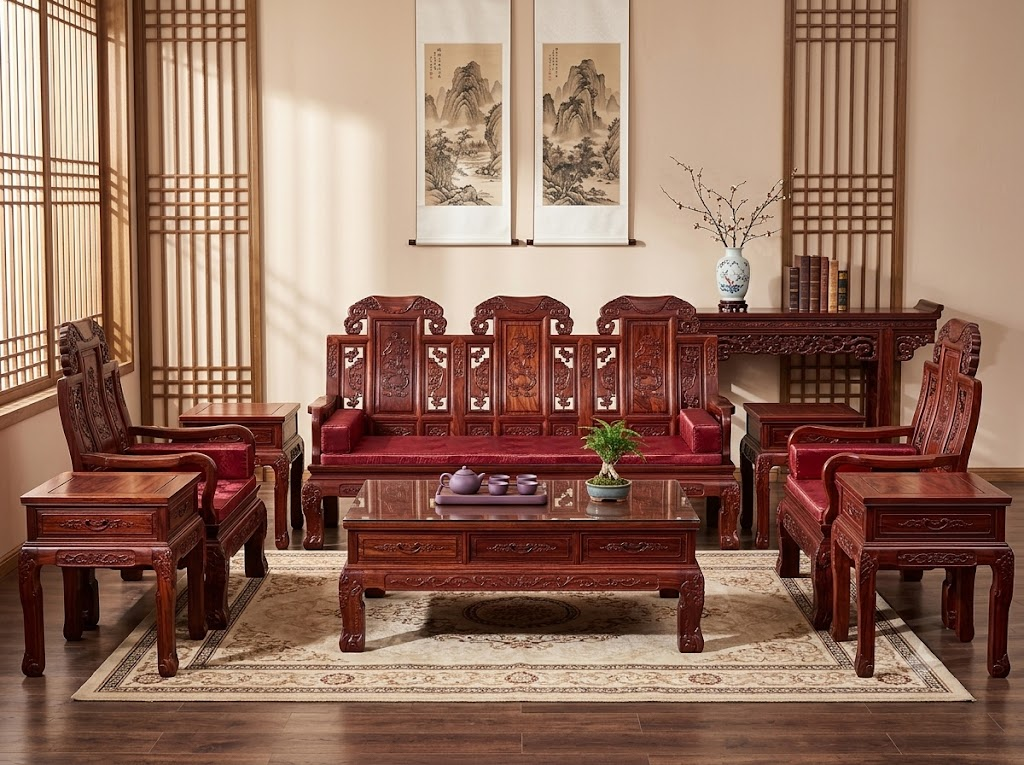
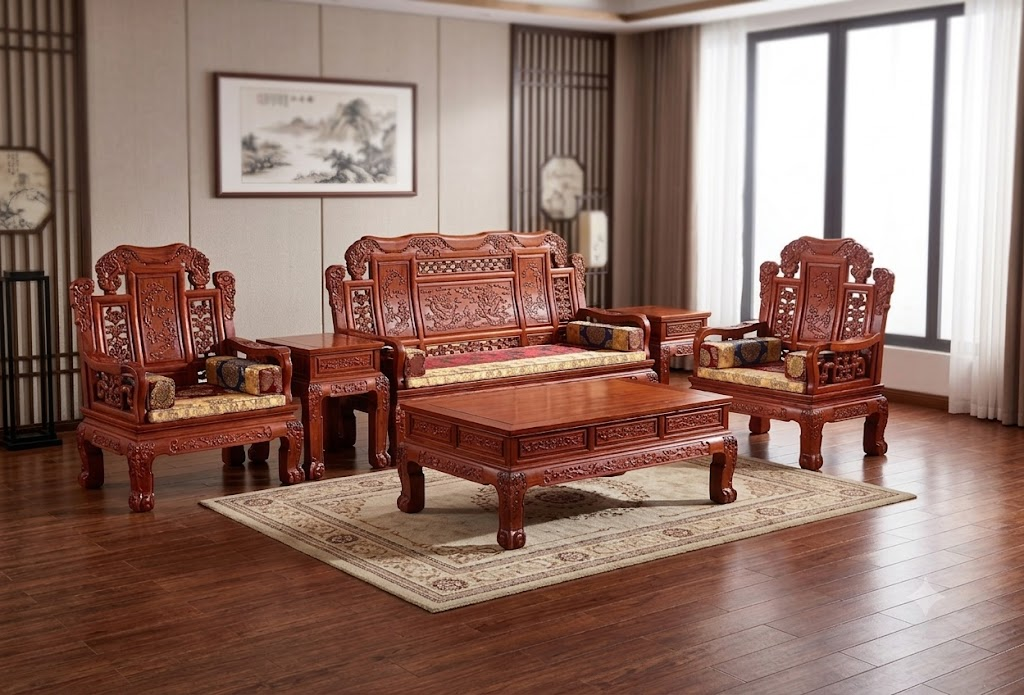
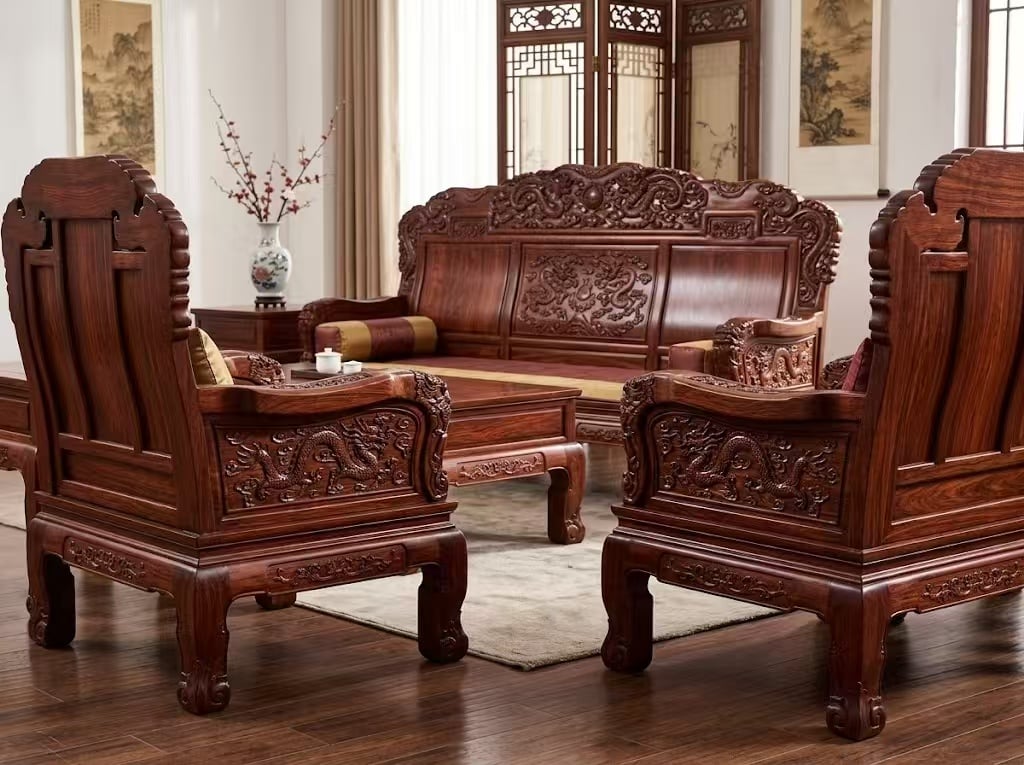
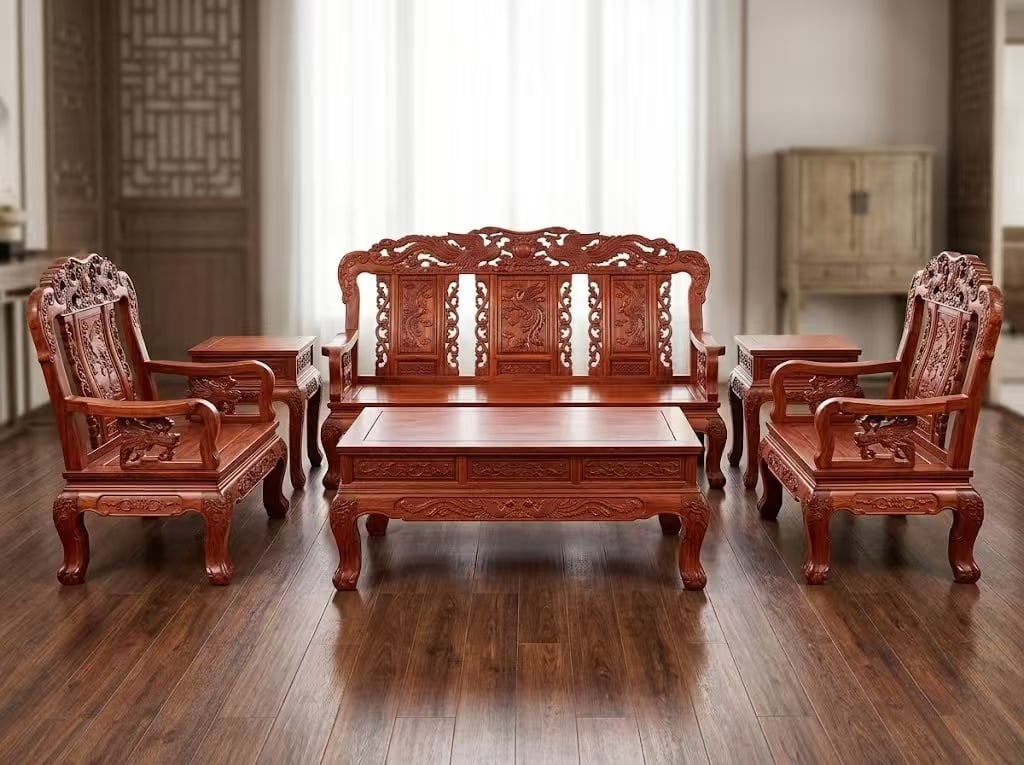
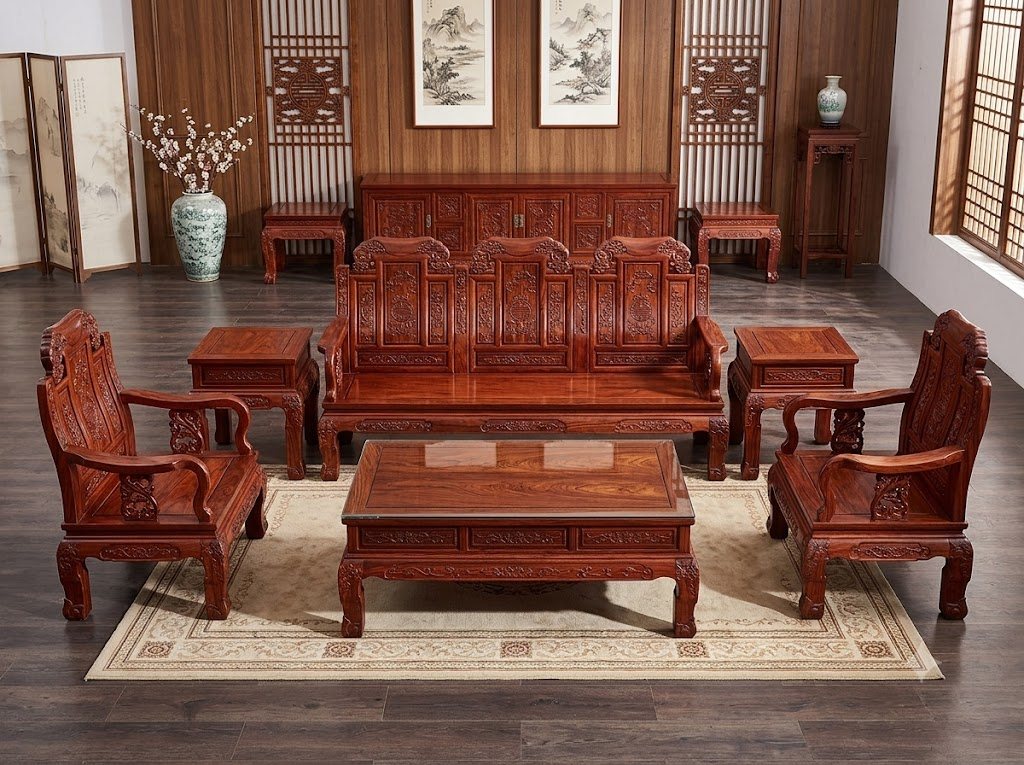
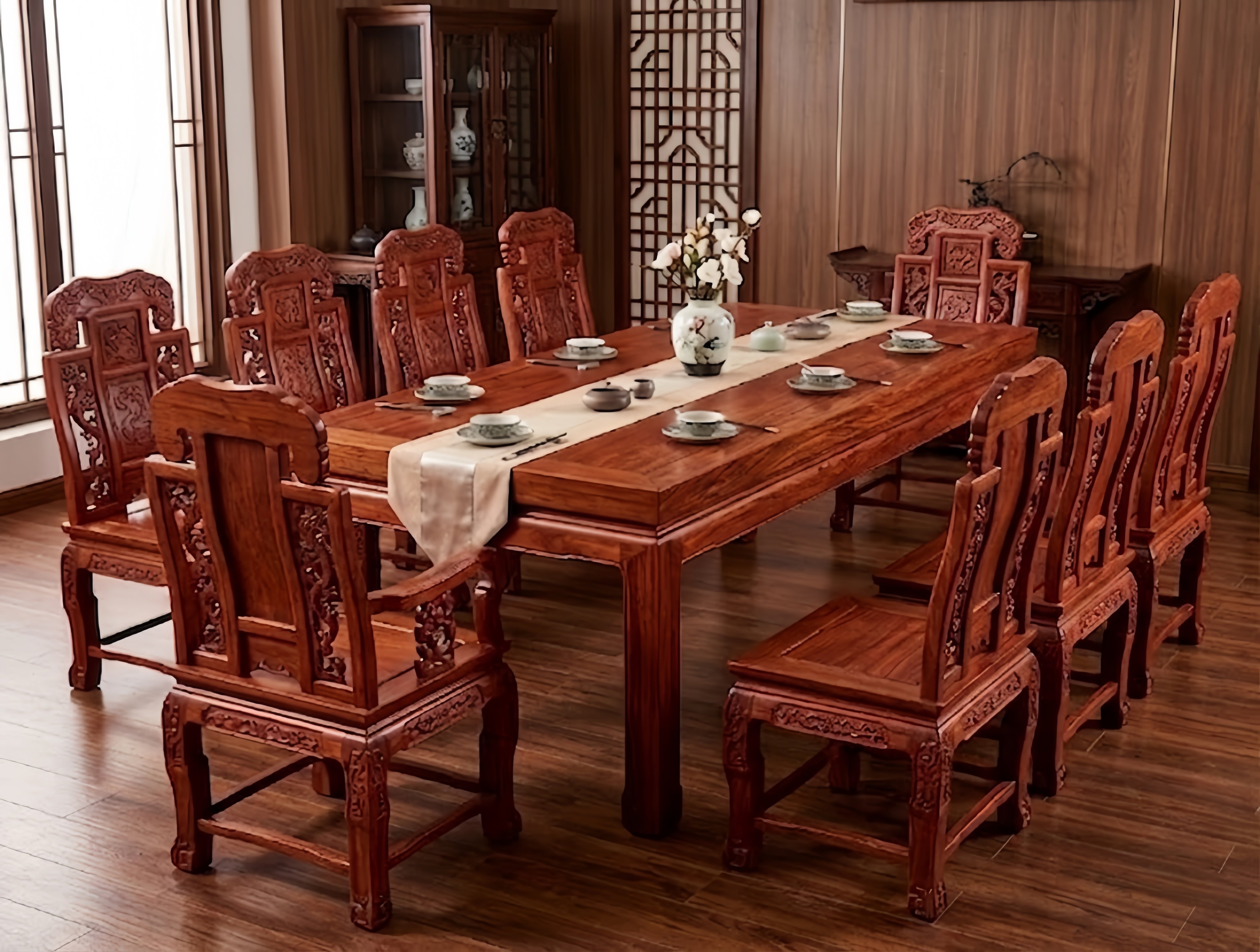
A real factory audit walks physical zones in production order. Yunxiao's facility is organized into five: a timber storage and drying zone where allocations await and complete the 36-day constant-humidity cycle; carving workshops where master artisans hand-chisel dragon, cloud, lattice, phoenix, ruyi, and bamboo motifs; assembly lines where mortise-and-tenon frames come together with bamboo dowel pins and zero metal fasteners in primary structures; humidity-controlled lacquer finishing rooms where the 8 to 9 coat raw lacquer process cures; and export packing stations where ISPM-15 crates are built, lined, and loaded.
Zone layout matters because it reveals flow discipline. Timber that never leaves the building between drying and carving is not sitting in uncontrolled humidity; finishing rooms with humidity control produce the even curing that field-lacquered furniture cannot match. When auditing any factory, ask to see each zone in production sequence and note whether work-in-progress sits in climate-controlled space or open air. The answer predicts what your container will look like in year three.
Verifying Timber Legality: The FSC and CITES Evidence Chain
Timber legality is the compliance core of rosewood sourcing, and it is documented or it is absent. Siamese rosewood, Dalbergia cochinchinensis, is CITES Appendix II listed: trade is legal with shipment-specific, non-transferable export permits processed in 5 to 10 working days. FSC chain-of-custody certification documents that timber originated from legal sources and travels documented through every custody change.
Buyers should request two things at quotation: a CITES permit sample naming the exporter of record, and the FSC certificate scope. Yunxiao supplies both, and its internal export team prepares the full document stack, from REACH and CARB declarations to ISPM-15 certificates and commercial invoices under HS code 9403.60. If a supplier cannot produce permit samples before order, assume the permits do not exist, because in this category paperwork is the product as much as the furniture is.
Moisture Control as a Proxy for Process Discipline
One number predicts a rosewood manufacturer's process discipline better than any brochure: timber moisture content. Wood above 14 percent moisture will move, and furniture built from it warps and cracks in destination climates. Yunxiao's protocol is 36 days of constant-humidity kiln drying in three phases, an initial high-temperature phase removing free moisture, an equalization phase balancing the gradient through the cross-section, and a conditioning phase relieving stresses, all targeting below 14 percent with documented readings.
Use moisture as an audit question with any manufacturer: ask to see drying records for the batch that will become your order. A factory that produces readings without hesitation has process control; a factory that offers explanations instead of records has neither. The 36-day cycle is also why honest lead times cannot be compressed: drying is physics, not scheduling, and a supplier promising catalog delivery in three weeks is telling you something about their timber, not their efficiency.
Joinery Inspection: What to Look For on the Floor
Joinery quality is visible if you know where to look. On the assembly floor, inspect sample joints: through-tenons with wedges at leg-to-apron connections should show tight, continuous grain lines; half-lap mortise-and-tenon joints at stretchers should resist racking by hand; dovetail drawer joints should show clean, uniform tails. Bamboo dowel pins securing tenons indicate traditional practice, chosen because bamboo moves with rosewood in humidity where metal would loosen.
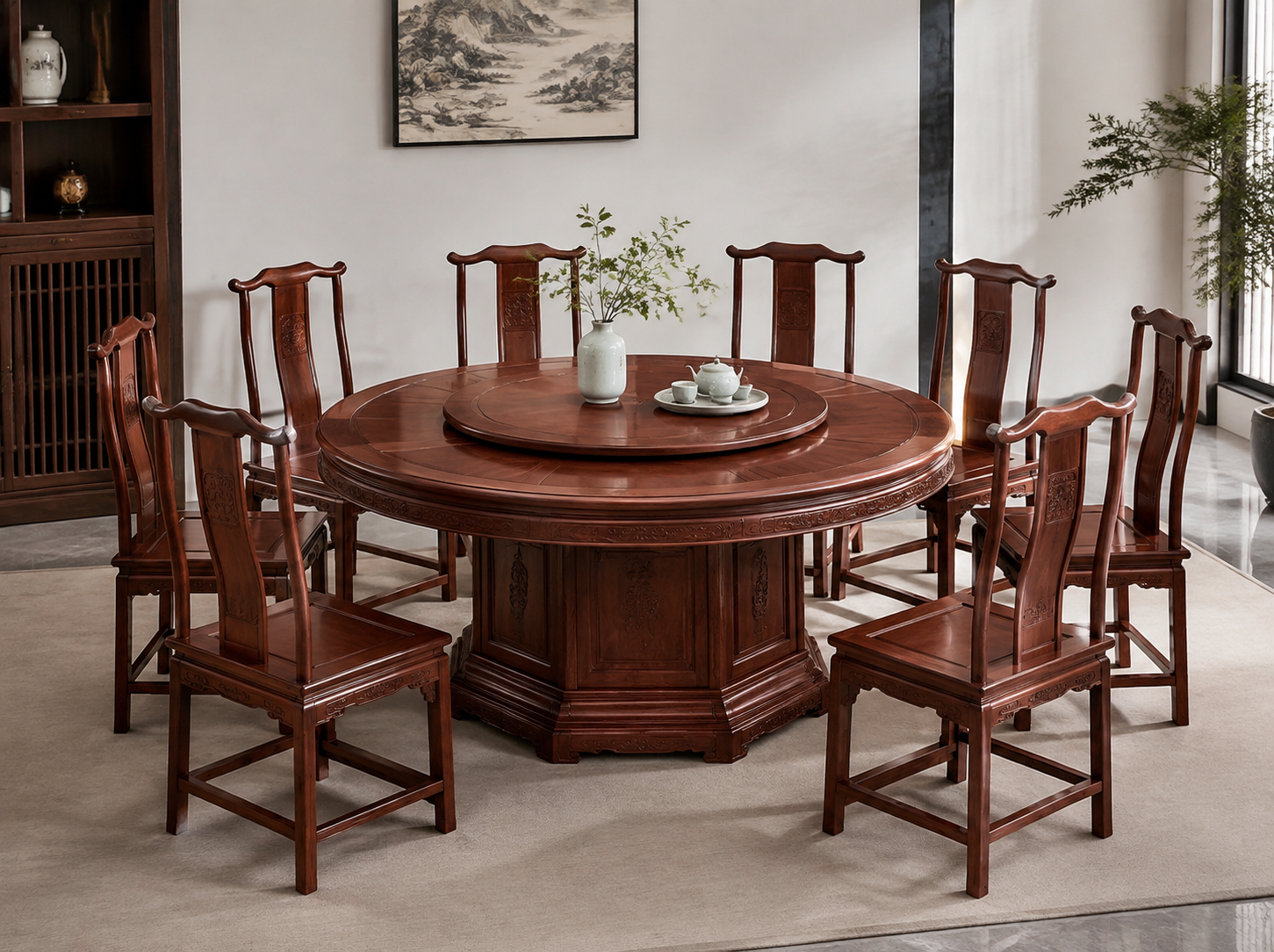
Also check what should be absent: metal screws in primary frames. Yunxiao's standard is zero metal fasteners in load paths, 38 mm seat rails on grand-scale sets, and floating-panel construction on tabletops, wardrobe doors, and bed panels, with intentional clearance around panel edges so seasonal expansion has room. Panels fitted dead-tight at the factory are the ones that crack in year two, and a guide who proudly shows you a rattle-free tight panel may be showing you a future warranty claim.
Batch Consistency for Multi-Container Programs
Wholesale programs live or die on consistency between shipments. Yunxiao controls it with single timber allocation per set: one density-banded, heartwood-graded batch covers an entire set, so grain tone, color, and movement behavior match across every piece. For programs ordering 20 or more sets, batch production assigns dedicated carving artisans and assembly teams, with quality gates at each stage rather than only final inspection.
Buyers planning multi-container rollouts should state the full program scope at quotation, even if orders phase later. Knowing the total program lets the factory reserve timber allocations and artisan capacity so container three matches container one, including finish tone developed under the same curing conditions. Consistency is scheduled months before it is inspected, and the schedule is the buyer's to influence.
Quality Control Gates Through Production
Documented quality control means checkpoints with records, not a final glance before packing. Yunxiao runs four gates. Timber verification confirms moisture readings, heartwood ratio, and density sorting for the allocated batch. Carving inspection checks designs against approved drawings, relief depth consistency across panels, and surface quality before assembly. Assembly verification tests joinery tightness and dimensional accuracy against specification. Finish assessment checks lacquer coverage, color consistency against the approved sample, and sheen under controlled lighting.
Third-party pre-shipment inspection is welcome at the buyer's expense, with full factory cooperation including access to production records, kiln logs, and material documentation. Buyers should treat an invitation to inspect as a positive signal and its absence as disqualifying, because a factory confident in its process wants witnesses.
Documentation Every Shipment Must Carry
A qualified manufacturer's export team produces a complete, English-language document stack per shipment:
- CITES Appendix II export permit, shipment-specific and non-transferable, processed in 5 to 10 working days.
- FSC chain-of-custody certificate, documenting legal timber origin for hotel chains and government procurement.
- ISPM-15 heat treatment certificate, confirming packaging treated at 56 degrees Celsius for over 30 minutes.
- EU REACH and US CARB compliance declarations for the lacquer finishing system.
- FDA 21 CFR 175.300 compliance for dining surfaces with repeated food contact.
- Commercial invoice under HS code 9403.60 plus an itemized packing list with crate dimensions and weights.
The practical test for buyers: request document samples during quotation. Yunxiao provides them so freight forwarders and customs brokers can pre-clear the paperwork. Missing or late documentation, not production quality, is the most common cause of shipments stuck at port.
Working With Third-Party Inspectors
Independent inspection adds a professional pair of eyes without adding factory friction. Yunxiao's practice is full cooperation: inspectors get access to production zones, records, kiln logs, and material documentation, and inspection scheduling can align with any of the four QC gates or with final packing. Container loading at the factory is supervised, with photographic records available.
For buyers, the efficient pattern is to inspect after finish assessment and before crate packing, when every surface is visible and corrections remain inexpensive. Inspection cost is negligible against the cost of receiving non-conforming furniture across an ocean, and factories that resist inspection are pricing something other than confidence.
From Audit to Partnership: Trial Sets and Phased Ordering
Verification ends not with a report but with a first order sized to prove the relationship. The standard path: specifications and document samples at quotation, a trial single set to evaluate quality in person, then container orders of 6 to 10 sets per 40-foot container with a loading plan included. Long-term partners unlock partial shipments against sell-through, batch production for large programs, refundable sample sets for new designs, and layout drawings plus remote installation guidance for projects.
Payment terms protect both sides throughout: 30 percent T/T deposit initiates production, balance before shipment allows inspection before final payment, and L/C is available above USD 30,000. Weekly production photos keep the buyer inside the process from deposit to container, which is the practical meaning of a verifiable manufacturer.
Frequently Asked Questions
Can we visit the factory?
Yes, factory visits are welcome by appointment in Xianyou County, Fujian. Buyers typically combine the visit with sample review and document verification.
How do we confirm you are a factory, not a trading company?
Request the five tests in this guide: license and walkthrough video, kiln logs, named carving teams, CITES permits in the exporter's own name, and packing specifications. Yunxiao answers all five with documents.
Can audits be done remotely?
Yes. Video walkthroughs of each production zone, weekly production photos, document samples, and third-party inspection together cover what an in-person audit would verify.
What records will you share?
Kiln drying logs with moisture readings, timber grading records, carving hour estimates, QC checkpoint records, and the full export document stack are available to serious buyers.
Is third-party inspection welcome?
Yes, at the buyer's expense, with full cooperation and access to production records, kiln logs, and material documentation at any QC gate.
What production capacity exists?
A 40-foot container carries 6 to 10 complete sets; standard catalog runs 45 to 60 working days and custom 60 to 75. Large programs are scheduled in dedicated batches with assigned artisan teams.
Who prepares export documents?
Yunxiao's internal export team prepares CITES permits, FSC certificates, ISPM-15, REACH and CARB declarations, HS 9403.60 invoicing, and packing lists in English for every shipment.
What quality guarantees apply?
Four documented QC gates, sub-14 percent moisture timber, zero-metal joinery, finish approval by mailed samples, and supervised container loading, with inspection rights preserved at every stage.
How do we start if budgets are small?
Begin with a trial single set and document samples. Container volume can follow once quality is verified in person.
What are the long-term partnership terms?
Partial shipments against sell-through, batch production for programs, refundable sample sets, free layout drawings, and remote installation guidance for project partners.