What Actually Determines a rosewood sofa design
A rosewood sofa set is a specification product, not a catalog price tag. When procurement teams ask about pricing, the honest answer is that four variables set the number: wood species and grade, set configuration and piece count, carving density, and finish specification. Two sofa sets that look identical in photographs can differ substantially in legitimate cost because one uses sapwood-heavy timber with shallow machine-assisted carving while the other uses 80-percent-heartwood Siamese rosewood with 40-hour hand-carved armrests.
This guide breaks down how Yunxiao Rosewood Furniture Co., Ltd prices its carved sofa sets for B2B buyers, what sits inside a quotation, and how to compare supplier quotes honestly. It reflects the actual quotation practice of a 12,000-square-meter factory in Xianyou County, Fujian, exporting to wholesalers, hotels, and designers across Southeast Asia, Australia, North America, and Europe.
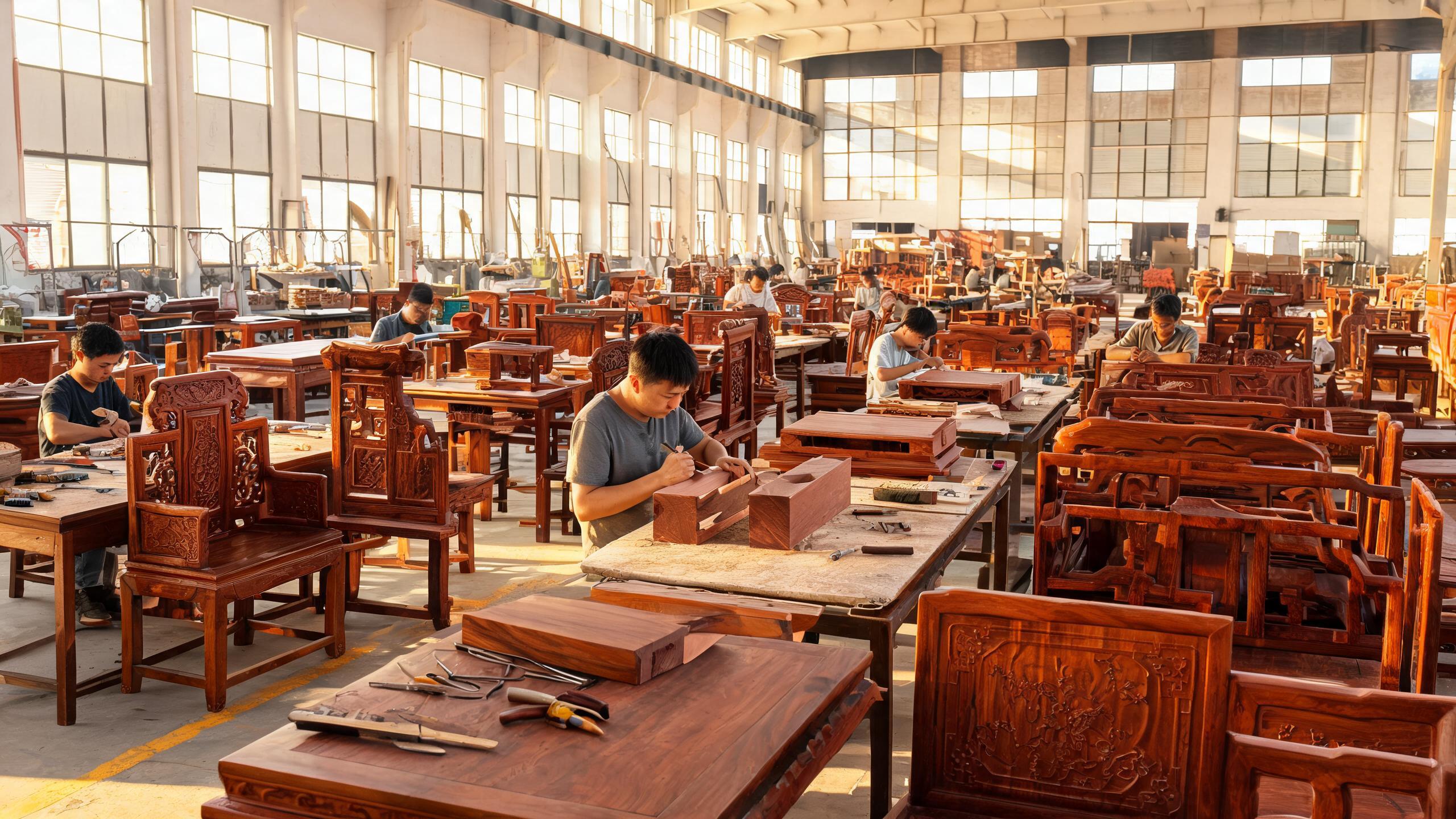
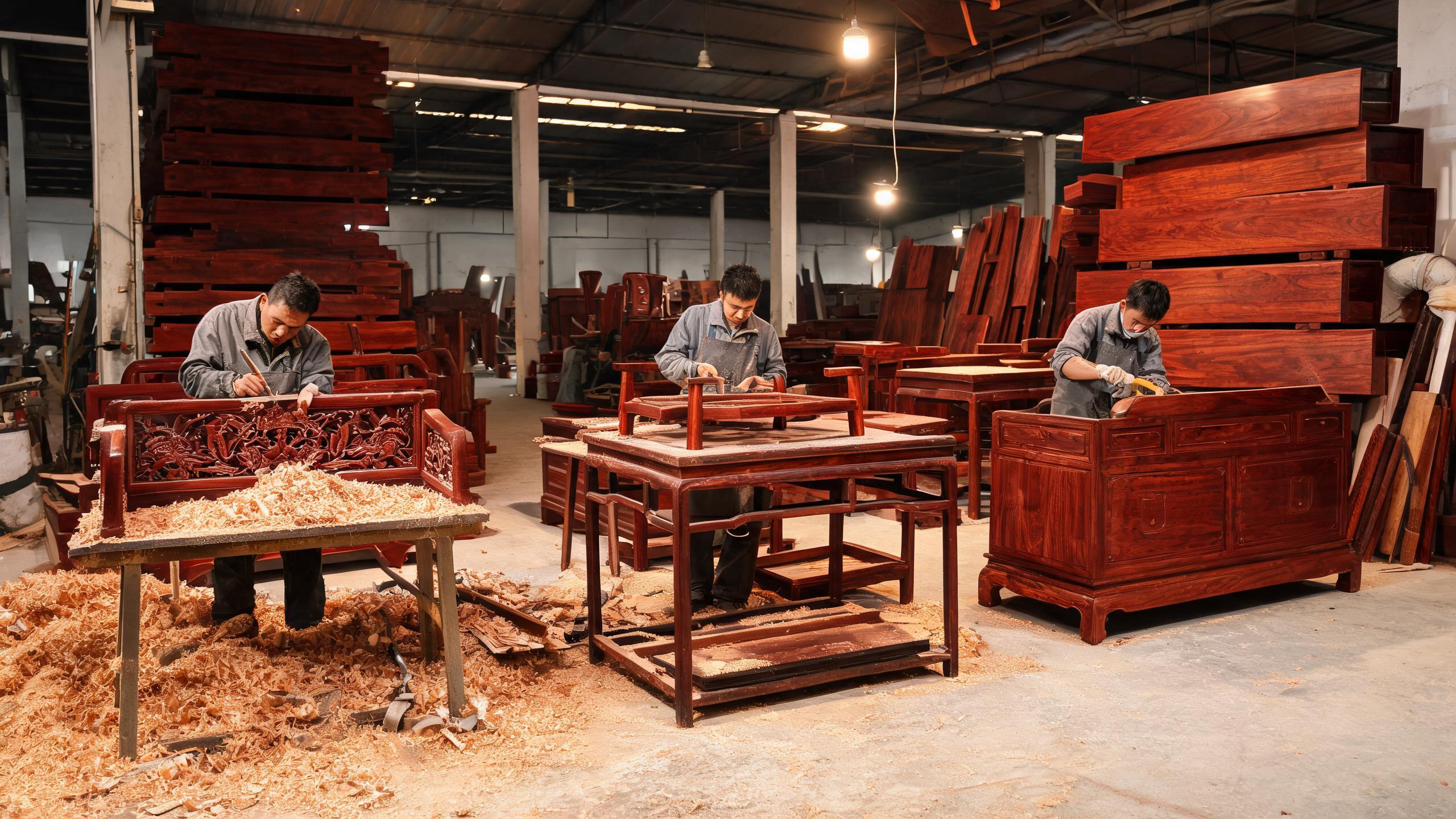
Cost Anatomy: From Timber Yard to Export Crate
Understanding where money goes in a rosewood sofa set explains why quotes differ and which corners some suppliers cut. Every set passes through the same production stages, and each stage carries real cost that a professional quotation should itemize.
| Production Stage | What Drives Cost | How to Verify It |
|---|---|---|
| Timber selection | Heartwood ratio, density banding, species | FSC and CITES documents; grading records on request |
| Kiln drying | 36-day cycle to below 14% moisture | Moisture readings in production records |
| Carving | Master artisan hours; a dragon armrest is about 40 hours | Carving hour estimate in the quote |
| Assembly | Mortise-and-tenon fit, bamboo dowels, no metal fasteners | Joinery photos during production |
| Finishing | 8-9 coats of raw lacquer over 20-30 days | Finish samples mailed before production |
| Export packing | ISPM-15 crate, acid-free tissue, EPE, VCI film | Packing specification sheet |
A quotation that cannot itemize these stages is a quotation that cannot be audited. Yunxiao provides the breakdown so buyers can see exactly what they are paying for and negotiate on specifics rather than on vague percentages.
Price Ladder by Set Size
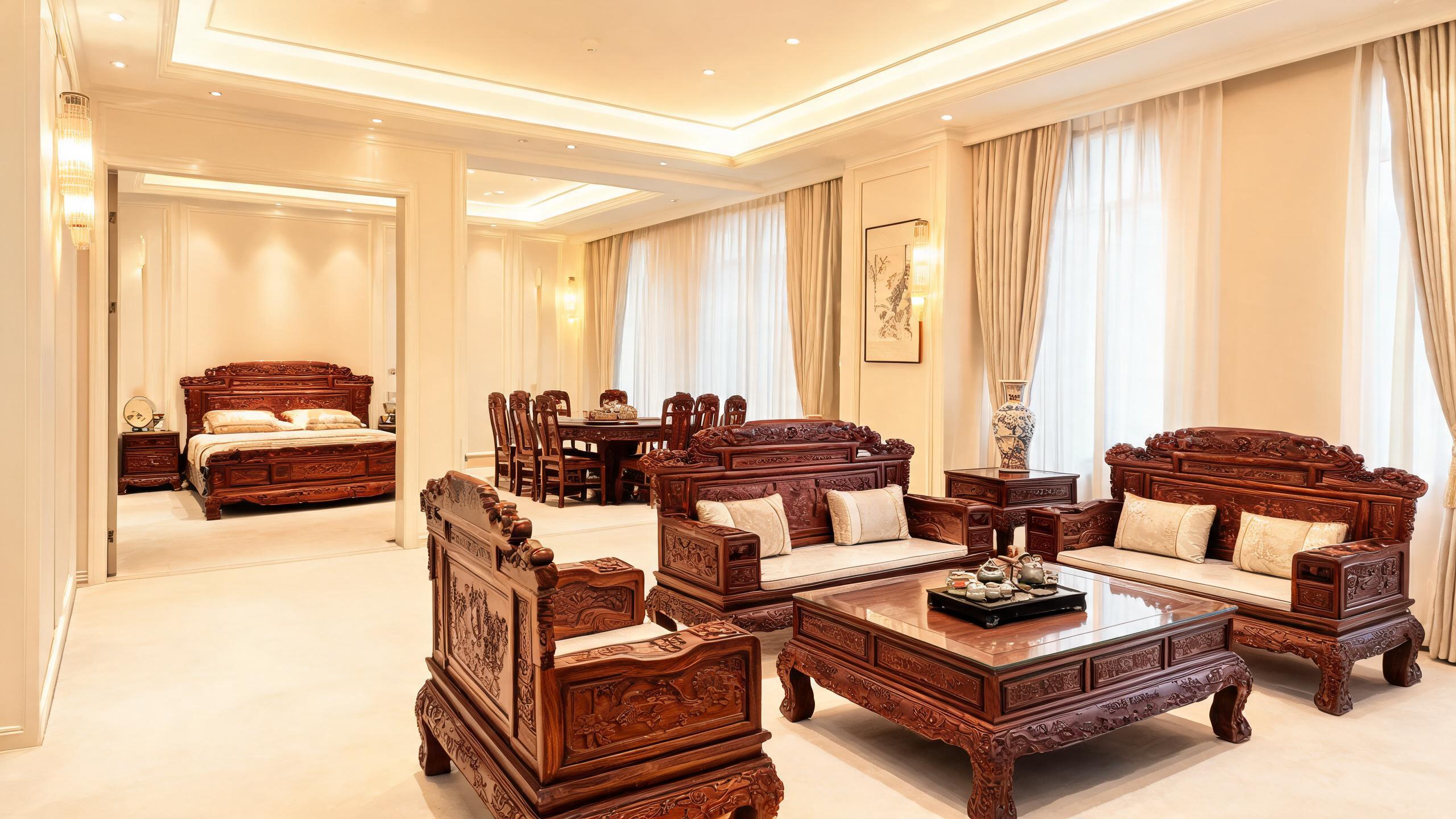
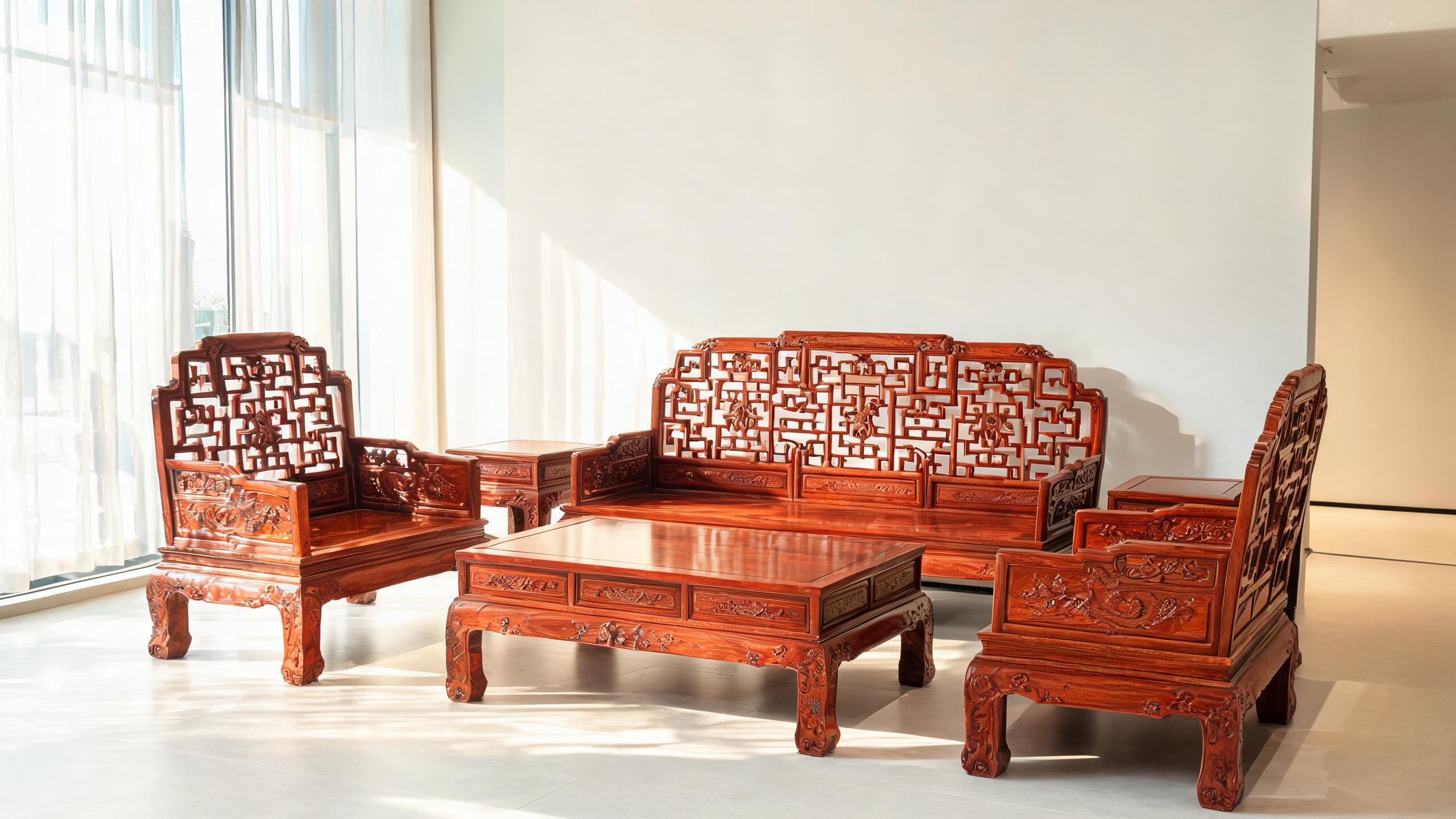
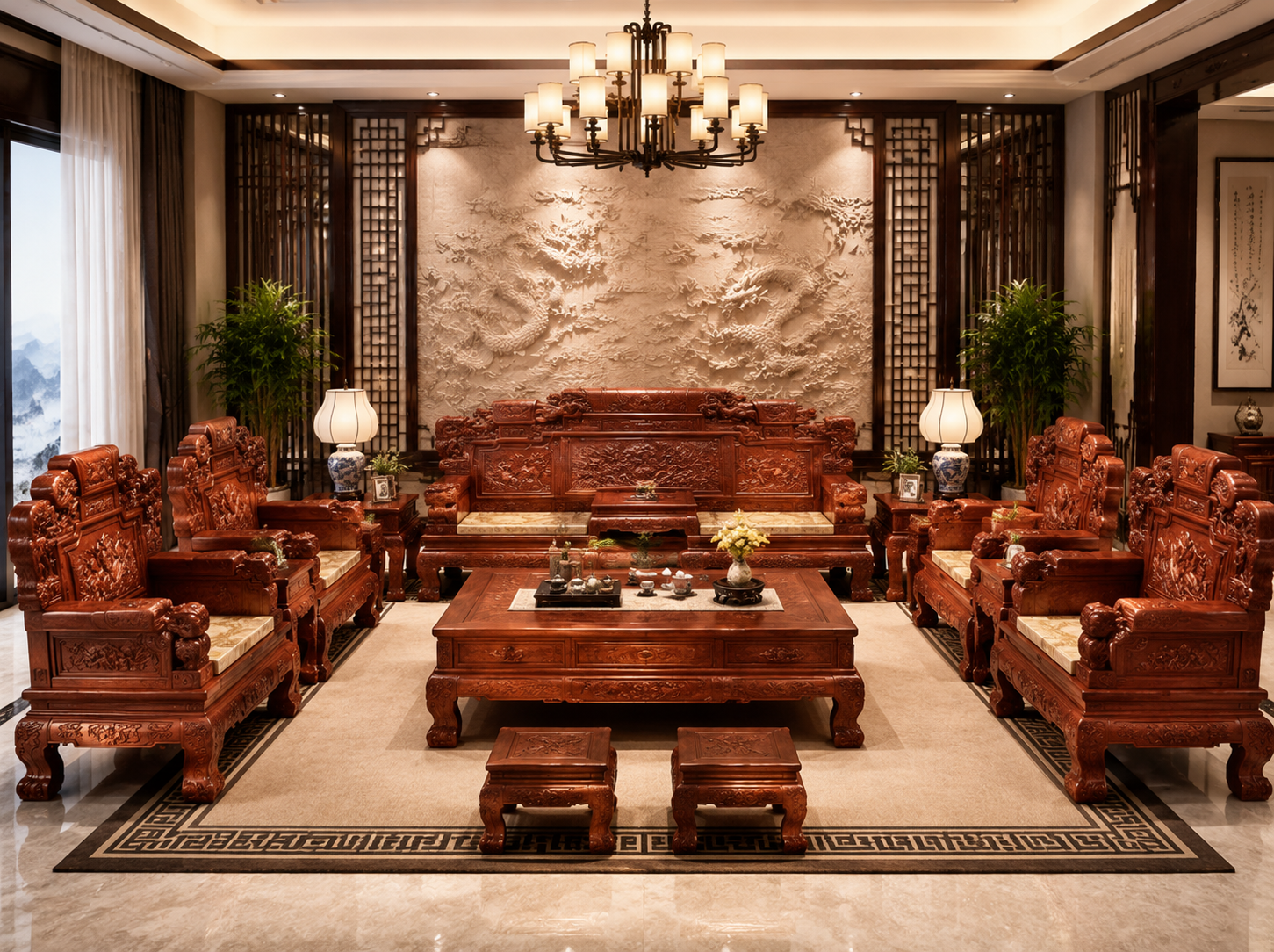
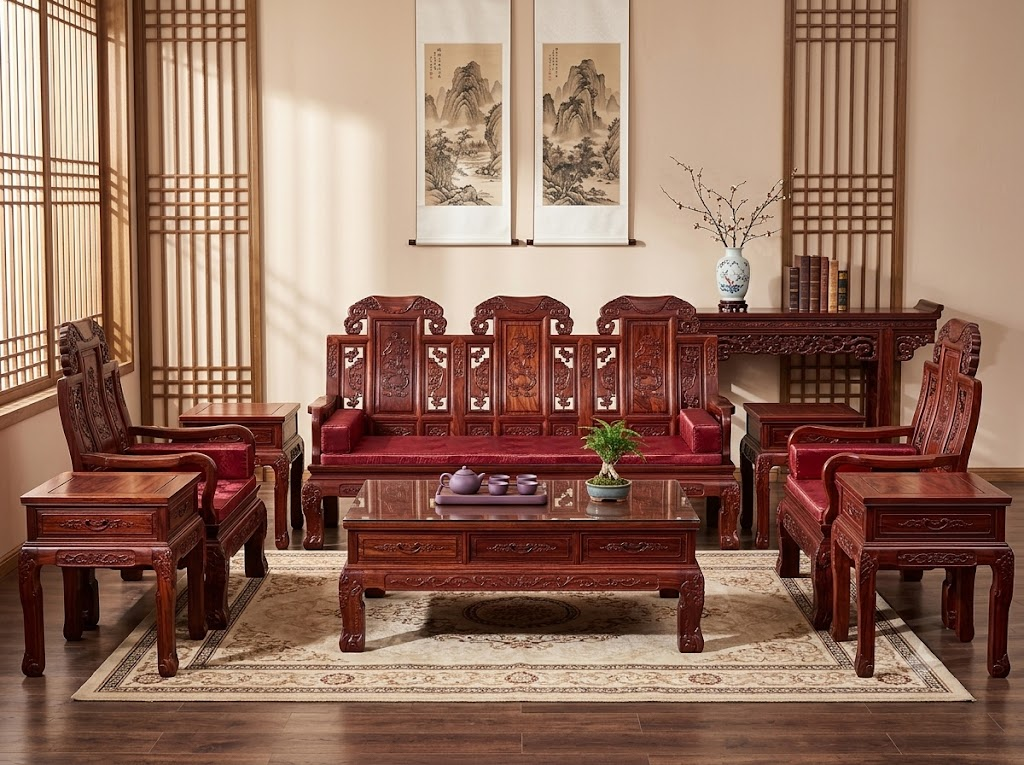
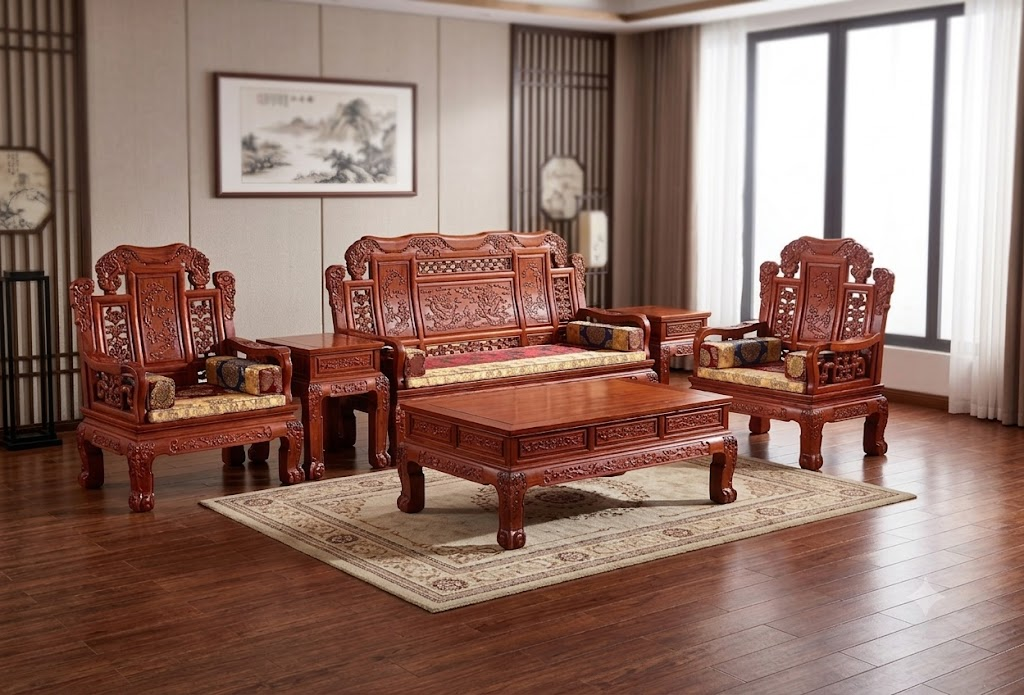
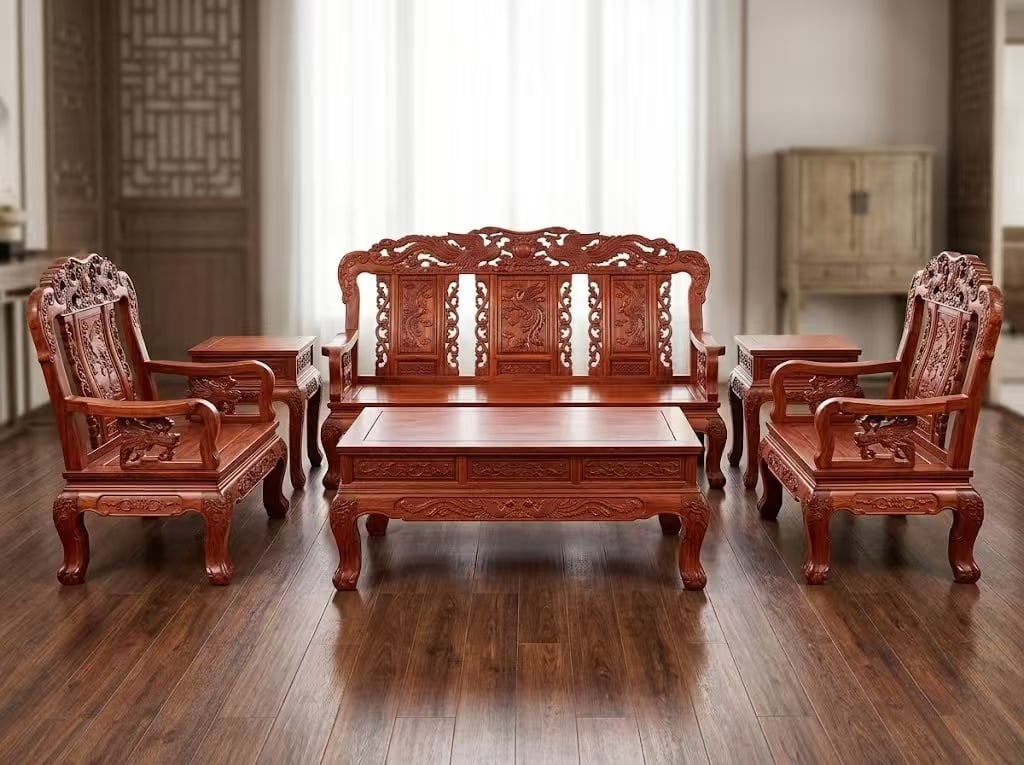
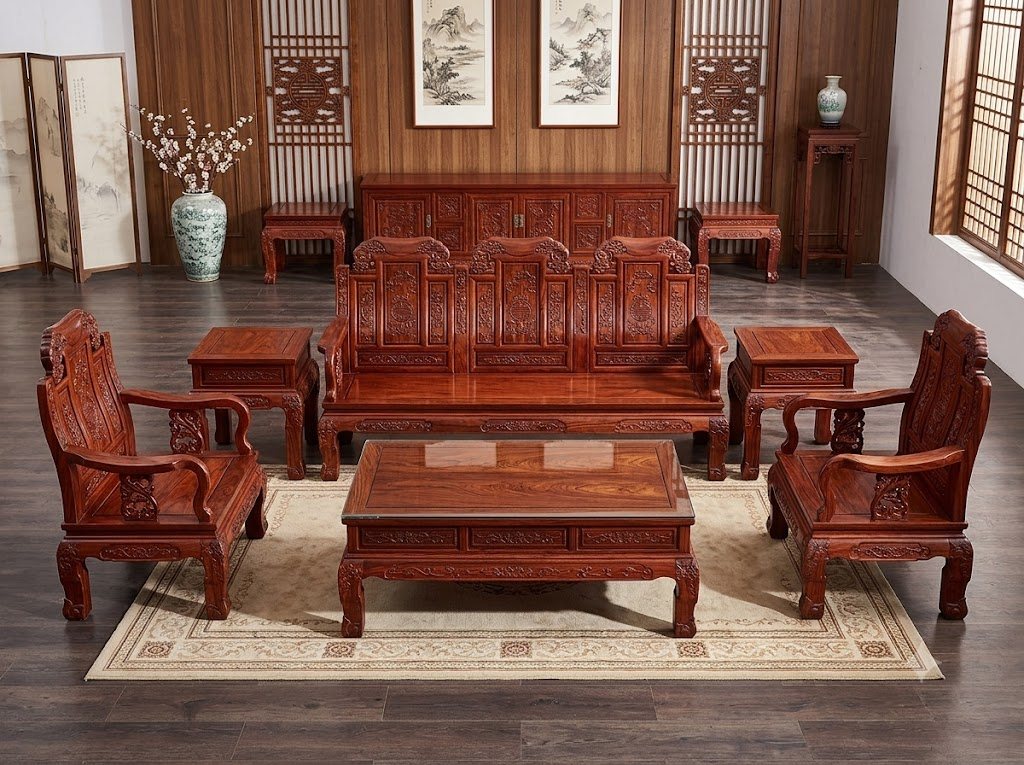
Configuration is the largest single price variable because each additional piece adds timber, carving, finishing, and crate volume. The catalog is built as a deliberate ladder so buyers can choose where to enter. The 3-piece set with carved armrests serves compact living rooms and trial orders. The 5-piece Qing style set centers on a 185 cm three-seat sofa with two armchairs plus coffee and end tables, the workhorse of standard living room programs. The 6-piece phoenix reception set targets clubs and hotel lounges. Ming style 7-piece and 9-piece sets fill design-led retail, and the 10-seat imperial configuration, one three-seat central sofa, two side sofas, two armchairs, three tables, anchors banquet halls and flagship showrooms.
Within one collection, the ladder lets retailers merchandise trade-up paths, and container quotes can mix configurations to balance volume and value. When budgeting, price the ladder position you actually need, then ask what moving one step up or down does to the total; the answer is usually smaller than expected on the mid rungs and steep at the imperial end because carving hours compound.
Carving Complexity and Labor Hours
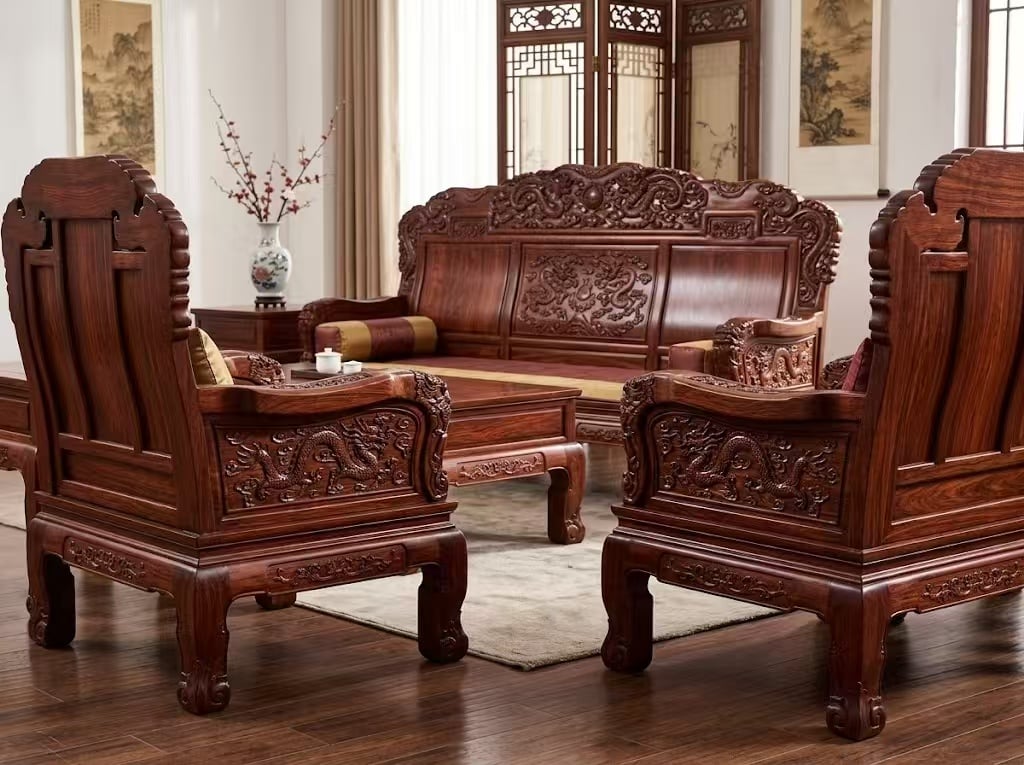
Hand carving is priced by artisan hours, and motif density is the dial that moves it most. The five-claw dragon armrests on the Imperial Dragon 10-seat set each consume roughly 40 hours of master-artisan work, while a lattice backrest panel runs far fewer hours at equal quality. Cloud aprons, ruyi backrest crests, and bamboo chair carving sit between those extremes.
Buyers controlling budget often specify dense carving on hero pieces and restrained carving on secondary seating, keeping the visual identity while trimming total labor. Yunxiao quotes this way routinely: the quotation lists carving scope per piece so the trade-off is explicit and adjustable before deposit. If a supplier cannot tell you how many carving hours a motif costs, they are not pricing the work; they are guessing what you will pay.
Wood Species Price Differentials and When Alternatives Make Sense
Species choice changes both cost and paperwork. Siamese rosewood, Dalbergia cochinchinensis, is the premium carving wood and carries CITES Appendix II documentation requirements on every shipment. Machilus Nanmu is a legally certified alternative with lighter color and finer grain that avoids CITES paperwork and suits contemporary programs. Grade-A aged redwood offers a different grain character with FSC chain-of-custody documentation.
The honest guidance: choose Siamese rosewood when carving depth, color gravitas, and heritage positioning justify the documentation; choose alternatives when the program targets price-sensitive retail or markets where CITES handling adds friction. All species receive identical 36-day kiln drying, mortise-and-tenon joinery, and raw lacquer finishing, so nothing structural is lost by choosing down the ladder, only look and paperwork change.
Custom Orders Versus Catalog: The Price Difference Explained
Custom OEM and ODM orders cost more than catalog items for identifiable reasons: a 15-working-day design cycle with 3D mockups, physical carving and finish samples mailed for approval, one-off fixture setup, and smaller batch sizes. Production runs 60 to 75 working days versus 45 to 60 for catalog. In return the buyer gets exclusive dimensions, motifs, and finishes matched to a specific market.
For buyers testing a market, the economical path is often a catalog trial set first, then customization of the pieces that prove sell-through. This sequencing avoids paying custom premiums before demand is confirmed, and it gives the factory real sales data to design against. Many successful programs started with one catalog set and evolved into fully custom collections by the third container.
From FOB Xiamen to Landed Cost
Comparing quotes requires looking past the factory price to total landed cost. A structured checklist prevents surprises at destination:
- FOB unit price: confirm it includes packing to the ISPM-15 specification, not just a wooden box.
- Ocean freight: container type and route; transit runs 14 to 30 days from Xiamen to major ports.
- Insurance: confirm coverage of carved surfaces in transit, which standard policies sometimes exclude.
- Duty and taxes: HS code 9403.60 classification in the destination market.
- Inspection: optional third-party pre-shipment QC; the factory cooperates fully.
- Delivery and handling: crated weights and warehouse equipment for heavy hardwood sets.
Yunxiao supplies the container loading plan and crate dimensions with each quote so freight forwarders can price accurately before deposit. Buyers who let their forwarder see the loading plan at quotation stage routinely save by adjusting the product mix before the container is booked.
Container Economics for Wholesale Buyers
A 40-foot container holds 6 to 10 complete furniture sets depending on the product mix, and sofa sets with carved backrest panels consume more crate volume than bedroom suites. This makes mix planning a pricing decision: a container weighted toward dining or bedroom pieces carries more retail value per cubic meter, while sofa-heavy containers deliver the highest visual impact per set. The quotation includes a container loading plan calculating total crate volume and recommending the optimal combination.
Partial shipments are available for long-term partners, letting inventory investment follow sell-through rather than arriving as one lump. For seasonal retail, phasing two containers across a season often beats one large shipment, because it keeps showroom stock fresh and spreads customs and cash-flow pressure. Ask for the partial-shipment schedule during quotation so production slots can be reserved.
Payment Terms, Deposits, and Protecting Cash Flow
Standard terms are 30 percent T/T deposit to initiate production with balance before shipment, and L/C is available for orders above USD 30,000. Refundable sample sets are offered to qualified buyers evaluating new designs, and trial single sets let new buyers verify quality before committing to container volume.
These terms protect both sides: the deposit covers timber allocation and the 36-day drying cycle that begins immediately, while balance-before-shipment lets buyers trigger third-party inspection before payment completes. Weekly production photos keep the buyer informed throughout, so the payment schedule maps to visible progress rather than blind faith.
Hidden Costs Buyers Forget
Four cost lines are routinely missed in first-time budgeting. First, customs broker fees for CITES-handled shipments, which run higher than standard clearance and demand an experienced broker. Second, storage risk if the container arrives before warehouse slots are ready; demurrage charges compound daily. Third, climate conditioning: rosewood is stable below 14 percent moisture, but showroom floors with extreme dryness still benefit from humidification planning. Fourth, assembly labor at destination, mitigated by Yunxiao's remote installation guidance and free layout drawings.
None of these are factory costs, but they are real landed costs. Budgeting them at quotation stage keeps the program profitable and prevents the classic first-order mistake: a container that fits the budget on paper and exceeds it at the port.
How to Get a Precise Quote in 48 Hours
Yunxiao returns itemized quotations within 48 hours of receiving five inputs: set configuration and seat count, wood species, carving density preference, destination market, and estimated order quantity. The quote returns itemized FOB Xiamen pricing, production timeline, document samples, and container loading calculations.
The more precisely these five inputs are specified, the more comparable quotes become across suppliers. Buyers who fix the specification first and then solicit competing quotes get honest numbers; buyers who ask for ballpark prices get marketing. Put the five inputs in writing, send them to every candidate supplier, and judge suppliers on the quality of the questions they ask back.
Frequently Asked Questions
Why do rosewood sofa set prices vary so much between suppliers?
Variation comes from heartwood ratio, density grading, carving hours, drying discipline, and finish coats. A quote that itemizes these stages is auditable; a single lump number is not.
Do you publish a price list?
Pricing is specification-driven, so itemized quotations are issued per project within 48 hours of receiving configuration, species, carving density, destination, and quantity.
What are the payment terms?
Thirty percent T/T deposit initiates production, balance before shipment. L/C is available for orders above USD 30,000.
How does a trial set work?
New buyers can order a single set to verify quality in person before container commitment. Refundable sample sets are available for qualified buyers evaluating new designs.
Does a custom design cost more?
Custom OEM and ODM orders carry a 15-day design cycle, mailed samples, and smaller batches, so they price above catalog items and run 60 to 75 working days versus 45 to 60.
What does FOB Xiamen include?
The FOB price covers the finished set, ISPM-15 export crate with protective packing, and export documents. Freight, insurance, duty, and destination handling are buyer-side.
Can I mix configurations in one container?
Yes. A 40-foot container holds 6 to 10 sets, and each quotation includes a loading plan recommending the optimal mix of sofa, dining, and bedroom pieces.
Are partial shipments possible?
For long-term partners, yes. Inventory can be phased against sell-through instead of arriving as a single container.
How does carving depth affect price?
Carving is priced by artisan hours. A five-claw dragon armrest takes roughly 40 hours; specifying dense carving on hero pieces and restrained carving elsewhere controls total labor cost.
What documents are included at no charge?
CITES Appendix II permits, FSC chain-of-custody, ISPM-15 certificate, REACH and CARB declarations, and the packing list are prepared with every shipment.