The Design Language of a Classical rosewood furniture manufacturer
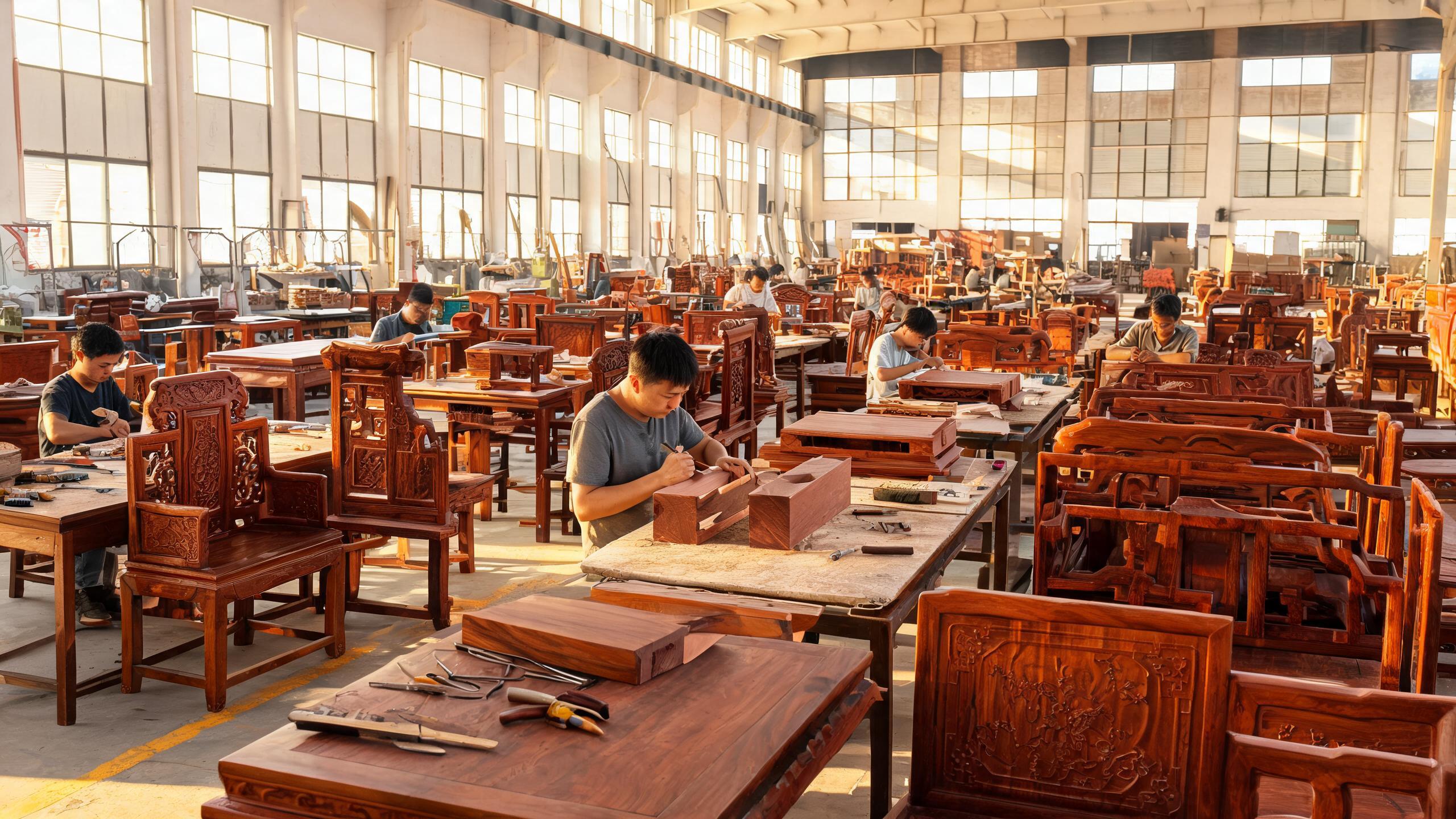
A rosewood sofa is designed three times: on paper as proportions and motifs, in the workshop as joinery engineering, and in the finishing room as color and sheen. Buyers who understand all three layers can specify exactly what their market needs and avoid paying for carving that does not sell. Yunxiao Rosewood Furniture Co., Ltd designs and manufactures classical carved sofa sets from its 12,000-square-meter factory in Xianyou County, Fujian Province, serving wholesalers, hotels, and design firms across Southeast Asia, Australia, North America, and Europe.
This guide walks through how a carved sofa design is actually developed: the motif system, proportion and ergonomics, structural engineering, climate design, finish specification, and the 15-day ODM workflow that turns a buyer's concept into approved 3D mockups and physical samples. Design is where money is made or wasted in this category, because every carving hour and every board foot is committed by decisions made before production starts.
Motif Library and Regional Symbolism
Motifs are the vocabulary of classical sofa design, and each carries meaning end customers recognize. Choosing among them is a market decision as much as an aesthetic one, and pairing motifs deliberately is what separates a designed set from a decorated one.
| Motif | Meaning | Typical Placement and Market |
|---|---|---|
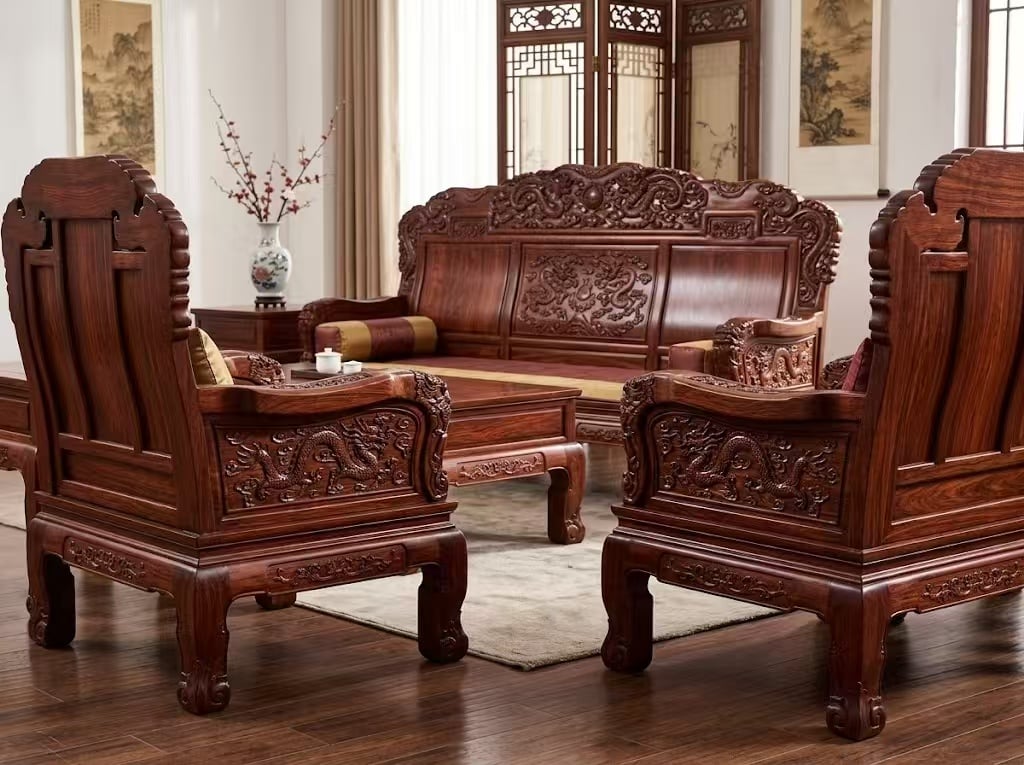
| Five-claw dragon | Authority, celebration | Armrests on imperial sets; banquet markets |
| Phoenix | Auspicious renewal | Backrests on reception sets; club and hotel interiors |
| Cloud scrolls | Fortune rising | Aprons and stretchers; broad appeal |
| Lattice | Scholarly refinement | Backrest panels; design-led retail |
| Ruyi head | Wish-fulfillment | Backrest crests; classic Chinese programs |
| Bamboo | Integrity, resilience | Chair carving; dining and living blends |
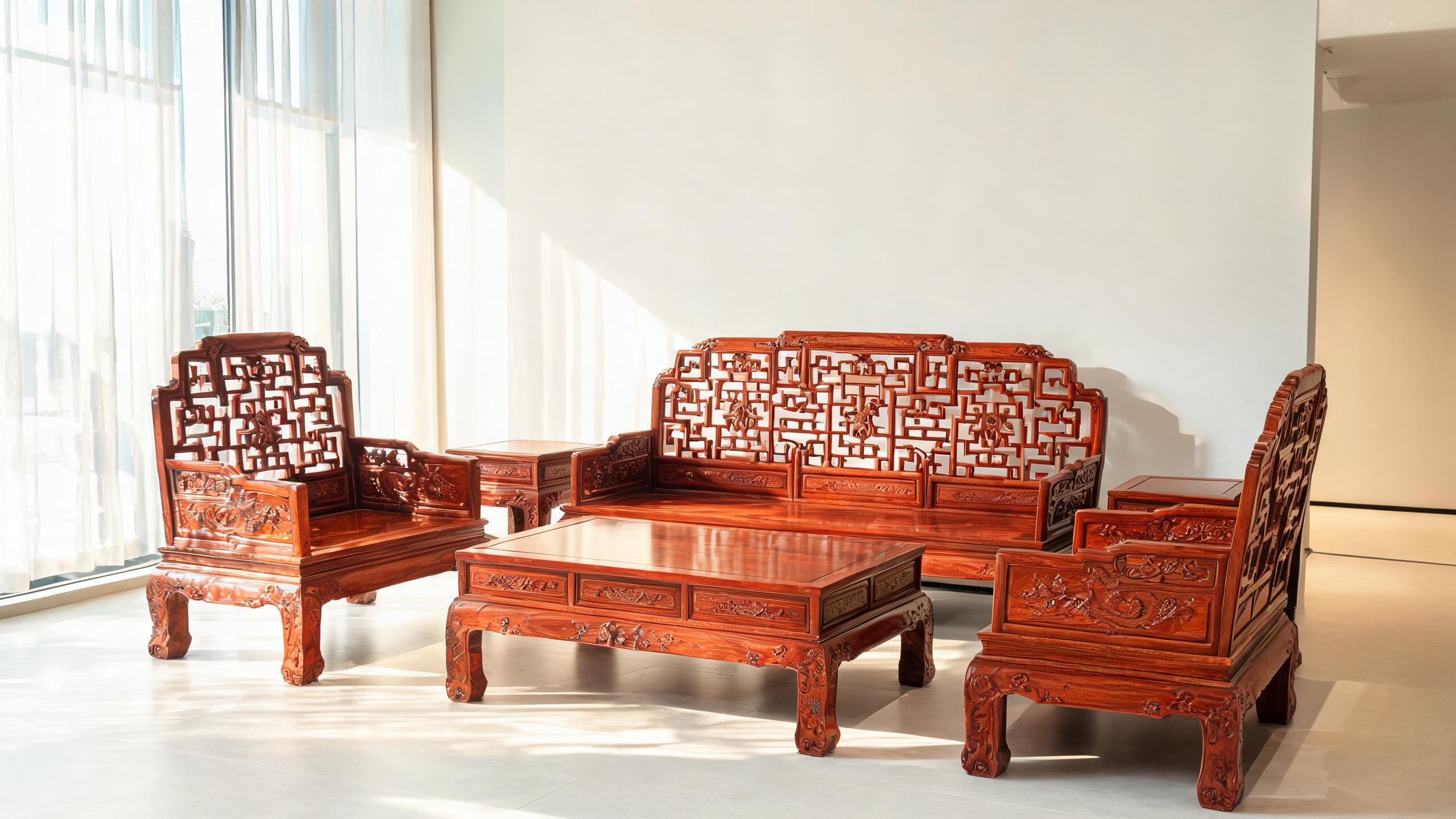
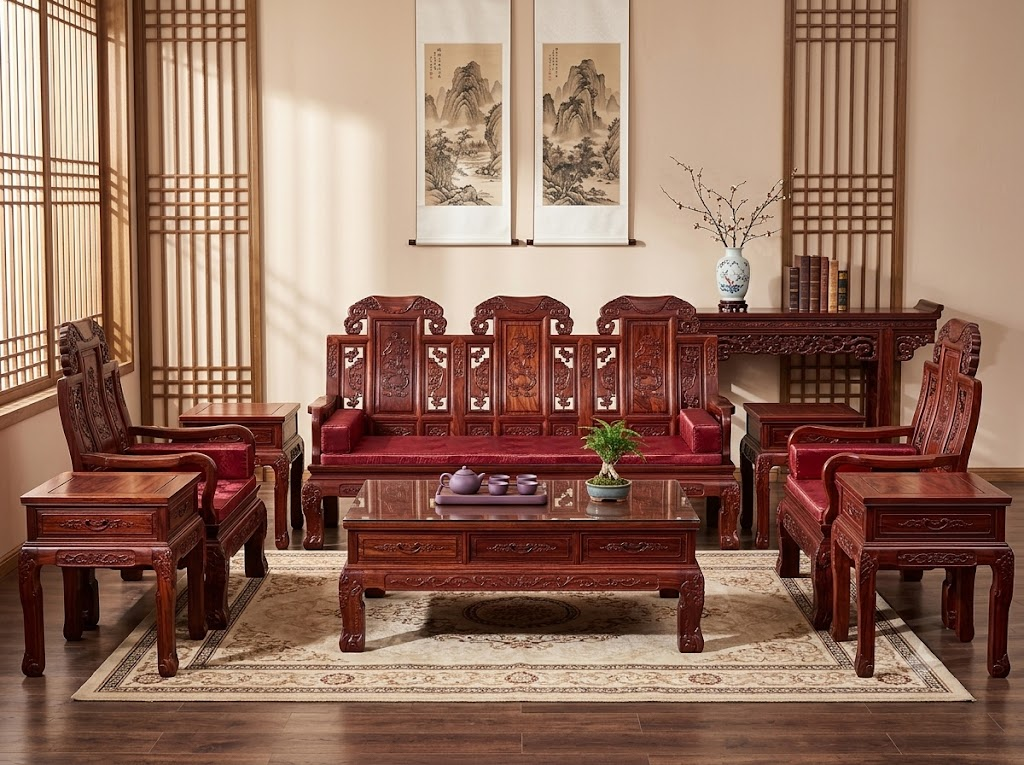
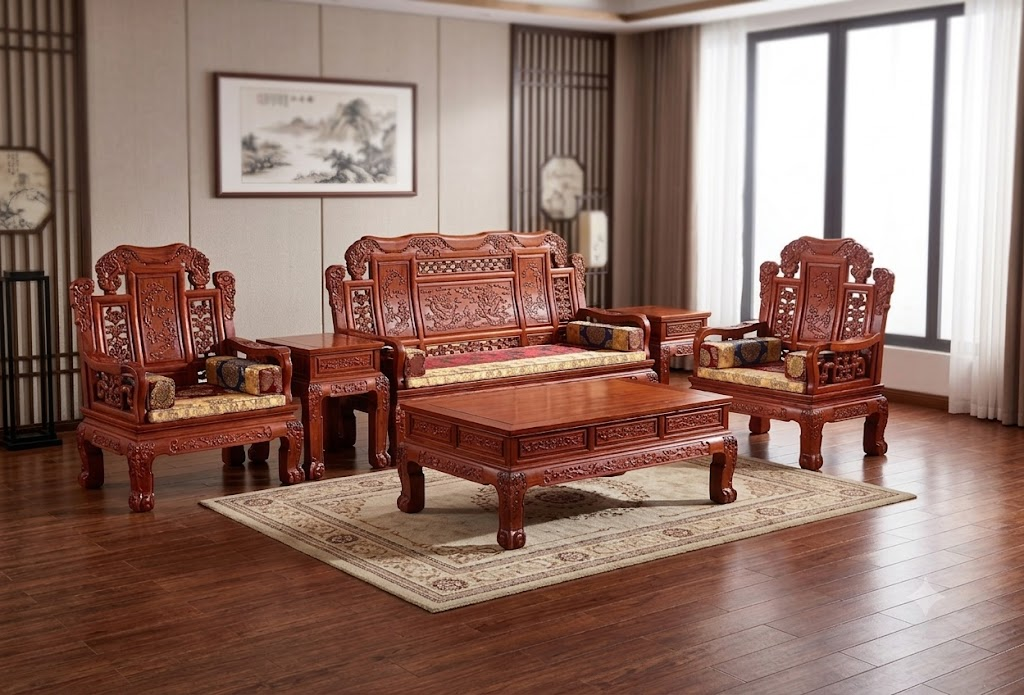
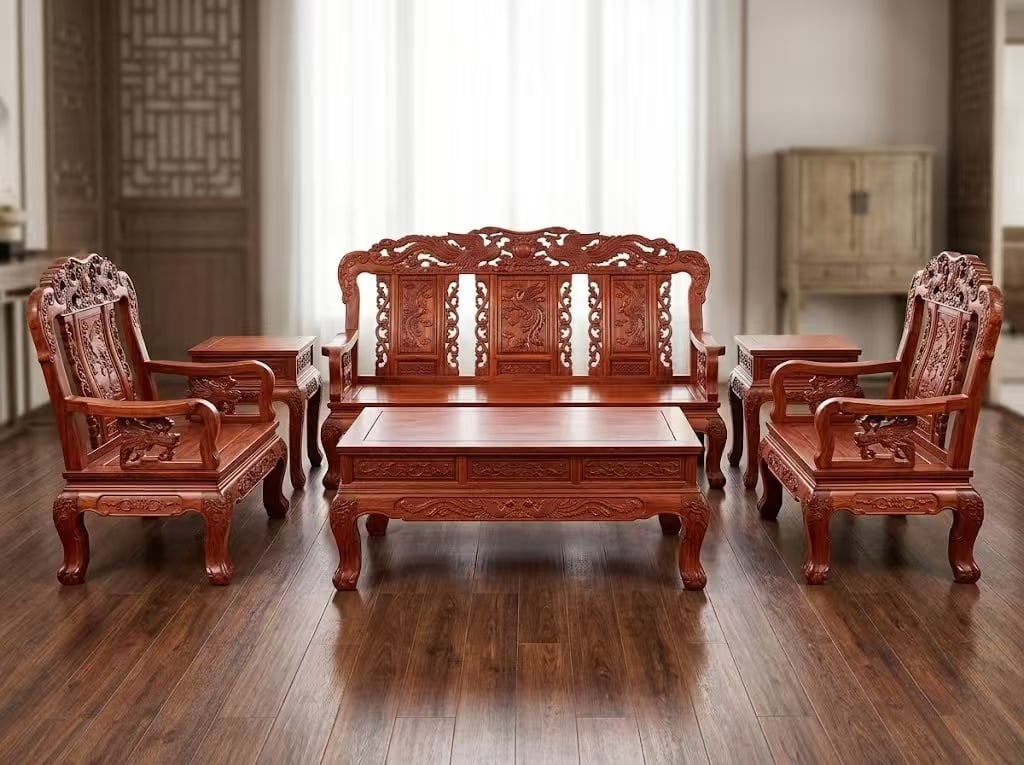
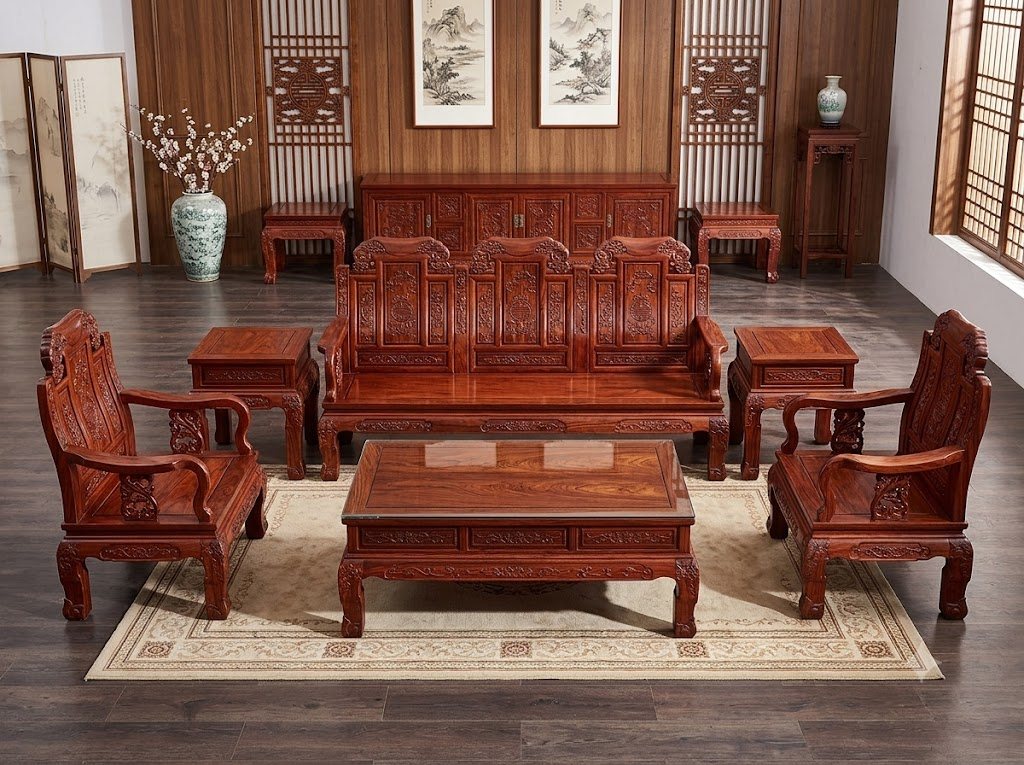
The Qing Dynasty 5-piece set combines lattice and phoenix carving for exactly this layered reading, while the Ming 7-piece set keeps bamboo restraint for contemporary Western retail. A good brief tells the factory which story the market buys, and the motif library does the rest.
Proportions and Ergonomics
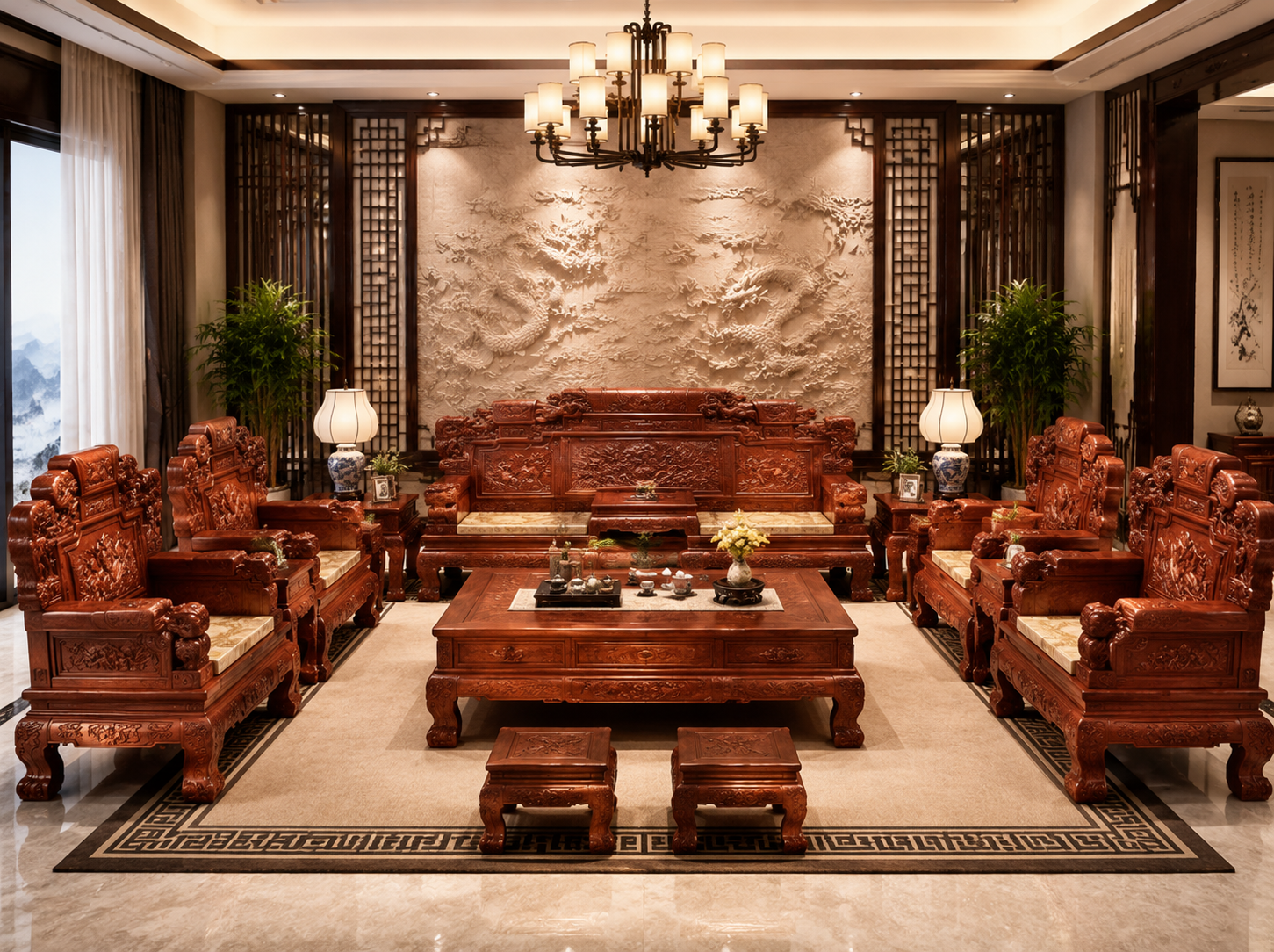
Classical silhouettes obey proportion rules that determine both comfort and room presence. The Qing style 5-piece set centers on a 185 cm three-seat sofa, a scale that seats three adults comfortably while fitting standard living room clearances. Larger programs scale horizontally rather than stretching one sofa: the 10-seat imperial layout adds side sofas and armchairs around the central piece, keeping every seat within conversational distance rather than lining a wall.
Structural dimensions follow use. Seat rails run 38 mm thick in the imperial set because grand-scale frames carry real loads, and armrest heights are set for standing support, a function armrests genuinely serve in reception settings where guests rise and converse. Buyers specifying for hospitality should communicate seating duration and user expectations so dimensions are tuned to the use case rather than copied from a catalog photograph. A sofa meant for a forty-minute tea service and a sofa meant for a four-hour banquet behave differently, and the difference is designed in.
Structural Design: Joinery as a Design Decision
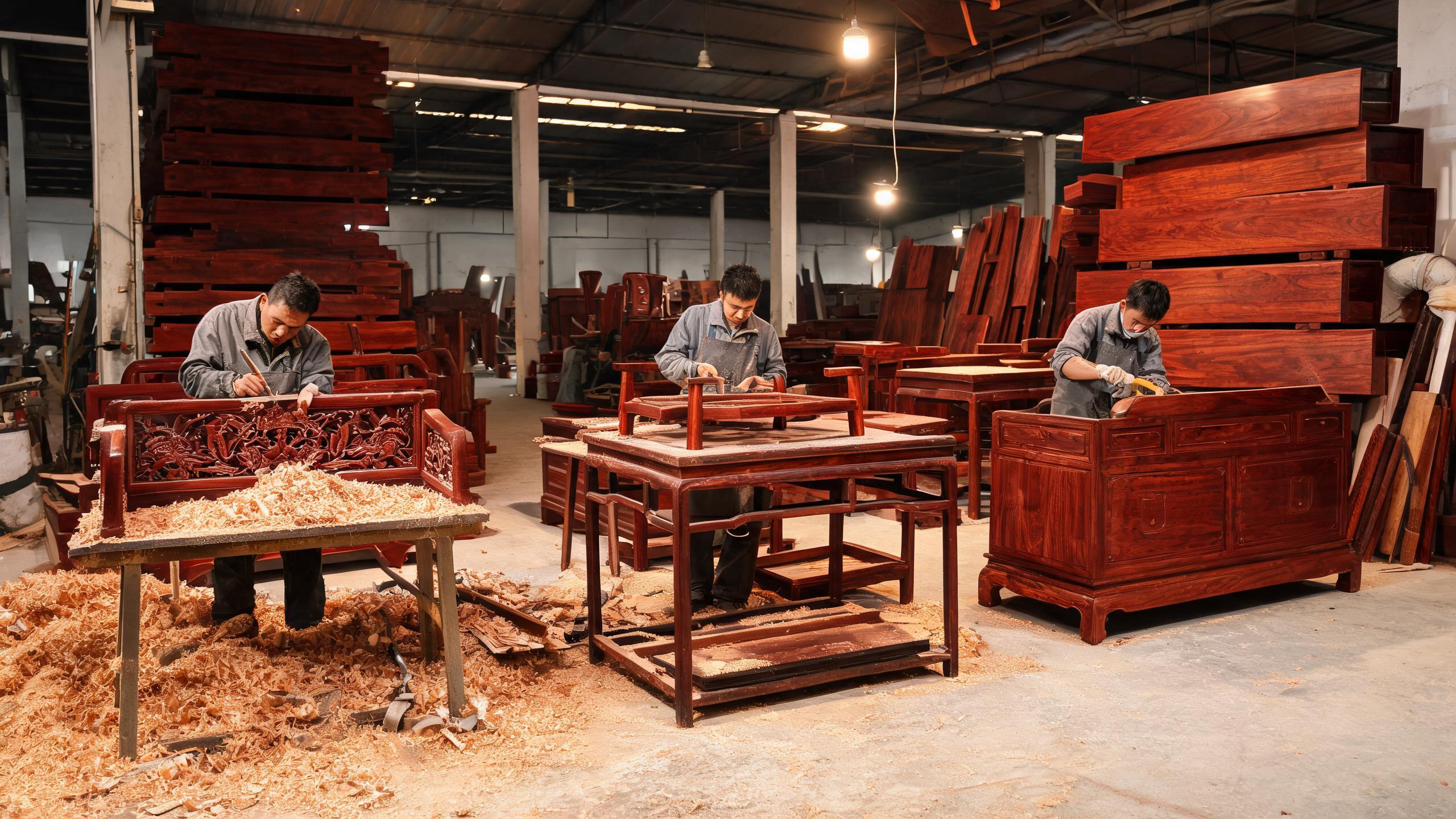
Joinery is invisible in photographs but decides whether a design survives decades of use. Yunxiao builds primary frames with traditional Chinese mortise-and-tenon joints secured by bamboo dowel pins, with no metal fasteners in load paths. Through-tenons with wedges tighten under load at leg-to-apron connections; half-lap joints prevent racking at stretchers; dovetails carry drawer fronts.
The design consequence is real: metal screws loosen as solid wood expands and contracts across seasons, while interlocking wooden joints allow micro-movement without failure. When a buyer evaluates a design, the joinery schedule should be part of the specification, and Yunxiao documents it per product so the structure behind the carving is never a mystery. Ask any supplier for the joint schedule of the set you are pricing; hesitation is information.
Designing for Destination Climates
A sofa designed for humid Southeast Asia and shipped to dry North American interiors faces a moisture differential that punishes rigid construction. Climate design at Yunxiao starts in the kiln, where timber spends 36 days in constant-humidity drying to below 14 percent moisture, and continues in construction: floating panels on large surfaces sit in grooved frames with intentional clearance so seasonal expansion has somewhere to go.
The finish completes the strategy. The hand-rubbed raw lacquer system is breathable, allowing vapor transmission while protecting the surface, unlike plastic-like barrier finishes that blister when trapped moisture moves. Buyers targeting Australia's biosecurity regime and dry interiors, or North American heated buildings, get the same sub-14-percent timber and floating-panel engineering that tropical buyers get, because climate resilience is designed in rather than added later. A deliberate gap between a floating panel and its frame is a design feature, not a defect.
Finish Design: Developing Color and Sheen
The finish is where a rosewood sofa's final character is set. Yunxiao's raw lacquer process builds 8 to 9 hand-rubbed coats over 20 to 30 days: a sealing coat stabilizes the surface, filling coats level the open grain, body coats build protective film, and a final 7 to 10 day cure in a humidity-controlled room hardens the system. The result is a deep, transparent sheen that lets the heartwood's reddish-brown figure read through.
Finish specification is customizable: sheen level and color tone can be tuned per market, and finish samples on wood blocks are mailed for approval before production. Compliance is engineered in, with finishes meeting EU REACH chemical safety, US CARB formaldehyde limits, and FDA 21 CFR 175.300 for repeated food contact on table surfaces within the same set programs. When designing for a specific retailer, send the lighting conditions of the showroom; a finish approved under factory lighting can look different under retail spotlights.
The 15-Day ODM Design Cycle, Step by Step
Custom design follows a disciplined 15-working-day cycle that keeps buyers in control without stretching timelines indefinitely:
- Day 1: requirement brief locked; scope, market, and budget band confirmed in writing.
- Days 5-7: layout drawings with joinery details delivered; buyer approves proportions and structure.
- Days 8-12: 3D mockups of finished appearance; buyer approves motif depth and finish look.
- Days 13-15: one revision round completed; final sign-off, then deposit and production start.
After approval, finish samples and full-scale carving samples on wood panels are mailed, production runs 60 to 75 working days for custom work, and weekly production photos keep the design accountable to its drawings. The cycle is short because the questions are structured; buyers who arrive with reference images and clear market notes routinely approve on the first mockup.
Designing for Hotels and Banquet Projects
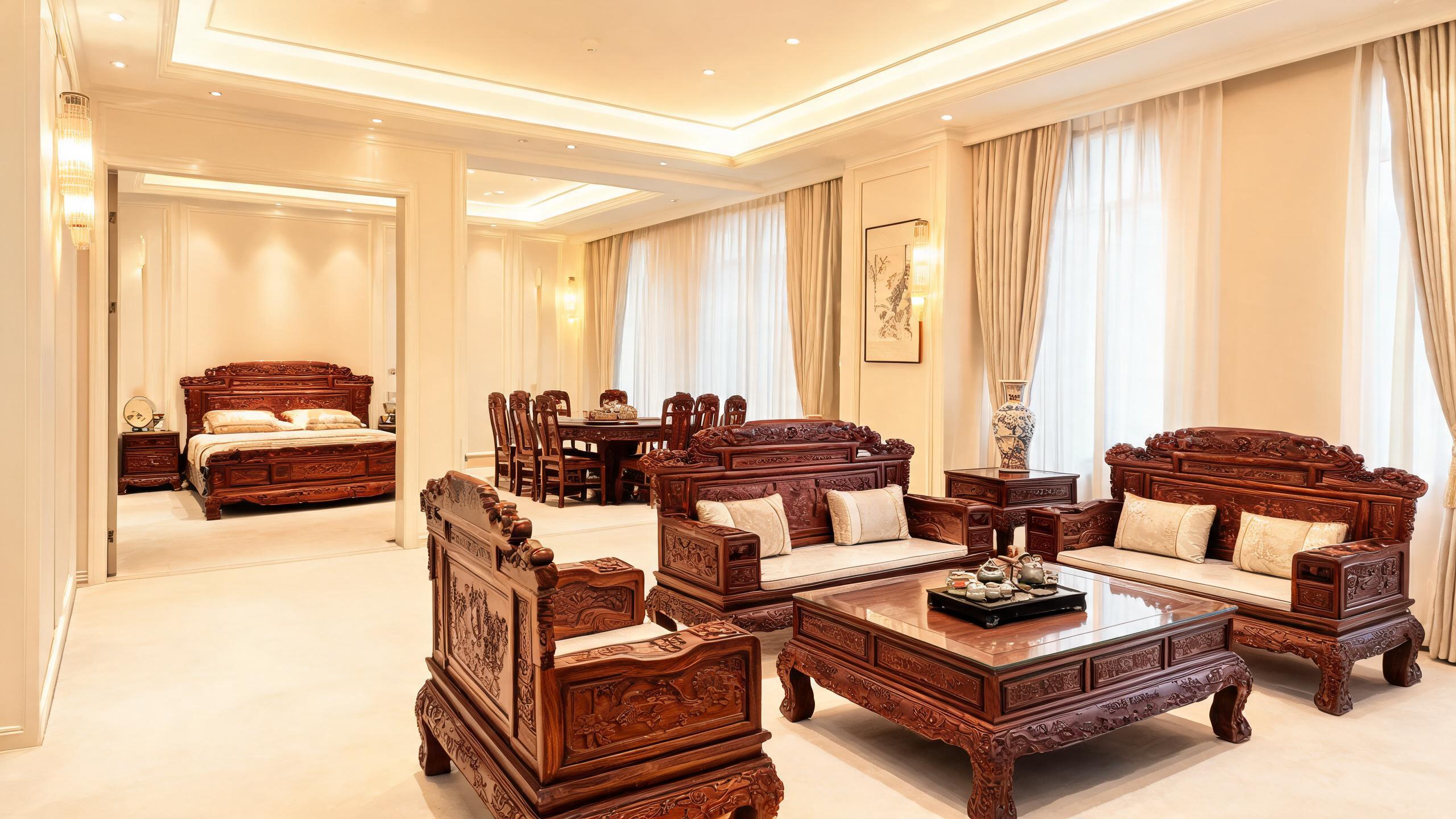
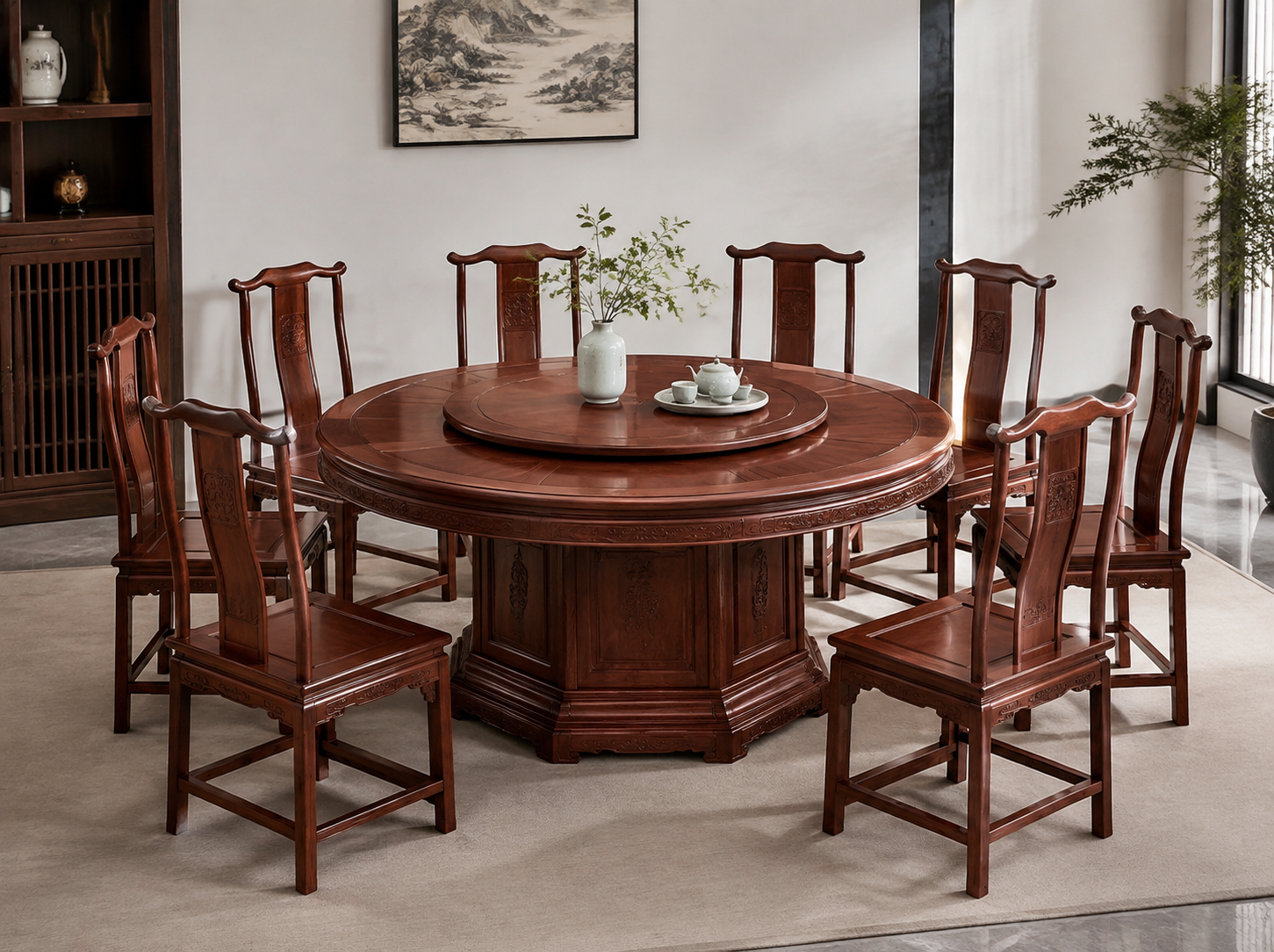
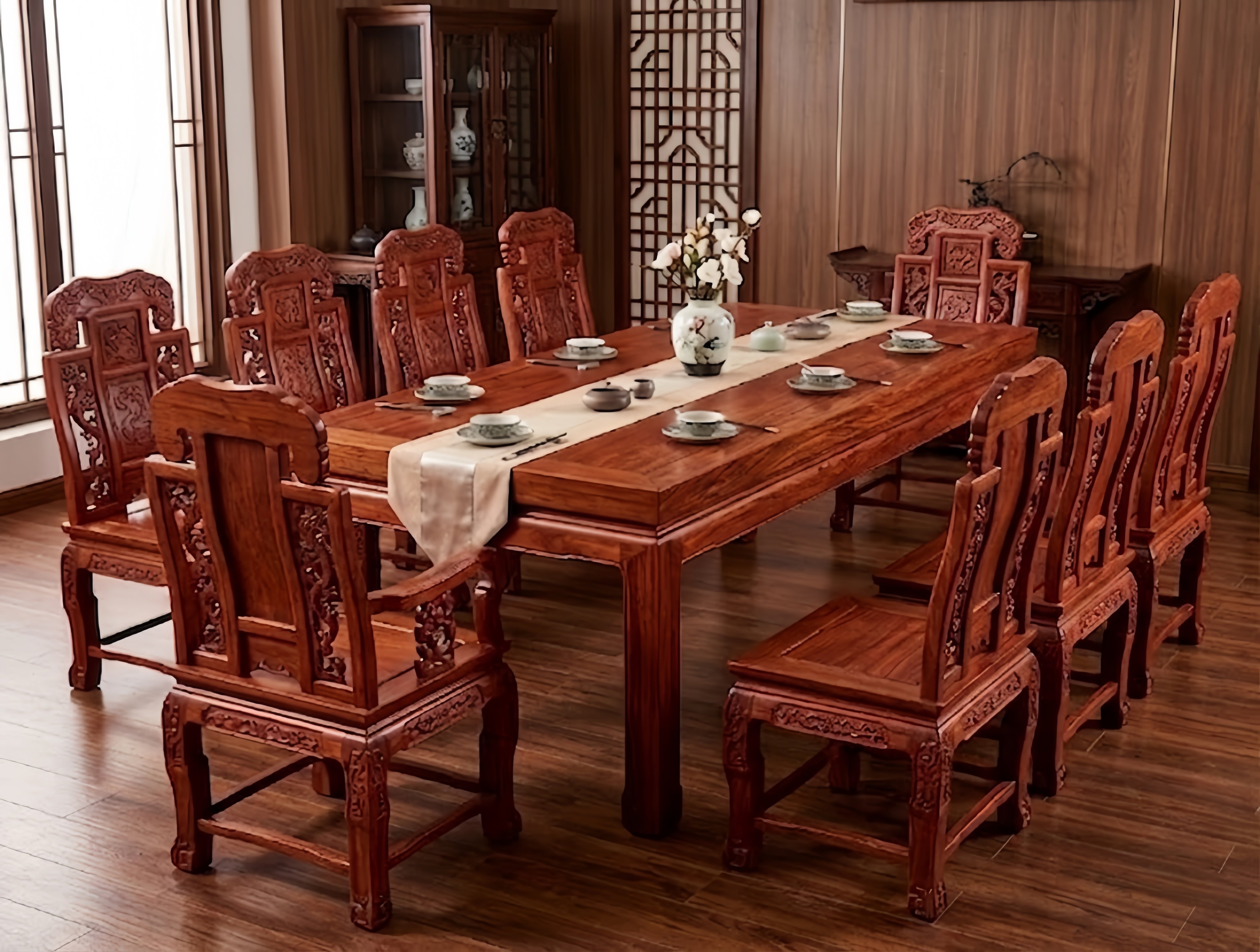
Hospitality design differs from retail: pieces must survive heavy use, read impressively from distance, and coordinate across dozens of rooms or one vast hall. The 10-seat imperial layout answers banquet halls with a three-seat central sofa flanked by side sofas, armchairs, and three tables, all carved from a single density-matched timber allocation so grain and color stay consistent across the installation. The 12-seat banqueting dining set extends the same logic to dining floors.
Project buyers receive free layout drawings that plan circulation and clearance, plus remote installation guidance after delivery. For phased openings, batch production with dedicated carving and assembly teams keeps repeat orders consistent, and partial shipments align deliveries with construction milestones. Designing for projects means designing the delivery sequence too; a beautiful set that arrives before the floor is finished is a liability, not an asset.
Remote Approval: Mockups, Samples, and Weekly Photos
Most buyers approve designs without visiting Fujian, and the approval chain is built for that reality. 3D mockups show finished appearance from every angle; wood-block finish samples confirm color and sheen under the buyer's own lighting; full-scale carving panels confirm motif and relief depth before production; and weekly photographs track each set through carving, assembly, and finishing.
Production begins only after written approval, and third-party inspectors are welcome at any checkpoint, with full access to production records, kiln logs, and material documentation. The design the buyer approved is the design that ships. For remote programs, the discipline of the approval chain replaces the confidence of standing on the factory floor, and it does so measurably.
Mixing Classical Pieces Into Contemporary Programs
The strongest Western programs rarely furnish an entire room in classical idiom; they anchor contemporary interiors with one or two carved statements. A Ming 7-piece set in a minimal room reads as sculptural; a single carved armchair with ruyi backrest punctuates a neutral suite; a lattice-door display cabinet bridges classical joinery and modern storage needs. Yunxiao's catalog supports this mixing because sofa, dining, bedroom, and standalone pieces share wood species, finish system, and joinery standards, letting designers pull individual pieces without breaking coherence.
For buyers building such programs, the practical advice is to specify finish color across all pieces in one order so tone matching is exact, and to order spare chairs and tables with the main set while the same timber allocation is still in the workshop. Grain matching across later orders is approximate by nature; grain matching within one allocation is exact.
Designing the Trade-Up Path
Wholesale design is not one set; it is a ladder of sets that lets retail customers start small and climb. Yunxiao's configuration ladder, from 3-piece to 10-seat, exists precisely for trade-up merchandising: the customer who buys a carved armchair this year returns for the 5-piece set next year. Design decisions should protect that path, which means keeping motif families and finish tones consistent across the ladder, and reserving the densest carving for the top rungs where margin lives.
Buyers planning multi-year programs should say so at quotation. Knowing the ladder is coming changes how the factory allocates timber, schedules artisans, and prices the middle rungs, and it usually improves both consistency and terms.
Frequently Asked Questions
Can we modify dimensions on a catalog design?
Yes. OEM customization adjusts dimensions, carving patterns, species, and finish while keeping the structural joinery system. Modified designs quote with their own timeline, typically 60 to 75 working days.
Can we get exclusive motifs for our brand?
ODM work develops exclusive motifs within the 15-day design cycle, with 3D mockups and carved panel samples for approval before production begins.
How are mockups delivered?
Layout drawings arrive by day 5-7 and 3D mockups by day 8-12 of the design cycle, followed by one revision round before final approval.
How many revision rounds are included?
The standard cycle includes one full revision round. Additional rounds extend the timeline proportionally and are quoted openly before starting.
Who owns the custom design?
Custom designs developed for a buyer's program are used for that buyer's orders. Discuss exclusivity scope and duration during the brief so expectations are contractual, not assumed.
What finish options exist?
The 8 to 9 coat hand-rubbed raw lacquer system allows sheen and color tuning per market. Finish samples on wood blocks are mailed for approval before production.
Can designs match an existing interior scheme?
Yes. Buyers supply finish references, tone targets, and motif preferences; the design cycle reconciles them with structural standards and returns mockups for confirmation.
What samples do we receive before production?
Finish samples on wood blocks for color and sheen, and for custom carving, full-scale motif panels for relief depth approval. Production starts after written approval.
How long does a custom design take to deliver?
Fifteen working days of design approval, then 60 to 75 working days of production, including the 36-day kiln cycle that cannot be accelerated.
Can we order matching spare pieces later?
Yes, and it is wise to order spares with the main set while one timber allocation covers grain matching. Later additions are matched as closely as timber batches allow.