Yunxiao Rosewood Furniture Co., Ltd.
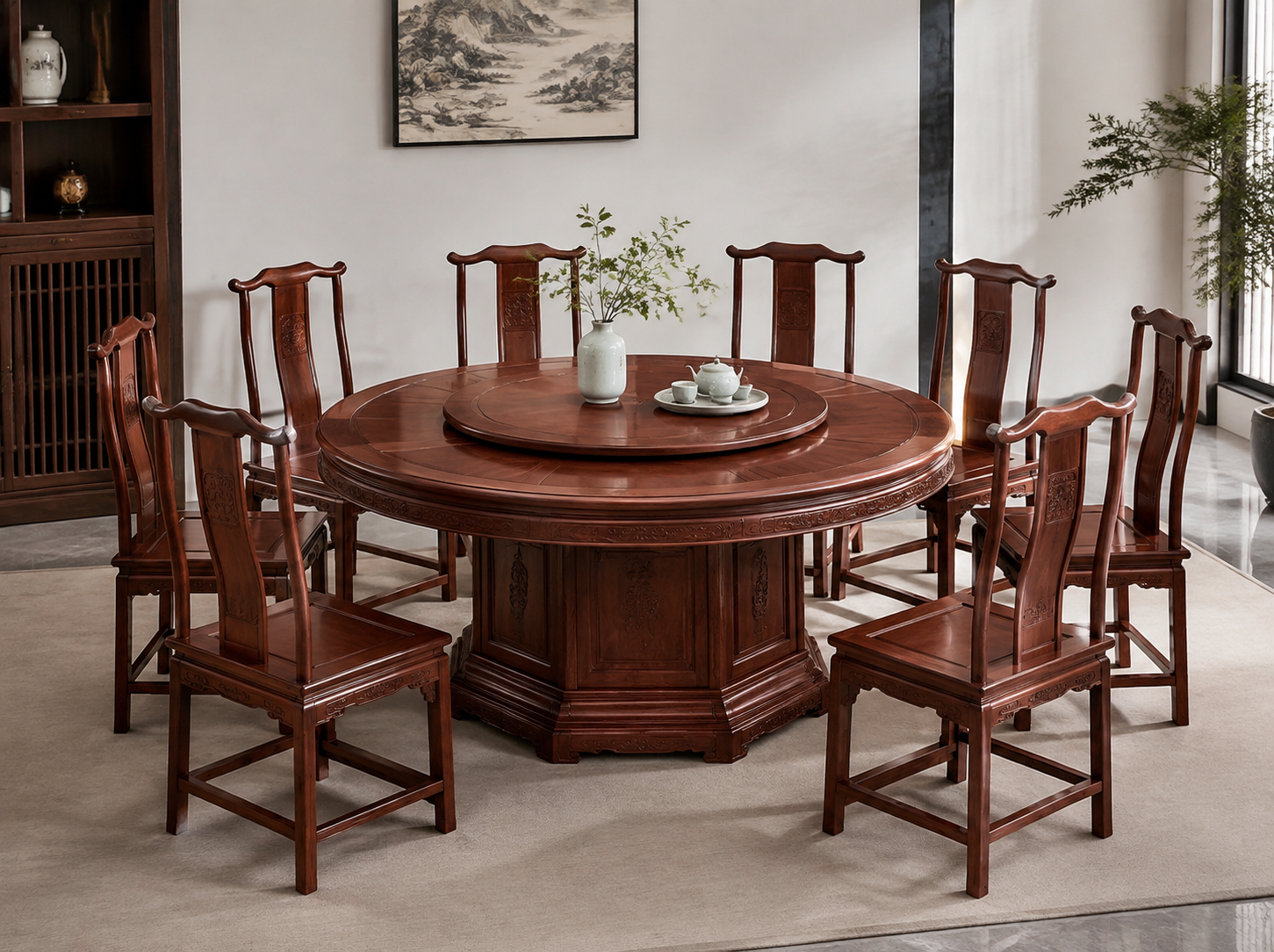
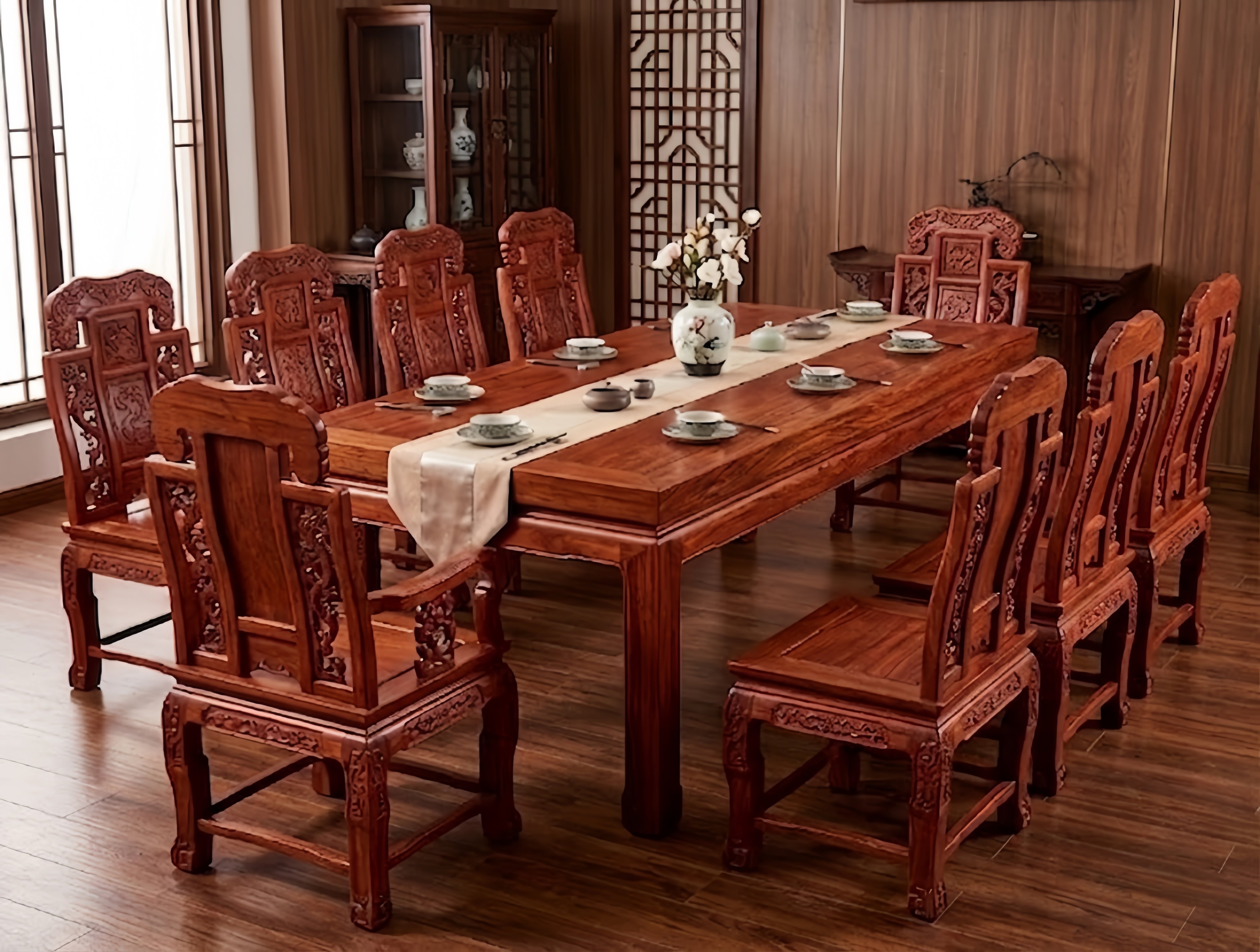
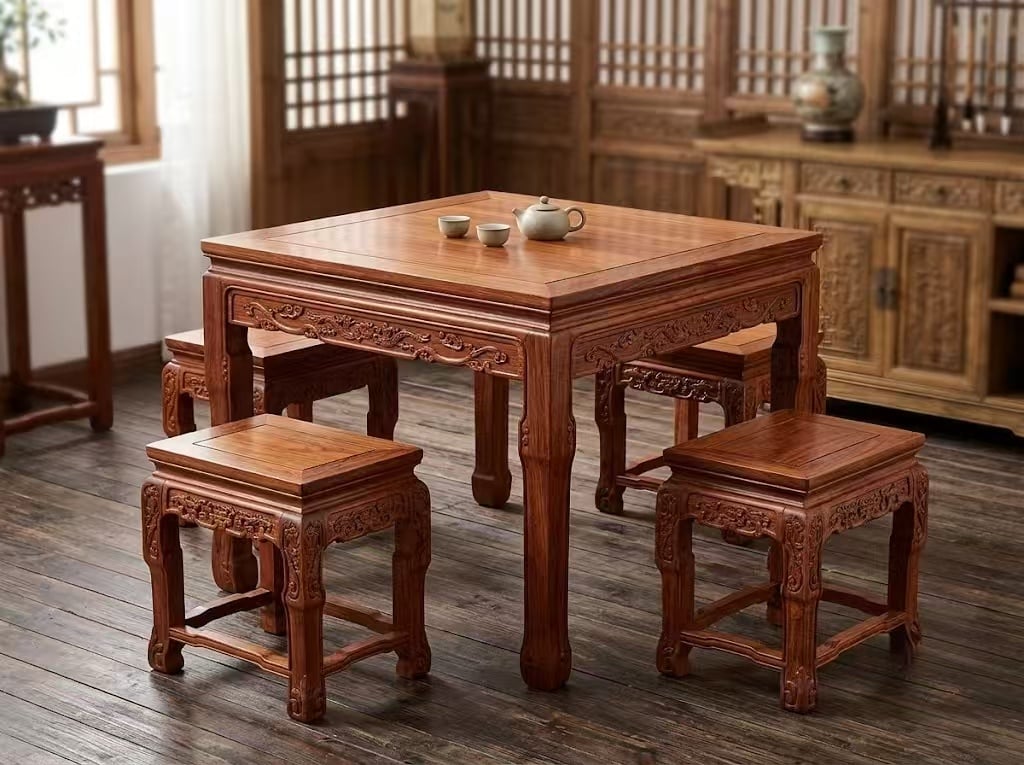
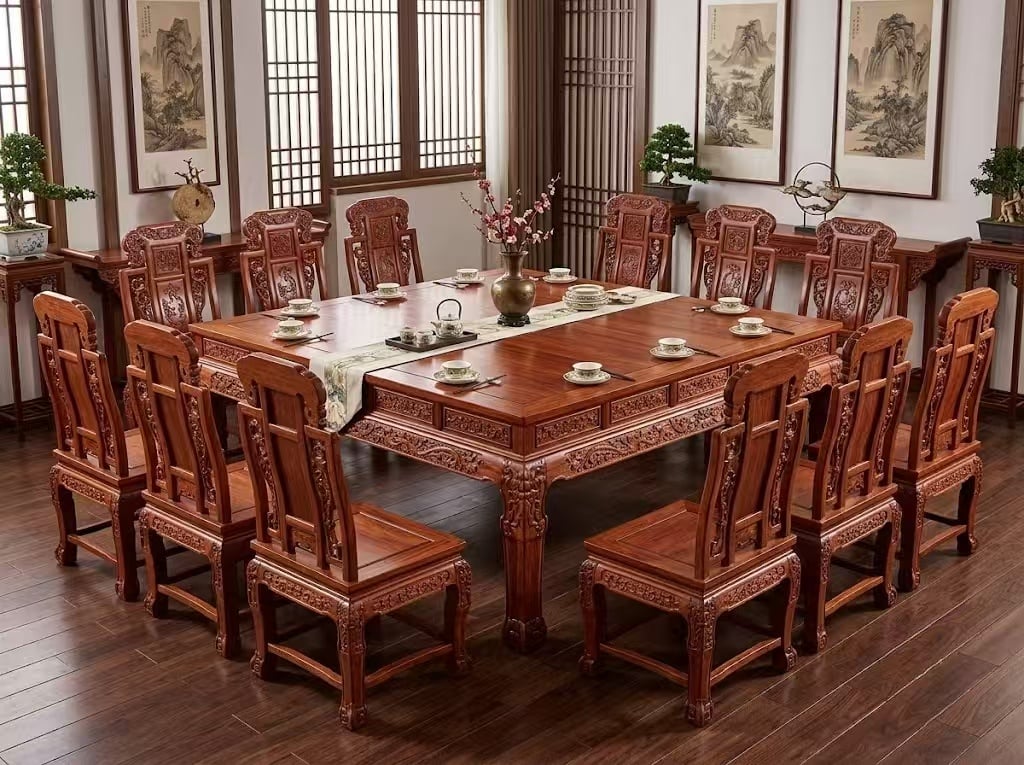
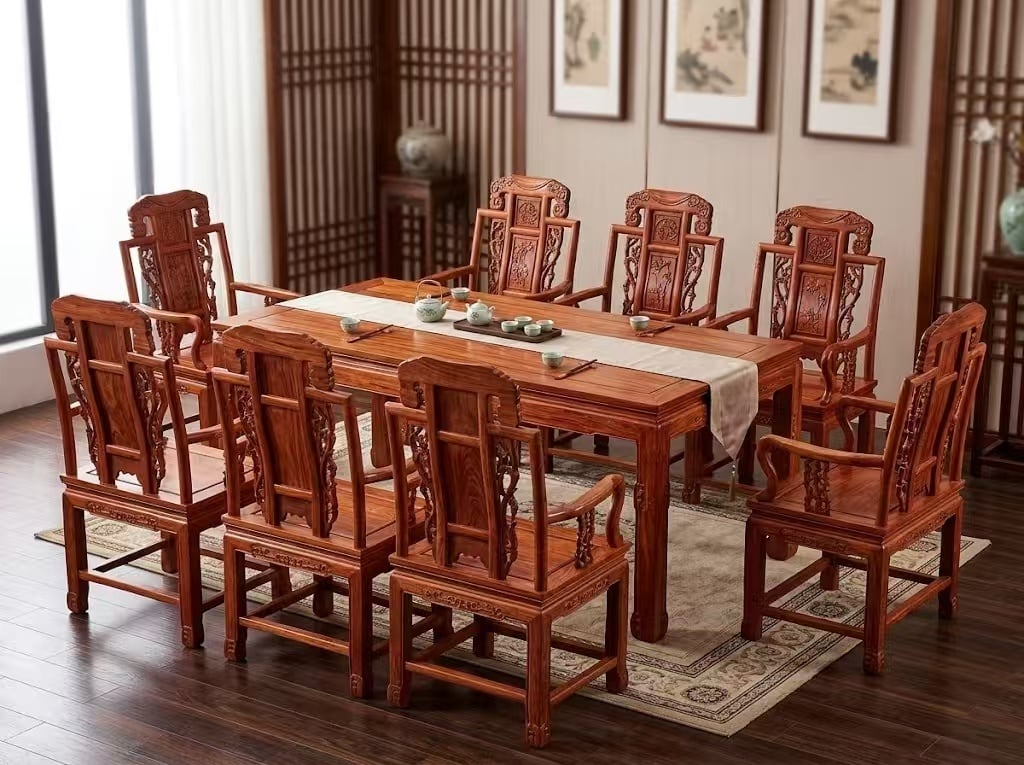
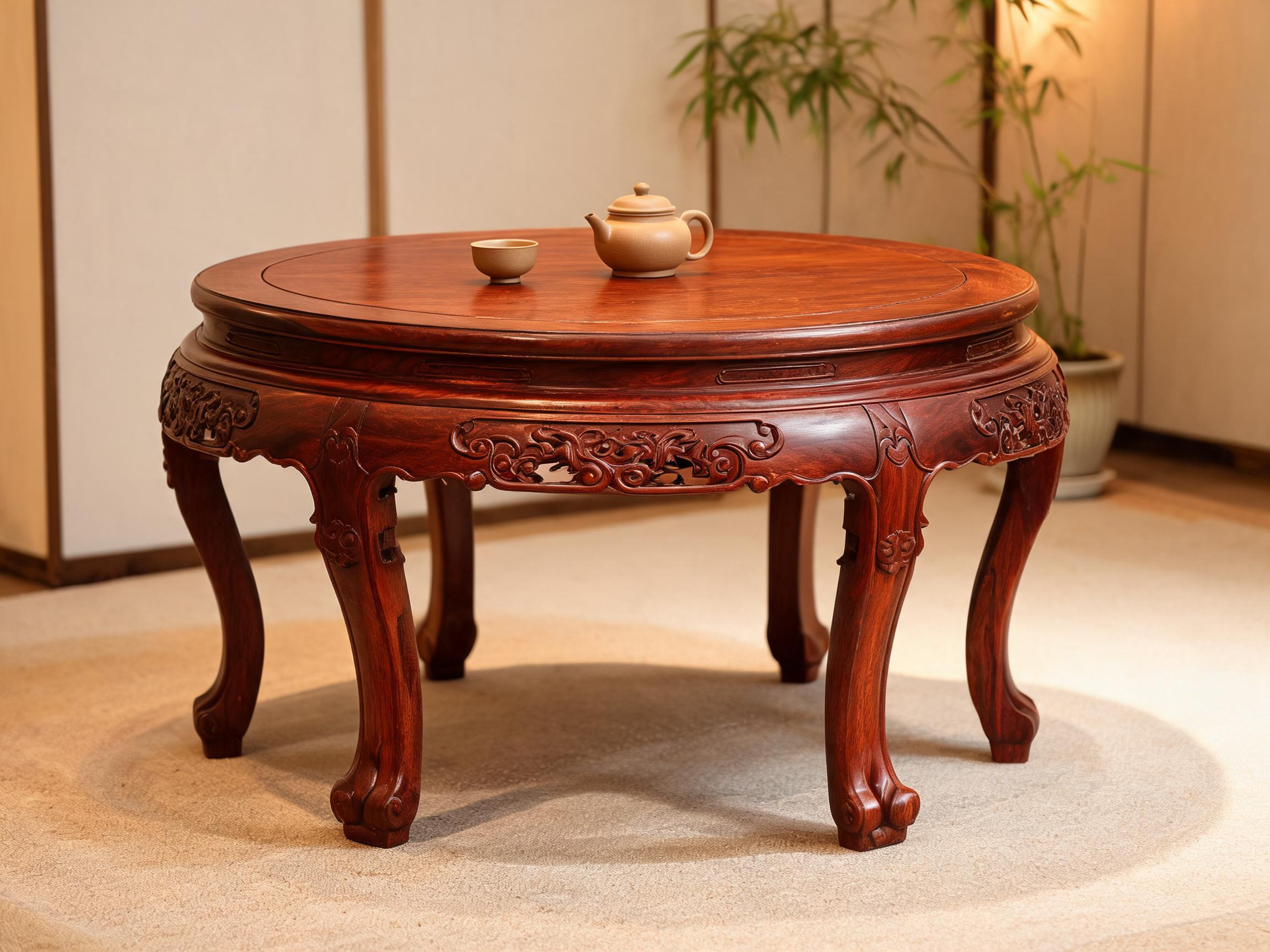
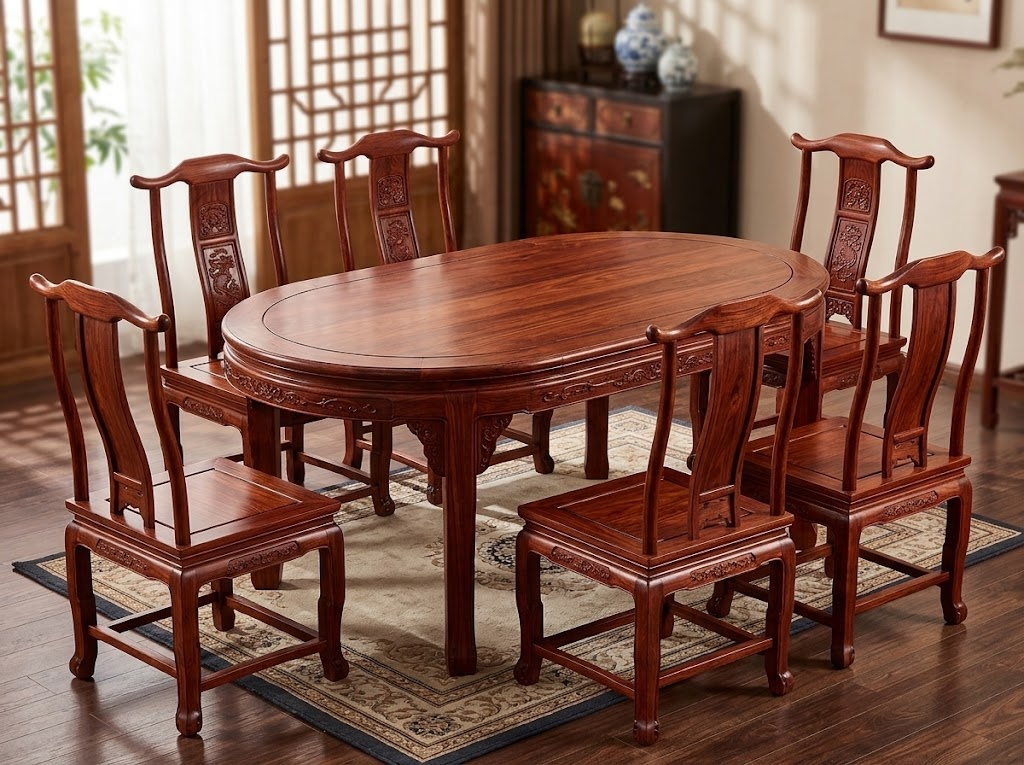
Oval Redwood Dining Table 6-Seat Set with Ming Style Chairs
Six-seat oval Siamese rosewood dining set with Ming-style open-slat chairs, glossy lacquer finish specified to meet FDA 21 CFR 175.300, and FSC plus CITES documentation for compact dining spaces.
Highlights
- Solid Siamese rosewood oval dining table with 6 Ming-style open-slat chairs, 140 cm length
- Glossy lacquer finish specified to meet FDA 21 CFR 175.300, compliance documents with order
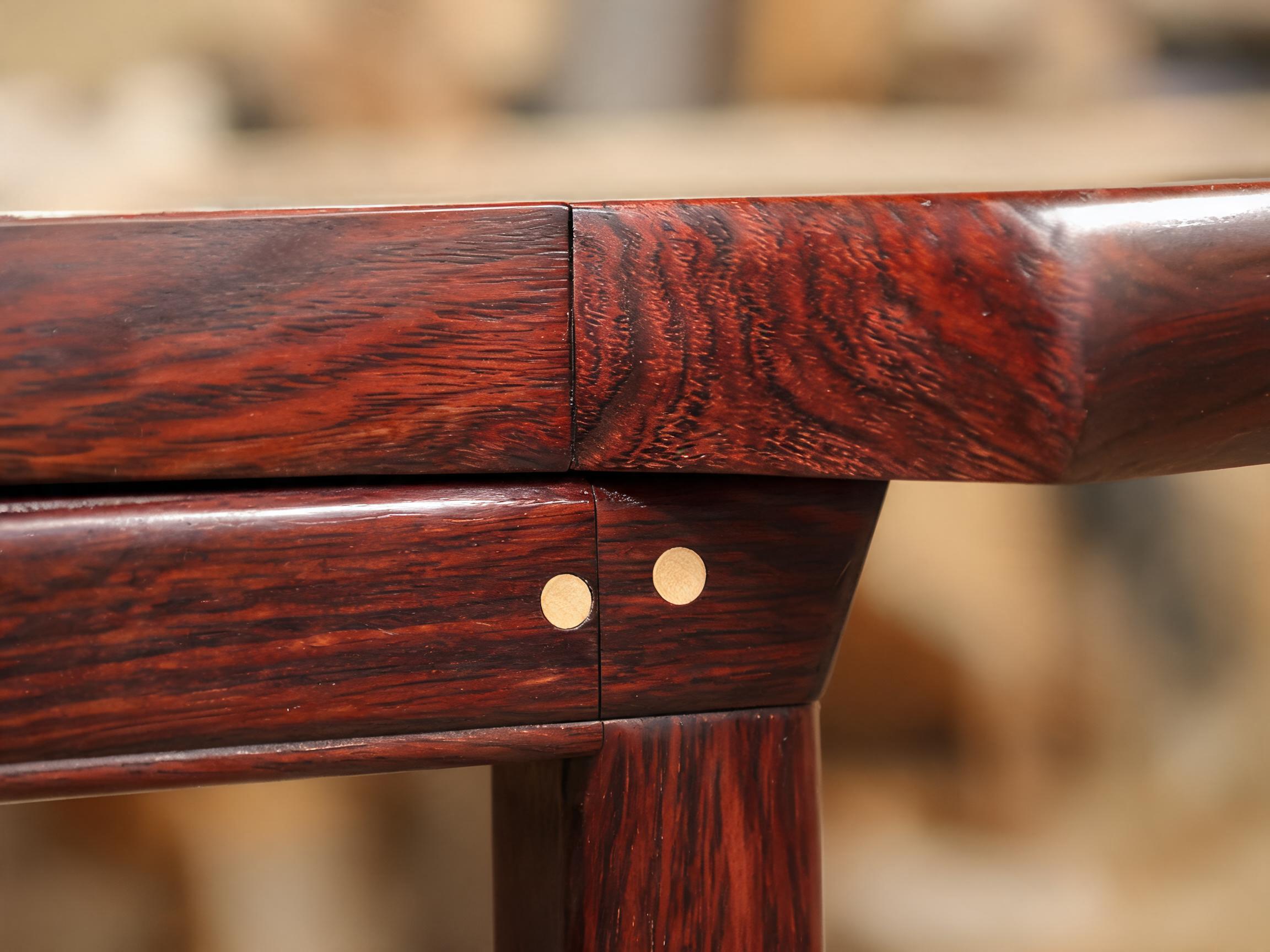
- Mortise-and-tenon joinery with bamboo dowel pins; joinery uses no metal fasteners
- Open-slat Ming-style chair backrests cut and fitted by hand
- FSC chain-of-custody and CITES Appendix II export permits included
- Timber conditioned to 8 to 12 percent moisture content
- Compact footprint suited for apartments and smaller dining rooms
Specifications
| Table Dimensions | 140 cm x 90 cm x 76 cm (Oval) |
|---|---|
| Seat Capacity | 6 Chairs |
| Chair Seat Height | 45 cm |
| Chair Backrest Height | 92 cm |
| Wood Species | Siamese Rosewood (Dalbergia cochinchinensis) |
| Finish | Glossy Lacquer, specified to meet FDA 21 CFR 175.300 (supplier compliance docs with order) |
| Joinery | Mortise-and-Tenon with Bamboo Dowel Pins |
| Chair Style | Ming Open-Slat Backrest |
| Moisture Content | 8 to 12 Percent |
| Certification | CITES Appendix II, FSC Chain of Custody |
| Table Weight | Approx 35 kg |
| Chair Weight | Approx 11 kg Each |
| MOQ | 1 Set |
| Lead Time | 45 to 60 Days |
| OEM/ODM | Supported (Custom Dimensions, Finish, Carving) |
| Environmental Compliance (Formaldehyde/Benzene) | Solid rosewood construction with glossy lacquer finish, no engineered boards; formaldehyde and benzene emission test reports available upon inquiry |
| Hardness Grade | Dense hardwood; published reference values for Dalbergia cochinchinensis place Janka hardness at approximately 1,000-1,300 lbf |
| Heat Resistance | No laboratory heat test performed; industry guidance for gloss lacquer: brief contact around 70 °C normally tolerated, sustained contact above ~60 °C may dull finish; use trivets |
Product Detail
Buyer Pain Point and Our Solution
The pain point: six-seat dining sets that are too large for compact rooms or too flimsy for commercial use. Importers furnishing apartments, compact dining rooms, or boutique hotel breakfast areas need a six-seat dining set that does not dominate the space. Standard 8-seat and 10-seat round tables are too large for many target installations, yet the compact sets that do fit often use thin timber and metal fasteners that loosen under daily use. For the buyer this means either a table that crowds the room or a set that fails within the first year of commercial service.
Our solution: an oval six-seat set sized for compact rooms with solid rosewood joinery throughout. The oval tabletop measures 140 cm by 90 cm, seating six adults with elbow room while fitting a room as small as 12 square metres. The top is shaped from edge-joined Siamese rosewood boards, kiln-dried to 8-12% moisture, and the apron-to-leg connections use 16 mm tenon-depth mortise-and-tenon joints with bamboo dowel pins. Chair backrests use the classic Ming open-slat pattern, with each slat fitted by hand into the rail mortises by friction — no glue — so a damaged slat can be replaced without disassembling the chair. The glossy lacquer topcoat is specified to meet FDA 21 CFR 175.300 for repeated food contact, with the finish supplier's compliance documentation provided with order documents. Each chair is load-tested with 90 kg for 24 hours before packing. The value to you: a set that fits the room your client actually has, survives commercial dining loads, and supports food-safety review — backed by a 24-month structural warranty.
Dimensions at a Glance
Ming-Style Open-Slat Chair Construction
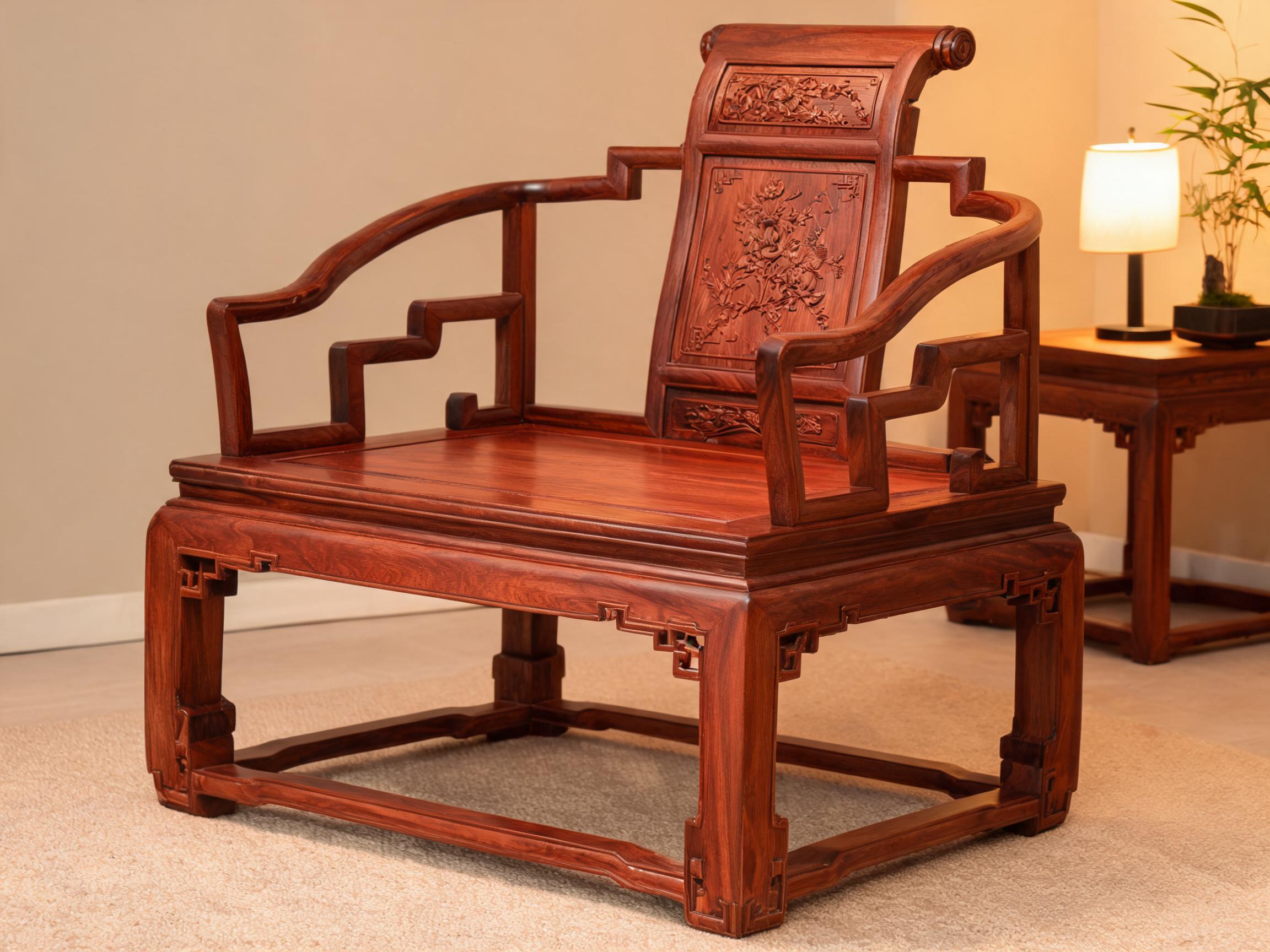
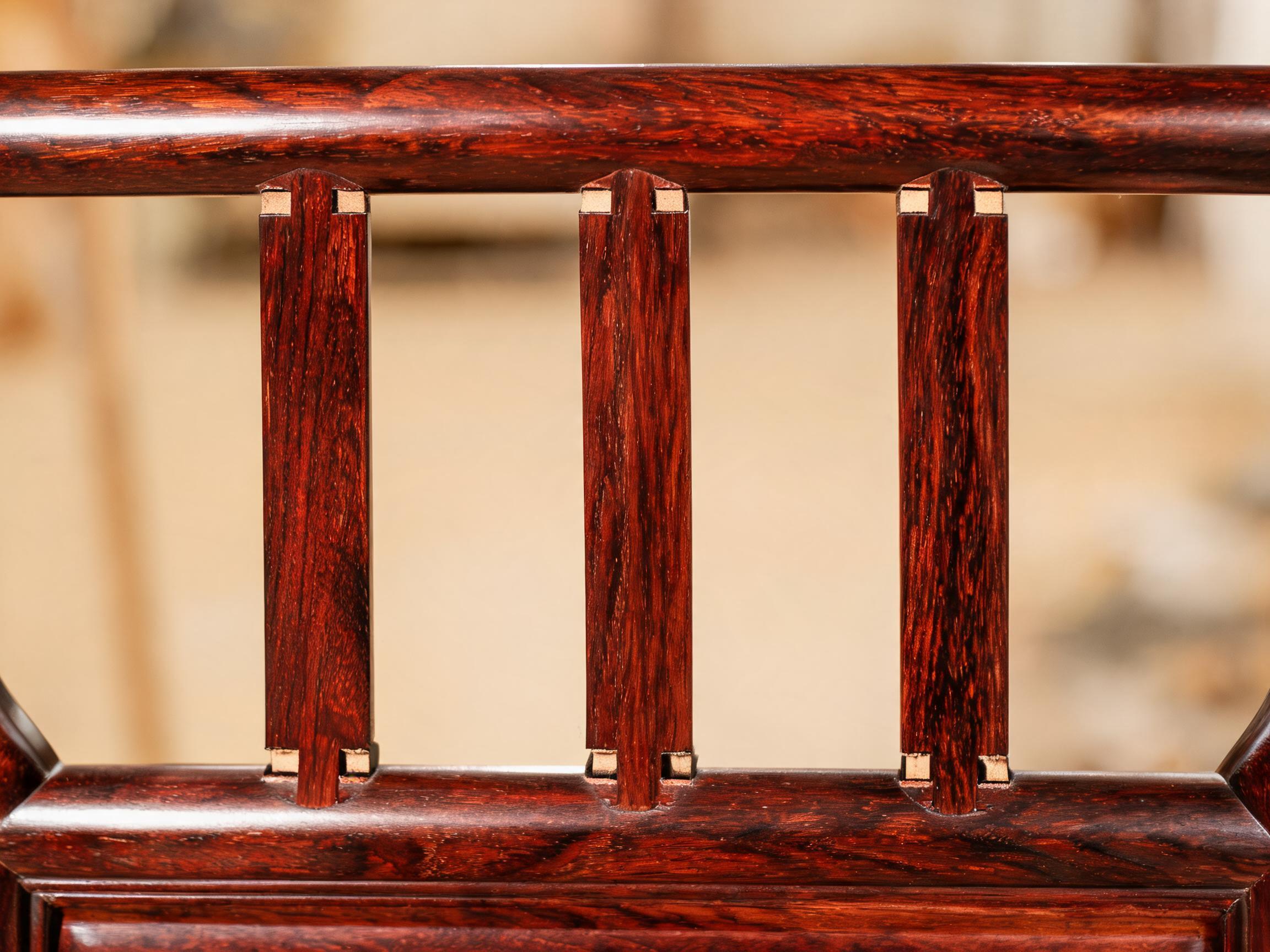
The chair backrests use the classic Ming open-slat pattern: three vertical slats fitted into the top rail and seat rail, with the central slat slightly wider than the two flanking slats. Each slat is cut from solid rosewood and fitted by hand into the rail mortises. No glue is used in the slat-to-rail connection; the slat is held by friction fit and the rail's own structural compression. This is the traditional Ming construction method, and it allows the slat to be replaced if damaged without disassembling the entire chair.
Craftsmanship and Production Workflow
- Stage 1 - Timber Selection and Drying: Siamese rosewood boards are selected for straight grain and kiln-dried to 8 to 12 percent moisture content. The drying cycle includes a 48-hour equalization period to relieve internal stress.
- Stage 2 - Oval Top Construction: The oval tabletop is shaped by tracing a template onto the joined board, then bandsaw-cutting to the oval profile. The edge is hand-fared with a spokeshave and sanded to 320-grit.
- Stage 3 - Joinery: Table apron-to-leg connections use 16 mm tenon-depth mortise-and-tenon joints with bamboo dowel pins. Chair seat rails use 15 mm tenons at the back-post junction.
- Stage 4 - Slat Fitting: Chair backrest slats are hand-fitted to the rail mortises. The friction fit is tested by inserting and removing each slat three times; a slat that loosens after the third insertion is re-cut to a slightly wider dimension.
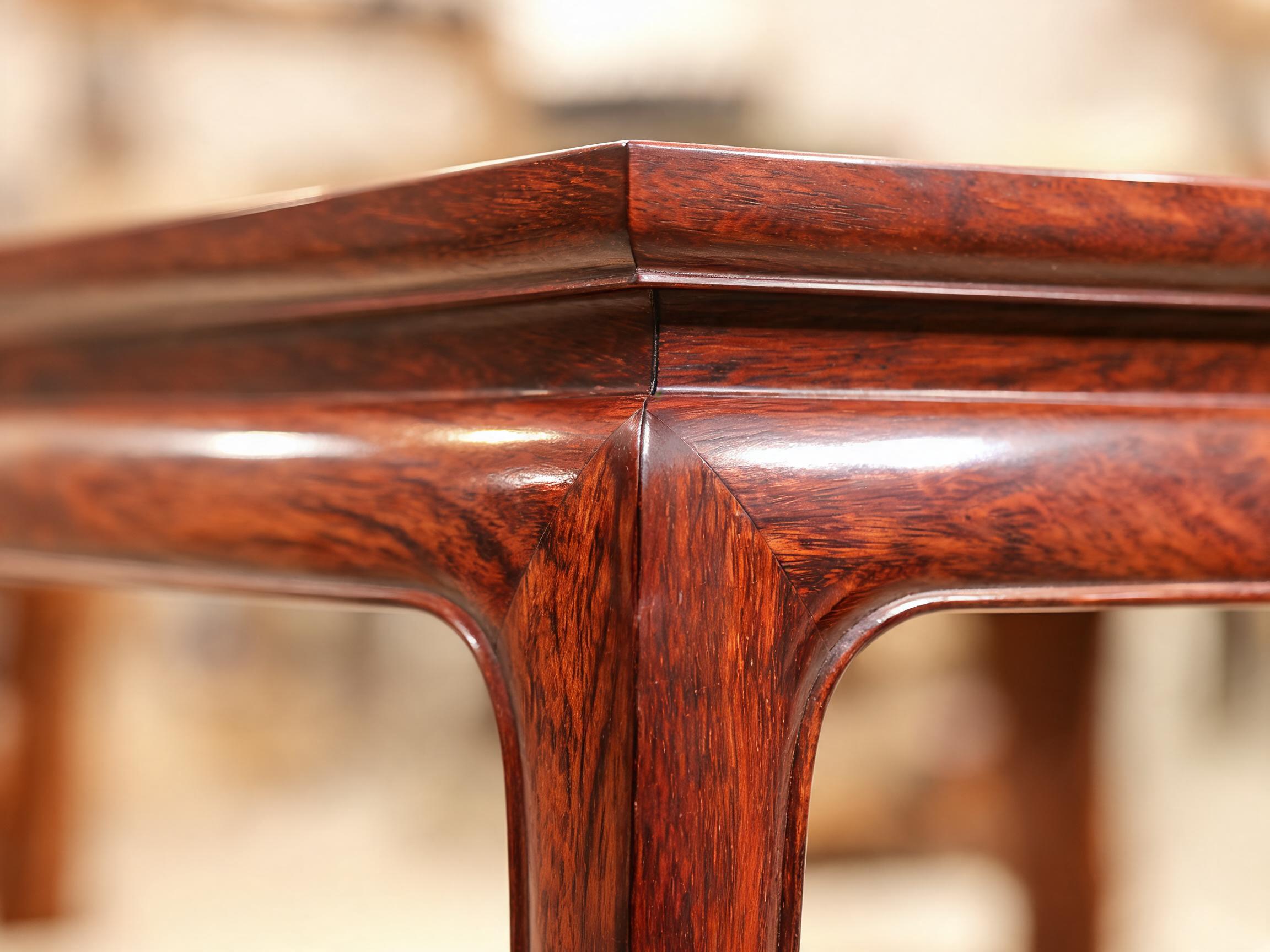
- Stage 5 - Lacquer Finishing: Five coats of glossy lacquer are applied in a dust-controlled booth. Each coat is sanded with 400-grit paper before the next. The final coat is polished to a mirror gloss.
Quality Inspection
- Top Flatness: A straightedge is placed across the oval top at three points. Gaps exceeding 0.8 mm trigger re-planing.
- Joint Test: Each chair is loaded with 90 kg static weight for 24 hours. Visible joint separation is cause for re-fitting.
- Slat Fit Check: Each backrest slat is grip-tested by hand. A slat that can be removed with less than 5 kg of pull force is re-fitted.
- Moisture Audit: Three-point readings per piece. Readings outside 8 to 12 percent require re-conditioning.
- Finish Inspection: Surface inspected under 5000K LED lighting at 30 cm. Defects are reworked before packing.
Heat Resistance: What the Finish Tolerates
No laboratory heat-tolerance test has been performed on this specific lacquer finish, so we do not quote a tested temperature rating. As general industry guidance for lacquered solid-wood furniture finishes, brief contact with objects at around 70 °C is normally tolerated, while sustained contact above roughly 60 °C can dull or blush a gloss lacquer surface over time. Hot cookware, dishes straight from the oven, and heat-generating appliances should always be placed on trivets or insulated mats. If your target application involves sustained heat exposure (for example, built-in hot plates or teppanyaki service), confirm the requirement with us before ordering so the finish specification can be reviewed.
Care and Maintenance
- Daily cleaning: Wipe with a soft, dry or slightly damp cloth. Avoid abrasive cleaners, solvents, and alcohol-based wipes, which can dull a gloss lacquer surface.
- Heat and sunlight: Use trivets for hot cookware as described above, and avoid placing the set in prolonged direct sunlight or against heat sources, which can fade or check the finish over time.
- Humidity: Keep indoor humidity stable and moderate. Solid rosewood responds to humidity swings, and stable indoor conditions help protect the friction-fitted joints.
- Spills: Wipe up water, wine, and oil spills promptly; standing liquid left on a lacquered surface can leave marks.
- Slats and joints: Check the friction-fitted backrest slats periodically. A loosened slat can be re-fitted or replaced without disassembling the chair.
Enterprise Strength
Yunxiao Rosewood Furniture Co., Ltd. has produced classical redwood furniture in Xianyou since 2008. The workshop holds FSC chain-of-custody documentation and CITES export permit registration for Dalbergia cochinchinensis. Production capacity and client references are available upon request. OEM custom dimensions and ODM design development are supported with a 15-day design approval cycle.
Certifications and How to Verify Them
- FSC Chain of Custody: The workshop holds FSC chain-of-custody documentation covering its rosewood timber sourcing. The certificate holder is Yunxiao Rosewood Furniture Co., Ltd.; the certificate number is stated on the FSC documentation supplied with each order, and the holder's status can be checked in the FSC public certificate database at fsc.org by searching the holder name. (Certificate number not listed on this page — the current on-file record does not include it; it is provided with order documents.)
- CITES Appendix II: Siamese rosewood (Dalbergia cochinchinensis) is listed in CITES Appendix II. Every export shipment includes CITES export permits issued by China's CITES management authority; the permit number is printed on the shipping documents that accompany each consignment, so your customs broker can match the permit to the shipment directly. (A standing CITES registration number is not published on this page; permit-level numbers are shipment-specific.)
- FDA 21 CFR 175.300: The glossy lacquer topcoat is specified to meet this US FDA regulation for repeated food-contact surfaces. 21 CFR 175.300 is a published US regulation, so the compliance basis is verifiable against the regulation text; the finish supplier's compliance documentation for this coating is provided with order documents. (No third-party test report number for this finish is currently on file.)
- Packaging Drop Test: Packaging passed an in-house 1-metre drop test. Third-party drop-test reports to an ISTA standard are not currently on file; if your market requires an ISTA-certified report, raise it at inquiry so it can be arranged before shipment.
Exhibition Engagement
Yunxiao Rosewood Furniture Co., Ltd. participates in Canton Fair and Shanghai International Furniture Fair channels. Specific booth numbers and dates are available on request. Buyers visiting Xianyou can tour the workshop to inspect timber stock, joinery benches, and the lacquer curing area.
Packaging and Export Documents
The set ships in two crates: one for the tabletop and legs, one for the six chairs. Each piece is wrapped in non-woven fabric with EPS foam corner blocks. Crates are ISPM-15 heat-treated. Total gross weight is approximately 105 kg. Every shipment includes CITES export permits, FSC certificate, commercial invoice with HS code 9403.60, and a wood drying certificate.
Buyer FAQ
Request a Detailed Quote
Include your destination port, preferred Incoterm, order quantity, and any custom dimension or finish requirements. Mention CITES import-permit needs for your country.
Request product detailsTags
Related Products