Yunxiao Rosewood Furniture Co., Ltd.
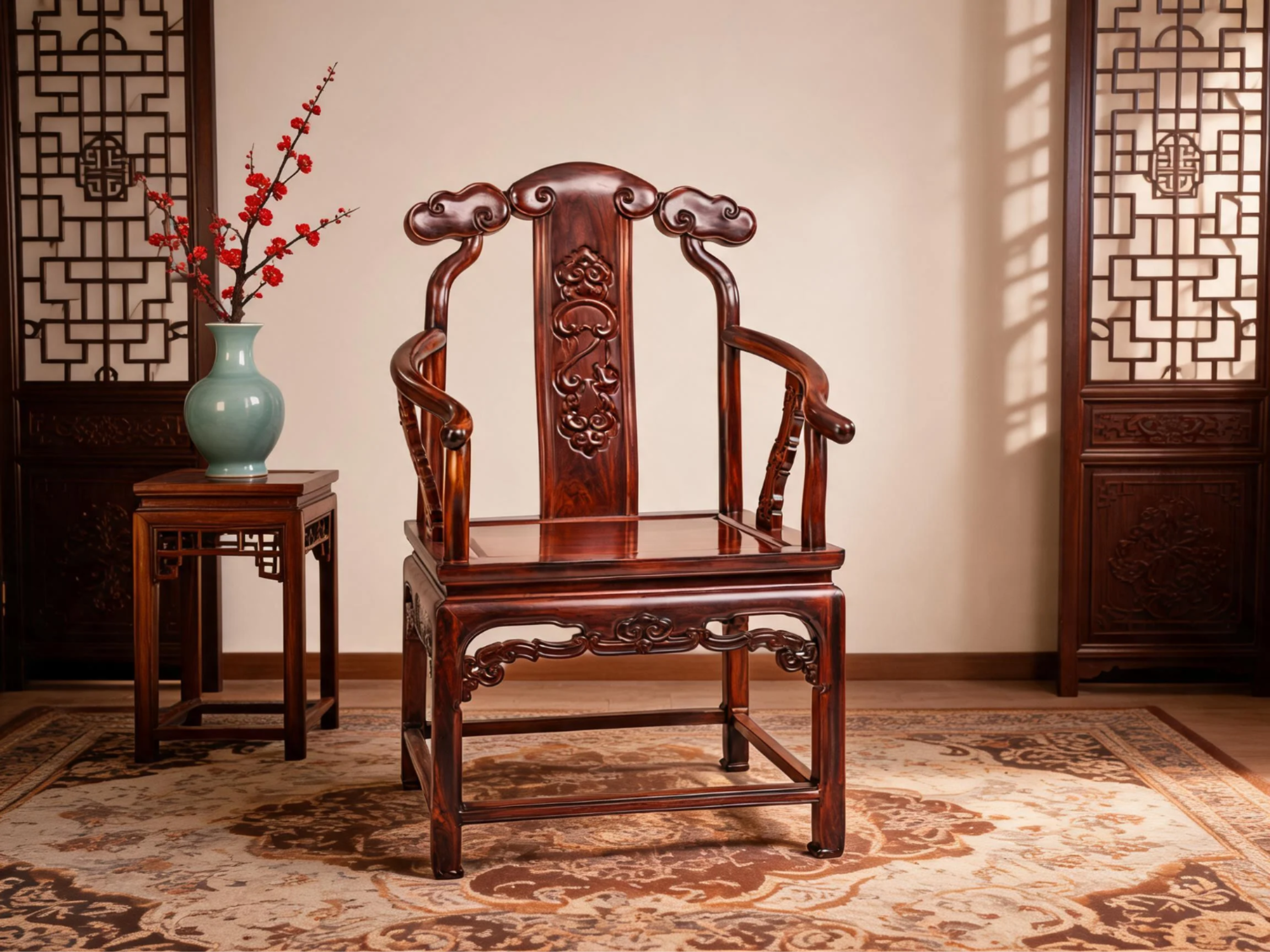
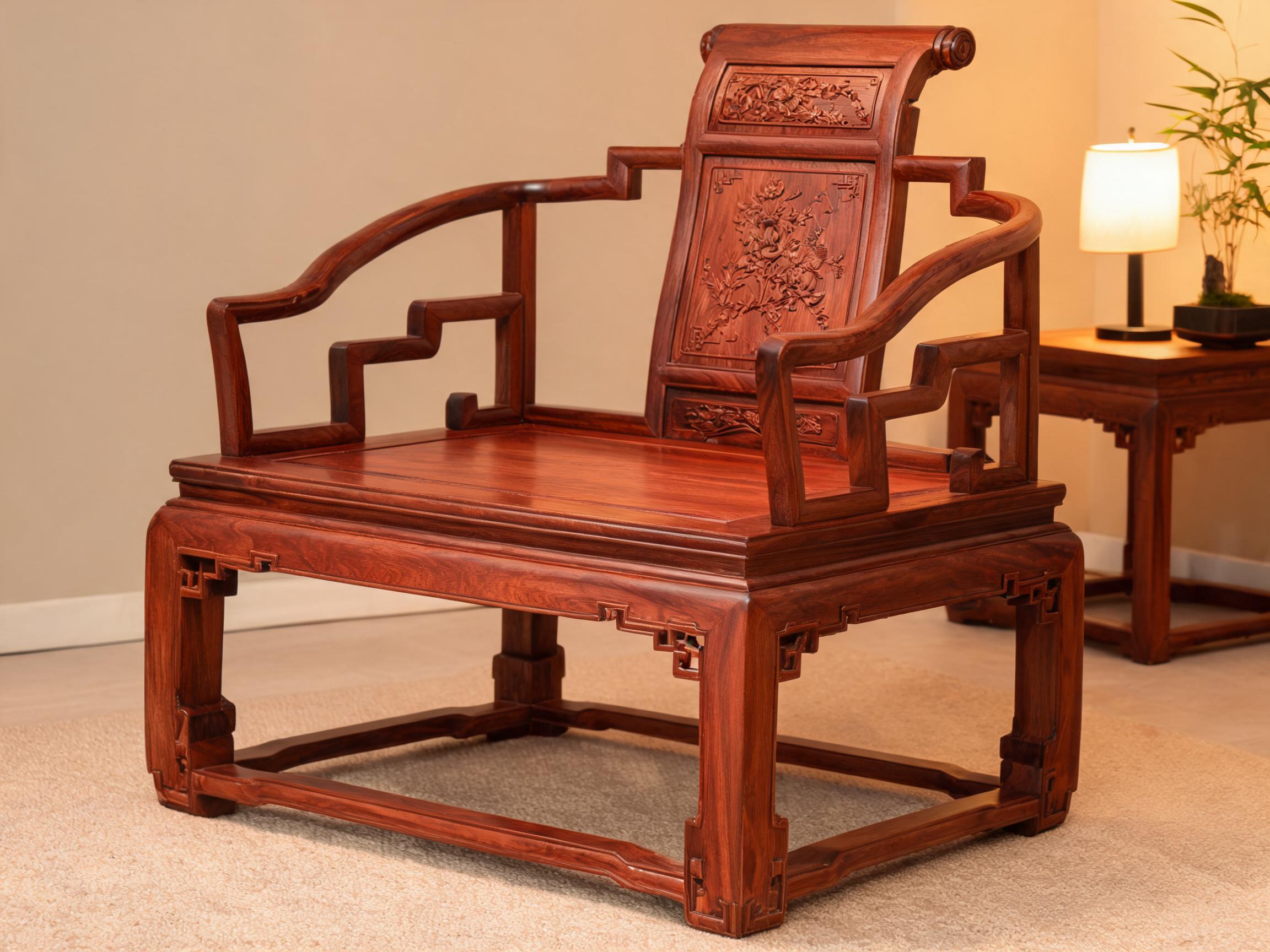
Classical Siamese Rosewood Lounge Chair with Carved Backrest
Solid Siamese rosewood lounge chair with hand-carved floral backrest, curved armrests, mortise-and-tenon joinery, and six-coat raw lacquer finish. 66 cm width for living rooms, reading corners, and boutique hotel lounges.
Highlights
- Solid Siamese rosewood (Dalbergia cochinchinensis) construction throughout - no veneer, no MDF, no finger joints in load-bearing components
- Hand-carved floral and botanical motif on backrest panel, approximately 20 carving hours per piece, cut in relief at 2-4 mm depth
- Curved armrests carved from single solid rosewood sections for ergonomic support
- Mortise-and-tenon joinery with bamboo dowel pins - no metal fasteners at the load-bearing joints
- Six-coat raw lacquer finish, each coat cured 24 hours and hand-rubbed with pumice stone for a penetrating satin sheen
- Compact 66 cm width fits European apartments and boutique hotel lounge areas where full sofa sets are too large
Specifications
| Hardness Grade | 1520-3680 lbf Janka hardness and 0.8-1.33 g/cm³ air-dry density are the published species-wide range for Dalbergia cochinchinensis under the national standard, not a single-batch measurement. Yunxiao controls timber toward the dense end of this range through 80%+ heartwood selection and kiln-drying to 8-12% moisture content; a batch-specific wood drying certificate accompanies every shipment. |
|---|---|
| Heat Tolerance | Finished lacquer surface passed heat testing at 70°C dry heat and 85°C wet heat; the applicable test standard designation and report number are stated on the test report provided with your quotation. Timber begins to degrade above 120°C. Do not place boiling-hot items directly on the surface. |
| Environmental Safety | Solid rosewood structure with natural raw lacquer finish; no engineered boards or solvent-based coatings, so the structure introduces no formaldehyde or benzene sources from adhesives or composite panels. Third-party emission test report provided with your quotation. |
Product Detail
Why This Rosewood Lounge Chair Holds Up After Shipping
Wholesalers who import classical seating know where warranty claims usually come from. Not the wood - the hardware. Screws back out on the road. Brackets corrode inside a humid container. The chair that looked perfect at the factory turns up loose at the project site months later, and the claim lands on your desk.
We built this chair to take that failure mode off the table. The frame is joined entirely with mortise-and-tenon joints pinned by bamboo dowels; no metal fasteners carry load anywhere, so there is nothing to rust or shake loose. The timber is solid Siamese rosewood (Dalbergia cochinchinensis) throughout, kiln-dried to 8 to 12 percent moisture content before any joint is cut. Seat rails carry 18 mm tenon depth, backrest stiles 16 mm, and every right-angle intersection gets a corner block.
The timber itself is dense by any measure. The 1520 to 3680 lbf Janka hardness range and 0.8 to 1.33 g/cm³ air-dry density are the published species-wide figures for Dalbergia cochinchinensis under the national standard, not a single-batch measurement. Within that range, our timber selection pushes toward the dense end: only boards exceeding 80 percent heartwood enter this product line, and kiln-drying to 8 to 12 percent moisture content stabilizes the wood before joinery. A wood drying certificate for your specific batch accompanies every shipment. Those figures are why carved panels on a rosewood lounge chair hold crisp edges for decades and why the seat rails resist denting under daily lounge use.
One honest caveat, because solid wood is solid wood: the timber itself expands and contracts with humidity. We recommend keeping indoor relative humidity within roughly 40 to 60 percent, which matches the chair's 8 to 12 percent moisture content. Within that range the joinery stays tight. Outside it for long stretches, let the chair acclimatize gradually and check the joints now and then.
Before packing, every assembled frame spends 24 hours under 120 kg of distributed weight in our workshop. Any joint showing visible separation gets re-fitted - not patched. The chair carries a 24-month structural warranty covering joinery failure and frame cracking under normal indoor use.
Rosewood Lounge Chair Dimensions
Fitting a reading corner, a boutique hotel suite, or a European apartment where a full sofa set will not go? These are the numbers that matter:
Overall Width
66 cm
Overall Depth
60 cm
Backrest Height
92 cm
Seat Height
44 cm
Seat Depth
44 cm
Wood Moisture
8-12%
At 66 cm wide, this rosewood lounge chair slots into spaces where larger classical seating cannot go. Design firms often order one or two pieces first to test the fit in a show flat, then scale up - which is exactly why the MOQ is 1 piece.
The Carved Backrest: About Twenty Hours of Hand Work
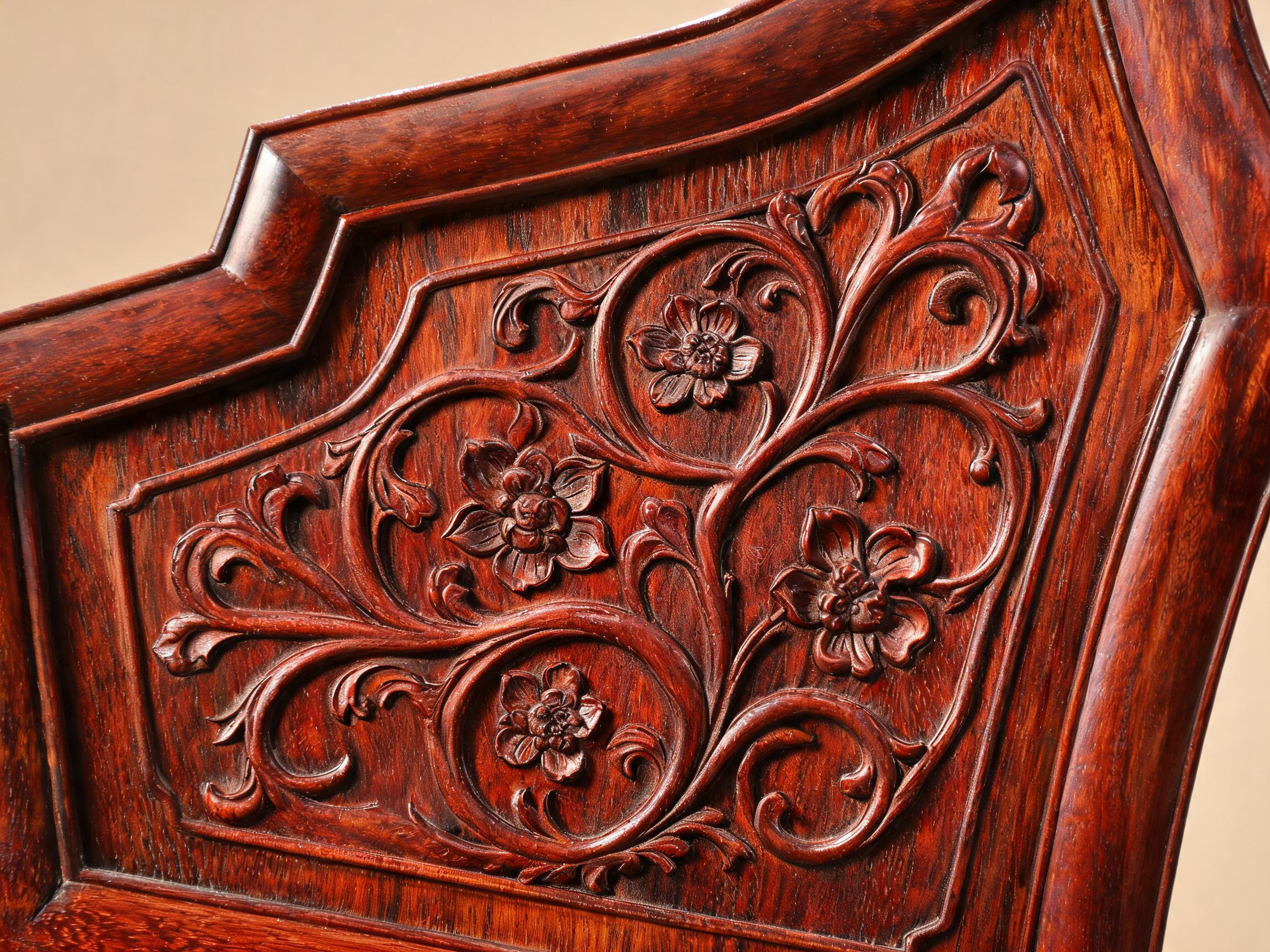
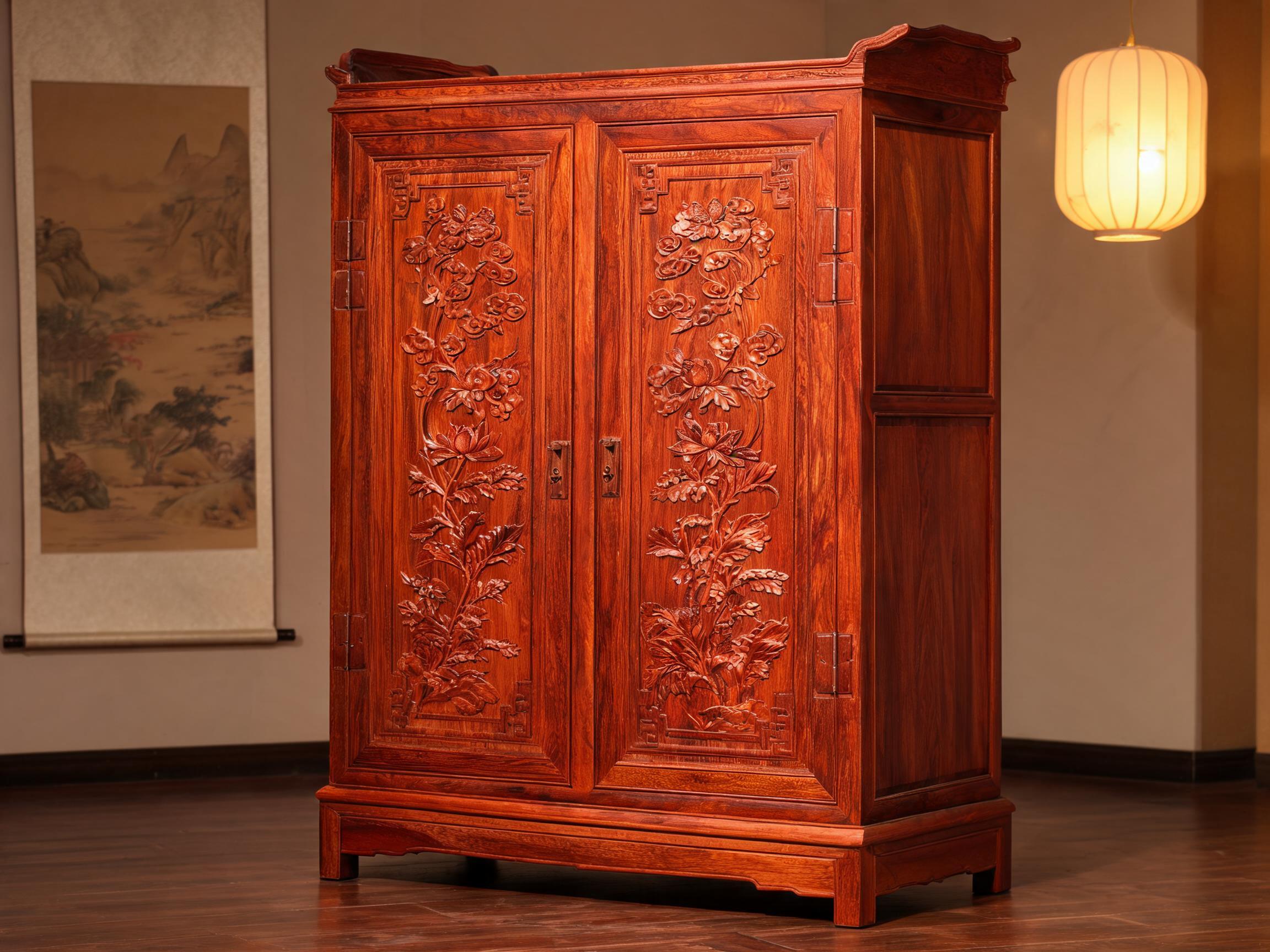
A traditional Chinese floral and botanical motif runs across the backrest panel, carved in relief at 2 to 4 mm depth over a recessed background. Walk around the chair and the panel reads differently from each angle - that shadow play is what machine carving cannot reproduce. Each panel takes roughly 20 carving hours.
The carver works with chisels from 2 mm to 12 mm wide. The hardest part is the flowing floral curves: they demand continuous cuts along the grain, and Siamese rosewood is dense enough that one careless stroke splinters the surface and scraps the panel. The same carvers accept buyer-specified motifs for OEM orders after a 15-day design approval cycle.
Curved Armrests, Cut From Single Sections
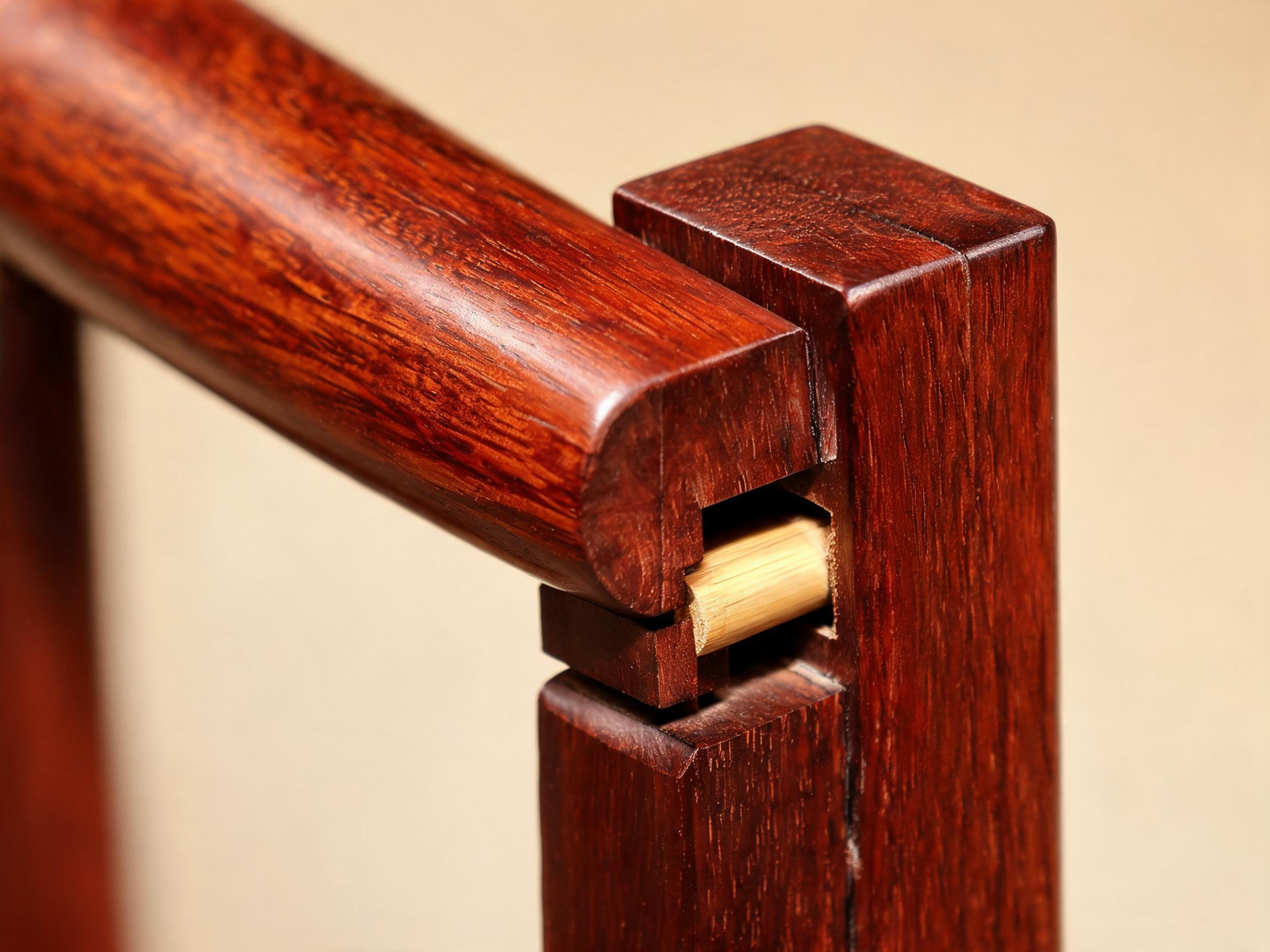
Each armrest comes out of a single piece of solid rosewood, cut along the natural grain. The curve supports the forearm without a sharp edge, and grain continuity matters structurally as much as visually - a laminated or cross-grain armrest is where cheap chairs crack first. Bamboo-doweled mortise-and-tenon joints connect the armrest to the back post and front leg, fitted dry before any glue goes in.
How We Build Each Rosewood Lounge Chair
Four stages, in this order, for every rosewood lounge chair that leaves the workshop:
Stage 1 - Timber Heartwood Selection. Boards are inspected for heartwood ratio. Only boards exceeding 80 percent heartwood enter this product line; boards with more than 20 percent sapwood are diverted elsewhere.
Stage 2 - Kiln Conditioning. Selected timber is kiln-dried to 8 to 12 percent moisture over a 4-week cycle with gradual temperature ramping, followed by a 48-hour equalization period.
Stage 3 - Frame Joinery. Mortise-and-tenon joints are cut to 18 mm tenon depth on seat rails and 16 mm on backrest stiles. Bamboo dowel pins go in dry before glue. Corner blocks are installed at every right-angle intersection.
Stage 4 - Carving and Six-Coat Lacquer. The floral backrest panel is carved after frame assembly. Six coats of raw lacquer follow, each cured 24 hours and hand-rubbed with pumice stone.
Quality Inspection Before Packing
Heartwood ratio verification: visual inspection per board, as described in Stage 1.
Joint stress test: 120 kg distributed load for 24 hours on every assembled frame. Visible separation means the joint is re-fitted, not patched.
Carving relief depth check: depth gauge readings at three points per backrest panel.
Moisture audit: three-point readings per chair; anything outside 8 to 12 percent goes back to conditioning.
Finish uniformity: lacquer surface inspected under 5000K LED lighting against a reference panel.
Lacquer Finish and Leg Construction
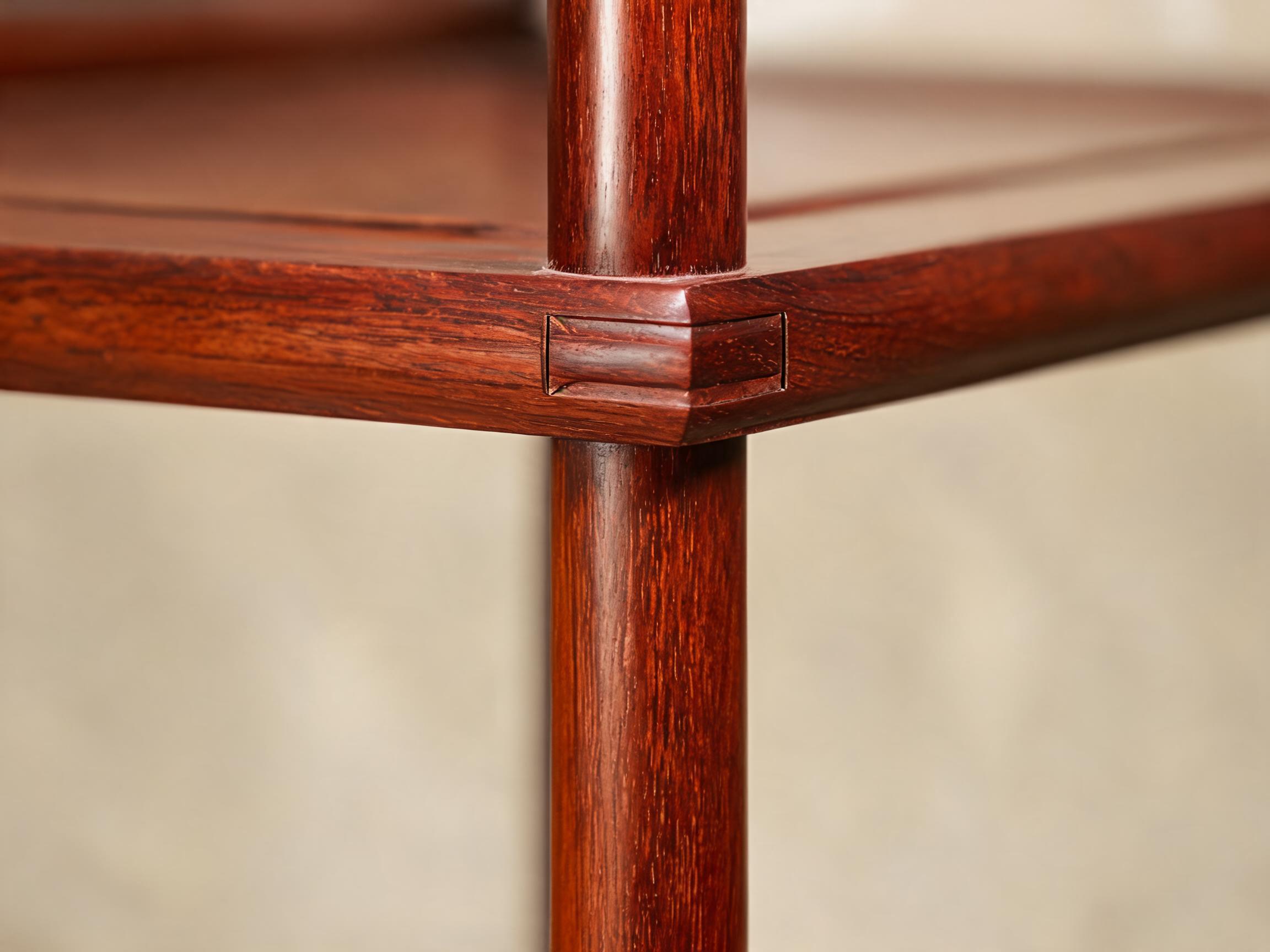
Straight cylindrical front legs meet the seat rails in clean mortise-and-tenon lines - the profile stays visually light without giving up structural strength. The six-coat raw lacquer finish is applied by hand, each coat cured for 24 hours and rubbed with pumice stone until the surface takes on a deep satin sheen. Because the construction uses natural raw lacquer on solid rosewood, with no engineered boards or solvent-based coatings, the structure introduces no formaldehyde or benzene sources from adhesives or composite panels; the third-party emission test report is provided with your quotation.
Heat Tolerance of the Lacquer Finish
A fair question from buyers in hot climates: how much heat can the finish take? The finished lacquer surface passed heat testing at 70°C under dry heat and 85°C under wet heat. The applicable test standard designation and report number are stated on the test report provided with your quotation. The rosewood timber itself begins to degrade above 120°C. In everyday terms: normal indoor use sits comfortably inside the tested range, but do not place boiling-hot cookware or freshly heated items directly on the surface - use a coaster or trivet. This is the same guidance we put in writing with every quotation.
Caring for a Rosewood Lounge Chair in Daily Use
Not much is needed. Dust with a soft dry cloth and wipe spills promptly. Keep the chair out of prolonged direct sunlight and away from radiators or other heat sources. Hold indoor relative humidity near the recommended 40 to 60 percent; if your market's climate sits outside that range for whole seasons, let the chair acclimatize gradually on arrival and inspect the joints periodically during the first year. Buyers in dry or tropical climates often ask about this before ordering - it is a fair question, and the answer above is the same one we give in writing with every quotation.
Who Builds This Rosewood Lounge Chair
Yunxiao Rosewood Furniture Co., Ltd. has produced classical redwood furniture in Xianyou, Fujian, since 2008. The workshop maintains FSC chain-of-custody documentation and CITES export permit registration for Dalbergia cochinchinensis shipments. The FSC certificate number, issuing body, and validity period, together with the CITES registration details, are stated in writing with your quotation, and copies of both documents accompany every shipment. Production capacity, employee count, and client references are likewise available on request. OEM carving customization and ODM design development are supported with a 15-day design approval cycle.
Meet Us at the Fair or Visit the Workshop
We exhibit at Canton Fair and the Shanghai International Furniture Fair; specific booth numbers and dates are available on request. If you are sourcing rosewood lounge chairs for a project, a workshop visit in Xianyou is the fastest way to judge us: you can inspect timber stock, watch the carving stations, and see the lacquer curing room for yourself.
Export Packaging and Shipping Documents
Each rosewood lounge chair is wrapped in acid-free tissue paper and corrugated cardboard, then packed in an ISPM-15 heat-treated wooden crate with EPS foam corner blocks. Gross weight per crate is approximately 30 kg. Our packaging passed an in-house 1-metre drop test; if your logistics standard requires third-party drop-test certification, tell us at inquiry and we will confirm what documentation we can provide. Every shipment includes CITES export permits, the FSC chain-of-custody certificate, a commercial invoice with HS code 9403.60, and a wood drying certificate.
A note on CITES for first-time importers of Dalbergia species: because Siamese rosewood is listed on CITES Appendix II, most destination countries require an import permit on your side before the goods ship. We provide the CITES export permit and supporting documents from our side; please confirm your country's import-permit process with your customs broker early, since permit timing can affect your delivery schedule.
Pairing with other Yunxiao pieces
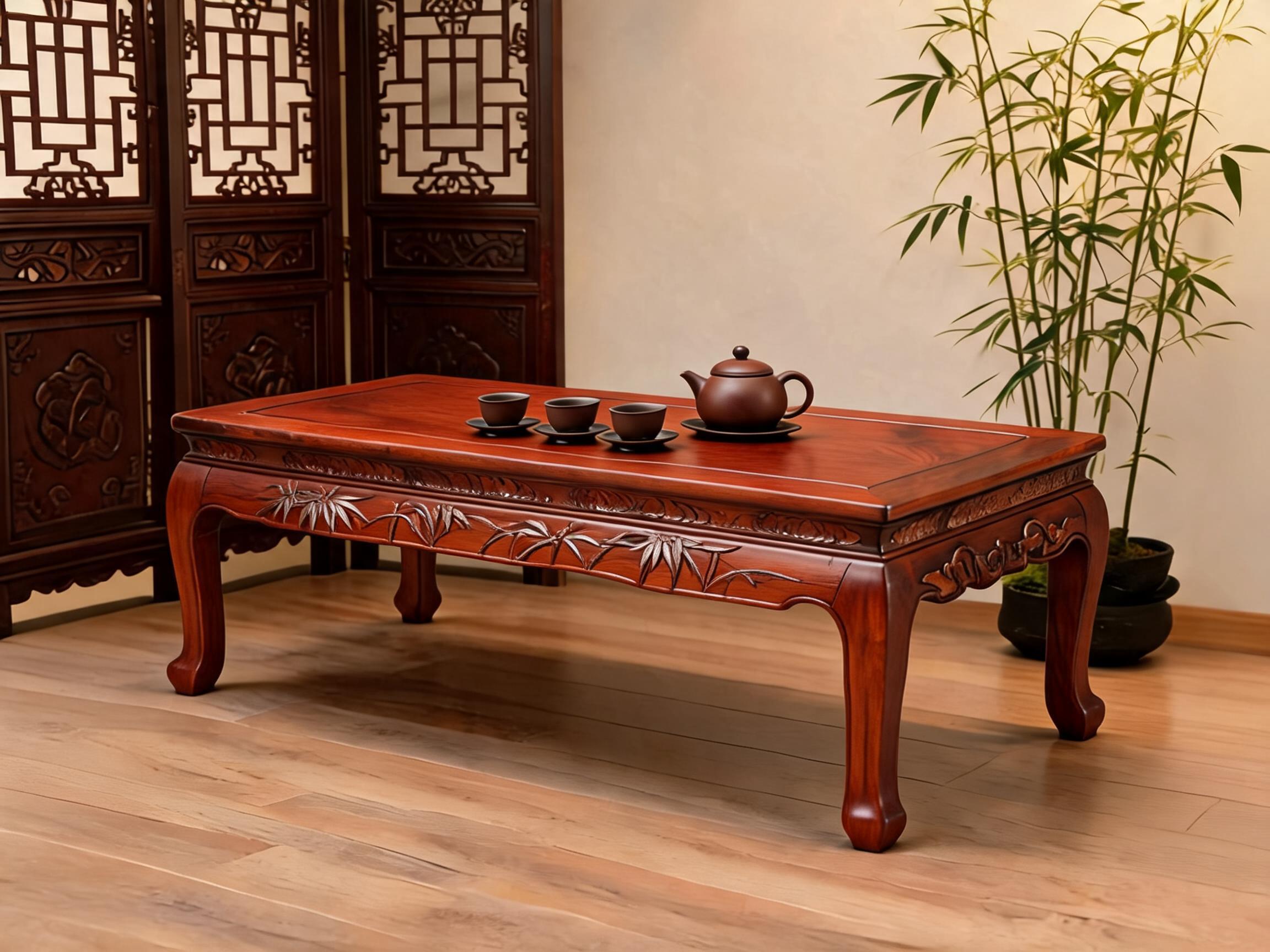
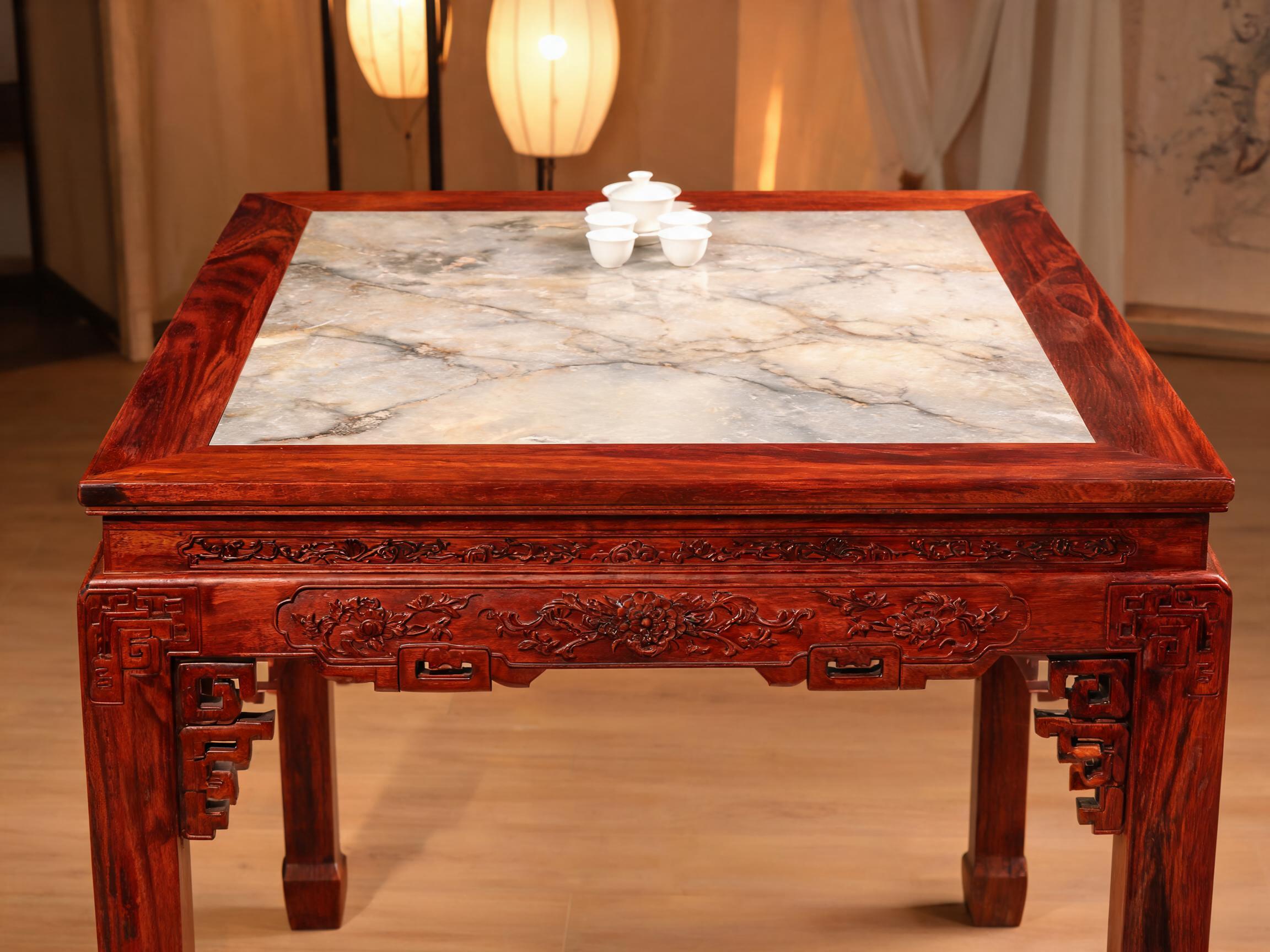
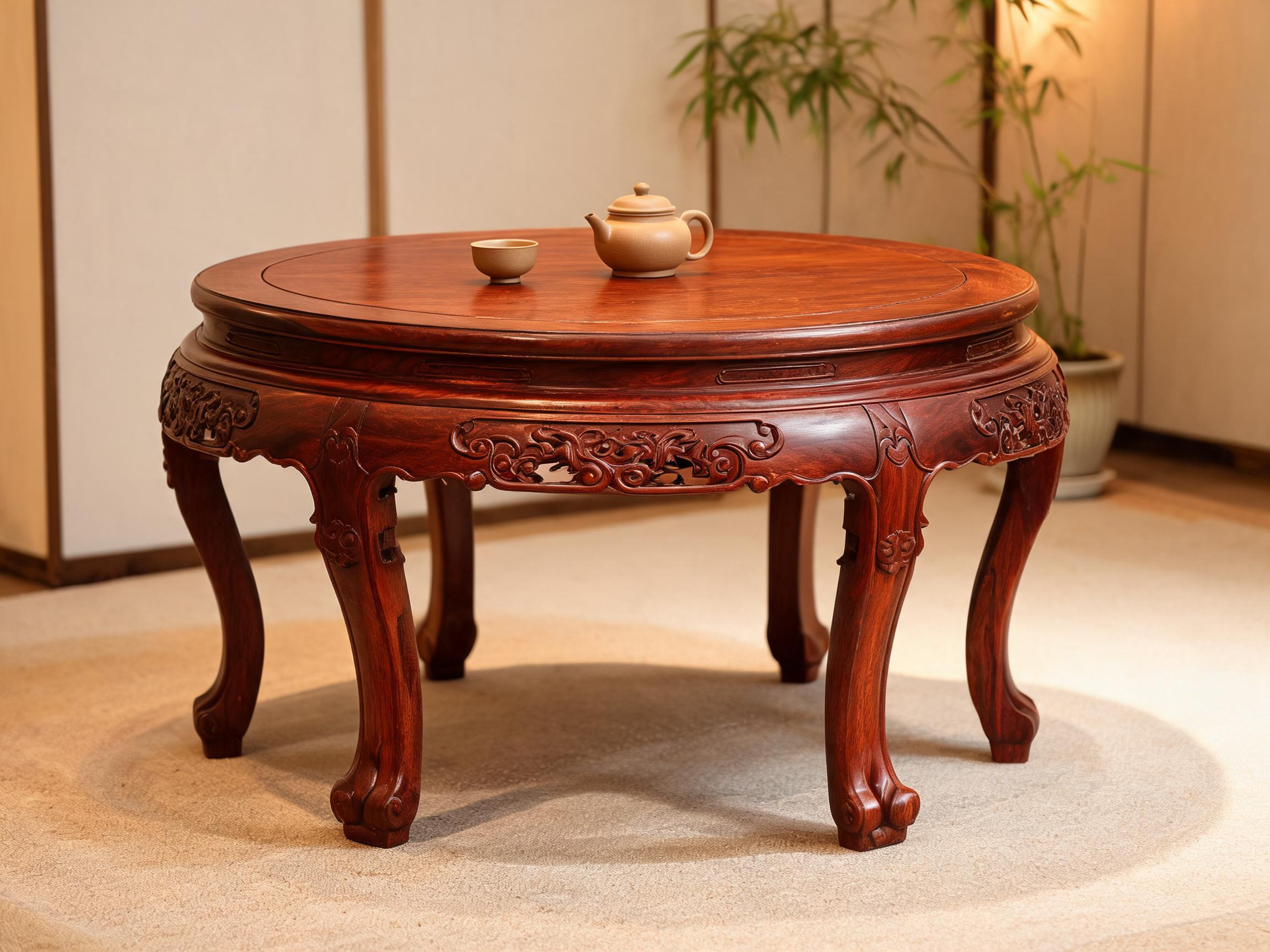
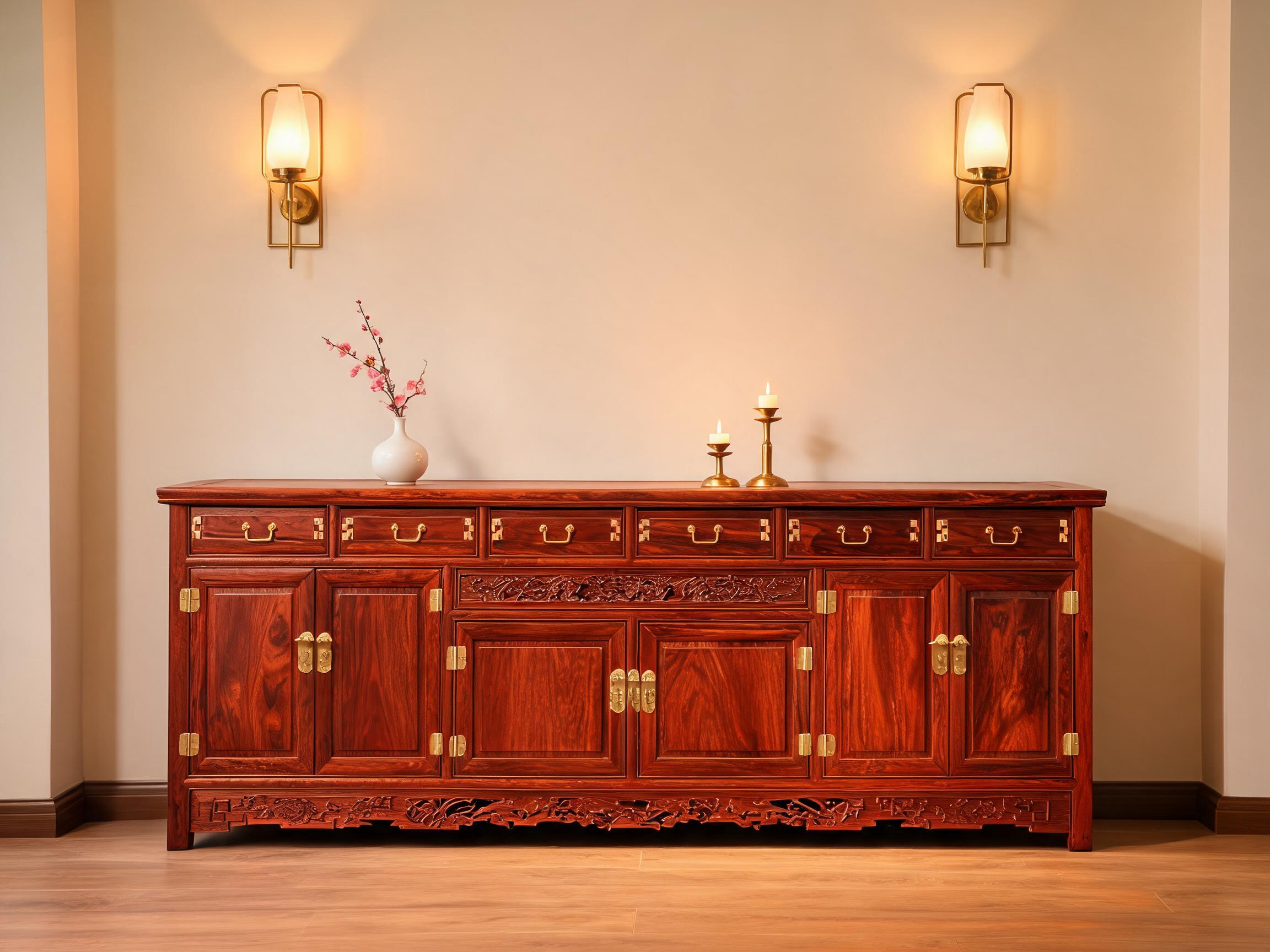
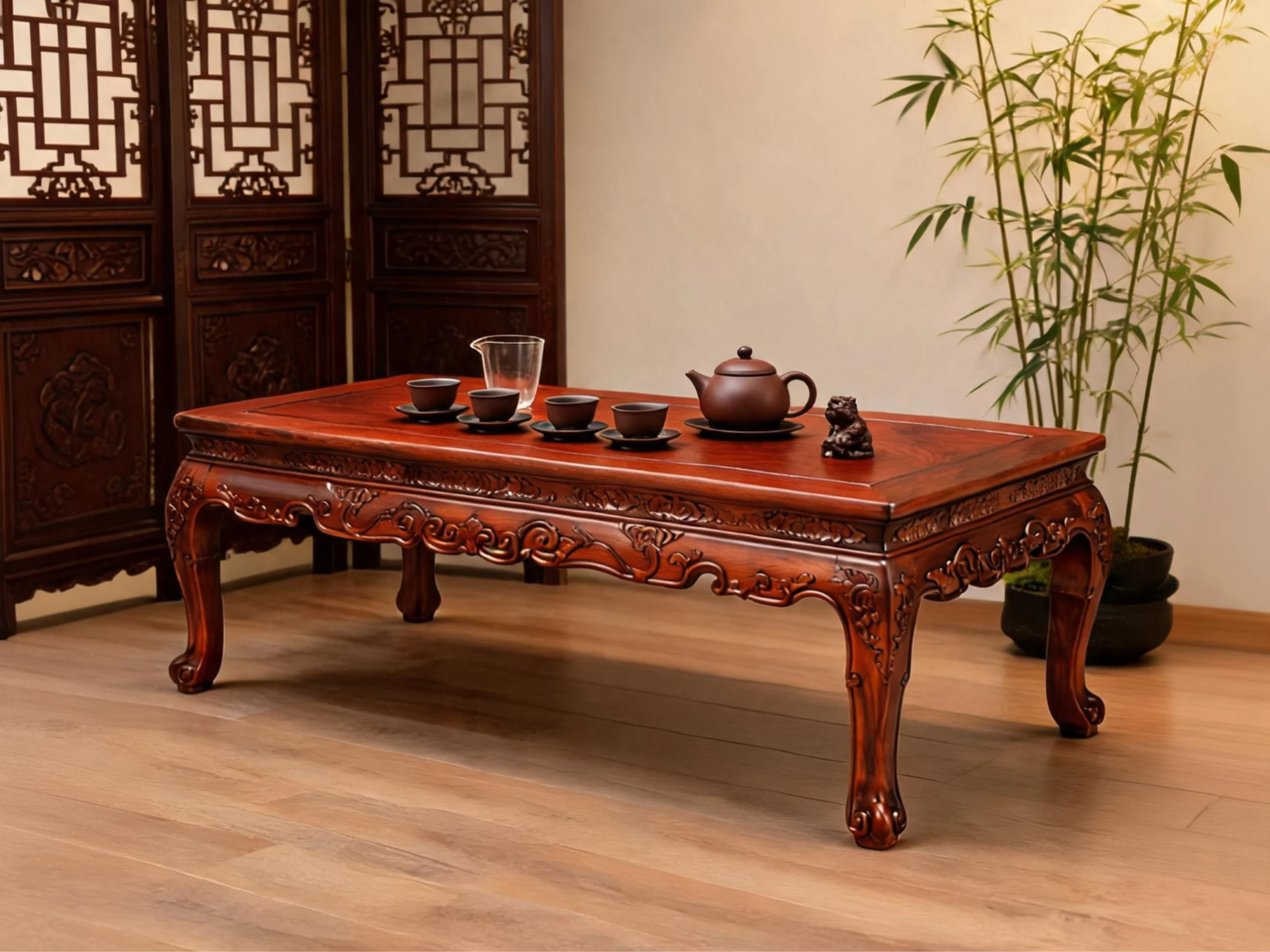
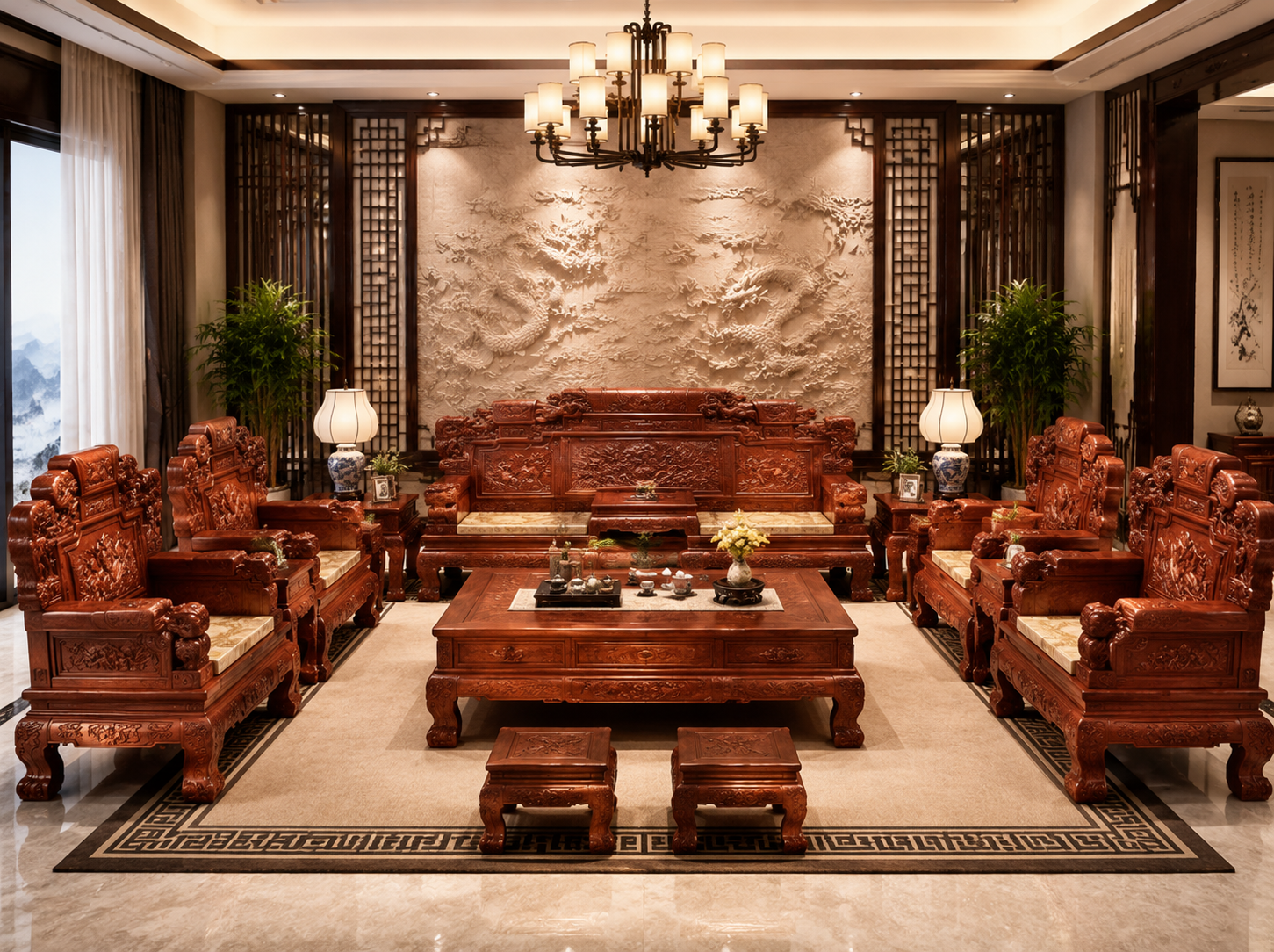
This rosewood lounge chair can be ordered alongside Yunxiao rosewood sofa sets and tea tables. Wood colour and grain vary between boards, so if colour consistency across pieces matters for your project, place the combined order as one lot and tell us at inquiry - we will select timber from matching stock for the whole order.
Buyer FAQ
What is the MOQ for this rosewood lounge chair?
MOQ is 1 piece, so you can order a single sample chair first. Volume pricing applies at 10 pieces and above. Actual container loading quantity depends on the packing configuration and crate dimensions for your order - tell us your destination port at inquiry and we will confirm the loading plan.
What shipping Incoterms do you support?
FOB Xiamen is the default. CIF and DDP are available on request. LCL consolidation works for single-piece orders; FCL is recommended for 50 pieces or more.
How is the chair packed for international shipping?
Each rosewood lounge chair ships in an individual ISPM-15 heat-treated crate with acid-free tissue paper, corrugated cardboard, and EPS foam corner blocks. Our packaging passed an in-house 1-metre drop test; third-party test documentation can be discussed at inquiry.
What payment terms do you accept?
30 percent T/T deposit with the balance before shipment. L/C is accepted for orders of 5 pieces or more.
Can I order one chair as a sample?
Yes. A single rosewood lounge chair can be ordered as a sample, and if a bulk order follows within 90 days, the sample cost credit policy will be confirmed in writing with your quotation.
Can I customize the carving or add my logo?
Custom carving motifs and buyer logos are supported. OEM and ODM orders are accepted with a 15-day design approval cycle, and dimensions can be adjusted for specific room requirements.
What is the lead time?
35 to 50 days from deposit confirmation for a single piece. Batch orders of 5 pieces or more extend to 60 to 75 days.
Can you provide FSC and CITES documentation?
Yes. The FSC certificate number, issuing body, and validity period, together with the CITES registration details, are stated in writing with your quotation, and every shipment travels with CITES export permits and the FSC chain-of-custody certificate.
How hard is Siamese rosewood, and how heat-resistant is the lacquer finish?
The 1520 to 3680 lbf Janka hardness range and 0.8 to 1.33 g/cm³ air-dry density are the published species-wide figures for Dalbergia cochinchinensis under the national standard. Our timber selection pushes toward the dense end of that range through 80 percent-plus heartwood selection and kiln-drying to 8 to 12 percent moisture content, and a wood drying certificate for your batch accompanies every shipment. For heat: the finished lacquer surface passed heat testing at 70°C dry heat and 85°C wet heat, with the applicable test standard designation and report number stated on the test report provided with your quotation. The timber itself begins to degrade above 120°C. Use a coaster for hot items; do not set boiling cookware directly on the surface.
What after-sales warranty is provided?
A 24-month structural warranty covers joinery failure and frame cracking under normal indoor use. Replacement parts can be ordered for transit damage.
Is this rosewood lounge chair suitable for humid climates?
Within a normal indoor relative humidity range of roughly 40 to 60 percent, the mortise-and-tenon frame stays tight because there are no metal fasteners to rust. Solid wood still responds to humidity, so in persistently humid or very dry climates we advise gradual acclimatization on arrival and periodic joint checks in the first year.
How do I compare this chair with other rosewood lounge chairs on the market?
Compare four things: the wood species and moisture content (this chair uses solid Dalbergia cochinchinensis kiln-dried to 8 to 12 percent), the joinery method (full mortise-and-tenon with bamboo dowel pins rather than screws), the carving (hand relief at 2 to 4 mm depth versus machine carving), and the documentation that ships with the goods (CITES export permit, FSC chain-of-custody certificate, and wood drying certificate). Those four points separate a workshop-built rosewood lounge chair from a mass-produced one.
Request a Detailed Quote
Tell us your destination port, preferred Incoterm, order quantity, and any custom carving or dimension requirements. If your project needs CITES import permits, mention your country so we can align document timing with your schedule.
Tags
Related Products