Yunxiao Rosewood Furniture Co., Ltd.
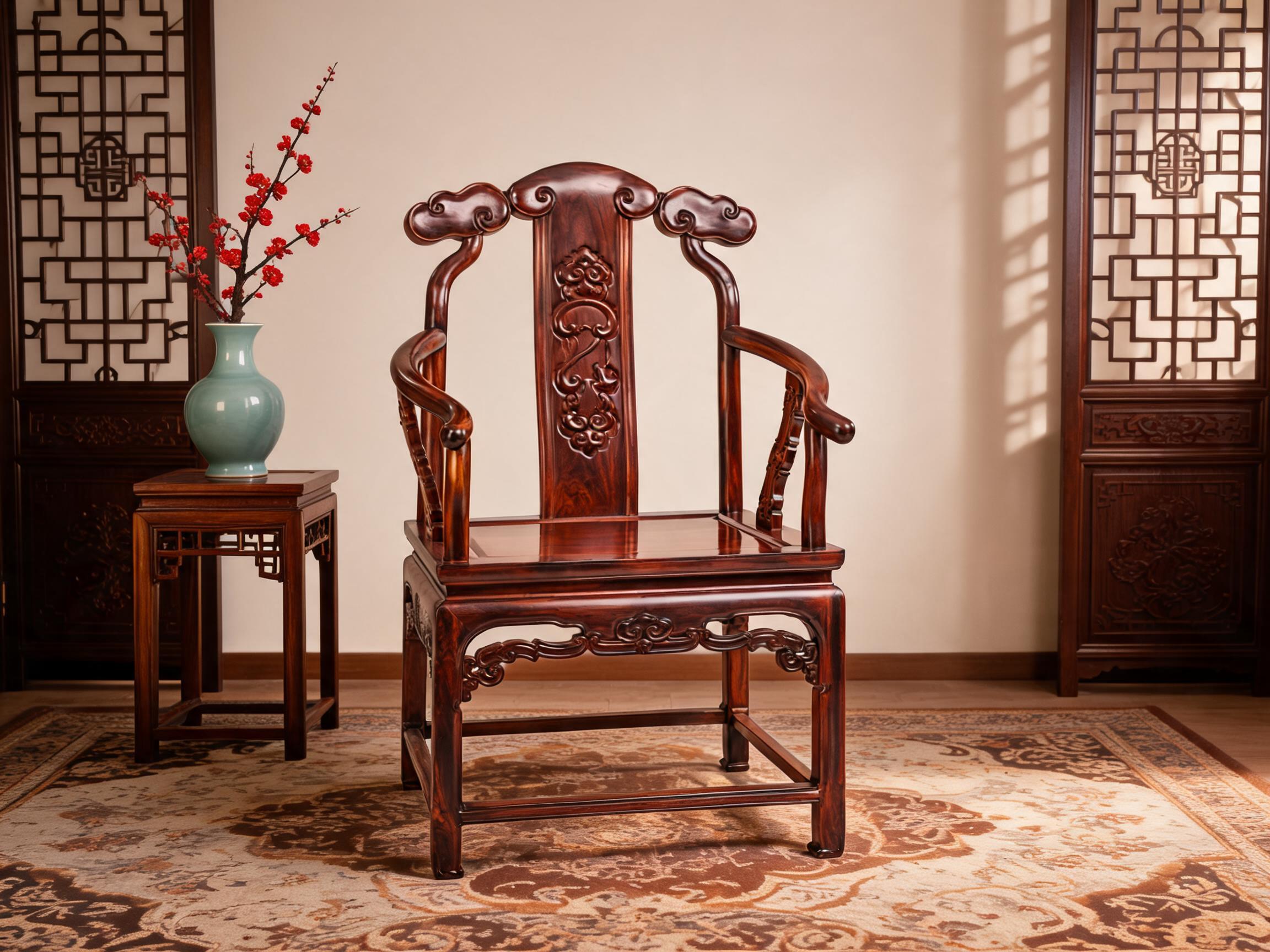
Classical Siamese Rosewood Armchair with Carved Ruyi Backrest
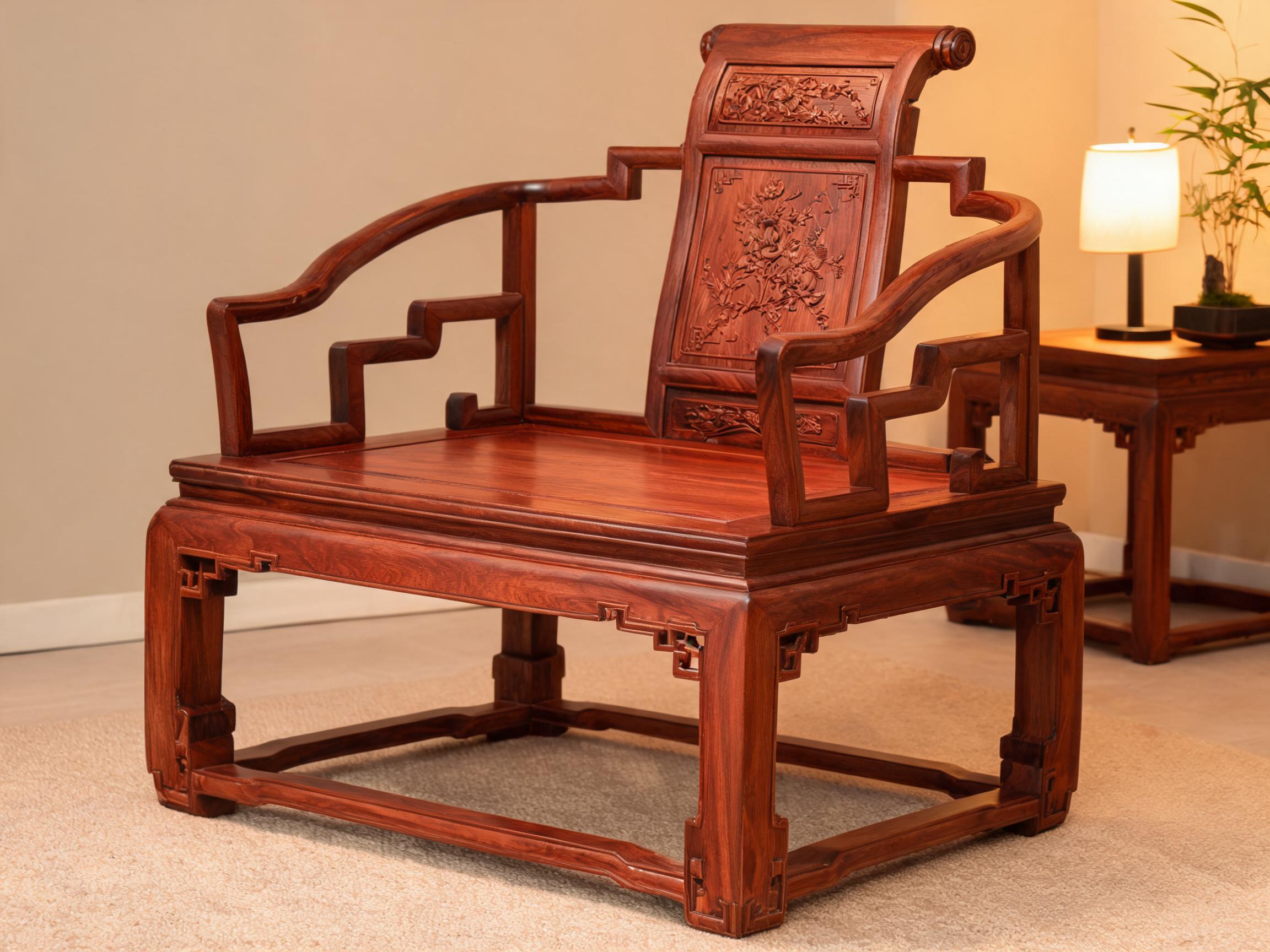
Solid Siamese rosewood armchair with hand-carved ruyi sceptre backrest, Ming-style open-slat design, mortise-and-tenon joinery, and six-coat raw lacquer finish. Compact 62 cm width for living rooms, studies, and boutique hotel lounges.
Highlights
- Solid Siamese rosewood (Dalbergia cochinchinensis) construction throughout - no veneer, no MDF, no finger joints in load-bearing components
- Hand-carved ruyi sceptre motif on backrest panel, approximately 18 carving hours per piece, cut in relief at 2-4 mm depth
- Traditional mortise-and-tenon joinery with bamboo dowel pins - zero metal fasteners in the primary frame
- Six-coat raw lacquer finish, each coat cured 24 hours and hand-rubbed with pumice stone for a penetrating satin sheen
- Kiln-dried to 8-12 percent moisture content with 48-hour equalization period for climate stability in overseas shipments
- Compact 62 cm width fits European apartments and boutique hotel lounge areas where full sofa sets are too large
Specifications
| Classical Siamese Rosewood Armchair with Carved Ruyi Backrest | |
| Solid Siamese rosewood (Dalbergia cochinchinensis) | |
| Dalbergia cochinchinensis | |
| Ming-style open-slat with ruyi sceptre carving | |
| 62 cm width x 58 cm depth x 88 cm backrest height; seat height 43 cm | |
| Natural reddish-brown | |
| Six-coat raw lacquer, hand-rubbed, satin sheen | |
| Hand-carved ruyi motif, 2-4 mm relief depth, 18 carving hours | |
| Mortise-and-tenon with bamboo dowel pins, no metal fasteners | |
| Fully assembled | |
| Living room, study, reception, boutique hotel lounge | |
| OEM/ODM, custom carving and dimensions, 15-day design cycle | |
| ISPM-15 heat-treated crate with EPS foam corner blocks | |
| 35-50 days single piece; 60-75 days batch of 5+ |
Product Detail
Buyer Pain Point and Our Solution
The pain point: chairs that wobble after one season in a new climate. Wholesalers and interior design firms sourcing accent seating for mixed-use projects keep encountering the same defect: armchairs assembled with metal brackets and screws loosen as humidity changes, so a chair that felt solid at the factory arrives wobbly at the showroom or, worse, develops play in the joints after a few months of hotel or residential use. For a buyer this is a direct cost — retail returns, on-site repairs billed against your margin, and end clients who read a rocking chair as a sign the whole supplier is unreliable.
Our solution: a frame with no metal fasteners to loosen. This Ming-style armchair is cut from solid Siamese rosewood (Dalbergia cochinchinensis) heartwood and joined entirely with mortise-and-tenon joints — 18 mm tenon depth on seat rails, 16 mm on backrest stiles — reinforced with bamboo dowel pins fitted dry before gluing, and corner blocks at every right-angle intersection to prevent racking. Every board is kiln-conditioned to 8-12% moisture over a 4-week cycle with a 48-hour equalization period, the ruyi backrest panel is hand-carved (approximately 18 carving hours), and each finished frame is load-tested with 120 kg for 24 hours before packing. The value to you: a chair that stays tight through tropical humidity and heated winters alike, backed by a 24-month structural warranty — fewer returns, fewer repair calls, and seating you can specify for high-end projects with confidence.
Dimensions at a Glance
Overall Width
62 cm
Overall Depth
58 cm
Backrest Height
88 cm
Seat Height
43 cm
Seat Depth
42 cm
Wood Moisture
8-12%
Ruyi-Sceptre Backrest Carving
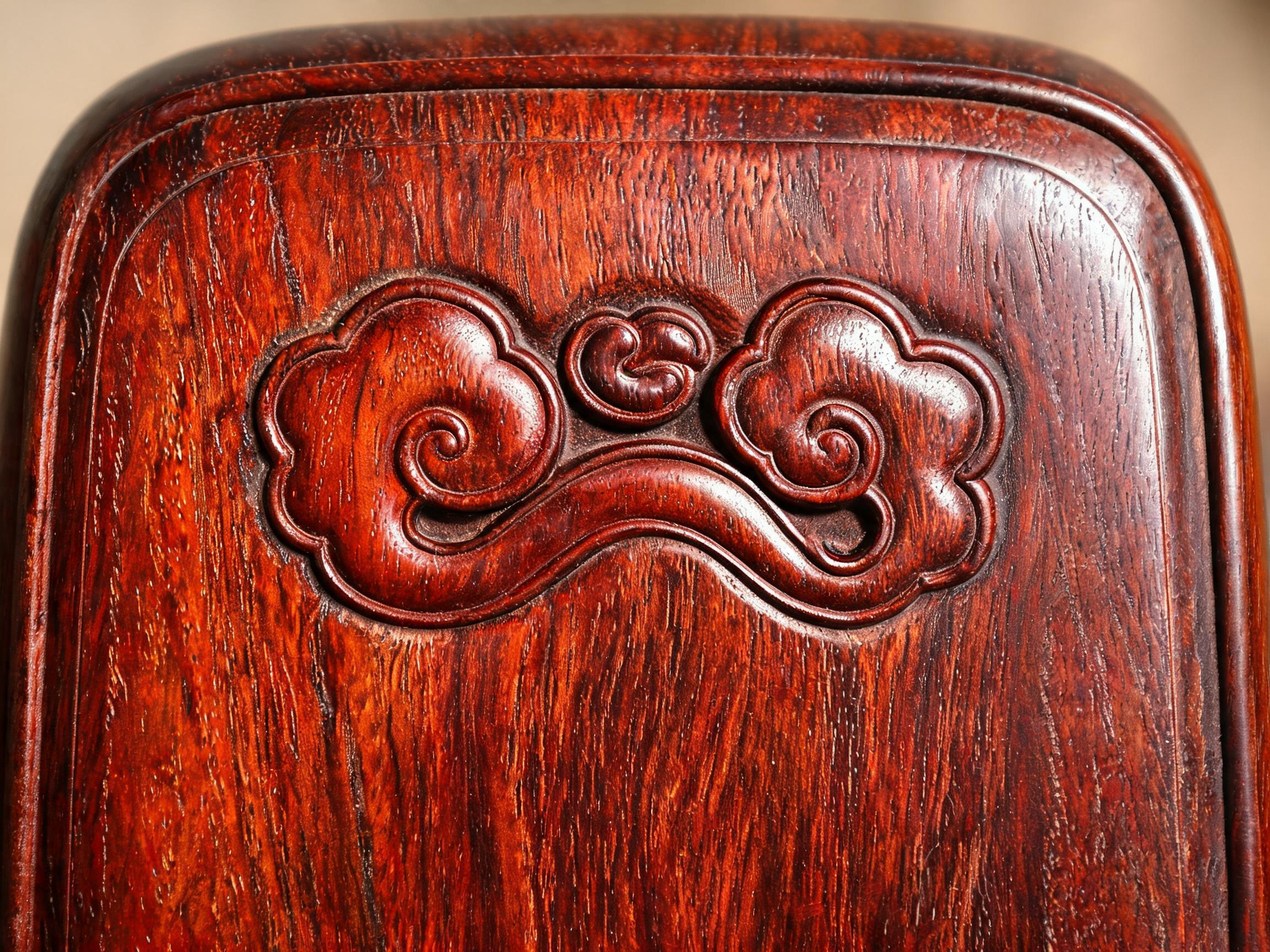
The backrest panel features a ruyi sceptre head motif, a classical Chinese symbol of authority and good fortune. The carving is executed in relief at 2-4 mm depth with a recessed background, creating visual depth when viewed from different angles. Each backrest panel requires approximately 18 carving hours. The carver uses chisels ranging from 2 mm to 12 mm width, with the curved ruyi head being the most technically demanding element because it requires continuous flowing cuts along the grain without splintering the dense rosewood.
Manufacturing Workflow
This armchair follows a four-stage production sequence with a carving-intensive workflow:
Stage 1 - Timber Heartwood Selection: Siamese rosewood boards are inspected for heartwood ratio. Only boards with a heartwood percentage exceeding 80 percent proceed to this product line, since heartwood holds carving detail more cleanly than sapwood and resists dimensional movement in overseas climates.
Stage 2 - Kiln Conditioning: Selected timber is kiln-dried to 8 to 12 percent moisture content over a 4-week cycle with gradual temperature ramping to avoid case-hardening. A 48-hour equalization period follows to relieve internal stresses before cutting.
Stage 3 - Frame Joinery: Mortise-and-tenon joints are cut to 18 mm tenon depth on seat rails and 16 mm on backrest stiles. Bamboo dowel pins are fitted dry before glue application. Corner blocks are installed at every right-angle intersection to prevent racking.
Stage 4 - Carving and Six-Coat Lacquer Finishing: The ruyi backrest panel is carved after frame assembly. Six coats of raw lacquer are then applied by hand, each cured for 24 hours and rubbed with pumice stone. The final coat achieves a deep satin sheen that highlights the carving relief.
Joinery Detail: Bamboo Dowel Reinforcement
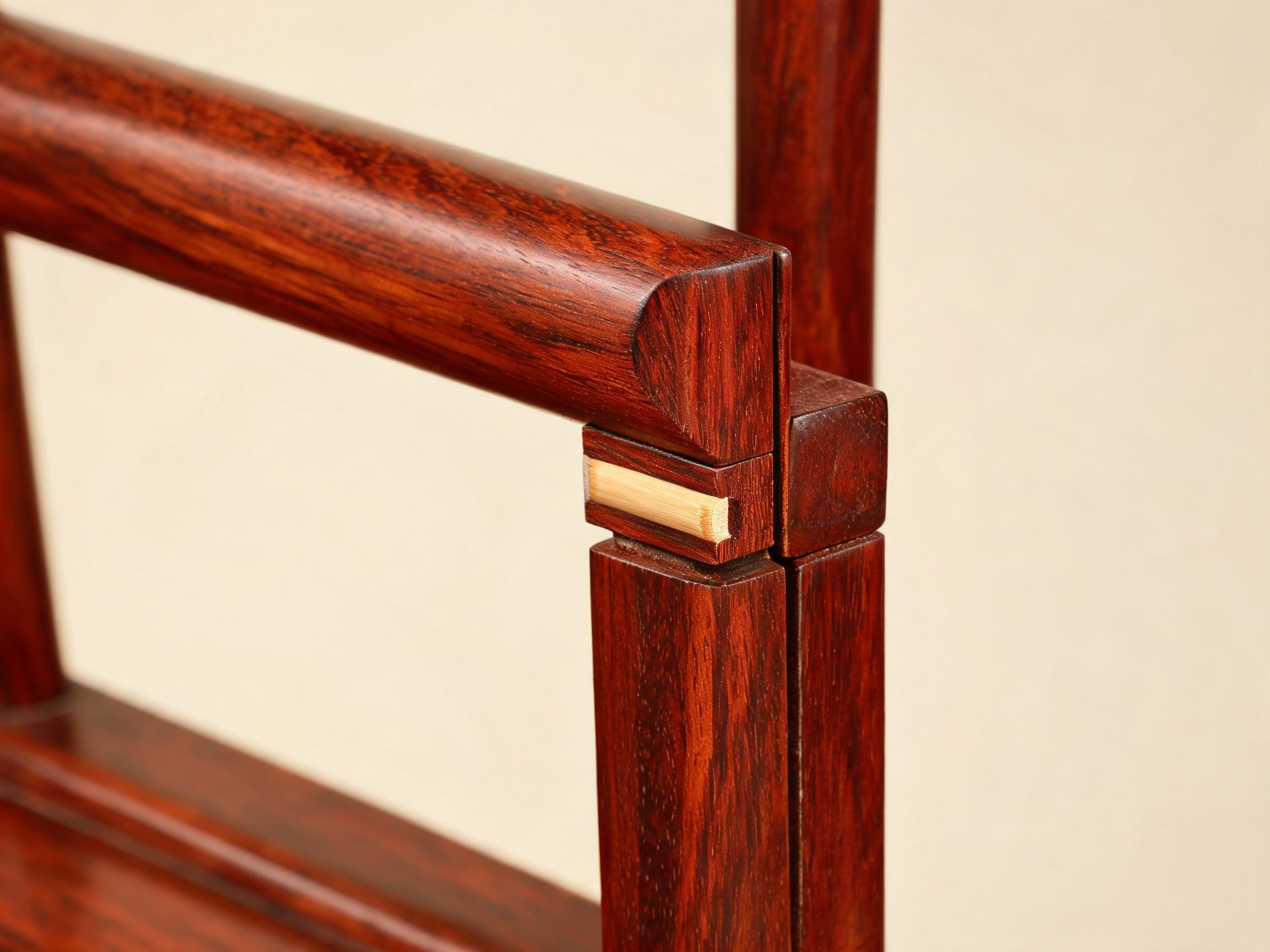
At every armrest-to-backrest intersection, the tenon is locked with a bamboo dowel pin fitted dry and sanded flush with the surrounding surface. Bamboo is chosen deliberately: its silica-rich fibre compresses rather than splits when the joint flexes, so the pin keeps clamping pressure on the tenon through seasonal humidity swings instead of working loose the way a metal screw does in end grain. Combined with corner blocks at each right-angle intersection, this is the structural reason the frame carries a 24-month warranty against joinery failure.
Quality Inspection
Heartwood Ratio Verification: Each board is visually inspected for sapwood percentage. Boards exceeding 20 percent sapwood are diverted to other product lines.
Joint Stress Test: Assembled frames are loaded with 120 kg of distributed weight for 24 hours. Any joint showing visible separation is re-fitted.
Carving Relief Depth Check: Relief depths (2-4 mm, recessed background) are verified with a depth gauge at three points per backrest panel.
Moisture Audit: Three-point readings per chair. Readings outside 8 to 12 percent require re-conditioning.
Finish Uniformity: The lacquer surface is inspected under 5000K LED lighting. Colour consistency is verified against a reference panel.
Lacquer Surface and Leg Profile
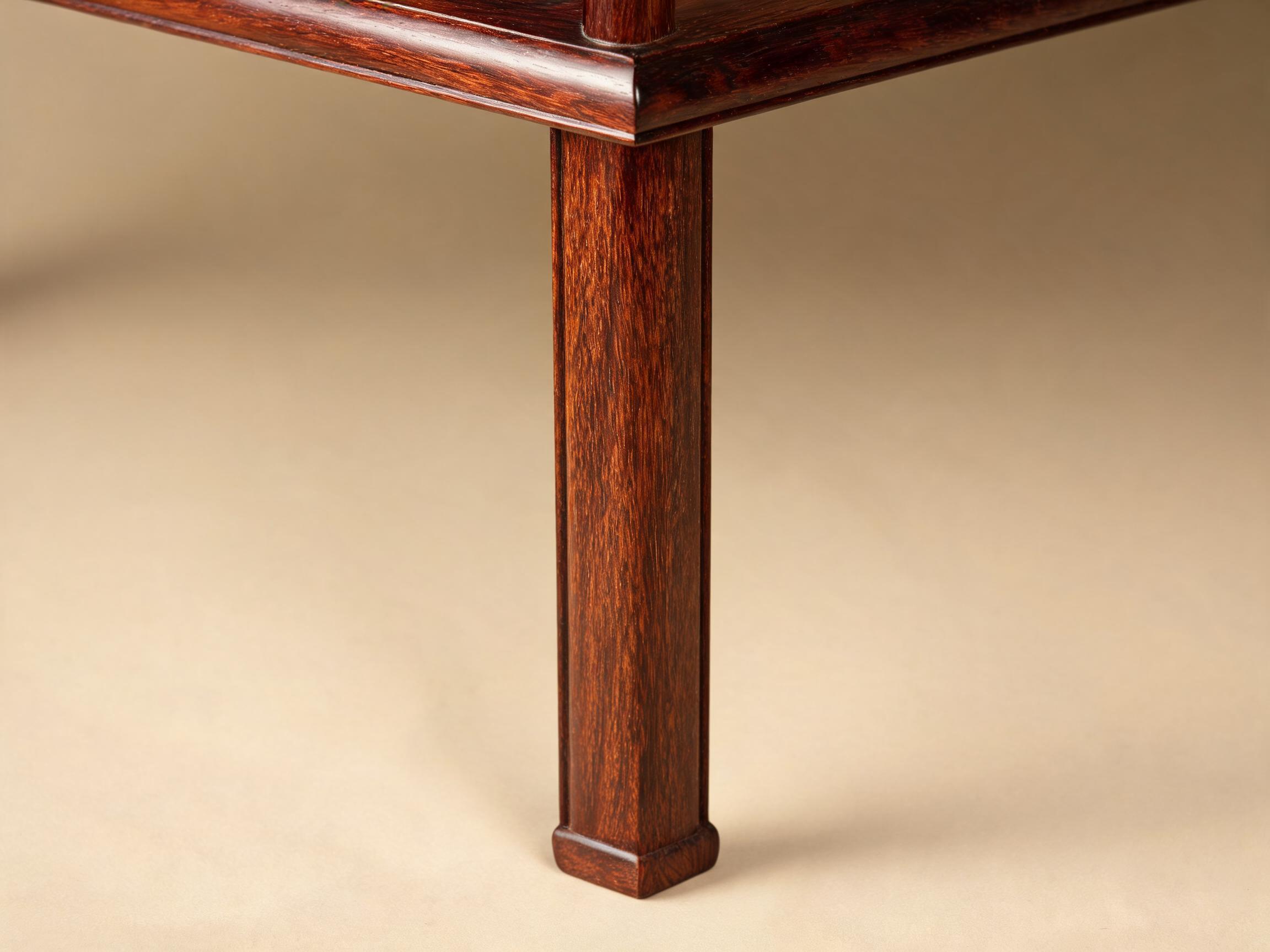
The straight leg profile is finished with six coats of raw lacquer, each cured for 24 hours and hand-rubbed with pumice stone so the final surface shows a penetrating satin sheen rather than a plastic film. Because the lacquer penetrates the wood instead of sitting on top of it, minor surface marks can be spot-repaired on site without refinishing the whole chair — a practical advantage for hotel and showroom maintenance. The crisp edge line where the leg meets the seat rail is checked under 5000K LED lighting against a reference panel for colour consistency.
Enterprise Capability
Yunxiao Rosewood Furniture Co., Ltd. has produced classical redwood furniture in Xianyou since 2008. The workshop maintains FSC chain-of-custody documentation and CITES export permit registration for Dalbergia cochinchinensis shipments. Production capacity, employee count, and client references are available upon request. OEM carving customization and ODM design development are supported with a 15-day design approval cycle.
Exhibition Experience
Yunxiao Rosewood Furniture Co., Ltd. engages with international buyers through Canton Fair and Shanghai International Furniture Fair participation. Specific booth numbers and dates are available on request. Buyers visiting Xianyou can arrange a workshop tour to inspect timber stock, carving stations, and the lacquer curing room.
Export Packaging and Documentation
Each armchair is wrapped in acid-free tissue paper and corrugated cardboard, then packed in an ISPM-15 heat-treated wooden crate with EPS foam corner blocks. Gross weight per crate is approximately 28 kg. Every shipment includes CITES export permits, FSC chain-of-custody certificate, commercial invoice with HS code 9403.60, and a wood drying certificate.
Pairing suggestion
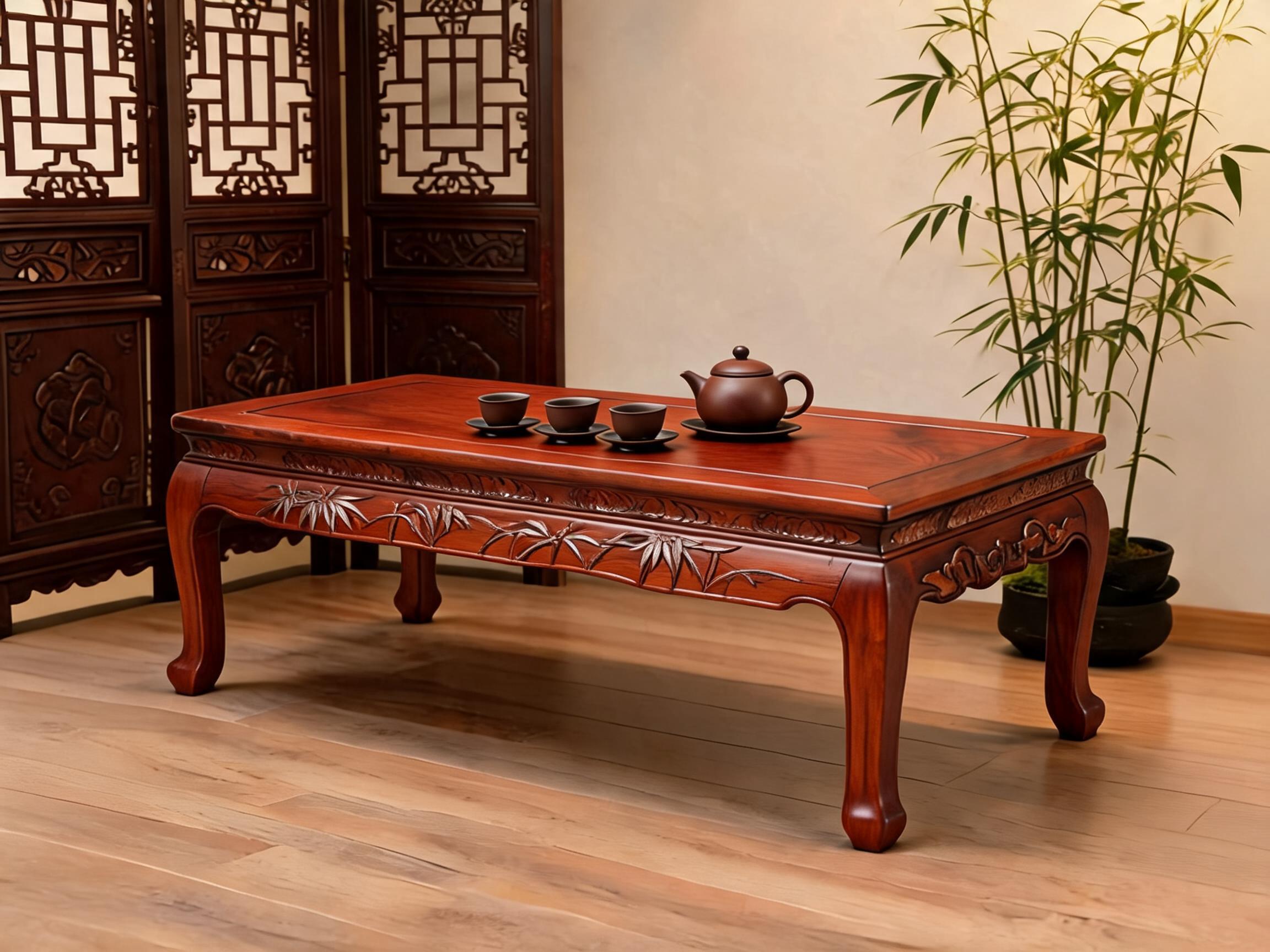
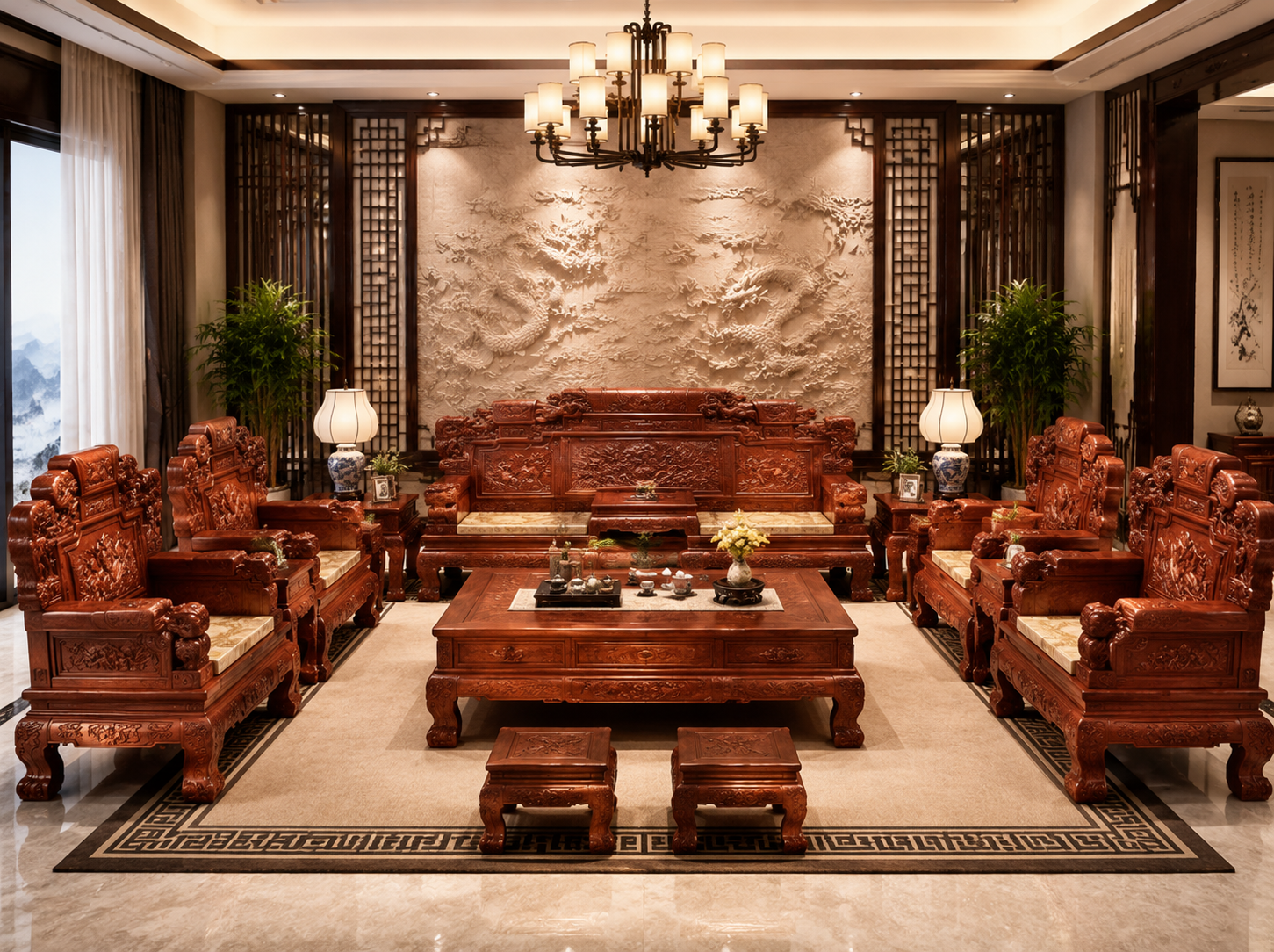
This armchair pairs seamlessly with the Yunxiao rosewood sofa sets and tea tables. When ordering as part of a whole-house project, mention the combined order for unified wood selection and colour matching across all pieces.
Buyer FAQ
What is the MOQ?
MOQ is 1 piece. Volume pricing applies at 10 pieces and above. A 20-foot container fits approximately 120 armchairs.
What shipping Incoterms do you support?
FOB Xiamen is the default. CIF and DDP are available on request. LCL consolidation works for single-piece orders; FCL is recommended for 50 pieces or more.
How is the chair packaged?
Each armchair is packed in an individual ISPM-15 heat-treated crate with acid-free tissue paper, corrugated cardboard, and EPS foam corner blocks. Packaging passed a 1-metre drop test.
What payment terms do you accept?
30 percent T/T deposit with balance before shipment. L/C accepted for orders of 20 pieces or more.
Can I order a sample piece?
A single armchair can be ordered as a sample. If a bulk order follows within 90 days, part of the sample cost is credited.
Can I customize the carving or add my logo?
Custom carving motifs and buyer logos are supported. OEM and ODM accepted with a 15-day design approval cycle. Dimensions can be adjusted for specific room requirements.
What is the lead time?
35 to 50 days from deposit confirmation for a single piece. Batch orders of 20 or more extend to 60 to 75 days.
What after-sales warranty is provided?
24-month structural warranty covering joinery failure and frame cracking under normal indoor use. Replacement parts can be ordered for transit damage.
Request a Detailed Quote
Include your destination port, preferred Incoterm, order quantity, and any custom carving or dimension requirements. Mention CITES import-permit needs for your country.
Tags
Related Products